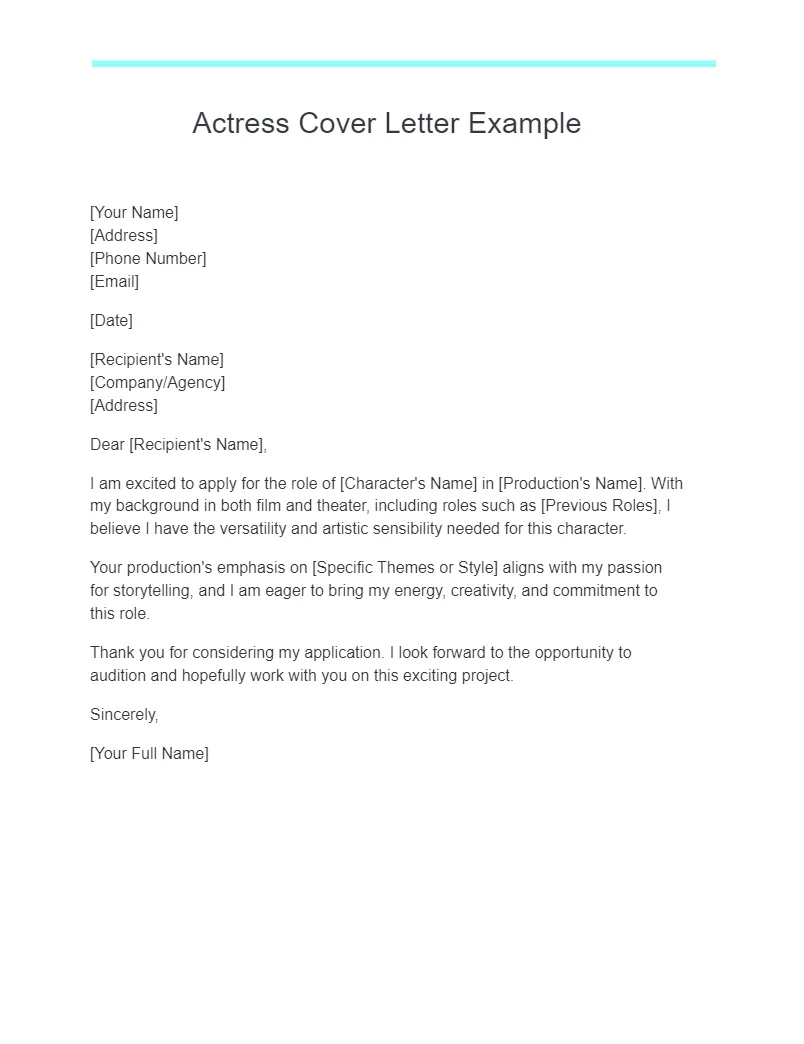
Crafting a Standout Acting Audition Cover Letter
An acting audition cover letter is your first introduction to casting directors and agents, making a lasting impression before they even see your audition. It’s an opportunity to showcase your personality, highlight your relevant experience, and demonstrate why you’re the perfect fit for the role. In a competitive field, a well-crafted cover letter can set you apart, leading to more auditions and ultimately, more opportunities. It’s more than just a formality; it’s a vital marketing tool that needs to be carefully considered and meticulously executed. A strong cover letter grabs the attention of casting professionals, piquing their interest and encouraging them to delve deeper into your materials. This initial impression can significantly impact your chances of securing an audition and ultimately, landing the role. The ability to create a professional and impactful cover letter is, therefore, a core competency for all aspiring actors.
Understanding the Purpose of an Acting Cover Letter
The primary purpose of an acting cover letter is to introduce yourself and your qualifications to the casting director or agent. It acts as a personalized bridge, connecting your resume and headshot to the specific project. Unlike a resume, which lists your experience, the cover letter allows you to tell your story, explain your motivations, and demonstrate your understanding of the role. It gives you the chance to explain why you want this role. It is your chance to display the acting skills. The letter provides context and highlights relevant experiences, skills, and personality traits that make you a compelling candidate. This context is critical because it enables casting directors to better understand your potential fit for the project. Without a strong cover letter, your application might be overlooked, or the essence of your application may be missed. A well-written cover letter shows that you understand the project and are seriously considering the opportunity. It is where you must sell yourself in writing!
Highlighting Your Acting Experience

Your cover letter should highlight the acting experience most relevant to the role you’re applying for. Instead of listing every credit, focus on those that directly relate to the project’s requirements. Include the name of the production, your role, and a brief description of your contributions or achievements. Quantify your accomplishments whenever possible, such as the number of performances or audience reach. Mention any specific skills you’ve developed, like dialects, stage combat, or musical instruments. These relevant details demonstrate your ability to meet the needs of the role. If you have limited experience, emphasize any training, workshops, or relevant extracurricular activities that show your dedication and commitment to acting. This approach helps you stand out from other applicants. The goal is to showcase your potential and make a strong case for an audition. If the role is for a Shakespearean play, mention previous Shakespearean performances, and if the role is for a comedy, mention any prior comedy experience.
Tailoring Your Letter to the Specific Role
Never use a generic cover letter. Each cover letter must be tailored to the specific role and project. Carefully read the casting call or script to understand the character’s personality, motivations, and background. Use this information to customize your letter, directly addressing the requirements of the role. Highlight specific skills or experiences that align with the character’s needs. For example, if the character is athletic, mention your sports background. If the character is multilingual, showcase your language skills. By directly connecting your abilities to the character, you demonstrate your understanding of the role and show the casting director that you’ve put in the effort to understand the project. This personalized approach greatly increases your chances of getting selected for an audition. Research the production company or the director, and, if possible, mention something that shows your familiarity with their work. If appropriate, reference a specific scene or aspect of the script that resonates with you and explains why you are excited about the project.
Showcasing Your Unique Qualities
Your cover letter should highlight your unique qualities as an actor, going beyond your experience and skills. What makes you, you? This is your chance to showcase your personality and passion for acting. Briefly describe what drives you to act. Mention any unique skills, talents, or personal experiences that add value to the role. Do you have a particular perspective on life that informs your acting? Are you adept at improvising? Can you bring a fresh interpretation to the character? Be authentic and genuine. Share a brief anecdote that illustrates your dedication or creativity. This could be a story about a challenging role you overcame or a creative way you prepared for a part. Share some personality so that it feels like you are not just another applicant, but the actor that the casting director has been waiting for. Casting directors want to discover actors who are not only skilled but also interesting. By sharing your personality, you make a lasting impression that goes beyond the resume and headshot.
Formatting and Presentation for Impact

The format and presentation of your cover letter can significantly impact its effectiveness. Use a clean, professional font like Times New Roman, Arial, or Calibri, with a font size of 11 or 12 points. Ensure your letter is easy to read, with clear spacing and margins. Keep your cover letter concise, ideally no more than one page. Use a professional letterhead, including your name, contact information, and the date. Address the recipient by name, if possible, using a formal salutation such as ‘Dear Mr./Ms. [Last Name]’. Avoid using slang or overly casual language. Proofread carefully for any errors in grammar, spelling, or punctuation. A well-formatted and error-free cover letter reflects your attention to detail and professionalism, making a positive first impression. The appearance of your letter communicates your level of professionalism, and a polished presentation shows that you take your acting career seriously and gives the casting director confidence in the rest of your materials.
Essential Elements of an Acting Cover Letter
An effective acting cover letter typically includes these elements. Start with a professional salutation, addressing the recipient by name if possible. State the role you are applying for and where you found the casting call. Briefly introduce yourself and highlight your most relevant skills and experience. Explain why you are interested in the role and what makes you a good fit. Include a brief statement about your passion for acting and what drives you. Mention any unique qualities or personal experiences that would add value to the role. Express your enthusiasm for the project and the opportunity to audition. Close with a professional closing, such as ‘Sincerely’ or ‘Best regards’. Include your contact information, including your email address and phone number. Keep your resume and headshot as enclosures. It is important to show you did your research and are prepared to deliver. You must have this down, otherwise you will be immediately dismissed.
Address the Recipient Professionally
Always address the recipient of your cover letter professionally. If you know the casting director’s or agent’s name, use it. Use formal titles like ‘Mr.’, ‘Ms.’, or ‘Mx.’ followed by their last name. If you do not know the name, try to find it through research or the casting call. If you still cannot find a name, use a general greeting like ‘Dear Casting Director’ or ‘Dear [Production Company]’. Avoid informal greetings like ‘Hey’ or ‘Hello’. Your cover letter should showcase your professionalism, and using the recipient’s name helps to personalize the letter and show that you’ve taken the time to research the opportunity. This personal touch demonstrates your respect and shows that you’re dedicated to the role.
Writing Your Body Paragraphs

The body paragraphs of your cover letter are where you expand on your qualifications and explain why you are a strong candidate. Start with a concise introduction, stating the role you’re applying for and how you learned about the opportunity. In the subsequent paragraphs, highlight your most relevant experience and skills. Use specific examples to illustrate your capabilities, such as describing a challenging role you played or a specific skill you used in a past production. Tailor your response to the specific requirements of the role. Explain why you are excited about the project and what aspects of the character or story resonate with you. Show your knowledge of the material by referencing specific scenes, themes, or characters. Maintain a professional tone. Express your enthusiasm for the opportunity to audition, and conclude by thanking the recipient for their time and consideration. Make sure you have a good blend of experience and personality so that it doesn’t sound too professional or too informal.
Creating a Strong Closing Statement
Your closing statement should reiterate your interest in the role and your availability for an audition. Express your enthusiasm for the project, and thank the casting director or agent for their time and consideration. Include a call to action, such as stating that you look forward to hearing from them soon or are available for an audition at their earliest convenience. Ensure your contact information is readily available. Your email address and phone number should be clearly visible, so the recipient can easily reach you. Close with a professional closing, such as ‘Sincerely’, ‘Best regards’, or ‘Thank you’. Avoid overly casual or informal closings. A strong closing statement leaves a positive final impression and increases your chances of getting an audition.
Proofreading and Editing Your Cover Letter
Before submitting your cover letter, proofread it carefully for any errors in grammar, spelling, or punctuation. Errors can detract from your professionalism and give the impression that you lack attention to detail. Read your letter aloud to catch any awkward phrasing or unclear sentences. Ask a friend, colleague, or mentor to review your letter for feedback. A fresh pair of eyes can often spot errors that you might have missed. Check for inconsistencies in formatting or style. Ensure your letter has a clean, professional look. Verify that all contact information is correct. Make sure your resume and headshot are attached. A well-proofread cover letter demonstrates your attention to detail and professionalism, which is essential for making a strong first impression.
Examples of Effective Acting Cover Letters

Reviewing examples of successful acting cover letters can provide valuable insights into effective writing. Analyze the format, structure, and content of these letters. Pay attention to how the actors highlight their experience, tailor their letters to the role, and showcase their unique qualities. Notice the language used, the tone, and the overall impression the letters convey. Consider how the actors showcase their personality and passion for acting. Use these examples as inspiration, but do not copy them. Customize your cover letter to reflect your own unique experience and style. Make sure you are being authentic to yourself. By studying these examples, you can learn to create cover letters that effectively capture the attention of casting directors and increase your chances of getting an audition. You can use online resources like casting websites and acting blogs. Look at a variety of cover letters. This can help you refine your own cover letter writing skills.
Key Takeaways from Successful Cover Letters
Successful acting cover letters share several key characteristics. They are tailored to the specific role and project. The letters are personalized to address the casting director or agent by name. They highlight relevant experience and skills, using specific examples to illustrate capabilities. They showcase the actor’s unique qualities and personality. The letters express enthusiasm for the project and a genuine passion for acting. They have a clear and concise format, are easy to read, and are free of errors. They include a strong call to action, encouraging the recipient to contact the actor for an audition. These elements work together to capture the attention of casting professionals and increase the actor’s chances of getting selected for an audition.
Best Practices
Follow these best practices for crafting a winning cover letter. Always tailor your letter to the specific role. Proofread and edit meticulously. Use a professional tone and format. Highlight relevant experience and skills. Showcase your unique qualities. Address the recipient by name. Express your enthusiasm for the project. Include a call to action. Keep it concise and easy to read. Seek feedback from others. By following these best practices, you can create a cover letter that effectively showcases your abilities, increases your chances of getting selected for an audition, and takes you one step closer to landing your dream role. Using these will certainly increase your chances to be seen.
Common Mistakes to Avoid

Avoid these common mistakes to ensure your cover letter makes a positive impression. Do not use a generic cover letter. Avoid spelling and grammar errors. Do not be overly casual or informal. Do not list every credit; focus on the most relevant ones. Avoid being vague or generic. Do not exceed one page. Avoid including irrelevant information. Do not forget to include your contact information. Avoid using clichés or overly dramatic language. Avoid negative self-talk or apologies. Avoiding these common mistakes will increase your chances of making a positive impression and securing an audition.
Using Keywords for SEO Optimization
While an acting audition cover letter’s primary goal is to impress casting professionals, incorporating relevant keywords can help with online visibility. If you’re submitting your cover letter digitally, using keywords can make it easier for casting directors to find your application. Research relevant keywords related to the role, the project, and your skills. Include these keywords naturally within your cover letter. Use keywords in your headline, body paragraphs, and closing statement. Avoid keyword stuffing, and ensure your letter remains readable and engaging. By strategically incorporating relevant keywords, you can improve the visibility of your cover letter and increase your chances of being discovered by casting professionals. Keywords can increase your visibility to casting directors searching online for actors with your particular skill sets.
Enhance Your Cover Letter’s Visibility
Enhancing your cover letter’s visibility is crucial in the competitive world of acting. Along with using relevant keywords, consider these strategies. Submit your cover letter as a PDF to preserve formatting and ensure readability. Use a clear and professional file name, including your name and the role or project. Use a concise and descriptive subject line in your email. Follow up with a polite email or phone call to express your interest and confirm your application. Network with other actors and industry professionals. Promote yourself and your cover letter on social media platforms like LinkedIn or Instagram. By taking these steps, you can increase the visibility of your cover letter and increase your chances of landing an audition.