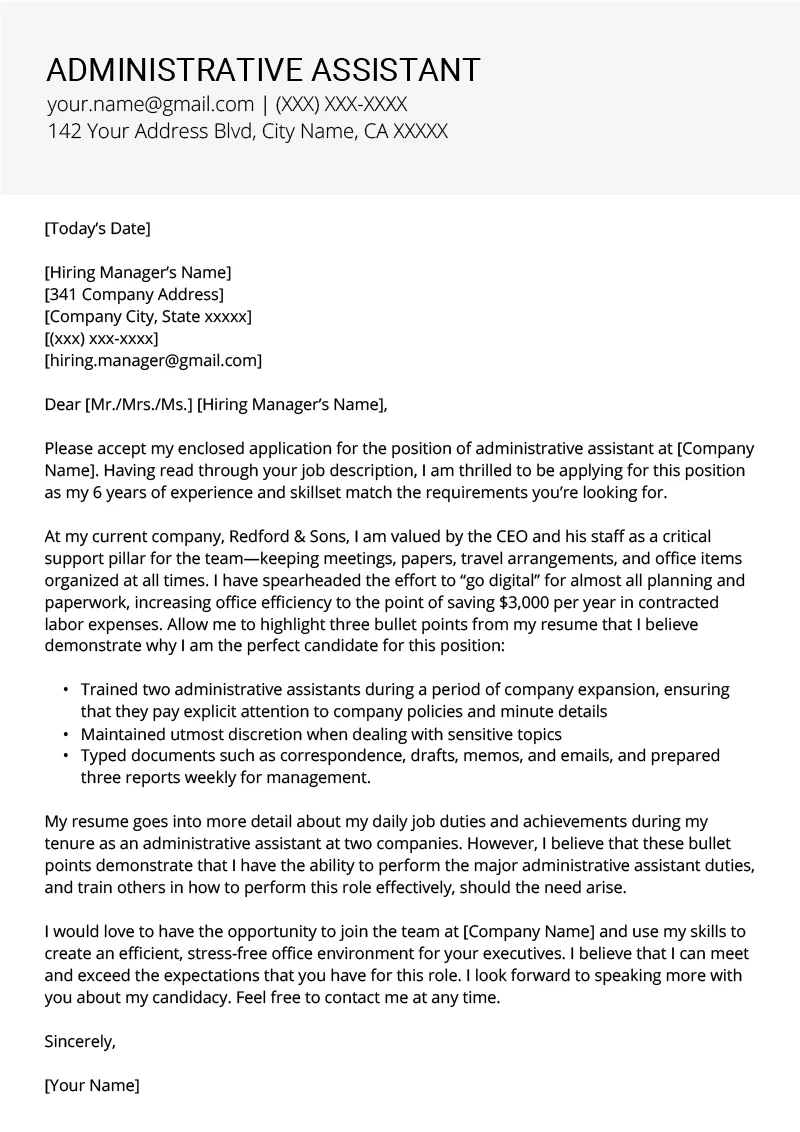
Crafting a compelling cover letter is a crucial step in landing your dream administrative assistant role. Your cover letter is your first impression on a potential employer, offering a unique opportunity to showcase your skills, experience, and personality. It goes beyond your resume to tell a story, illustrating how you fit the specific requirements of the job and why you’re the perfect candidate. This guide provides actionable tips to help you create a standout cover letter that grabs the hiring manager’s attention and secures you an interview. Following these strategies will significantly increase your chances of success in your job search.
Highlighting Your Skills & Experience
Your cover letter should serve as a snapshot of your most relevant skills and experiences. The goal is to demonstrate how your background aligns with the specific needs of the role. Avoid simply restating your resume; instead, elaborate on your accomplishments and explain how your skills have benefited previous employers. Use concise language, focusing on what you’ve achieved and how you can contribute to the company’s success. Tailor your cover letter to each job application, ensuring that the skills and experiences you highlight are directly relevant to the position you’re applying for. Emphasize the most crucial aspects of your background that align with the job description.
Key Skills to Showcase
Administrative assistant roles demand a diverse skillset, so carefully select the most relevant skills to feature in your cover letter. Make sure to include both hard skills and soft skills, demonstrating a well-rounded approach to your work and highlighting that you’re not just capable but also adaptable. Consider the specific requirements outlined in the job description and tailor your skills accordingly. Here are some of the most important categories to consider when writing about your capabilities:
Administrative Tasks Proficiency

Highlight your expertise in administrative tasks. These might include managing calendars, scheduling meetings, handling travel arrangements, and processing expense reports. Providing concrete examples of your experience will strengthen your application. For instance, if you’ve successfully managed complex travel itineraries for executives, mention this. If you’ve streamlined office processes to improve efficiency, explain how. Always try to quantify your achievements whenever possible. Did your calendar management skills reduce scheduling conflicts by a certain percentage? Did you save the company money on travel expenses? Highlighting these details will make a strong case for your skills.
Communication and Interpersonal Skills
Administrative assistants are often the first point of contact for clients and visitors, so exceptional communication and interpersonal skills are essential. Demonstrate your ability to communicate effectively both verbally and in writing. Highlight your experience in handling phone calls, emails, and correspondence with professionalism and tact. Showcasing your ability to resolve conflicts, build rapport, and maintain positive relationships is equally important. Provide instances of how you’ve successfully managed difficult situations or built strong working relationships with colleagues, clients, or vendors. Remember to tailor your language to match the tone of the company you’re applying to.
Technical Skills and Software Knowledge
Familiarity with various software and technologies is another critical area to address in your cover letter. List the specific software programs you are proficient in, such as Microsoft Office Suite (Word, Excel, PowerPoint, Outlook), CRM software, and other relevant applications. If you have experience with specialized software or systems used in the industry, be sure to mention these as well. Quantify your technical skills when possible; for example, you can say you have created presentations with a 95% positive feedback. Showing proficiency in the required technology is often what sets administrative assistants apart.
Formatting Your Cover Letter

The format and tone of your cover letter play a vital role in making a positive first impression. While the content is essential, a well-formatted letter that’s easy to read and visually appealing demonstrates attention to detail and professionalism. The format should adhere to standard business letter conventions. Keep your letter concise – aim for one page, if possible. The appearance of your cover letter speaks volumes about your professionalism. Choose a clean, readable font like Arial, Calibri, or Times New Roman, and ensure the font size is between 10 and 12 points. Proper formatting can influence the impression you give to potential employers.
Choosing the Right Tone
The tone of your cover letter should match the company culture and the specific requirements of the job. Whether you are formal or informal, ensure your tone is consistent throughout the letter. The tone you adopt should be respectful, enthusiastic, and professional. Consider the company’s branding and the industry they operate in. Do some research on the company to understand its values and communication style. Is the company known for being very formal, or more relaxed and collaborative? Match the tone accordingly, showing the hiring manager that you understand their business and culture.
Formal vs. Informal Tone
For more traditional or corporate environments, a formal tone is often preferred. This involves using professional language, avoiding slang, and addressing the hiring manager by their title and name. Use standard business letter formatting with clear headings, and ensure the language is precise and direct. In more modern or creative environments, a slightly more informal tone may be acceptable. Here, you might use a more conversational style and incorporate a touch of personality. Even in these cases, maintaining a professional demeanor is crucial. Always prioritize clarity and courtesy. Adapt your tone to the situation but always remain respectful.
Personalizing Your Cover Letter

Personalizing your cover letter is important for demonstrating genuine interest in the position and the company. Generic cover letters are easily recognizable and often discarded. Customizing your cover letter shows that you’ve taken the time to research the company and understand its needs. This is your opportunity to connect with the hiring manager and make a memorable impression. Don’t simply state that you’re a great fit. Explain why you’re excited about the opportunity and how your skills align with the company’s goals and mission. Personalization creates a stronger connection, increasing the likelihood that your application will stand out.
Tailoring to the Job Description
Carefully review the job description and identify the key skills and requirements the employer is looking for. Use the job description as a guide to tailor your cover letter, ensuring you address these points directly. Highlight the skills and experiences that match the requirements outlined in the job posting. Use keywords from the job description throughout your cover letter. This helps the hiring manager see that you’re a perfect match for the role. It also helps applicant tracking systems (ATS) recognize your application as relevant, boosting your chances of being selected. Remember to be honest and authentic, but always emphasize your strengths in relation to the job’s requirements.
Addressing the Hiring Manager
Whenever possible, address your cover letter to a specific person, such as the hiring manager or the contact listed in the job posting. Research the company’s website or LinkedIn to find the appropriate name and title. Addressing your letter to a specific person shows initiative and attention to detail. If you are unable to find a specific name, you can use a generic greeting like “Dear Hiring Manager” or “Dear [Company Name] Team.” Avoid using overly generic greetings. Always double-check the spelling of the person’s name. Make a personal connection from the start to create a positive impression.
Showcasing Achievements

Highlighting your achievements is a vital component of a successful cover letter. Instead of just listing your responsibilities, focus on your accomplishments and what you have delivered. Use action verbs and quantify your achievements to show the impact you’ve made in previous roles. This is your chance to demonstrate the value you can bring to the company and make a strong case for your candidacy. Use the CAR method – Challenge, Action, Result – to structure your achievements. This structure helps provide context to your achievements and is one of the most recommended methods by hiring managers. Always focus on your positive impact on the company.
Quantifying Your Accomplishments
Whenever possible, quantify your accomplishments with numbers, percentages, or specific results. For instance, instead of saying you “improved office efficiency,” you could say, “Streamlined office processes, leading to a 15% reduction in operational costs.” Quantifying your achievements provides concrete evidence of your capabilities and demonstrates the impact you can make. Using numbers is the best way to make your accomplishments stand out. Quantifiable results are much more persuasive than vague statements, providing clear evidence of your skills and abilities. Use data whenever possible, such as the number of projects completed, the amount of money saved, or the percentage of improvement achieved.
Providing Specific Examples
Use specific examples to illustrate your skills and experiences. Providing concrete examples demonstrates that you can apply your skills in real-world situations. Instead of simply stating that you have strong organizational skills, provide an example of how you organized a complex project or managed a busy calendar. Specific examples help the hiring manager understand your capabilities. If possible, reference the challenges you faced, the actions you took, and the results you achieved. This approach helps the hiring manager see how you handled problems and what your contribution to the company was. Always ensure your examples are relevant to the job’s requirements. Remember, your experiences should be practical and easy to understand.
Making a Strong Impression

Your cover letter is an opportunity to make a lasting impression on the hiring manager, so ensure your letter is professional, polished, and memorable. The impression your cover letter makes is critical. From the opening to the closing, every aspect should reflect your professionalism, attention to detail, and enthusiasm for the position. Highlight what makes you unique and why you are the best candidate for the role. It is the perfect place to demonstrate your personality, while still remaining professional. Make it memorable by telling a story, demonstrating your enthusiasm, and highlighting your unique attributes. Create a cover letter that leaves a lasting impression and sets you apart.
Proofreading and Editing
Proofreading and editing are critical steps in the cover letter writing process. Before submitting your cover letter, meticulously proofread it for any errors in grammar, spelling, and punctuation. Errors can detract from your credibility, even if you have all the necessary skills. Read your letter aloud to catch awkward phrasing or sentences. If possible, ask a friend, family member, or career counselor to review your letter as well. Ensure all names, titles, and company details are correct. A well-proofread and polished cover letter demonstrates attention to detail and professionalism, while errors may suggest carelessness or lack of attention.
Call to Action
End your cover letter with a clear call to action. Let the hiring manager know that you are eager to discuss the position further and are available for an interview. Express your enthusiasm for the opportunity and reinforce your interest in the company. This is the final step in closing your application strong, so you should express how your skills align with the company’s needs. Clearly state your desire for an interview and thank the hiring manager for their time and consideration. A strong call to action ensures the hiring manager knows how to contact you and signals your eagerness to move forward in the hiring process. Always make sure you are available for a call or interview as soon as possible.
By following these tips, you can create an Administrative Assistant cover letter that highlights your skills and experience, showcases your achievements, and ultimately helps you land your dream job. Good luck!