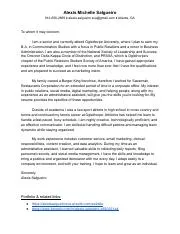
Understanding the AMS Cover Letter
An AMS cover letter is your first chance to make a strong impression on a potential employer. It’s a crucial document that accompanies your resume, providing an opportunity to showcase your personality, skills, and enthusiasm for the position. Unlike a resume, which is a factual summary of your experience, a cover letter allows you to explain why you’re the perfect fit for the job and the company. A well-crafted AMS cover letter can significantly increase your chances of getting an interview, while a poorly written one can land your application in the rejection pile. Therefore, taking the time to create a compelling and tailored cover letter is essential in your job search.
Why is an AMS Cover Letter Important?
An AMS cover letter is important for several key reasons. First, it demonstrates your communication skills. Your ability to write clearly, concisely, and persuasively is often assessed through your cover letter. Second, it allows you to highlight the specific skills and experiences that are most relevant to the job requirements. This allows you to tailor your application, showing the employer that you understand their needs and are a great fit. Third, a cover letter provides context to your resume. It explains any gaps in your employment history, career changes, or other aspects that might require clarification. Lastly, a well-written cover letter showcases your personality and enthusiasm, making you stand out from other applicants who might have similar qualifications but lack the personalized touch.
Key Components of a Winning AMS Cover Letter

A winning AMS cover letter includes several essential components that work together to create a compelling narrative. These components ensure that your letter is professional, informative, and persuasive. From the opening greeting to the closing call to action, each element plays a vital role in showcasing your qualifications and capturing the employer’s attention. When all these elements are combined, your AMS cover letter can greatly increase your chance of being hired. Reviewing and implementing the following steps will help you write a great cover letter.
Contact Information and Date
Start your AMS cover letter with your contact information at the top. Include your full name, address, phone number, and email address. Directly below, include the date you are sending the letter. This information is vital for the recipient to easily reach you and keep track of when your application was submitted. Ensure that your contact information is accurate and up-to-date. A clear and well-formatted heading builds your professionalism.
Recipient Details
Address your letter to the hiring manager or the specific person mentioned in the job posting. If the name isn’t provided, research the company website or LinkedIn to find out who the hiring manager is. Always avoid generic greetings like “To Whom It May Concern.” Addressing your letter to a specific person shows that you have taken the time to do your research and that you care about the position. If a name can’t be found, then the title of the position is a fine alternative.
Professional Greeting

Use a professional greeting, such as “Dear Mr./Ms./Mx. [Last Name],” to start your letter. If you don’t know the person’s gender, you can use their full name or a general greeting like “Dear Hiring Manager.” This demonstrates respect and professionalism from the start. A proper greeting sets a positive tone for the rest of the letter and signals your attention to detail. Avoid informal greetings like “Hey” or “Hi”.
The Opening Paragraph
In the opening paragraph, state the position you are applying for and how you found the job posting. Briefly mention why you’re interested in the company and the role. You can express your enthusiasm. This helps grab the reader’s attention immediately and sets the stage for the rest of the letter. Make a strong first impression by clearly stating your intent and demonstrating your early interest. For example, “I am writing to apply for the [Job Title] position at [Company Name], as advertised on [Platform].”
Highlighting Relevant Skills and Experience
The main body of your AMS cover letter should focus on highlighting your relevant skills and experience. Use specific examples to show how you meet the job requirements. Instead of simply listing your qualifications, explain how you have used those skills in the past and what results you achieved. This demonstrates your abilities and gives the hiring manager a clear understanding of what you can bring to the role. Tailoring your cover letter to the specific job will enhance your chances of getting the interview.
Tailoring Your Letter to the Specific Job

Carefully review the job description and identify the key skills and qualifications the employer is seeking. Then, in your cover letter, address these requirements directly. Use keywords from the job posting and provide examples of how you have demonstrated those skills in previous roles. This will demonstrate that you have read the job posting and are a strong match for the position. Tailoring your cover letter to each specific job shows that you are genuinely interested in the role and have taken the time to understand the company’s needs. Also, using the same keywords will help you get through the Applicant Tracking System (ATS).
Quantifying Achievements
Whenever possible, quantify your achievements with numbers and data. Instead of saying you “improved customer service,” state that you “increased customer satisfaction scores by 15% in six months.” Quantifiable results provide concrete evidence of your accomplishments and demonstrate your impact. Use metrics, percentages, and specific examples to showcase your successes. Quantifying your achievements makes your cover letter more compelling and shows the employer what you can achieve for them. These metrics provide real evidence of your past results.
Demonstrating Your Knowledge of AMS
If the job requires experience with AMS (Applicant Management Systems) tools, highlight your knowledge of these systems. Mention specific software you’ve used, such as Workday, Taleo, or Greenhouse. Discuss how you have used these tools to streamline processes, improve efficiency, and achieve positive outcomes. Providing specific examples of your AMS experience will show the employer that you have the skills needed to perform the job effectively. This is important, as AMS experience is in high demand.
Expressing Enthusiasm and Interest

Express your enthusiasm for the opportunity and the company in your AMS cover letter. Explain why you’re excited about the role and how it aligns with your career goals. Show that you have researched the company and understand its mission, values, and culture. This demonstrates that you are genuinely interested in joining the team. Conveying your enthusiasm and interest makes you more memorable and shows the employer that you will be a positive contributor to the workplace. Always express yourself in a positive manner.
The Closing Paragraph
In the closing paragraph of your AMS cover letter, reiterate your interest in the position and thank the hiring manager for their time and consideration. Briefly summarize your key qualifications and express your eagerness to discuss your application further. This provides a final opportunity to leave a positive impression. Ending on a strong note ensures that you’re remembered positively. Be sure to restate your interest in the position and thank the employer for their time.
Call to Action
Include a clear call to action in your AMS cover letter. State that you are available for an interview and provide your contact information again. This encourages the hiring manager to take the next step and contact you. Make it easy for them to reach out by providing your phone number and email. A strong call to action increases your chances of getting an interview. Use a phrase like, “I am available for an interview at your earliest convenience and can be reached at [phone number] or [email address].”
Proper Formatting and Proofreading

Proper formatting and careful proofreading are essential for creating a professional and polished AMS cover letter. Pay close attention to the appearance of your letter, including the font, spacing, and overall layout. Ensure that your letter is free of errors and easy to read. A well-formatted and proofread cover letter makes a positive impression and demonstrates your attention to detail. Failing to do so will reflect badly on your overall job application.
Formatting Tips
Use a standard font, such as Times New Roman, Arial, or Calibri, in a readable size (11-12 points). Use single-spaced paragraphs with a blank line between each paragraph. Use a left-aligned format with a 1-inch margin on all sides. Ensure that your letter is visually appealing and easy to read. Proper formatting enhances the readability of your cover letter and gives a professional look. Maintain a consistent format throughout your letter for a polished appearance.
Proofreading and Editing
Proofread your AMS cover letter carefully for any typos, grammatical errors, and spelling mistakes. Check for clarity, conciseness, and proper sentence structure. Have someone else review your letter, as a fresh pair of eyes can often catch errors you might miss. Pay attention to the details. Thorough proofreading minimizes errors and ensures that your cover letter is polished and professional. Always proofread and edit your cover letter before submitting it.
Common Mistakes to Avoid

Avoiding common mistakes can significantly improve the effectiveness of your AMS cover letter. Be mindful of the common pitfalls, such as using a generic letter, making grammatical errors, and lacking specificity. Correcting these mistakes will make your application stand out. Learning to avoid common mistakes and writing a strong AMS cover letter will greatly increase your chance of getting the job.
Generic Letters
Avoid using a generic cover letter that is not tailored to the specific job or company. Such letters often sound impersonal and fail to demonstrate genuine interest. Customize each cover letter to the job requirements and the company’s culture. Generic letters fail to grab the hiring manager’s attention. Your cover letter should speak specifically about the company and the role. Always take the time to tailor your application to the specific role and organization.
Typos and Grammatical Errors
Typos and grammatical errors can damage your credibility and make you appear unprofessional. Always proofread your letter carefully and use spell-check and grammar-check tools. Errors can undermine your qualifications. Mistakes can make you seem careless. Always proofread your letter and have someone else review it before submitting your application.
Lack of Specificity
Avoid being vague and provide specific examples of your skills and experiences. Generic statements like “I am a hard worker” are less effective than detailed accounts of how you have achieved results. Provide details. Show, don’t just tell, about your skills and experiences. Specific examples of your achievements demonstrate your abilities and value to the company. A lack of specificity makes it difficult for the hiring manager to understand your qualifications.