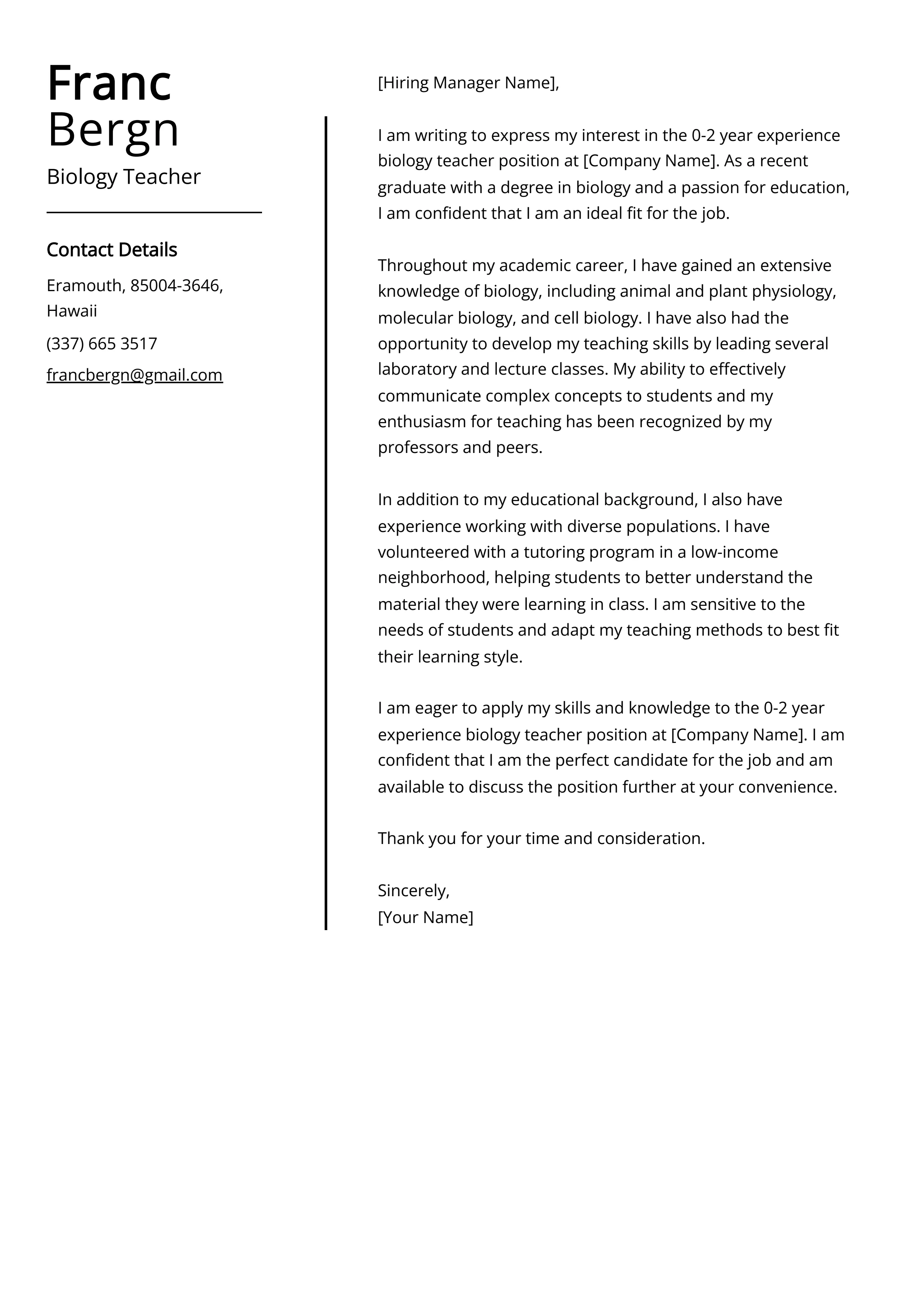
Understanding the Importance of a Biology Teacher Cover Letter
In the competitive field of education, a compelling cover letter can be the key to landing your dream job as a biology teacher. A well-crafted cover letter serves as your introduction to the hiring committee, providing an opportunity to showcase your skills, experience, and passion for teaching. It’s more than just a formality; it’s a crucial tool for making a strong first impression and setting yourself apart from other candidates. This guide will walk you through the essential components of a successful biology teacher cover letter, helping you craft a document that grabs attention and highlights your unique qualifications. Mastering the art of the cover letter is a critical step in the job search process, and this guide will help you succeed.
Why a Cover Letter Matters
A cover letter is your chance to tell your story and explain why you’re the perfect fit for the role. While your resume provides a summary of your qualifications, the cover letter allows you to elaborate on those details and connect with the hiring manager on a more personal level. It allows you to demonstrate your communication skills, express your enthusiasm for the position, and highlight the specific experiences and skills that make you an ideal candidate. It shows that you have taken the time to understand the school’s needs and that you are genuinely interested in the opportunity. Failing to include a cover letter, or submitting a generic one, can significantly reduce your chances of being considered for an interview.
Highlighting Relevant Skills and Experience

Your cover letter should emphasize the skills and experiences most relevant to the biology teacher position. Focus on the qualifications that align with the job description, such as your expertise in biology, your teaching methodologies, and your experience with curriculum development. Quantify your achievements whenever possible; for example, instead of saying you “improved student test scores,” state that you “increased average scores by 15% through the implementation of innovative teaching strategies.” This approach shows the hiring committee the tangible impact you can make. Highlighting specific projects, successful lesson plans, and any specializations you have will also help you stand out. Think about what makes you unique and make sure to communicate those qualities in your cover letter.
Key Components of a Biology Teacher Cover Letter
Header and Contact Information
Begin your cover letter with a professional header that includes your name, address, phone number, and email address. Ensure this information is accurate and up-to-date. Directly below your contact information, include the date and the hiring manager’s name and title if you know it. If you don’t know the hiring manager’s name, use a general salutation such as “Dear Hiring Committee.” Always address the letter to a specific person whenever possible; it demonstrates that you’ve done your research and that you’re genuinely interested in the position. Pay careful attention to detail, ensuring that all information is formatted correctly and that there are no typos.
Opening Paragraph – Grabbing Attention

The opening paragraph is your first opportunity to capture the reader’s interest, so make it count. Start with a strong statement that immediately highlights your enthusiasm for the position and the school. Briefly mention how you learned about the opening and why you’re excited about the opportunity. You might reference a specific program or initiative at the school that aligns with your teaching philosophy. Avoid generic openings; instead, personalize your introduction to showcase your unique perspective. A compelling opening paragraph sets the tone for the rest of your cover letter and encourages the hiring manager to continue reading.
Body Paragraphs – Showcasing Qualifications
The body of your cover letter is where you elaborate on your qualifications, skills, and experience. Use specific examples to illustrate your abilities and provide evidence of your achievements. Structure your paragraphs logically, addressing the key requirements outlined in the job description. Connect your skills and experiences directly to the school’s needs. Show, don’t just tell; instead of saying you are a good teacher, describe a successful lesson plan, a student project, or a positive classroom outcome that demonstrates your effectiveness. Tailor each paragraph to match the specific needs and values of the school or district.
Highlighting Teaching Philosophy
Your teaching philosophy is a crucial component of your cover letter. Briefly explain your approach to teaching and how you foster a positive and engaging learning environment. Describe your beliefs about student learning and how you motivate students to succeed. Mention any specific teaching methodologies or strategies you employ, such as project-based learning, differentiated instruction, or inquiry-based learning. Share your passion for science and your commitment to inspiring students to pursue careers in biology or related fields. Make sure your philosophy aligns with the school’s mission and values.
Demonstrating Classroom Management Skills

Classroom management is essential for creating a conducive learning environment. Describe your strategies for maintaining order, fostering positive student behavior, and addressing disciplinary issues. Highlight any experience you have with specific classroom management techniques, such as positive reinforcement, clear expectations, or restorative justice. Explain how you create a supportive and respectful classroom culture where all students feel safe and valued. Provide concrete examples of how you have successfully managed classrooms and handled challenging situations. Emphasize your ability to create a structured and engaging learning environment where students can thrive.
Showcasing Curriculum Development Experience
If you have experience in curriculum development, be sure to highlight it. Describe your experience creating lesson plans, developing assessments, and aligning curriculum with state standards. Mention any experience you have with specific curriculum frameworks, such as NGSS. Provide examples of successful curriculum projects or initiatives you have implemented. Explain how you incorporate innovative teaching methods and technologies into your curriculum to enhance student engagement and learning. Show the hiring committee that you are able to create a dynamic and effective curriculum that meets the needs of diverse learners.
Closing Paragraph – Call to Action
Conclude your cover letter with a strong call to action. Express your enthusiasm for the position and reiterate your interest in the school. Thank the hiring manager for their time and consideration. State your availability for an interview and how you can be reached. Reiterate your key qualifications and your ability to contribute to the school’s mission. End with a professional closing, such as “Sincerely” or “Respectfully,” followed by your typed name. Proofread the entire letter one last time before submitting it.
Formatting and Presentation for Impact

Font and Layout Considerations
The formatting and layout of your cover letter play a significant role in making a positive impression. Use a professional font, such as Times New Roman, Arial, or Calibri, in a readable size (11 or 12 points). Maintain consistent formatting throughout the document, including consistent spacing and alignment. Use clear headings and subheadings to break up large blocks of text and make your cover letter easy to scan. Keep the tone of your letter professional and concise, using clear and direct language. A well-formatted cover letter shows attention to detail and demonstrates your professionalism.
Proofreading and Editing for Perfection
Proofreading and editing are crucial steps in the cover letter writing process. Carefully review your cover letter for any grammatical errors, spelling mistakes, or typos. Read your letter aloud to catch any awkward phrasing or inconsistencies. Have a friend or colleague proofread your letter as well; a fresh pair of eyes can often spot errors that you may have missed. Ensure that your cover letter is free of errors; this attention to detail demonstrates your professionalism and your commitment to excellence. A polished and error-free cover letter significantly increases your chances of making a positive impression.
Tailoring Your Cover Letter

Researching the School and Position
Before writing your cover letter, thoroughly research the school and the specific position. Visit the school’s website to learn about its mission, values, and academic programs. Review the job description carefully, paying attention to the required qualifications and the school’s expectations. Use this information to tailor your cover letter to the specific needs of the school and the position. Demonstrate that you understand the school’s culture and that you are a good fit for the environment. Show that you have taken the time to understand the opportunity and that you are genuinely interested in the position.
Customizing for Specific Requirements
Customize your cover letter to address the specific requirements and preferences outlined in the job description. Highlight the qualifications and experiences that are most relevant to the position. Use keywords and phrases from the job description to demonstrate that you meet the required criteria. If the job description mentions specific software, skills, or teaching methodologies, be sure to address these in your cover letter. Show the hiring committee that you have the skills and experiences they are looking for. Avoid using a generic cover letter; instead, tailor your letter to each specific job application.
Examples of Strong Biology Teacher Cover Letter Phrases

Phrases to Use for Skills and Experience
Use strong action verbs to describe your skills and experience. For example, instead of saying “I taught biology,” use phrases like “Developed and implemented engaging lesson plans,” “Managed a diverse classroom environment,” or “Increased student test scores by 15% through innovative teaching methods.” Focus on quantifiable achievements whenever possible. Demonstrate your experience with specific technologies, such as “Proficient in using interactive whiteboards and educational software.” These phrases showcase your accomplishments in a clear and compelling way.
Phrases for Teaching Philosophy
Clearly articulate your teaching philosophy using impactful phrases. Some examples include, “I am committed to fostering a student-centered learning environment,” “My teaching philosophy emphasizes inquiry-based learning and critical thinking skills,” or “I believe in creating a supportive and inclusive classroom culture where all students feel valued.” Use specific examples to support your beliefs, such as “I incorporate project-based learning to encourage student collaboration and real-world problem-solving.” Show your commitment to student success and your belief in the power of education.
Common Mistakes to Avoid

Avoid common mistakes that can damage your chances of being hired. Do not use a generic cover letter; always tailor your letter to the specific job. Avoid typos, grammatical errors, and spelling mistakes. Do not simply restate your resume; provide additional details and insights. Avoid being overly informal or using jargon. Do not exceed one page in length. Avoid negative language and focus on your strengths. Do not mention salary expectations unless specifically requested. Proofread your letter thoroughly before submitting it.