Understanding the Importance of a Cover Letter
In the competitive landscape of a career change, a well-crafted cover letter is your secret weapon. It’s more than just a formality; it’s your first opportunity to make a strong impression and convince the hiring manager that you’re worth a closer look. Unlike a resume, which provides a static overview of your experience, a cover letter allows you to tell your story, explain your career shift, and highlight how your skills align with the new role. It offers a chance to show your personality, passion, and genuine interest in the position, all of which can significantly boost your chances of landing an interview. This document allows you to connect the dots for the employer, illustrating how your past experiences have prepared you for this new path.
Why a Cover Letter Matters for Career Changers
For those undergoing a career change, a cover letter becomes even more crucial. It’s the space where you directly address the elephant in the room – your career shift. This document allows you to explain the ‘why’ behind your transition, demonstrating that your decision is well-considered and that you have a clear vision for your future. It’s an opportunity to proactively counter any potential concerns the employer might have about your lack of direct experience in the new field. By highlighting transferable skills, showcasing relevant accomplishments, and expressing your genuine enthusiasm, you can reassure the hiring manager that you’re a valuable candidate, despite your different background. In essence, it’s your chance to frame your story in a way that is compelling and highlights your potential.
Highlighting Transferable Skills

One of the most effective strategies for a career change cover letter is to focus on your transferable skills. These are the skills you’ve developed in previous roles that are directly applicable to the new position. Think about communication, problem-solving, leadership, project management, and teamwork – skills that are valued in virtually every industry. Your cover letter should explicitly connect these skills to the requirements of the job description. For example, if you’re transitioning from a marketing role to project management, you might highlight your experience in ‘managing cross-functional teams,’ ‘meeting deadlines,’ and ‘delivering projects on time and within budget.’ By emphasizing these transferable assets, you demonstrate your ability to succeed in the new role, even if your background isn’t a perfect match.
Identifying and Showcasing Relevant Skills
Begin by carefully reviewing the job description and identifying the key skills and qualifications the employer is seeking. Then, examine your own experience to pinpoint instances where you’ve utilized those skills. Consider the specific tasks you’ve performed, projects you’ve led, and challenges you’ve overcome. For each relevant skill, provide a brief but compelling example that showcases your proficiency. For instance, if the job requires strong communication skills, you might describe a situation where you successfully presented a complex project to a diverse audience or mediated a conflict between team members. Use action verbs to describe your accomplishments and quantify your results whenever possible. This will create a stronger impression.
Tailoring Your Letter to the Job Description
Generic cover letters are a surefire way to get your application tossed aside. To stand out, you must tailor each letter to the specific job and company. This means carefully reading the job description and highlighting the skills and experiences that directly align with the role’s requirements. Demonstrate that you understand the company’s needs and that you’ve researched the position. The more personalized your letter, the more likely you are to capture the hiring manager’s attention. This level of personalization shows the employer that you’ve invested time and effort into understanding their needs and that you’re genuinely interested in the opportunity. It demonstrates that you’re not just sending out mass applications, but thoughtfully targeting specific roles.
Researching the Company and Role

Before you start writing, research the company and the specific role. Visit the company website, read news articles, and check out their social media profiles. Learn about their mission, values, and recent projects. This information will not only help you tailor your letter but also demonstrate your genuine interest in the company. Understanding the role involves reading the job description carefully and researching the skills and responsibilities associated with the position. Identify the key requirements and align your cover letter to those specific points. When you can incorporate specific details about the company and the role into your letter, it shows the hiring manager that you’ve taken the time to learn about the opportunity.
Structuring Your Cover Letter Effectively
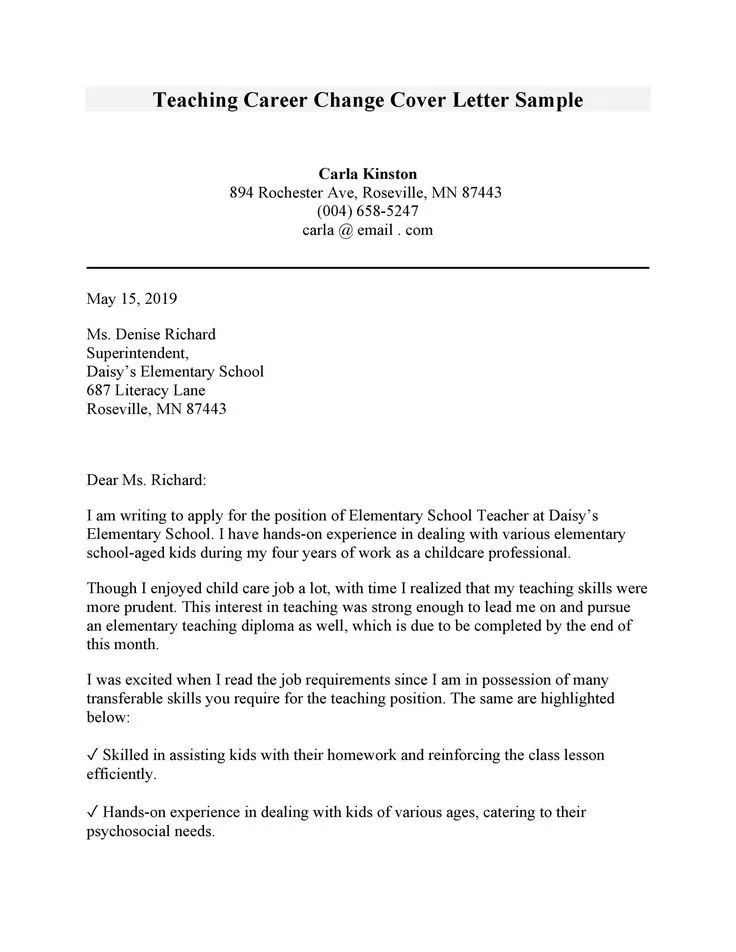
A well-structured cover letter is easy to read and allows the hiring manager to quickly grasp your key qualifications. Start with a professional header and contact information, followed by a compelling opening paragraph that grabs the reader’s attention. The body paragraphs should highlight your relevant skills and experiences, addressing the career change and showcasing your accomplishments. Close with a strong call to action, encouraging the reader to review your resume and contact you for an interview. This structure ensures that you present a clear and concise argument for why you’re the best candidate. Ensure a logical flow and make the letter visually appealing with clear formatting and spacing.
Header and Contact Information
Begin your cover letter with a professional header that includes your name, address, phone number, and email address. Use a clean and readable font. Include the date and the hiring manager’s name and title (if known). Addressing the letter to a specific person, rather than using a generic greeting like ‘To Whom It May Concern,’ shows that you’ve done your research and taken the time to personalize your application. The header sets the tone for the rest of the letter and provides the necessary contact information.
Opening Paragraph: Grab Attention

The opening paragraph is your chance to make a strong first impression. Start with a hook that grabs the reader’s attention – a brief statement of your enthusiasm for the role, a compelling accomplishment, or a relevant anecdote. State the specific position you are applying for and briefly mention where you found the job posting. This paragraph should clearly indicate your interest in the opportunity and provide a snapshot of your qualifications. Avoid generic phrases and instead aim for a sentence or two that immediately connects your background to the job requirements. Demonstrate your genuine interest and excitement from the outset.
Body Paragraphs: Sell Your Value
The body paragraphs are where you sell yourself. Highlight your relevant skills, experiences, and accomplishments that align with the job description. Use specific examples to demonstrate how you’ve utilized your skills and achieved positive results in the past. Focus on your transferable skills and explain how they apply to the new role. This is also where you address your career change. Provide a clear and concise explanation of why you’re making the transition and what has motivated you to pursue this new path. Don’t just list your skills; illustrate how you’ve applied them and what impact you’ve made.
Highlighting Your Enthusiasm
Demonstrate your enthusiasm for the position and the company. Explain what attracts you to the role and why you’re excited about the opportunity to contribute. Show that you’ve researched the company and that you understand their mission, values, and recent projects. Connect your skills and experiences to the company’s needs and explain how you can help them achieve their goals. A genuine display of enthusiasm can significantly increase your chances of making a positive impression. Express your eagerness to learn and contribute to the team.
Addressing the Career Change

Be upfront and honest about your career change. Explain your motivations for transitioning to a new field and highlight how your previous experiences have prepared you for success in the new role. Focus on the skills and experiences that are transferable, and explain how they will benefit the company. Frame your career change as a strategic decision, highlighting your personal growth, new skills acquired, and your strong desire to contribute. Avoid dwelling on past disappointments; instead, emphasize the positive aspects of your transition and your eagerness to embrace new challenges.
Showcasing Accomplishments
Instead of simply listing your job duties, showcase your accomplishments. Quantify your achievements whenever possible, using numbers and data to demonstrate the impact you’ve made in previous roles. For instance, instead of saying ‘Managed social media accounts,’ say ‘Increased social media engagement by 30% in six months.’ Use the STAR method (Situation, Task, Action, Result) to provide context for your accomplishments. This is your opportunity to prove your value and demonstrate what you can bring to the new role. This strategy also provides the hiring manager with concrete evidence of your ability to produce results.
Quantifying Achievements
Whenever possible, quantify your accomplishments. Use numbers, percentages, and data to demonstrate the impact you’ve made in previous roles. For example, instead of saying ‘Improved customer satisfaction,’ say ‘Increased customer satisfaction scores by 15% through improved customer service training.’ Quantifiable results provide concrete evidence of your abilities and make your accomplishments more impressive. The more specific you are, the more persuasive your cover letter will be. Use numbers to show your positive impact and results.
Closing Paragraph and Call to Action

In your closing paragraph, reiterate your interest in the position and express your enthusiasm for the opportunity. Thank the hiring manager for their time and consideration. End with a strong call to action, such as encouraging them to review your resume and inviting them to contact you for an interview. This action reinforces your interest and makes it easy for the hiring manager to take the next step. Make it clear you are looking forward to hearing from them and discussing the opportunity further. This also signals your proactive approach.
Proofreading and Editing
Before submitting your cover letter, carefully proofread and edit it for any errors in grammar, spelling, and punctuation. Ask a friend or family member to review it as well. A polished cover letter demonstrates your attention to detail and professionalism. Typos and grammatical errors can undermine your credibility and give the impression that you don’t care about the details. It is very easy to miss mistakes when you are the one who wrote the document, so having another pair of eyes can be invaluable. Ensure your letter is free of any errors before sending it out.
Common Mistakes to Avoid
Several common mistakes can derail your cover letter. Avoid generic letters that could apply to any job. Refrain from focusing solely on your past experiences without connecting them to the target role. Do not ignore the requirements outlined in the job description. Overly lengthy paragraphs and lack of formatting can also detract from your message. By avoiding these pitfalls, you can create a more impactful cover letter.
Generic Letters

Avoid using a generic cover letter template that could be sent to any company or position. Tailor each letter to the specific job and company. Generic letters show a lack of effort and demonstrate that you are not genuinely interested in the role. Personalize your letter to the company and role to capture the hiring manager’s attention.
Focusing on the Past
While it’s important to highlight your previous experiences, avoid focusing solely on your past. Connect your past experiences to the target role and demonstrate how your skills and accomplishments are relevant to the new position. Show the employer what you can bring to them, not just what you have done in the past.
Ignoring the Target Role
Failing to address the requirements of the job description is a significant mistake. Carefully review the job description and highlight the skills and experiences that directly align with the position’s needs. Tailor your letter to the specific requirements of the role, showing the employer that you understand their needs.
Formatting and Presentation Tips
The appearance of your cover letter is just as important as its content. Use a clean and professional font, such as Times New Roman, Arial, or Calibri. Keep the layout neat and easy to read with clear headings, bullet points, and adequate spacing. Your cover letter should be visually appealing and reflect your professionalism. Good formatting enhances the readability and makes a positive impression on the hiring manager. An organized and well-formatted cover letter showcases your professionalism and attention to detail.
Choosing the Right Font and Layout
Choose a professional and easy-to-read font, such as Times New Roman, Arial, or Calibri. Use a font size between 10 and 12 points. Maintain a consistent layout throughout your letter, with clear headings, bullet points, and adequate spacing. Avoid using overly decorative fonts or a layout that is difficult to read. A well-formatted letter is a sign of professionalism and consideration.
Using Action Verbs
Use strong action verbs to describe your accomplishments and responsibilities. Start each bullet point or sentence with an action verb, such as ‘Managed,’ ‘Developed,’ ‘Led,’ ‘Implemented,’ or ‘Achieved.’ Action verbs make your cover letter more dynamic and engaging, showcasing your accomplishments in a more compelling way. Strong action verbs bring your accomplishments to life and make a lasting impression.
Adding a Professional Touch
Use professional language, avoiding slang or informal expressions. Proofread your cover letter carefully for any errors in grammar, spelling, and punctuation. Tailor your letter to the specific job and company. Ensure your cover letter is free from any formatting issues, such as inconsistent spacing or misaligned text. A professional and well-crafted cover letter can significantly increase your chances of landing an interview.