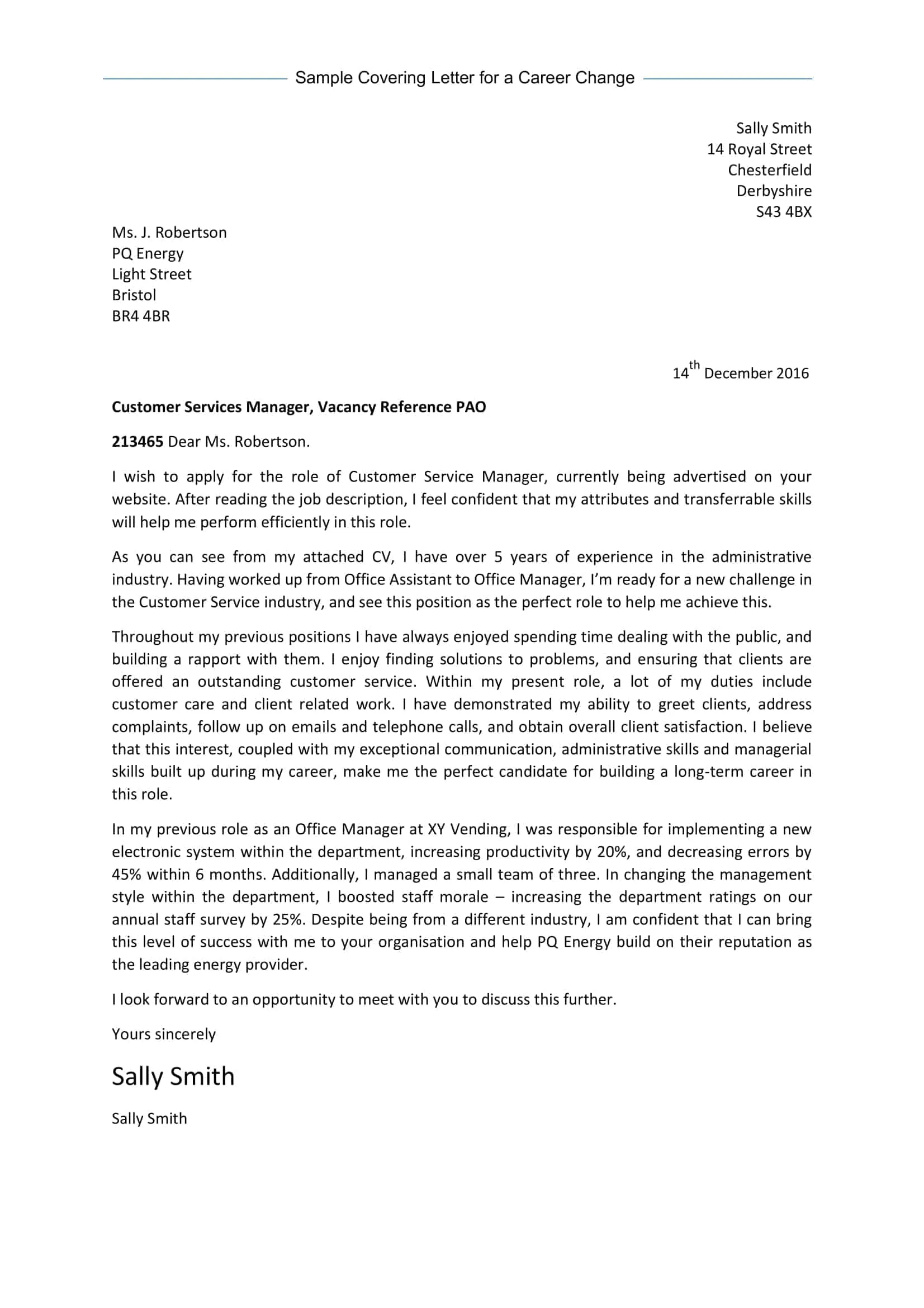
Crafting Your Career Change Cover Letter
Embarking on a career change is a significant step, and a well-crafted cover letter is your first opportunity to make a strong impression. This guide provides free career change cover letter samples and expert advice to help you navigate the complexities of transitioning to a new field. Whether you’re seeking a complete industry shift or a new role within your current field, the right cover letter can highlight your strengths and convince potential employers that you’re the perfect fit. Understanding the nuances of a career change cover letter is essential. Unlike a traditional cover letter, a career change cover letter must address the challenges of a non-linear career path. It needs to clearly articulate your motivations, showcase relevant skills, and emphasize your adaptability. This guide will walk you through each step, ensuring your letter resonates with hiring managers.
Why a Cover Letter is Crucial for Career Transitions
In a career transition, a cover letter serves as a bridge, explaining your reasons for the change and demonstrating your suitability for the new role. It’s your chance to directly address any gaps in your experience and convince employers of your potential. A cover letter allows you to provide context to your resume. It explains the ‘why’ behind your career shift, addressing potential concerns employers might have about your non-traditional background. It showcases your personality, communication skills, and genuine interest in the new role, setting you apart from candidates with similar qualifications. In the competitive job market, a compelling cover letter is often the deciding factor. It sets the tone for your application, and a well-written letter can significantly increase your chances of securing an interview and ultimately, landing your desired job. This is especially true when changing careers because it can clarify the narrative of your career journey.
Showcasing Transferable Skills

One of the most critical elements of a career change cover letter is highlighting your transferable skills. These are the skills you’ve acquired in previous roles that are relevant to the new position. Start by identifying the core competencies needed for the job you’re targeting. Then, carefully analyze your past experiences to pinpoint instances where you’ve demonstrated these skills. Transferable skills can include leadership, communication, problem-solving, project management, and more. Use your cover letter to provide specific examples of how you’ve utilized these skills in different contexts. This helps employers see the value you can bring to their organization, even if your experience isn’t a direct match. Think about project management, team leadership, communication, and analytical abilities. Showcase situations where you successfully applied these skills. Remember to quantify your achievements whenever possible.
Identifying Your Target Audience
Before you start writing, it’s essential to identify your target audience. Research the company and the specific role to understand what the hiring manager is looking for. This research informs the language, tone, and content of your cover letter. Visit the company’s website, read their mission statement, and review their social media profiles. Look for keywords in the job description and tailor your letter to reflect these terms. Addressing the letter to a specific person, if possible, shows you’ve done your homework and adds a personal touch. Knowing your audience allows you to customize your cover letter to resonate with their needs and expectations. This approach ensures that your application stands out from the crowd, and it helps you create a compelling narrative around your career transition.
Tailoring Your Cover Letter
Generic cover letters are easily spotted and often discarded. The most effective cover letters are those tailored to the specific job and company. Every cover letter you send should be a unique document reflecting your understanding of the role and the organization. Customize your cover letter by referencing the specific requirements and responsibilities outlined in the job description. Highlight the skills and experiences that align with those requirements. Explain how your previous experiences have prepared you for the new role. Use the company’s language and reflect their values in your writing. Show the hiring manager that you understand their needs and have carefully considered how you can meet them. Demonstrate that you understand the specific company culture and the job requirements. The effort of tailoring a cover letter demonstrates your genuine interest in the role, enhancing your chances of success.
Understanding the Structure of a Cover Letter

A well-structured cover letter is easy to read and allows the hiring manager to quickly grasp your key qualifications. The standard structure includes a header, an introduction, body paragraphs, and a closing. Each section serves a specific purpose. A clear structure ensures that your message is delivered in a logical and organized manner. Mastering this structure will help you create a compelling and effective cover letter that increases your chances of getting noticed. Adhering to this structure can greatly enhance your cover letter’s overall impact. This approach provides a framework to showcase your skills and experiences in a way that is both engaging and persuasive, giving you a clear advantage in your job search.
Header and Contact Information
Your header should include your contact information, such as your name, phone number, email address, and LinkedIn profile URL. Place this information at the top left or right corner of your document. Include the date and the recipient’s contact information (if available). Ensure that your contact information is accurate and professional. Using a professional email address is crucial. This section allows the recruiter to easily reach you if they want to offer you an interview. Make sure to use a readable font and format, keeping the header clean and easy to understand. This seemingly minor detail is important, as it demonstrates professionalism and attention to detail.
The Introduction
The introduction is your opportunity to make a strong first impression. Start by stating the position you’re applying for and where you saw the job posting. If possible, mention the name of the person you’re addressing the letter to. Briefly introduce yourself and explain your interest in the role. Your goal is to capture the reader’s attention and make them want to read more. The introduction sets the tone for the rest of the letter, making it crucial to be clear, concise, and engaging. This initial paragraph should clearly state your objective and briefly introduce yourself. The introduction must be tailored to the specific job and company. It provides an opening that sets the stage for highlighting your key skills and experiences.
Capturing Attention

To capture attention, start with a compelling hook. This could be a brief statement about your career change or an achievement related to the role you’re applying for. Avoid generic opening lines like, ‘I am writing to express my interest…’ Instead, try something more specific and engaging. A strong opening hook helps the reader to become interested in learning more about you. Make your introduction stand out by incorporating a statement about your passion or excitement for the opportunity. A hook will help your cover letter stand out from the competition and make a lasting impression.
Clearly Stating Your Objective
In the introduction, clearly state the position you are applying for. Mention the specific role and, if possible, how you learned about the opening. Be direct and specific. This helps the hiring manager quickly understand your purpose and goals. Don’t be vague about the position you want. Clarity and precision are essential here. The objective should be concise and directly to the point, indicating your intent to apply for a particular role. Ensure that your objective is relevant to the job posting, showing your understanding of the role.
Highlighting Your Relevant Skills and Experience
The body paragraphs of your cover letter are where you showcase your relevant skills and experience. Focus on the skills and experiences that align with the job requirements. Provide specific examples of your accomplishments, using the STAR method (Situation, Task, Action, Result) to illustrate how you’ve achieved positive outcomes in the past. Tailor your response to each job posting by highlighting the most relevant information. Use keywords from the job description to demonstrate that you possess the necessary qualifications. This is your chance to demonstrate how your previous experience has prepared you for this new role. Show, don’t just tell, providing concrete examples to demonstrate your value and capabilities.
Quantifying Achievements

Whenever possible, quantify your achievements. Use numbers and data to demonstrate the impact of your contributions. Instead of saying, ‘Improved sales,’ say, ‘Increased sales by 15% in one quarter.’ Quantifying your achievements makes your claims more credible and helps employers understand the tangible results you can deliver. Numerical data provides concrete evidence of your accomplishments and offers a clear picture of your capabilities and contributions. Including numbers helps to create a more persuasive cover letter, making it easier for recruiters to visualize the impact you’ve had in previous roles. Quantifying your skills is more effective than making generic statements.
Addressing the Skills Gap
A career change often involves transitioning to a field where you may not have direct experience. In your cover letter, address any skills gaps head-on. Explain how you plan to bridge these gaps, whether through education, training, or self-study. Emphasize your willingness to learn and your proactive approach to skill development. Explain how you’re taking steps to acquire the skills needed for the role. Your adaptability and willingness to learn are important qualities for a career change. Demonstrate your commitment to continuous learning. Highlighting how you are acquiring the necessary skills shows that you are dedicated to the new role.
Emphasizing Your Enthusiasm and Fit
Show genuine enthusiasm for the role and the company. Explain why you are excited about this opportunity and how your values align with the organization’s mission. Demonstrate your understanding of the company’s culture and your interest in becoming a valuable part of the team. Expressing your enthusiasm helps to build a connection with the reader, demonstrating that you are genuinely interested in the role and company. Express your alignment with the company’s mission or values. Use specific examples to demonstrate how your skills and experience make you a good fit. Show your personality, and express excitement for the role and the company. This makes you appear more personable and increases the likelihood of an interview.
The Body Paragraphs

The body paragraphs should provide detailed information about your skills, experiences, and qualifications. Focus on the most relevant aspects of your background and connect them to the job requirements. Use each paragraph to address a specific point or achievement. Write in a clear, concise, and engaging manner. Avoid jargon and technical terms that the hiring manager might not understand. Each body paragraph should highlight your transferable skills, quantify your accomplishments, and address any gaps in your experience. Show how your background aligns with the new role and what you bring to the table. Tailor the content to match the specific job requirements and the company’s needs.
Demonstrating Your Value
Use your cover letter to demonstrate your value to the company. Explain what you can offer the organization and how you can contribute to its success. Highlight your key accomplishments and provide concrete examples of your achievements. Focus on what you bring to the table, emphasizing the skills and experiences that make you a strong candidate. Instead of just listing your skills, show how you’ve used them to achieve positive outcomes. Be specific about your contributions. This allows you to showcase why the hiring manager should select you from the pool of candidates.
Providing Specific Examples
Provide specific examples to support your claims. The STAR method is an excellent way to structure these examples. Describe the Situation, the Task you were assigned, the Action you took, and the Result of your efforts. Use these examples to illustrate your skills, experiences, and achievements. Specific examples make your cover letter more engaging and memorable. They help the hiring manager to understand your value and assess your capabilities. The STAR method makes your claims more credible by demonstrating your skills in action.
Using Action Verbs
Use strong action verbs to describe your accomplishments. Action verbs make your cover letter more dynamic and engaging. Start each bullet point with an action verb. This makes your statements more impactful. Examples include ‘Managed,’ ‘Led,’ ‘Developed,’ ‘Implemented,’ ‘Achieved,’ and ‘Improved.’ Action verbs make your cover letter more dynamic and engaging. This helps you emphasize your accomplishments and capabilities effectively. This makes your cover letter more readable and persuasive.
Maintaining a Professional Tone
Maintain a professional tone throughout your cover letter. Use formal language and avoid slang or casual expressions. Proofread your cover letter carefully to ensure there are no grammatical errors or typos. A professional tone conveys credibility and attention to detail. Proofreading your cover letter is essential. This ensures your letter is polished and represents you in the best possible light. This gives a positive impression of you. A professional tone helps ensure that your cover letter will be well received by hiring managers.
The Closing
The closing of your cover letter should reiterate your interest in the position and express gratitude for the reader’s time and consideration. Keep the closing concise and professional. The closing is your last chance to leave a positive impression. It should summarize your interest in the role and your qualifications, and express your enthusiasm for the opportunity. Include a call to action, such as stating that you look forward to hearing from them soon. It should express your appreciation for the hiring manager’s time.
Expressing Gratitude
Express your gratitude to the hiring manager for their time and consideration. Thank them for reviewing your application and expressing your eagerness to learn more about the position. This shows respect and appreciation. A simple thank you can go a long way in building a positive impression. It demonstrates your professionalism and courtesy.
Call to Action
Include a clear call to action. State that you look forward to hearing from them soon or that you are available for an interview at their earliest convenience. Encourage them to contact you if they have any questions. The call to action makes it easier for the hiring manager to take the next step. A clear call to action is an important part of the closing. It reminds the hiring manager to contact you and sets the stage for the next steps in the hiring process.
Cover Letter Samples for Different Scenarios
Different career change scenarios require slightly different approaches. Tailoring your cover letter to the specific situation is crucial. This section offers cover letter samples for different circumstances, providing examples to guide your writing. These cover letter samples provide a solid foundation for writing your own. This can include templates for different roles, such as a field change, role change, or seniority level. Use them as a framework, customizing the content to align with your unique background and goals. These templates are invaluable resources.
Cover Letter for a Field Change
If you are transitioning to a completely new field, focus on transferable skills and your passion for the new industry. Explain your reasons for the career change and highlight the skills and experiences that align with the new role. Address any potential skills gaps and emphasize your willingness to learn. Provide examples to showcase your adaptability and drive. Mention how you are addressing skills gaps with additional coursework. This type of letter should place emphasis on transferable skills and your overall interest. A clear, concise explanation of your career change is important in this situation. Demonstrate how you can bring value to the new field.
Cover Letter for a Role Change
If you are seeking a different role within your current field, emphasize your relevant experience and skills, and explain your motivation for the role change. Highlight any additional training or education you have undertaken to prepare for the new role. Showcase your achievements and how your skills align with the new position. Briefly explain how you would be a good fit for the role. Focus on your achievements and qualifications.
Cover Letter for a Senior Position
If you’re applying for a senior position, emphasize your leadership skills, experience, and strategic thinking abilities. Highlight your accomplishments and the positive impact you have made in your previous roles. Explain how your skills and experience align with the requirements of the senior position. Demonstrate your ability to lead teams. Show you can drive results and make a strategic contribution to the organization. Show that you can mentor a team. Senior positions require a cover letter that reflects your experience and qualifications.
Cover Letter for a Junior Position
If you are applying for a junior position, focus on your education, any relevant internships or projects, and your willingness to learn and grow. Highlight any skills or experience that align with the job requirements. Express your enthusiasm for the opportunity. If you have limited work experience, highlight any relevant projects. Focus on transferable skills, and show your enthusiasm and potential. Express your interest in the company. A strong emphasis on education and projects is often important.
Formatting Your Cover Letter
Proper formatting is essential for making your cover letter easy to read and visually appealing. A well-formatted cover letter shows that you pay attention to detail and take your application seriously. Ensure your cover letter follows professional standards, using the right font, size, margins, and spacing. Use a format that is both clear and consistent. A well-formatted document will improve your chances of getting noticed. Use formatting to enhance readability.
Font and Font Size
Use a professional, easy-to-read font such as Times New Roman, Arial, or Calibri. Keep the font size between 10 and 12 points. A legible font is a must. Avoid using fonts that are overly stylized or difficult to read. Ensure that your font and size are consistent throughout the document. Maintain a consistent font size. This formatting will help create a professional and organized appearance.
Margins and Spacing
Set your margins to one inch on all sides. Use single or 1.15 line spacing within paragraphs and double spacing between paragraphs. This creates ample white space, making your cover letter easy on the eyes. Maintain consistent margins and spacing. Proper formatting enhances readability. Consistent margins and spacing contribute to a professional look.
Proofreading and Editing
Always proofread your cover letter before submitting it. Check for any typos, grammatical errors, or inconsistencies in your formatting. Ask a friend or family member to review your cover letter for you. Multiple sets of eyes can catch errors that you may have missed. Proofreading is a critical step. Ensure your letter is free of errors. Proofreading will ensure that your letter has a polished, professional appearance. Attention to detail demonstrates your commitment to quality.
Common Mistakes to Avoid
Avoid common mistakes that can undermine your cover letter and decrease your chances of getting hired. Being aware of these errors can help you write a more effective cover letter. Common mistakes include generic content, typos, and ignoring the job description. Pay close attention to these common pitfalls. Avoiding these mistakes can significantly improve your chances of making a positive impression.
Generic Content
Avoid using generic content that could apply to any job. Customize your cover letter to each specific role and company. Show that you understand the job requirements and have tailored your application accordingly. Generic cover letters indicate a lack of interest in the role and the company. Generic content will do more harm than good. Tailor your cover letter to the job and company.
Typos and Grammatical Errors
Typos and grammatical errors can make a negative impression, making you appear unprofessional. Always proofread your cover letter carefully. Mistakes suggest a lack of attention to detail. Carefully proofread your letter. A cover letter filled with typos and grammatical errors may be seen as a sign of carelessness or lack of professionalism. Typos should be avoided at all costs.
Ignoring the Job Description
Failing to address the requirements of the job description shows a lack of understanding of the role. Make sure to tailor your cover letter to the specific requirements of the job. Highlight the skills and experiences that align with the job requirements. Customize your application to the job description. Make sure your cover letter directly addresses the requirements. Always tailor the cover letter to the job posting.
Overly Lengthy Cover Letters
Keep your cover letter concise and to the point. Hiring managers often don’t have the time to read lengthy letters. Aim for one page in length. Avoid being overly verbose. A concise cover letter is easier to read and more effective. Get to the point, and keep your letter focused and to the point. Long cover letters are a detriment to your chances.
Maximizing Your Cover Letter’s Impact
To maximize the impact of your cover letter, follow all the tips outlined in this guide. Tailor your letter to the specific job, highlight your transferable skills, and address the needs of the employer. Use clear and concise language. Always proofread your work. Use action verbs and quantify your achievements. A well-crafted cover letter is a powerful tool. Taking the time to write a strong cover letter will significantly boost your chances. Your cover letter is a crucial component in your job search. By following these guidelines, you can increase your chances of securing an interview. Write a compelling cover letter that will help you land the job of your dreams.