Crafting Your Carpentry Apprenticeship Cover Letter
Embarking on a carpentry apprenticeship is an exciting step toward a fulfilling career. The cover letter is your first chance to impress potential employers and secure that coveted position. It’s not just a formality; it’s a vital tool to showcase your enthusiasm, skills, and dedication to the craft. A well-written cover letter can make you stand out from other candidates, demonstrating your commitment and attention to detail, both crucial qualities in carpentry. This guide provides you with all the steps needed to create a compelling carpentry apprenticeship cover letter that gets results.
Formatting Your Cover Letter
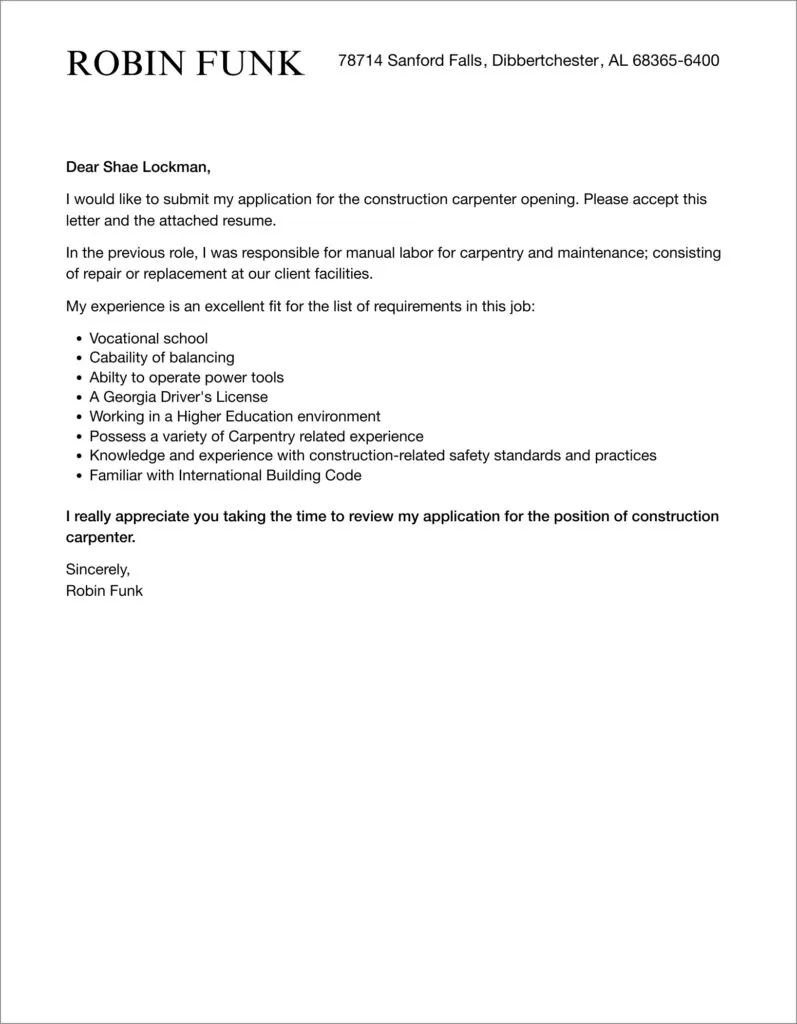
The layout and formatting of your cover letter are essential for creating a professional impression. Keep it clean, easy to read, and well-organized. Use a standard font like Times New Roman or Arial, and maintain a font size of 11 or 12 points. The document should be single-spaced with a space between each paragraph. Use left alignment and avoid full justification, as it can sometimes create uneven spacing. The goal is to make it visually appealing and easy for the reader to follow your message. A well-formatted letter shows that you pay attention to detail, a quality highly valued in carpentry.
Applicant Contact Information

Begin your cover letter by including your contact information in the top left corner. This should include your full name, address, phone number, and email address. Ensure your email address is professional; avoid using nicknames or unprofessional handles. Double-check all the details for accuracy. This section is crucial as it allows the potential employer to easily contact you for an interview. Accuracy here underscores your attention to detail, a vital trait for a carpentry apprentice.
Date
Below your contact information, include the current date. This helps establish when the letter was written and shows you’re up-to-date. The date is placed on the left side, typically a space or two below your contact details. This simple addition ensures your cover letter is properly dated. Proper dating is a common courtesy in professional correspondence.
Employer’s Contact Information
On the left, directly below the date, provide the employer’s contact information. This should include the name of the hiring manager (if known), the company name, and the company’s address. Research who to address your letter to; if you can’t find the hiring manager’s name, use a general title like ‘Hiring Manager.’ Addressing the letter to a specific person demonstrates initiative and attention to detail, which can make a positive impression. Using the correct contact information shows respect for the company.
Salutation
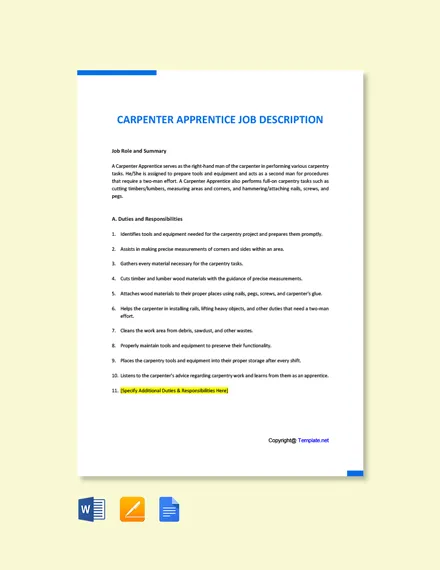
The salutation is your greeting. Start with ‘Dear Mr./Ms./Mx. [Last Name]’ if you know the hiring manager’s name. If not, a formal salutation like ‘Dear Hiring Manager’ is appropriate. Avoid generic greetings like ‘To Whom It May Concern,’ as they can make your letter seem impersonal. The salutation sets the tone for the letter and is your first chance to establish a connection with the reader. A professional greeting shows respect and attention to the details.
Writing the Body of Your Cover Letter
The body of your cover letter is where you convince the employer that you are the perfect fit for the carpentry apprenticeship. This section must be concise, clear, and compelling. It is crucial to highlight your relevant skills and experience. Break the body into a few well-structured paragraphs. Each paragraph should focus on a specific point and transition smoothly to the next. The following components will help you create an impressive cover letter.
Opening Paragraph Show Your Enthusiasm
Your opening paragraph should immediately grab the reader’s attention. Express your enthusiasm for the carpentry apprenticeship and the company. State clearly the position you are applying for and where you saw the job posting. Briefly mention why you are interested in carpentry. This introduction sets the tone for the rest of your letter, creating a positive first impression. Show your passion for the trade right from the start. This demonstrates genuine interest and motivates the hiring manager to keep reading.
Highlight Relevant Skills and Experience

The main section of your cover letter should showcase your skills and any relevant experience. Even if you don’t have extensive professional experience, emphasize any related skills like woodworking, using hand tools, or working with your hands. If you have participated in any relevant projects (school projects, volunteer work), be sure to describe them. Quantify your accomplishments whenever possible, using metrics to highlight your achievements. Mention any relevant coursework, certifications, or training programs you’ve completed. Link your skills directly to the apprenticeship requirements. Demonstrate you have the capacity to perform well and the right mindset.
Showcase your Knowledge
Demonstrate your familiarity with carpentry techniques, tools, and materials. Mention any specific areas of carpentry that interest you (e.g., framing, finishing, cabinet making). If the company specializes in a specific type of carpentry, tailor your letter to reflect that. Mention that you have basic knowledge and are eager to learn more. This shows that you are interested in the company and the trade in general. Your ability to relate your knowledge shows your ability to apply yourself to the work.
Closing the Cover Letter
Your closing is your last chance to leave a lasting impression. It should summarize your key qualifications and express your enthusiasm for the opportunity. A well-crafted closing paragraph reinforces your interest and makes it clear what you want the reader to do next. It’s a strategic opportunity to encourage the employer to take action. The closing paragraph should be concise, positive, and action-oriented.
Express Gratitude and a Call to Action
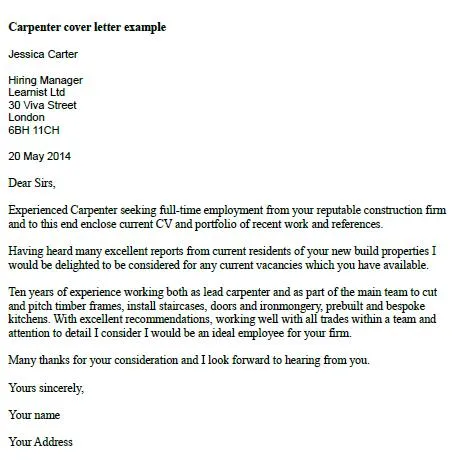
Thank the reader for their time and consideration. Reiterate your interest in the apprenticeship and mention your availability for an interview. Provide a clear call to action, such as ‘I look forward to hearing from you soon’ or ‘I am eager to discuss how my skills can contribute to your team.’ Include your phone number and email address again. A strong call to action prompts the reader to contact you, while expressing your gratitude leaves a positive impression.
Proofreading and Polishing
Before submitting your cover letter, meticulous proofreading and polishing are essential. Errors in grammar, spelling, and punctuation can undermine your professionalism and leave a negative impression. Read your letter carefully, looking for any mistakes. Use spell-check and grammar-check tools, but don’t rely on them entirely. Have a friend, family member, or career advisor review your letter for clarity and accuracy. A polished cover letter shows attention to detail and a commitment to quality, both important in carpentry.
Reviewing for Errors and Clarity
After writing, review your cover letter multiple times. Make sure the language is clear, concise, and easy to understand. Remove any jargon or overly complex sentences. Ensure your letter flows logically and that each paragraph supports your main points. Check for consistency in formatting and tone. Review the letter at least once with fresh eyes. A well-written, error-free cover letter significantly increases your chances of landing a carpentry apprenticeship, so make sure to invest the required time and effort.