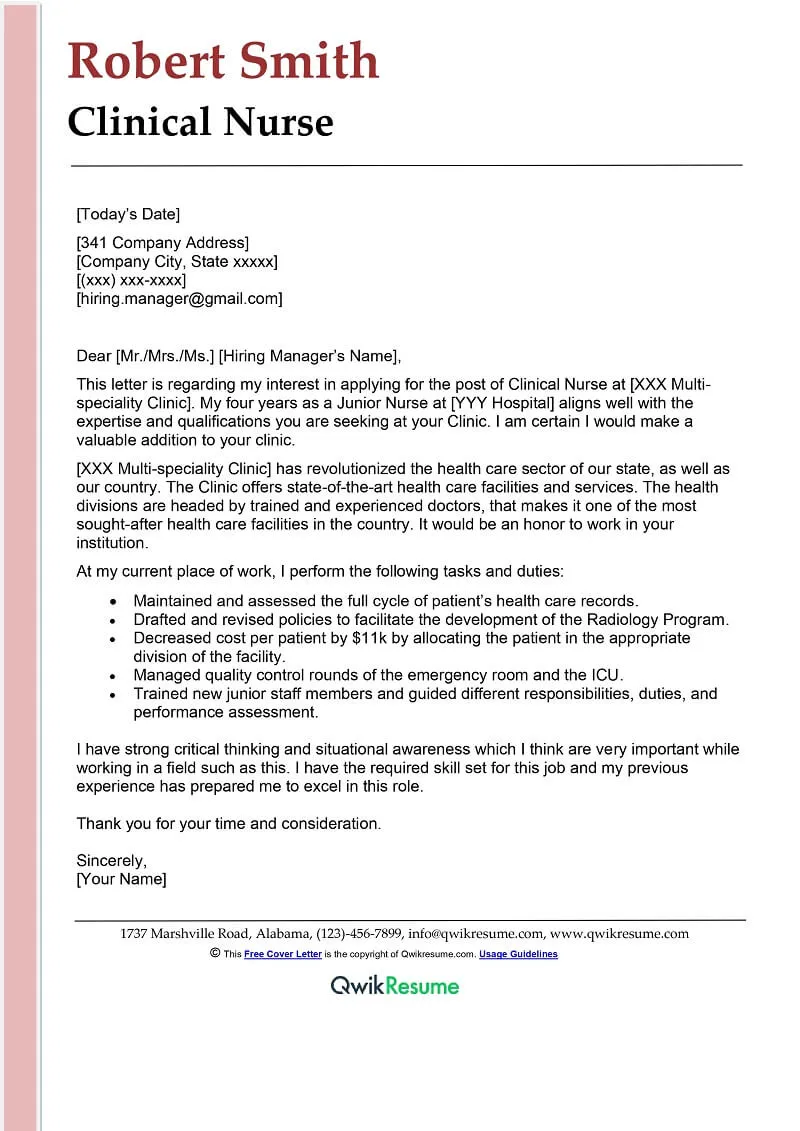
Crafting Your CNA Cover Letter for Hospitals
A compelling CNA cover letter is your first chance to make a strong impression on a hospital hiring manager. It’s more than just a formality; it’s a crucial tool to showcase your skills, experience, and passion for patient care. Your cover letter should complement your resume, providing a narrative that highlights why you’re the perfect fit for the role. Remember that a well-written cover letter is a sign of professionalism, attention to detail, and genuine interest in the position. This guide will provide you with the essential elements to craft a standout CNA cover letter that increases your chances of getting hired at your dream hospital.
Researching the Hospital and Position
Before you begin writing, take the time to research the hospital where you are applying. Visit their website to understand their mission, values, and the specific needs of the department you are interested in. Does the hospital specialize in any particular areas of care, such as geriatric care, rehabilitation, or critical care? Look at the job description carefully. What are the key responsibilities and required qualifications? Tailor your cover letter to address these points directly. Showing that you have done your homework demonstrates your genuine interest in the position and your ability to meet the hospital’s needs.
Highlighting Relevant Skills

Your CNA cover letter is the perfect place to spotlight your key skills. Think about the core competencies a hospital values in its CNAs. These often include excellent patient care, strong communication skills, the ability to work well in a team, and the capacity to remain calm and efficient under pressure. Be specific. Instead of just saying you have good communication skills, provide examples. For instance, you could write about how you effectively communicated with patients and their families to provide emotional support and explain medical procedures. Quantify your achievements whenever possible.
Patient Care and Assistance
Patient care is the heart of a CNA’s role. Highlight your experience in assisting patients with activities of daily living (ADLs), such as bathing, dressing, feeding, and mobility. Discuss any experience you have with specific patient populations or medical conditions. If you have experience in monitoring vital signs, reporting changes in patient condition, or assisting with medical treatments, be sure to include those details. Emphasize your empathy, compassion, and ability to create a supportive and comfortable environment for patients. Remember to showcase your ability to provide holistic care, addressing the physical, emotional, and psychological needs of each patient.
Medical Procedures and Documentation
CNAs are often responsible for assisting with various medical procedures and maintaining accurate patient documentation. Mention your experience with procedures such as taking vital signs, collecting specimens, and assisting with wound care. Explain your knowledge of infection control protocols and your commitment to maintaining a safe environment. Demonstrate your understanding of electronic health records (EHRs) or other documentation systems. Showcase your attention to detail and your ability to accurately record patient information. Accuracy in documentation is critical for patient safety and effective healthcare delivery.
Communication and Interpersonal Skills

Strong communication and interpersonal skills are vital for CNAs. Highlight your ability to communicate clearly and effectively with patients, families, and other members of the healthcare team. Provide examples of your active listening skills, your ability to build rapport with patients, and your capacity to handle difficult conversations with empathy and professionalism. Discuss your experience working in a team environment and your ability to collaborate with nurses, doctors, and other healthcare professionals. Your ability to work well with others is crucial for providing coordinated and comprehensive patient care.
Emphasizing Your CNA Certifications and Experience
Your CNA certification is your most important credential. Clearly state your certification status, including the issuing state and the expiration date. Specify the number of years of experience you have working as a CNA and the types of settings where you have worked (e.g., hospitals, nursing homes, home healthcare). Mention any specialized training or certifications you have, such as BLS (Basic Life Support) or advanced patient care certifications. Providing a clear overview of your credentials ensures that the hiring manager knows you meet the basic requirements for the position.
Formatting Your CNA Cover Letter
A well-formatted cover letter is easy to read and makes a positive first impression. Use a professional font such as Times New Roman, Arial, or Calibri, and maintain a consistent font size (11 or 12 points). Keep your letter concise, ideally no more than one page. Use clear headings and subheadings to break up the text and make it easier to scan. Use bullet points to highlight key skills or accomplishments. Ensure your letter is well-organized, with a clear introduction, body paragraphs that highlight your skills and experience, and a strong conclusion. Maintain consistent margins and spacing to ensure a clean and professional look.
Contact Information and Salutation

Start your cover letter with your contact information, including your name, phone number, email address, and mailing address. Follow this with the date and the hiring manager’s name and title, if available. Address the hiring manager by name (e.g., “Dear Ms. Smith”) if you know it. If you don’t know the hiring manager’s name, use a professional salutation such as “Dear Hiring Manager.” Avoid generic greetings such as “To Whom It May Concern.” A personalized greeting shows that you have taken the time to research the position.
Body Paragraphs Tips
The body paragraphs are the heart of your cover letter. Start with a strong opening paragraph that states the position you are applying for and how you learned about it. In the subsequent paragraphs, highlight your relevant skills and experience. Use the job description as a guide, addressing the key requirements one by one. Provide specific examples of your accomplishments. Use the STAR method (Situation, Task, Action, Result) to provide context and showcase your achievements. Avoid simply repeating the information in your resume; expand on your experiences and demonstrate your personality.
Closing the Letter
In your closing paragraph, reiterate your interest in the position and express your enthusiasm for the opportunity. Thank the hiring manager for their time and consideration. Include a call to action, such as stating that you are available for an interview and providing your contact information again. A strong conclusion leaves a lasting positive impression and encourages the hiring manager to take the next step. It’s also a good opportunity to briefly mention any specific skills that align with the hospital’s mission or values.
Proofreading and Editing Your Cover Letter

Before submitting your cover letter, proofread it carefully for any errors in grammar, spelling, and punctuation. Even small errors can undermine your credibility. Read your letter aloud to catch any awkward phrasing or unclear sentences. Ask a friend, family member, or career counselor to review your letter and provide feedback. Ensure that your cover letter is free of typos and that it presents you in the best possible light. A polished cover letter shows that you pay attention to detail, which is a critical skill for a CNA.
By following these steps, you can create a compelling CNA cover letter that highlights your skills, experience, and passion for patient care, increasing your chances of getting hired at a hospital.