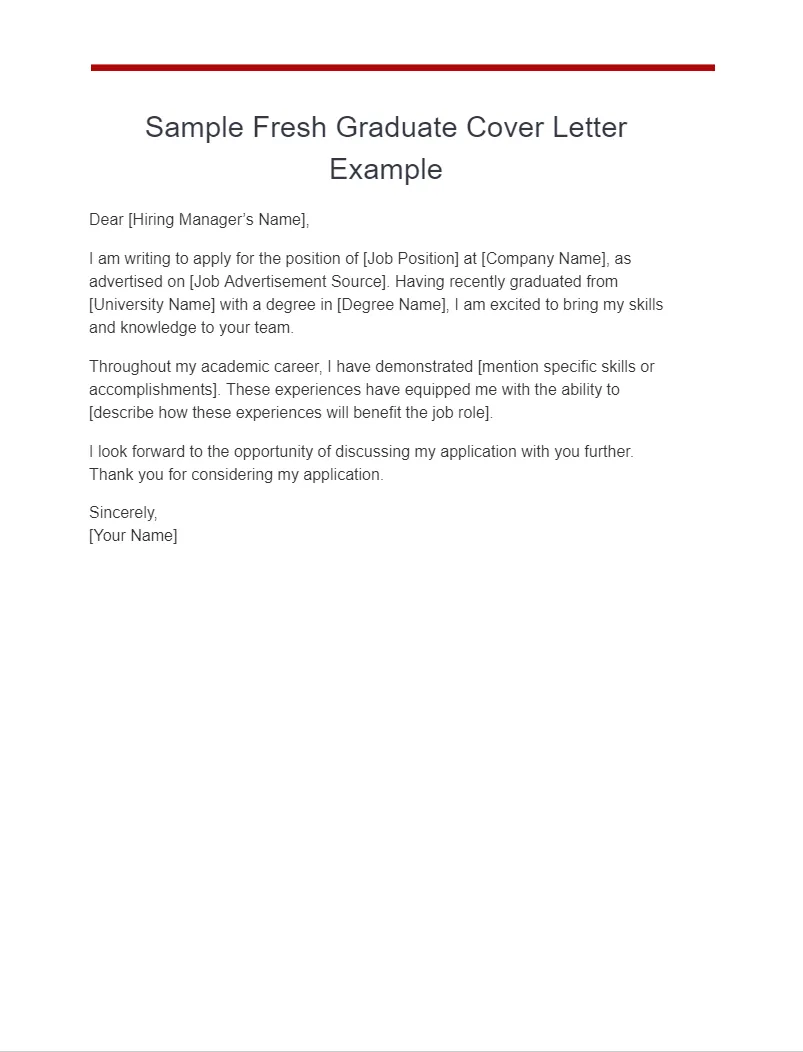
5 Ways to Impress Employers with Your Cover Letter
As a college graduate, you’re stepping into a competitive job market. A well-crafted cover letter is your first chance to make a strong impression and differentiate yourself from other applicants. It’s not just a formality; it’s a crucial tool to showcase your personality, skills, and enthusiasm for the role. A great cover letter complements your resume, providing context and depth that a list of accomplishments can’t always convey. By following these five key strategies, you can create a cover letter that grabs the attention of hiring managers and significantly increases your chances of landing an interview. Remember, your cover letter is an extension of your personal brand and a reflection of your commitment to excellence. Take the time to perfect it, and you’ll be well on your way to career success. Preparing an impactful cover letter is an investment in your future, so approach it with care and attention to detail. This guide will show you how to highlight your strengths, demonstrate your understanding of the job, and ultimately, impress potential employers.
Highlight Your Skills and Achievements
Your cover letter is your opportunity to bring your resume to life. Instead of simply listing your skills, use specific examples to demonstrate how you’ve utilized them in the past. Start by identifying the key skills that the job description emphasizes, and then provide brief but compelling narratives. For instance, if the job requires strong communication skills, describe a project where you successfully presented to a large audience, highlighting the positive outcome. Did you lead a team project that resulted in substantial improvements? Mention it, including the specific metrics that prove your impact. This approach allows employers to understand your capabilities and visualize you succeeding in the role. Showing, rather than simply telling, makes your application far more memorable and impactful. Use action verbs to start each sentence, and make sure your examples are recent and relevant to the position. Consider using the STAR method – Situation, Task, Action, Result – to structure your stories effectively. This technique helps you concisely and clearly convey your value proposition.
Quantify Your Accomplishments

Whenever possible, quantify your achievements to provide concrete evidence of your success. Instead of saying you improved sales, state that you increased sales by 15% in one quarter. If you streamlined a process, mention how much time or money you saved. Numbers are compelling and make your accomplishments more believable. When describing your work experience, be specific about the results you delivered. For example, if you managed a social media campaign, include metrics such as the increase in followers, engagement rate, or website traffic. If you volunteered for a project, mention the number of hours you contributed and what was accomplished. Quantification provides tangible proof of your abilities and allows employers to easily assess your value. The more data you can include, the more persuasive your cover letter will be. This is particularly important for college graduates who may have limited professional experience, as it helps to showcase the impact of their academic and extracurricular activities.
Tailor Your Cover Letter to the Job
Generic cover letters are easily identified and often discarded. To truly impress, customize each cover letter for the specific job you’re applying for. Carefully review the job description and identify the key requirements and desired qualifications. Then, in your cover letter, explain how your skills and experiences align with these needs. Don’t just repeat the job description, but explain how your unique experiences make you the ideal candidate. Highlight the relevant projects, coursework, or extracurricular activities that demonstrate your capabilities. This shows that you’ve taken the time to understand the role and are genuinely interested in the opportunity. When you customize, you show you care about the specific position and the company. Tailoring shows your attention to detail, research, and genuine interest in the role. Always prioritize matching the requirements of the particular job to your skills and experience. Show how you meet their needs.
Research the Company and Show Enthusiasm
Before writing your cover letter, research the company thoroughly. Understand their mission, values, and recent activities. Show that you are genuinely interested in their work. Mention specific projects, products, or initiatives that resonate with you. Express your enthusiasm for the company’s culture and the opportunity to contribute to their goals. Referencing the company’s achievements demonstrates your understanding of their operations. This research might include reviewing their website, social media profiles, and recent news articles. Showing you understand the company’s goals and challenges makes you appear more committed. This information can be used to personalize your letter and show a deeper connection. Use this knowledge to connect your skills and ambitions with the company’s strategic direction. When you demonstrate a deep interest, you’re far more likely to stand out from other applicants.
Demonstrate Your Understanding of the Role

Beyond researching the company, demonstrate that you understand the role itself. Explain how your skills and experiences directly relate to the job responsibilities outlined in the description. Provide specific examples of how you have tackled similar tasks in the past. By clearly demonstrating that you understand the requirements of the role, you reassure the hiring manager that you can step in and start contributing immediately. To achieve this, carefully analyze the job description, and then provide concise examples of how your skills meet the job’s requirements. Indicate any software, tools, or skills mentioned in the job description and how you are familiar with them. Consider the challenges of the role and express your enthusiasm for tackling them. Emphasize your ability to solve problems and contribute to team goals. This shows your understanding of what’s expected and your ability to perform the job effectively.
Use Action Verbs and Strong Language
Your cover letter should be dynamic and engaging. Start each sentence with strong action verbs to showcase your accomplishments. For example, instead of saying “I was responsible for,” use phrases like “Managed,” “Developed,” “Implemented,” or “Led.” Avoid passive voice and generic phrases. Use powerful language to convey your enthusiasm and confidence. This will make your letter more interesting and will highlight your abilities. Instead of saying, “I have experience with,” write, “I am proficient in.” Use positive and assertive language throughout your cover letter. Your tone should be confident without being arrogant. The language you use plays a significant role in how you are perceived. This reinforces your skills and keeps your letter engaging. A well-chosen vocabulary is essential to projecting professionalism.
Proofread and Edit Meticulously
Typos and grammatical errors are the quickest ways to undermine your credibility. Before submitting your cover letter, proofread it multiple times. Use grammar checkers, but also read it carefully yourself. Ask a friend or career advisor to review it as well. A fresh pair of eyes can often catch mistakes that you might miss. Ensure that your formatting is consistent, and that all contact information is accurate. Pay close attention to sentence structure, punctuation, and word choice. A polished cover letter reflects your attention to detail and your commitment to quality. Even small errors can create a negative impression. Thorough proofreading shows that you care about presenting a professional image. Ensure a flawless cover letter to ensure that your application makes the best possible impression.
Format Your Cover Letter for Readability

Your cover letter should be easy to read. Use a clear and professional format. Structure your letter with well-defined sections, paragraphs, and bullet points. This helps the hiring manager easily scan your letter and find the information they are looking for. Ensure there is adequate white space between paragraphs to avoid a cluttered look. Use a standard font and font size. A well-formatted cover letter shows your attention to detail and respect for the reader’s time. Think of the layout like a well-designed website. It makes the content accessible and helps to emphasize the most important points. Good formatting ensures that the reader can quickly grasp your qualifications and interest in the role. A well-formatted document gives a positive impression.
Choose a Professional Font
The font you select can impact your cover letter’s overall appearance. Stick to a professional and readable font, like Times New Roman, Arial, or Calibri. Avoid overly decorative or informal fonts. Keep the font size between 10 and 12 points for optimal readability. Choose a font that is easy on the eyes and suitable for professional correspondence. Ensure the font is consistent throughout your letter. A professional font choice contributes to the overall impression of professionalism and attention to detail. Stick with standard fonts that have become the norm in professional communications. The appropriate font choice makes a positive first impression.
Use Proper Spacing and Margins
Proper spacing and margins make your cover letter more visually appealing and easier to read. Use 1-inch margins on all sides of your document. Double-space between paragraphs to provide enough visual breaks. Ensure consistent spacing throughout your letter. Avoid overcrowding your text, as this can make the document seem overwhelming. Good spacing allows the reader to easily digest the information and helps them concentrate on the content. Well-spaced text shows professionalism and helps give a good impression of your attention to detail. This helps improve readability and demonstrates attention to detail, making your letter look polished and well-organized. Well-organized text is essential for a professional appearance.
Focus on the Employer’s Needs

The most effective cover letters are those that focus on the employer’s needs rather than solely on your own qualifications. While it’s important to highlight your skills and achievements, always frame them in the context of how they can benefit the company. Explain how your skills match the job requirements and how you can contribute to the company’s success. Demonstrate that you understand the company’s goals and are passionate about helping them achieve them. This shift in focus will make your letter more compelling and demonstrate a strong understanding of the role. By addressing their needs directly, you show that you are focused on providing value. Tailor your letter to show you understand what the employer is looking for. Demonstrate the value you bring to the organization, and show how your skills fit the requirements.