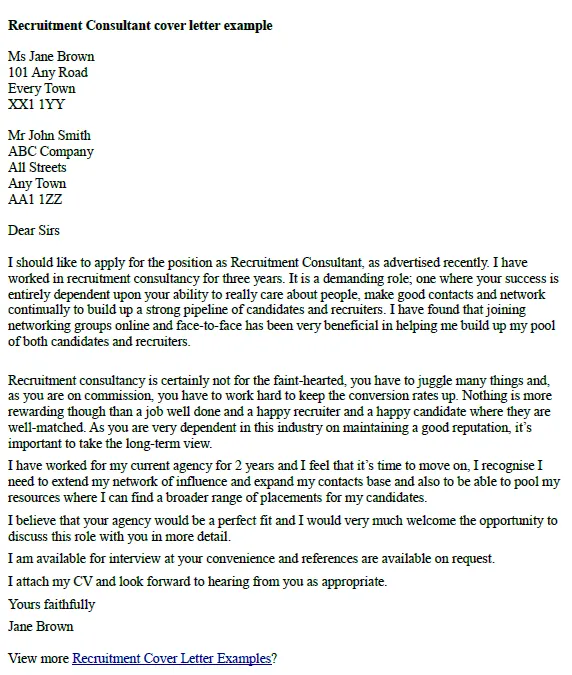
Why a Cover Letter Matters to Recruiters
In the competitive world of job applications, a cover letter is your first impression. It’s your opportunity to go beyond the bullet points of your resume and showcase your personality, enthusiasm, and suitability for a role. For recruitment agents, who are often sifting through dozens, if not hundreds, of applications, a well-crafted cover letter can be the difference between getting shortlisted and being overlooked. A compelling cover letter grabs their attention and makes them want to learn more about you, making you stand out from the crowd. It shows you’ve taken the time to understand the role and the company, demonstrating your genuine interest and commitment. This initial effort helps establish you as a serious candidate, increasing your chances of landing an interview.
Understanding the Recruitment Agent’s Perspective
Recruitment agents are constantly seeking the best talent to fill their clients’ vacancies. They have a clear understanding of their client’s needs and the specific requirements of the job roles. They are looking for candidates who not only possess the right skills and experience but also fit the company culture and demonstrate a strong understanding of the industry. They rely on cover letters to quickly assess a candidate’s suitability. A cover letter provides agents with vital information about your motivations, career goals, and personality, helping them determine whether you’re a good match for their clients. Furthermore, a well-written cover letter simplifies their job, allowing them to swiftly identify candidates who meet the essential criteria and are worth presenting to their clients.
The Importance of Tailoring Your Cover Letter

Generic cover letters that are mass-produced without any modification are easily recognized by recruiters. Such an approach sends the message that you haven’t invested much effort and are not particularly interested in the specific opportunity. Tailoring your cover letter is key to demonstrating your sincere interest and making a strong connection with the recruiter. Research the specific job requirements, the company, and the recruitment agency. Then, customize your cover letter to address the specific needs and expectations outlined in the job description. Highlight the skills and experiences most relevant to the role, and explain how you can contribute to the company’s success. This level of personalization shows that you’ve taken the time to understand the position and are serious about the job, setting you apart from applicants who rely on a standard template. Remember, a tailored cover letter showcases your genuine interest in the role and increases your likelihood of getting noticed.
Key Elements of a Winning Cover Letter
Opening Statement — Captivate Immediately
The opening paragraph is your chance to grab the recruiter’s attention. Instead of starting with a generic greeting, make a powerful statement that quickly highlights your key skills and your understanding of the role. Mention the specific job you are applying for and where you saw the advertisement. Briefly summarize your relevant experience and express your enthusiasm for the opportunity. For example, you can state the position, followed by a powerful sentence about your most relevant skill that matches the requirements. Keep your opening concise, compelling, and tailored to the specific job. A strong opening creates a positive first impression and encourages the recruiter to keep reading, making them more likely to consider your application seriously.
Highlighting Relevant Skills and Experience

The core of your cover letter should focus on demonstrating how your skills and experience align with the job requirements. Carefully review the job description and identify the key skills and qualifications the recruiter is looking for. Then, provide specific examples from your previous experiences that showcase these skills. Use action verbs to describe your accomplishments and quantify your achievements whenever possible. This section is your chance to prove that you not only meet the requirements but also exceed them. Tailor the content to the specific role, and don’t just list your responsibilities; instead, focus on what you achieved and the positive impact you made. This makes your cover letter more convincing and shows the recruiter how you can contribute to their client’s success.
Quantifying Your Achievements
Whenever possible, quantify your achievements to provide concrete evidence of your skills and value. Recruiters are impressed by numbers, percentages, and specific results. Instead of stating that you ‘improved sales,’ specify by how much – ‘increased sales by 15% in one quarter’. Instead of claiming you ‘managed a team,’ mention the team size, e.g., ‘managed a team of 10 employees’. Quantifying your achievements adds credibility and demonstrates your impact. Using numbers and metrics helps the recruiter quickly assess the value you brought to previous roles. This level of detail makes your cover letter much more compelling and helps you stand out from other candidates.
Showcasing Your Personality and Enthusiasm
While it is crucial to be professional, your cover letter should also reflect your personality and enthusiasm for the role. Let your genuine interest in the job and the company shine through. Use a conversational tone and express your excitement about the opportunity. Talk about what appeals to you about the company’s mission or values, or mention any specific projects that excite you. This shows the recruiter that you are more than just a list of skills; you’re a person who is genuinely interested in the job. Being enthusiastic and showing your passion will make you more memorable and can make the recruitment agent more inclined to present your application to their client.
Call to Action — Make it Easy for the Agent

End your cover letter with a clear and direct call to action. Instead of simply closing with a general thank you, tell the recruiter what you want them to do next. Express your availability for an interview and express your eagerness to discuss the opportunity further. You can also mention that you have attached your resume for their review and provide your contact information again to make it easy for them to reach out. Ensure your closing is positive and professional, and it reinforces your interest. This is your final chance to leave a positive impression and make it easy for the recruiter to take the next step in the process.
Formatting and Presentation Tips
Using a Professional Tone
The tone of your cover letter should be professional and business-like. Avoid casual language, slang, or overly familiar expressions. Use formal greetings such as ‘Dear Mr./Ms./Mx. [Last Name]’ or ‘Dear [Recruitment Agent Name]’ if you know it. Maintain a respectful and polite tone throughout the letter. Even when expressing enthusiasm, keep it professional. Your goal is to impress the recruiter with your skills and expertise, not with overly informal language. By maintaining a professional tone, you demonstrate that you take the job application seriously and are capable of communicating effectively in a professional setting.
Proofreading and Editing for Perfection

Errors in your cover letter can undermine your credibility. Proofread your cover letter carefully for any grammatical errors, typos, and inconsistencies. Read it out loud to catch any awkward phrasing or unclear sentences. Ask a friend, family member, or career advisor to review it as well. Fresh eyes can often spot mistakes that you might have missed. Pay close attention to spelling, punctuation, and the flow of your sentences. Ensure that your contact information is correct and that the formatting is consistent throughout. A polished and error-free cover letter shows your attention to detail and professionalism, which is essential for any job application. Always remember to run a spell check.
Tailoring Your Cover Letter for Different Roles
Researching the Recruitment Agency
Before submitting your cover letter, research the recruitment agency to gain a better understanding of its focus and culture. Visit their website to learn about their specialties, the industries they serve, and their values. Check LinkedIn to see if you can identify the recruiter you are contacting and gather some insights about them. Understanding the agency’s background helps you customize your cover letter to align with their expectations. Mentioning your knowledge of the agency in your cover letter shows that you have done your homework and are genuinely interested in working with them. This small step can make a significant difference in how they perceive your application.
Adapting Your Letter for Specific Job Types

Adapt your cover letter based on the type of job you are applying for. If it is a highly technical position, emphasize your technical skills and experience. If the role requires strong communication skills, highlight your ability to communicate clearly and effectively. Tailor your letter to the industry. For example, if you’re applying for a position in the creative industry, you can be more creative in your approach. However, in more formal industries, it is essential to maintain a professional tone. Pay attention to the specific requirements of each job and customize your letter accordingly. By tailoring your cover letter to the job requirements, you increase your chances of making a strong connection with the recruiter and demonstrating your suitability for the role.
In conclusion, writing a compelling cover letter to a recruitment agent is a critical step in your job search. By understanding the recruiter’s perspective, tailoring your letter, and highlighting the key elements of your qualifications, you can significantly increase your chances of getting noticed and landing your dream job. Remember to always proofread your letter and tailor it to each specific job. Good luck with your job hunt!