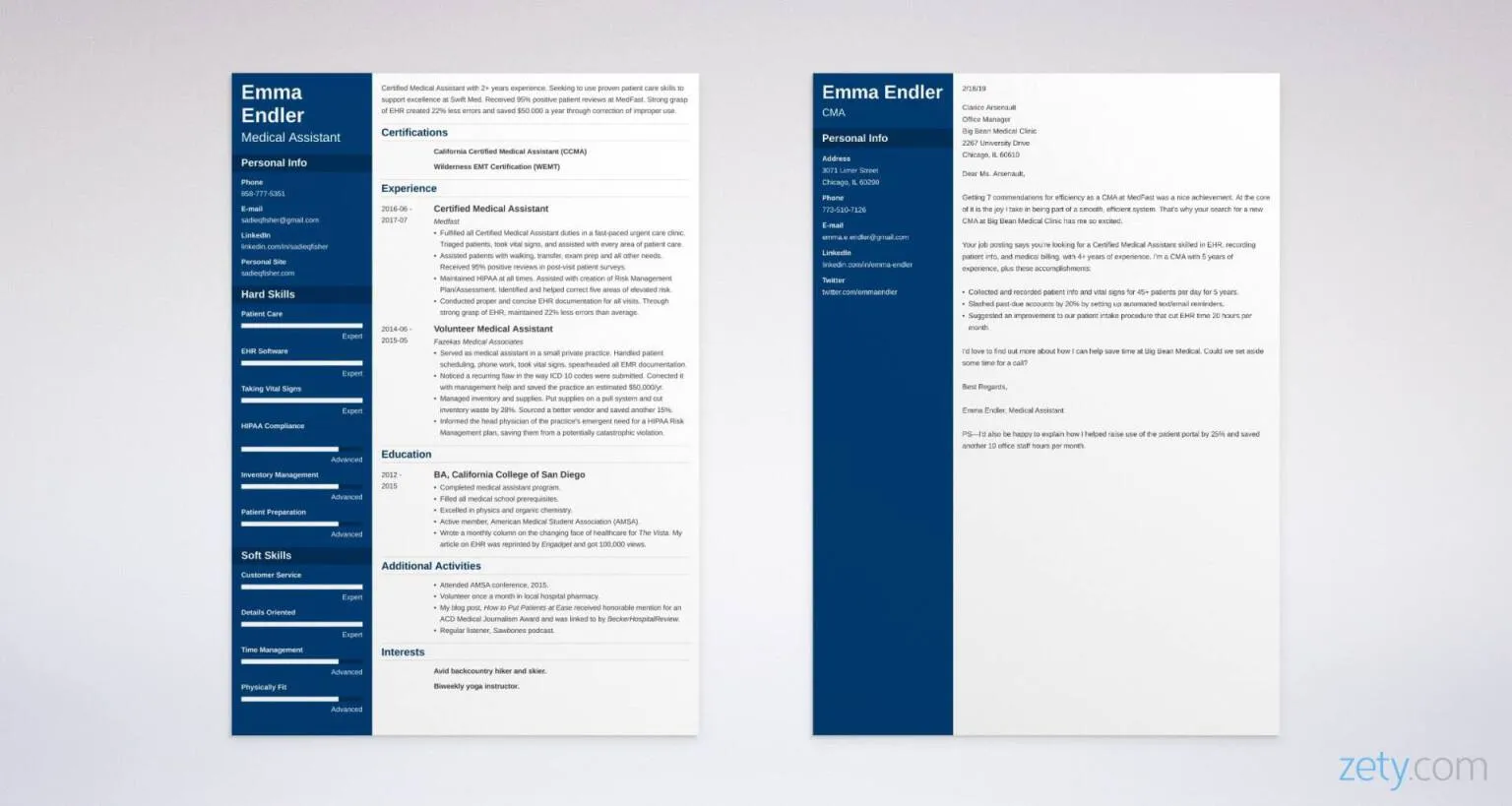
Crafting a Compelling Medical Assistant Cover Letter
A well-crafted cover letter is your first opportunity to impress a potential employer and secure an interview. For medical assistants, a cover letter isn’t just a formality; it’s a chance to showcase your skills, experience, and personality, setting you apart from other applicants. This guide provides a comprehensive cover letter example for medical assistants, offering insights into how to structure your letter, highlight your key qualifications, and ultimately, land your dream job in healthcare. Remember that each cover letter must be tailored to the specific job and the clinic or hospital to which you are applying. Avoid generic letters and focus on the unique aspects of the position and your qualifications.
Highlighting Your Skills
Your cover letter should clearly demonstrate the skills and abilities that make you an ideal medical assistant. This includes both clinical and administrative skills, as well as essential soft skills that contribute to a positive patient experience and efficient healthcare operations. Focus on the skills listed in the job description and provide concrete examples of how you have applied these skills in previous roles. Use action verbs to describe your accomplishments and quantify your achievements whenever possible.
Clinical Skills

Medical assistants are expected to perform a wide range of clinical duties. In your cover letter, emphasize your proficiency in these areas. Mention specific skills like taking patient histories and vital signs, assisting with examinations and procedures, administering medications (if certified), and performing phlebotomy. Highlight any certifications you hold, such as Certified Clinical Medical Assistant (CCMA), and any experience with electronic health records (EHR) systems. For example, ‘Proficient in taking patient histories, vital signs, and assisting physicians during examinations. Experienced in phlebotomy and administering medications under physician supervision. Certified in CPR and familiar with various EHR systems.’
Administrative Skills
Administrative skills are equally important for medical assistants. These skills contribute to the smooth operation of a medical office. Showcase your ability to manage patient appointments, handle insurance verification, process billing, and maintain patient records. If you have experience with scheduling software, electronic health records, or insurance claim submission, be sure to include it. Emphasize your organizational skills, attention to detail, and ability to communicate effectively with patients and other healthcare professionals. For instance, ‘Highly organized and detail-oriented, with experience in managing patient appointments, handling insurance verification, and processing billing. Proficient in using [Specific software or EHR system].’
Soft Skills for Success
In addition to technical skills, highlighting your soft skills is crucial. Soft skills are the personal attributes that enable you to interact effectively and harmoniously with other people. These skills contribute to a positive work environment and patient satisfaction. Demonstrate your ability to work as part of a team, communicate clearly, show empathy, and handle stressful situations with professionalism. These qualities often make the difference between a good medical assistant and a great one.
Communication Skills

Effective communication is paramount in healthcare. Showcase your ability to communicate clearly and empathetically with patients, physicians, and other staff members. Highlight your ability to explain medical information in a way that patients can understand, actively listen to their concerns, and provide compassionate care. Mention any experience you have with translating or interpreting, if applicable. For example, ‘Excellent communication skills, with the ability to explain medical information clearly and empathetically. Skilled in active listening and providing compassionate patient care. Proficient in communicating with patients from diverse backgrounds.’
Teamwork and Collaboration
Medical assistants work closely with doctors, nurses, and other healthcare professionals, making teamwork essential. Emphasize your ability to collaborate effectively with others, support the team’s goals, and maintain a positive and cooperative attitude. Provide examples of how you have worked in a team environment, contributed to a positive workplace culture, and resolved conflicts constructively. ‘A strong team player with a proven ability to collaborate effectively with physicians, nurses, and other staff members. Committed to creating a positive and supportive work environment. Experience in resolving conflicts constructively.’
Structuring Your Cover Letter
The structure of your cover letter is as important as its content. A well-organized letter is easy to read and allows the hiring manager to quickly understand your qualifications. Use a professional format, including a clear header, a proper salutation, concise body paragraphs, and a strong closing. Keep your cover letter to one page, ensuring you highlight the most relevant information. The following sections provide a detailed breakdown of how to format your medical assistant cover letter effectively. Remember, the formatting of your cover letter is part of your professional representation.
Header and Contact Information

Start your cover letter with your contact information. Include your full name, phone number, email address, and LinkedIn profile URL (optional). Below your contact information, include the date and the hiring manager’s name, title, and the clinic or hospital’s address. Ensuring you include this information shows your attention to detail and your interest in the specific position. Using the correct name of the hiring manager is a great way to personalize your letter.
Professional Salutation
Use a professional salutation, such as ‘Dear Mr./Ms. [Last Name of Hiring Manager]’. If you are unsure of the hiring manager’s name, use ‘Dear Hiring Manager’ or ‘Dear [Clinic/Hospital Name] Hiring Team’. Avoid overly casual greetings. It is crucial to research the name of the hiring manager and address the letter to them. Addressing the letter by the hiring manager’s name personalizes your letter, making it more memorable and showing your interest in the position.
Body Paragraphs
The body paragraphs are where you showcase your skills and experience. Divide your cover letter into three well-structured paragraphs: an introductory paragraph to grab attention, a middle paragraph to showcase your skills and experience, and a concluding paragraph to express your enthusiasm and fit. Each paragraph serves a specific purpose in communicating your qualifications and securing an interview. Each paragraph should be concise and focused on conveying your message effectively.
First Paragraph Grab Attention

Start your cover letter with a strong opening statement that immediately grabs the hiring manager’s attention. Clearly state the position you are applying for and how you learned about the opportunity. Briefly mention your key qualifications and express your enthusiasm for the role and the organization. This paragraph sets the tone for the rest of your letter and encourages the reader to continue. The introductory paragraph should make an impact on the reader, showing your interest, enthusiasm, and qualification for the position.
Second Paragraph Showcase Skills and Experience
In the middle paragraph, provide detailed information about your skills and experience. Focus on the skills and experience that are most relevant to the job description. Use specific examples to illustrate your accomplishments and quantify your achievements whenever possible. For example, you might mention the number of patients you assisted per day, or any special projects you completed. Connect your qualifications with the requirements of the role. Ensure you tailor the content of this paragraph to match the specific requirements of the job you are applying for.
Third Paragraph Express Enthusiasm and Fit
In the concluding paragraph, express your enthusiasm for the position and the organization. Explain why you are a good fit for the role and what you can bring to the team. Reiterate your interest in the opportunity and thank the hiring manager for their time and consideration. Conclude by stating your availability for an interview and providing your contact information again. The concluding paragraph is an opportunity to restate your interest and enthusiasm for the position and clinic.
Concluding Your Letter

The conclusion is the final impression you leave with the hiring manager. It should reiterate your interest in the position and encourage them to take action. Use a professional closing and sign your name. It is a key opportunity to summarize your qualifications and enthusiasm for the position.
Call to Action
End your cover letter with a clear call to action. Express your availability for an interview and provide your contact information. Thank the hiring manager for their time and consideration. Make it easy for them to contact you. This demonstrates your eagerness and professionalism.
Proper Closing and Signature
Use a professional closing, such as ‘Sincerely’ or ‘Best regards’. Sign your name (if submitting a physical letter) or type your full name. Make sure your signature is legible. This is the final touch of professionalism. It is a great way to conclude your letter.
Tailoring Your Letter to the Job
The most effective cover letters are tailored to the specific job and the organization. This means customizing your letter to match the job description and highlighting the skills and experience that are most relevant to the position. Avoid using a generic cover letter that you send to multiple employers. Instead, take the time to research the employer and the specific requirements of the role. This will significantly increase your chances of getting noticed and landing an interview.
Researching the Employer
Before writing your cover letter, research the clinic or hospital. Visit their website, read patient testimonials, and learn about their mission, values, and services. This information will help you tailor your letter to demonstrate your genuine interest in the organization and your understanding of their needs. Show that you share their values and demonstrate your commitment to providing quality patient care. Researching the employer is a great way to show genuine interest in the company and that you care about the values and mission of the clinic.
Matching Skills to Requirements
Carefully review the job description and identify the key skills and qualifications the employer is seeking. Then, highlight your relevant experience and skills in your cover letter. Provide specific examples of how you have used these skills in previous roles and the positive outcomes you achieved. Make a list of the skills required on the job description and match them to your experience to highlight your skills and experience.
Showcasing Relevant Experience
Focus on your experience that is most relevant to the job. Include details about your responsibilities, accomplishments, and the results you achieved. Use action verbs to describe your contributions and quantify your achievements whenever possible. For instance, instead of saying ‘Assisted with patient care,’ say ‘Assisted an average of 30 patients daily with vital signs, medication administration, and examination preparation, resulting in a 98% patient satisfaction rate.’ Show your skills and how your skills meet the requirements of the job. Include information that shows why you are a great fit.
Proofreading and Editing
Before submitting your cover letter, proofread it carefully for any errors in grammar, spelling, and punctuation. Ask a friend or family member to review your letter as well. A well-written, error-free cover letter demonstrates your attention to detail and professionalism. Ensure that your letter is clear, concise, and easy to read. Proofreading your cover letter is a great way to show professionalism and attention to detail. Making sure your cover letter has correct grammar, spelling, and punctuation will surely impress the hiring manager.