The Power of a Great Cover Letter
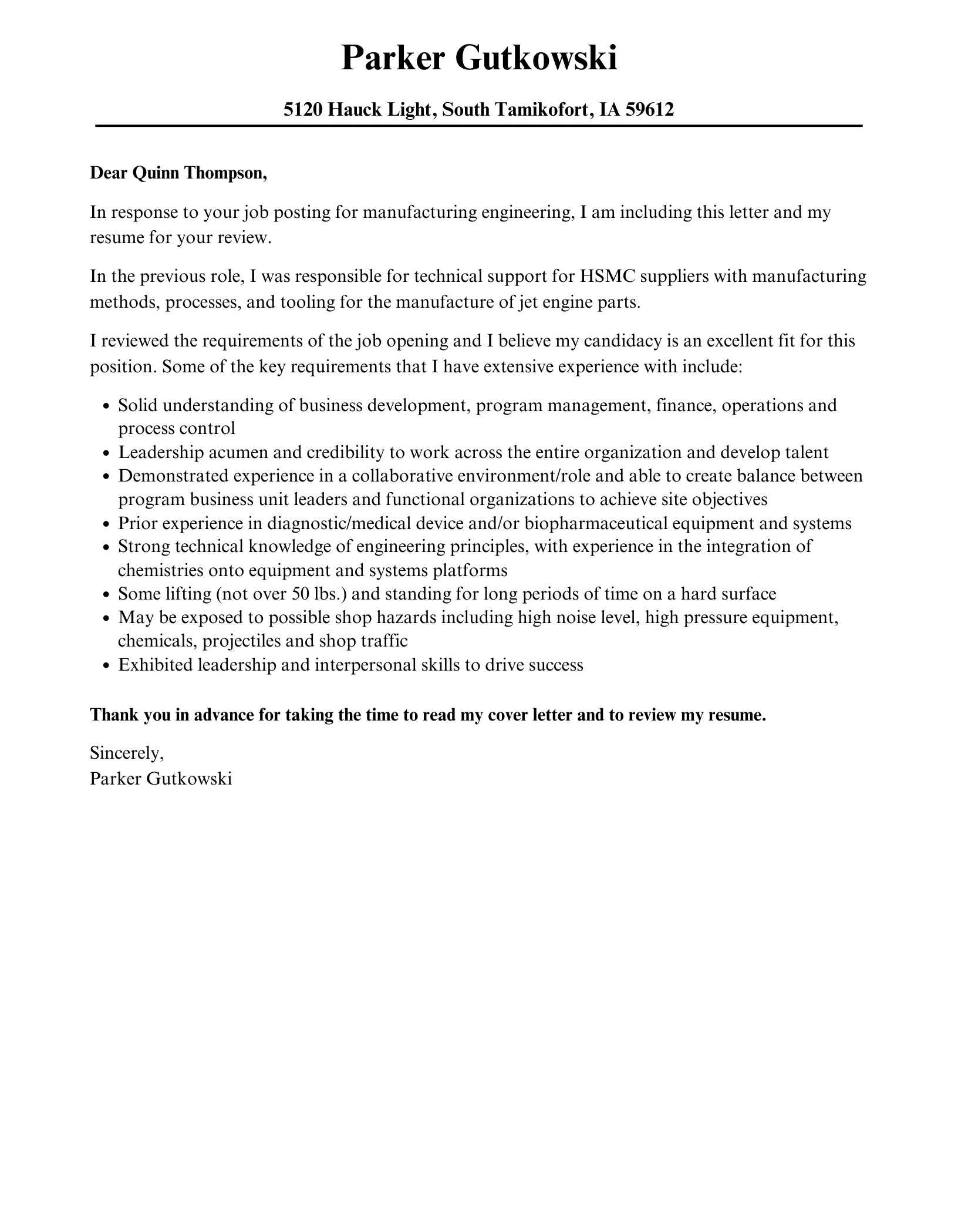
In the competitive world of manufacturing, a well-crafted cover letter can be your golden ticket to landing your dream job. More than just a formality, a cover letter provides you with the opportunity to showcase your personality, passion, and qualifications in a way that a resume alone cannot. It’s your first chance to make a strong impression on a hiring manager, setting the stage for a successful application. By highlighting your relevant skills, experience, and enthusiasm, you can significantly increase your chances of getting noticed and securing an interview. A compelling cover letter demonstrates your genuine interest in the role and the company, making you stand out from the crowd of applicants.
Why Cover Letters Matter in Manufacturing
Manufacturing roles often require a specific blend of technical expertise and soft skills. A cover letter lets you articulate how your unique combination of abilities aligns with the job’s demands. It allows you to elaborate on your experience, explaining how you’ve applied your skills in past roles and the positive results you achieved. This is particularly important in manufacturing, where demonstrating your understanding of processes, equipment, and safety protocols is crucial. By using specific examples and quantifiable achievements, you can demonstrate the value you bring to a potential employer. A strong cover letter confirms that you are not only qualified but also a great fit for the company culture.
Highlighting Relevant Skills

The core of an effective cover letter lies in its ability to highlight the skills that align with the job description. Carefully review the job posting and identify the key requirements. Then, structure your cover letter to demonstrate how your skills and experience meet these requirements. This targeted approach shows the hiring manager that you have taken the time to understand the role and are well-suited to succeed. Use the STAR method (Situation, Task, Action, Result) to describe your achievements in previous roles. This provides concrete evidence of your abilities and helps you stand out. It ensures the hiring manager can easily see the value you bring to the table.
Key Skills to Showcase
Technical Skills
Technical skills are the foundation of any successful manufacturing career. Your cover letter should highlight specific technical competencies relevant to the role. Mention any experience with machinery, software, and tools. If the role requires experience with CNC machines, CAD software, or specific manufacturing processes, be sure to mention them. Including certifications or training programs you have completed can further strengthen your application. Quantify your achievements whenever possible. For example, you might mention how you improved production efficiency by a certain percentage or reduced downtime through proactive maintenance. This level of detail shows that you have a strong understanding of manufacturing operations.
Be sure to align your skills with those requested in the job advertisement. For example, if the job posting mentions a need for experience with specific types of machinery, then make sure to highlight your relevant experience. Detail your proficiency with relevant equipment or software and quantify results from your work if possible, such as improvements in efficiency or reductions in defects.
Soft Skills
Soft skills are equally important in the manufacturing sector. They encompass the interpersonal and personal attributes that enable you to interact effectively with others, solve problems, and contribute to a positive work environment. Highlight skills like teamwork, communication, problem-solving, and attention to detail. Manufacturing environments often require working in teams, so demonstrate your ability to collaborate and contribute effectively. Mention any experiences where you successfully resolved a production issue or improved a process through teamwork. Focus on how you use these skills to improve efficiency, maintain safety standards, and contribute to a positive work environment.
Good communication is crucial for understanding instructions and reporting issues. Problem-solving skills are essential for troubleshooting issues and finding solutions. Showcasing these soft skills, combined with your technical expertise, makes you a well-rounded candidate.
Cover Letter Formatting
The format of your cover letter is just as important as its content. A well-formatted cover letter is easy to read, professional-looking, and reflects attention to detail. Use a clear and concise layout, with appropriate spacing and a professional font. Keep your cover letter to one page, focusing on the most relevant information. A well-formatted cover letter shows that you pay attention to detail. Use a professional-looking font such as Arial, Calibri, or Times New Roman. Ensure proper spacing between paragraphs and sections. A clean, uncluttered layout makes your cover letter visually appealing and easier to read, improving the overall impression on the hiring manager.
Header and Contact Information
Start your cover letter with a professional header that includes your contact information. This should include your full name, address, phone number, and professional email address. Also, include the date and the hiring manager’s name and title if known. If you do not know the hiring manager’s name, use a general salutation such as “Dear Hiring Manager.” Ensure all your contact information is correct and easy to find. This allows the hiring manager to quickly contact you if they are interested in your application.
Professional Salutations

Use a professional salutation to address the hiring manager. “Dear Mr./Ms./Mx. [Last Name]” is a great way to show respect and professionalism. If you do not know the hiring manager’s name, a general salutation such as “Dear Hiring Manager” or “To Whom It May Concern” is appropriate. Avoid informal greetings like “Hello” or “Hi.” A well-chosen salutation sets a professional tone for the rest of your letter.
Body Paragraphs
The body paragraphs are where you highlight your skills, experience, and achievements. Structure your body paragraphs logically, with clear and concise sentences. Use specific examples and quantifiable achievements to demonstrate your value. Focus on how your skills and experience align with the job description and the company’s needs. Break up your paragraphs into sections to improve readability. Avoid jargon and overly complex language. Strive for clarity and directness in your writing.
First Paragraph Introduction
Start your first paragraph with a strong opening statement that captures the hiring manager’s attention. State the position you are applying for and where you found the job posting. Briefly mention your interest in the company and the role. This is your opportunity to make a great first impression. This also allows you to set the stage for the rest of your letter, and also to show the hiring manager that you are organized and focused.
Middle Paragraphs Highlighting Experience

In the middle paragraphs, elaborate on your relevant experience, skills, and accomplishments. Provide specific examples of how you have applied your skills in previous roles and the positive results you achieved. Use the STAR method to describe your experiences. For example, if you are applying for a manufacturing engineer role, mention how you have improved efficiency, reduced costs, or improved safety measures. Use action verbs to describe your responsibilities and accomplishments, such as “managed,” “implemented,” “improved,” or “reduced.” Back up your claims with concrete data and results.
Closing Paragraph Call to Action
Conclude your cover letter with a strong call to action. Express your interest in an interview and reiterate your enthusiasm for the role and the company. Thank the hiring manager for their time and consideration. Provide your contact information one last time. Make it easy for the hiring manager to reach you and express your readiness for the next steps. This reinforces your interest and allows you to end on a positive note.
Example Cover Letters
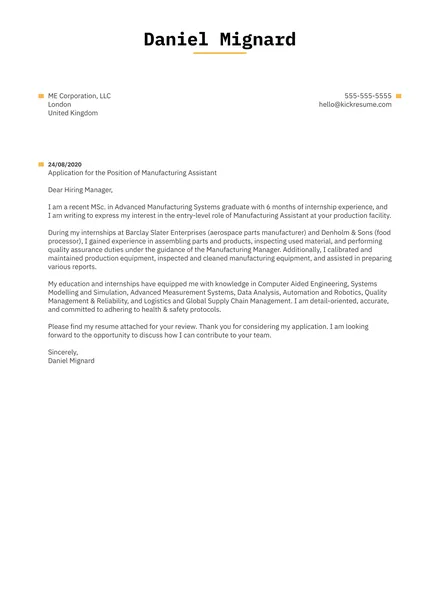
Reviewing example cover letters can be incredibly beneficial. They offer insights into the best practices for formatting and content. Below, we provide three cover letter examples tailored for different levels of experience in manufacturing.
Entry-Level Manufacturing Cover Letter Example
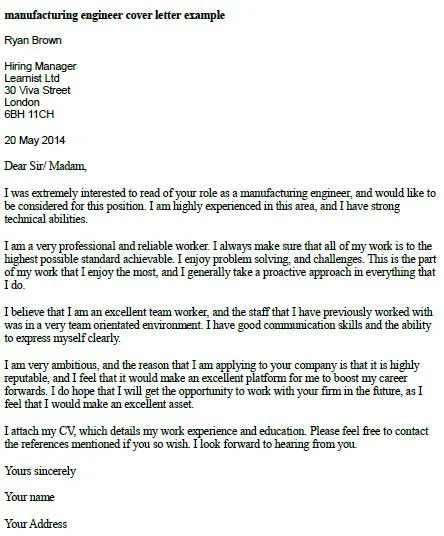
This example is for candidates with little or no prior experience. Focus on educational qualifications, internships, and any relevant coursework or projects. Highlight any transferable skills, like attention to detail, problem-solving abilities, and a strong work ethic. It can also include volunteer experience or any part-time jobs held previously. Remember to mention any relevant skills. This is especially useful when there is a lack of direct experience in the manufacturing field.
Mid-Career Manufacturing Cover Letter Example
This example targets candidates with several years of experience in manufacturing. Focus on showcasing your professional accomplishments, the projects you have managed, and the results you have achieved. Quantify your achievements whenever possible. Mention any certifications, training programs, and professional development activities that showcase your commitment to the field. Use this opportunity to demonstrate your expertise and the value you can bring to the role. Provide data and examples to demonstrate your expertise and accomplishments.
Experienced Manufacturing Professional Cover Letter
This example is designed for candidates with extensive experience in manufacturing, who are looking for senior positions or leadership roles. Highlight your leadership abilities, strategic thinking, and ability to drive results. Emphasize your experience in managing teams, streamlining processes, and improving overall efficiency. Provide examples of how you have led initiatives, resolved complex issues, and achieved significant improvements. Be sure to outline your key achievements in previous roles and what you have learned.
Tailoring Your Cover Letter

Tailoring your cover letter to each job application is essential. It shows the hiring manager that you have taken the time to understand the specific requirements of the role and the company. This customization demonstrates that you are genuinely interested in the position and the organization. This practice is important to prove that you are committed to the role.
Researching the Company
Before you start writing, research the company. Visit their website, read industry news, and learn about their products, services, and values. This research will help you tailor your cover letter to demonstrate your understanding of the company and your enthusiasm for working there. Identify the company’s mission statement and values and see how they align with your own. Mentioning specific aspects of the company that appeal to you shows that you have a genuine interest and is well-prepared.
Matching Skills to Job Requirements
Carefully analyze the job description and identify the key skills and qualifications. Then, tailor your cover letter to highlight your relevant skills and experience, making sure to include keywords from the job description. Provide examples that clearly demonstrate how your skills and experience align with the specific requirements. This targeted approach helps the hiring manager quickly understand how you fit the role.
Proofreading and Editing
Proofreading and editing are essential steps in the cover letter writing process. Always proofread your cover letter multiple times for any errors in grammar, spelling, or punctuation. Ask someone else to review your cover letter to catch any mistakes you may have missed. A well-proofread cover letter shows attention to detail and professionalism. Use tools to help you check your grammar and spelling. Ensure your cover letter is error-free before you submit your application. This will ensure that you present a professional image.
Common Mistakes to Avoid
Avoiding common mistakes can significantly improve your cover letter. These mistakes can hurt your chances of securing an interview. Understanding what to avoid can help you create a cover letter that impresses the hiring manager.
Generic Content
Avoid using generic, cookie-cutter cover letters. Customize your cover letter for each job application, tailoring it to the specific requirements and company. Generic content does not capture the hiring manager’s attention and shows that you are not genuinely interested in the role. Take the time to research the company and the role and show you understand the key skills and qualifications needed.
Typos and Grammatical Errors
Typos and grammatical errors can create a negative impression and undermine your credibility. Always proofread your cover letter carefully, and consider having someone else review it as well. Errors suggest a lack of attention to detail and can lead the hiring manager to question your overall qualifications. Use grammar and spell check tools and double-check your writing.
Ignoring the Job Description
Failing to address the specific requirements outlined in the job description shows that you haven’t taken the time to understand the role. Always align your skills and experience with the job requirements and include relevant keywords. This makes it easy for the hiring manager to see that you are a good fit for the position. Review the job description multiple times, and note down the keywords and skills required.
Conclusion
Crafting an effective cover letter can significantly boost your chances of landing a job in the manufacturing sector. By focusing on your skills, experience, and achievements, you can create a compelling cover letter that captures the hiring manager’s attention. Take your time to research the company and customize your cover letter for each role.
Final Thoughts and Next Steps
Remember to tailor your cover letter, proofread carefully, and follow up after submitting your application. Consider reaching out to the hiring manager to express your continued interest. By following these steps and utilizing the example cover letters, you can create a cover letter that effectively showcases your qualifications and helps you land your dream job in manufacturing. Best of luck in your job search.