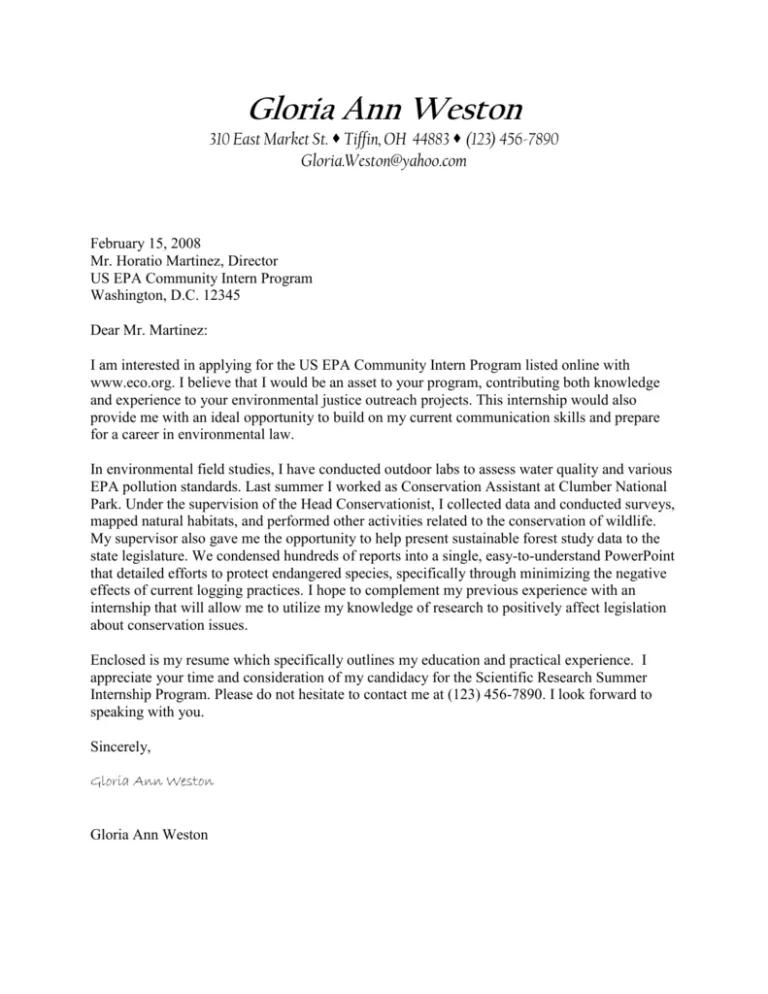
Cover Letter for Research Internship Why It Matters
A cover letter for a research internship serves as your first introduction to potential employers, and in a competitive field, it is crucial to stand out. Unlike a resume, which is a factual overview of your experience, a cover letter provides an opportunity to showcase your personality, passion, and specific interest in the research opportunity. It allows you to connect your skills and experiences to the requirements of the internship and explain why you are the ideal candidate. It provides the perfect platform to highlight your motivations and explain how the research internship aligns with your long-term career aspirations. A well-crafted cover letter can significantly increase your chances of securing an interview and ultimately, landing the research internship.
Highlighting Your Skills
Identify the key skills required for the research internship, such as data analysis, laboratory techniques, or specific software proficiency. Then, in your cover letter, clearly articulate how your skills align with these requirements. Provide concrete examples from your academic projects, previous internships, or relevant coursework. For instance, if the internship requires experience with statistical software, mention your proficiency with programs like SPSS, R, or Python, and briefly describe how you used these tools in your past work. Similarly, showcase your ability to work independently and as part of a team, emphasizing any leadership roles or collaborative projects you have undertaken. Be specific and avoid general statements. Instead of saying you ‘have good communication skills,’ describe a specific instance where you effectively communicated complex scientific concepts to a non-expert audience. Highlighting these skills will showcase you in a professional manner.
Showcasing Relevant Experience

Detail any research experience you have, even if it’s not directly related to the specific internship. This demonstrates your proactive approach to learning and your commitment to the field. Include any lab work, research projects, or academic papers you have been involved in. If you have experience with data collection, analysis, or interpretation, be sure to mention it, as these are often valuable skills in research. Clearly explain your role in each project, the methodologies you employed, and the key results or findings you contributed to. Quantify your achievements whenever possible. Furthermore, be sure to highlight any transferable skills from other roles, such as organizational skills, time management, or problem-solving abilities, that would be beneficial in a research setting. Always tailor your experience to the specific requirements of the internship, making sure to include keywords from the job description and emphasizing the most relevant parts of your background.
Quantifying Achievements
Whenever possible, use numbers to demonstrate your accomplishments and the impact of your work. This adds credibility and clarity to your cover letter. For example, instead of saying you ‘managed a project’, state that you ‘managed a project involving a team of five students, resulting in a 15% increase in efficiency’. If you contributed to a publication, mention the journal’s impact factor or the number of citations your work has received. If you have analyzed a large dataset, specify the number of data points you processed. If you presented your research at a conference, mention the number of attendees or the feedback you received. By quantifying your achievements, you provide tangible evidence of your skills and the value you bring to the research team, which will enhance your application in a professional manner.
Using Action Verbs
Use strong action verbs to describe your responsibilities and accomplishments. Action verbs bring your experiences to life and demonstrate your active involvement and contributions. Replace passive phrases with dynamic action verbs to show what you have achieved. For example, instead of saying ‘was responsible for,’ use ‘managed,’ ‘conducted,’ ‘analyzed,’ ‘developed,’ ‘implemented,’ ‘coordinated,’ or ’led.’ Start each bullet point or sentence describing your experience with a powerful verb. This will not only make your cover letter more engaging but also provide employers with a clear understanding of your abilities and the actions you have taken. This also highlights your achievements, responsibilities, and contributions in a precise and impactful manner, helping you stand out.
Demonstrating Research Interest

Showcase your genuine interest in the specific research area and the goals of the internship. Explain why you are enthusiastic about the opportunity and how your interests align with the research being conducted. Conduct thorough research on the lab, professor, or research group to understand their current projects, publications, and research interests. Refer to their specific work in your cover letter, demonstrating that you have taken the time to learn about their research. Mention specific papers or projects that have intrigued you and explain why. Express how the internship aligns with your career aspirations and what you hope to achieve by participating. This will help your cover letter stand out, indicating you are invested in this opportunity.
Tailoring the Cover Letter
Customize each cover letter to the specific internship and institution. Generic cover letters are easily recognizable and often discarded. Review the job description carefully and identify the key requirements and skills. Highlight how your experiences and skills directly meet these requirements, using the same keywords and terminology the employer uses. Demonstrate that you understand the research being conducted and express your interest in the specific projects or goals of the internship. Research the institution and the research group to which you are applying. Address the cover letter to a specific person, such as the professor or the hiring manager, whenever possible, as this demonstrates that you have done your homework. Tailoring your cover letter shows your genuine interest and makes a lasting impression, increasing your chances of getting the position.
Formatting Your Cover Letter
Ensure your cover letter is professional, easy to read, and visually appealing. Use a standard font like Times New Roman, Arial, or Calibri, and maintain a consistent font size (11 or 12 points). Use appropriate spacing and margins to create a clean and uncluttered look. Divide your cover letter into clear sections, such as an introduction, body paragraphs highlighting your skills and experience, and a conclusion. Keep your cover letter concise, ideally within one page. Use bullet points to make key information and achievements easy to identify. Proofread your cover letter carefully to ensure there are no grammatical errors or typos, which can detract from your professionalism. A well-formatted cover letter not only looks professional but also makes it easier for the hiring manager to read and appreciate your qualifications.
Proofreading and Editing

Thoroughly proofread and edit your cover letter before submitting it. Errors can undermine your credibility and make a negative impression. Check for grammatical errors, typos, and awkward phrasing. Use spell-check and grammar-check tools, but don’t rely on them entirely. Proofread the cover letter yourself, and ideally, have someone else review it as well. Ask a friend, family member, career counselor, or professor to read your cover letter and provide feedback. They can catch errors you might have missed and provide suggestions for improving clarity and impact. Ensure that your cover letter is free of errors and effectively communicates your qualifications and enthusiasm for the internship. This will show your professionalism and attention to detail.
Closing Your Cover Letter
Expressing Enthusiasm
End your cover letter with a strong and positive statement that expresses your enthusiasm for the internship. Reiterate your interest in the research and highlight how the opportunity aligns with your career goals. Thank the hiring manager for their time and consideration. Express your eagerness to learn more about the opportunity and the research group. Mention that you are available for an interview and provide your contact information. Avoid generic closing statements. Instead, show your genuine excitement and highlight your interest in the role. A well-crafted closing leaves the reader with a positive impression and increases the likelihood of a call back.
Providing Contact Information

Make it easy for the hiring manager to contact you by providing clear and accurate contact information. Include your full name, phone number, and professional email address. Ensure your email address is professional-sounding (e.g., using your name) and avoid informal email addresses. If you have a professional online presence, such as a LinkedIn profile or a personal website, include the links to these resources. Proofread your contact information to make sure it is accurate and up-to-date. Always make sure it is easy for them to reach you to schedule an interview or ask further questions. Your contact information is very important; it is the key to any further process.