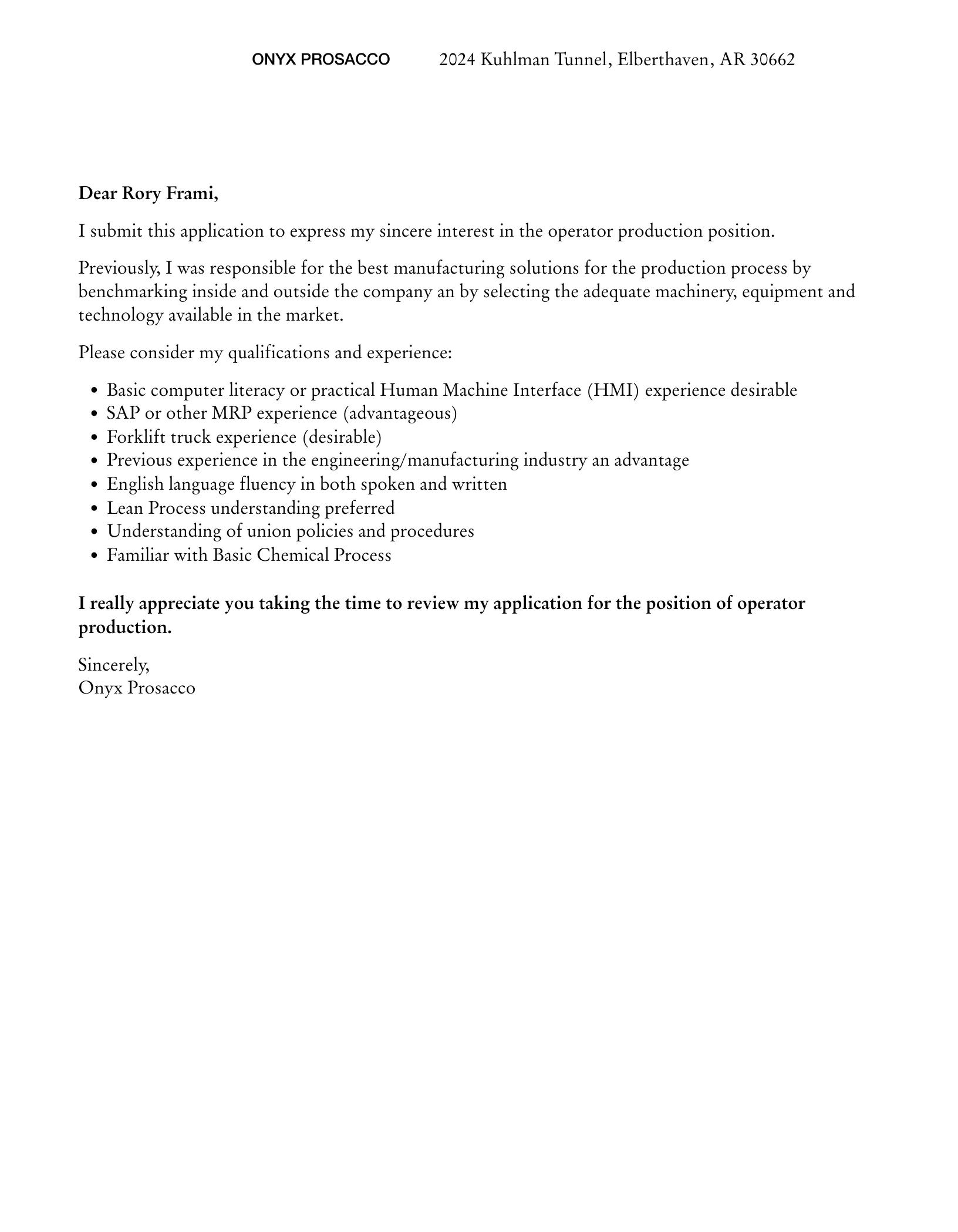
Crafting a Winning Cover Letter for Production Operator Positions
A well-crafted cover letter is your first opportunity to make a strong impression on a potential employer. For production operator positions, the cover letter serves as a crucial tool to highlight your relevant skills, experience, and your understanding of the job requirements. It is not just a formality; it’s a chance to showcase your personality, work ethic, and how you align with the company’s values. The cover letter must demonstrate that you have thoroughly researched the company and the specific role. Tailor your letter to the job description and the company’s needs, emphasizing how your qualifications make you the ideal candidate. This initial communication is the cornerstone to securing an interview and ultimately landing the job. A poorly written cover letter can easily lead to your application being overlooked. Therefore, take the time to create a compelling and professional document that showcases your best attributes.
Highlighting Relevant Skills and Experience for Production Operator
When writing a cover letter for a production operator role, focusing on relevant skills and experience is paramount. Start by identifying the key skills mentioned in the job description and aligning them with your abilities. Mention your expertise in operating machinery, equipment maintenance, and quality control. Showcase your familiarity with production processes and any specific industry experience. Quantify your accomplishments whenever possible. For example, mention the percentage by which you improved efficiency, reduced waste, or enhanced safety measures in a previous role. Detail any specific training or certifications you have, such as forklift operation, OSHA certifications, or other industry-specific qualifications. These details validate your professional capabilities. Your cover letter should paint a picture of a dedicated, skilled, and experienced professional ready to contribute immediately.
Understanding Production Operator Job Requirements

Before you start writing your cover letter, thoroughly understand the requirements of the production operator job. Review the job description carefully to identify the essential skills, qualifications, and responsibilities. Pay attention to the specific machinery or processes involved, the required safety protocols, and any company-specific expectations. Research the company’s values, mission, and work culture to understand how you can align your skills and experience. This knowledge will help you tailor your cover letter to address the employer’s needs and expectations. By demonstrating that you understand the role’s requirements, you show your genuine interest and preparedness. Highlighting your awareness of safety standards, quality control, and production efficiency demonstrates your suitability for the position. A well-researched approach shows that you take your job search seriously and are capable of meeting the demands of the role.
Showcasing Your Technical Skills
Technical skills are essential for a production operator, so make sure they are prominently displayed in your cover letter. Detail your proficiency in operating and maintaining specific types of machinery and equipment, such as CNC machines, assembly lines, or packaging systems. Mention your familiarity with software, control systems, and any related technology. If you have experience troubleshooting equipment malfunctions, repairing machinery, or performing routine maintenance, be sure to include that. Quantify your accomplishments, such as a reduction in downtime due to your proactive maintenance efforts or improvements in production efficiency through your technical skills. If applicable, mention any experience with quality control processes, such as inspecting products, identifying defects, or ensuring compliance with industry standards. Providing specific examples of how you have applied these skills will strengthen your case and demonstrate your capabilities.
Detailing Your Experience in Production Environments
Your experience in production environments is a critical factor for employers. Describe your history working in manufacturing or production settings, emphasizing the responsibilities you held and the tasks you performed. Highlight any experience you have with specific industries, products, or processes. Discuss your understanding of production workflows, from raw materials to finished products, and how you contributed to the overall efficiency. Mention any experience with inventory management, quality control, or safety procedures. Quantify your accomplishments whenever possible. For example, indicate how you improved production rates, reduced waste, or minimized errors. Include any experience with performance metrics or continuous improvement initiatives. Your goal is to convey that you are not only experienced, but also that you can hit the ground running and become a valuable asset from day one.
Emphasizing Safety Protocols and Regulations

Safety is a paramount concern in any production environment, and highlighting your knowledge and adherence to safety protocols is crucial. Mention any safety certifications you hold, such as OSHA certifications or specific training related to the equipment you have experience with. Describe your experience following safety guidelines, using personal protective equipment (PPE), and adhering to all relevant regulations. If you have been involved in safety inspections, training programs, or incident reporting, make sure to include these details. Show your understanding of hazard identification and risk management, emphasizing your ability to prevent accidents and maintain a safe working environment. Indicate your commitment to following safety procedures and promoting a culture of safety in the workplace. By demonstrating your awareness of safety protocols, you can reassure the employer of your reliability and attention to detail, qualities highly valued in a production operator role.
Presenting Your Problem-Solving Abilities
Production operator roles often require individuals to solve problems. Emphasize your ability to identify and resolve issues quickly and efficiently. Describe instances where you successfully troubleshooted equipment malfunctions, addressed production bottlenecks, or improved processes. Explain your approach to problem-solving, including how you analyze the situation, identify the root cause, and implement effective solutions. Showcase any experience you have with implementing corrective actions, performing root cause analysis, or collaborating with maintenance teams to address issues. Provide specific examples of how you solved problems, including any improvements you implemented. Your goal is to illustrate your ability to think critically, make sound decisions, and take initiative to resolve issues, showing you can contribute to a smooth and efficient production process.
Demonstrating Teamwork and Communication Skills
Production environments are inherently team-oriented, so demonstrating your ability to work collaboratively and communicate effectively is essential. Describe your experience working as part of a team, highlighting your ability to cooperate with colleagues and contribute to shared goals. Mention any experience with team-based projects, cross-functional collaboration, or training other operators. Detail your communication skills, including your ability to clearly communicate with supervisors, team members, and other stakeholders. Include examples of how you effectively communicated technical information, followed instructions, and provided feedback. Your ability to work well with others and communicate clearly is crucial in a production setting. Show your eagerness to contribute to a positive and productive work environment and to contribute to the success of the team.
Formatting Your Cover Letter for Maximum Impact

The format of your cover letter can significantly influence the hiring manager’s impression. Use a professional format, with a clear font, concise paragraphs, and appropriate spacing. Start with a professional heading that includes your contact information and the date. Address the hiring manager by name if possible; otherwise, use a formal salutation. Keep the letter concise, focusing on the most relevant information, with no more than one page. Use clear headings and bullet points to break up text and make your letter easier to read. Customize the format to align with the company’s branding, and maintain a consistent tone and style throughout the document. Ensure the letter is well-organized, with a logical flow that highlights your most significant achievements and qualifications. Remember to proofread carefully for any errors in grammar and spelling. Your cover letter should be formatted for readability, ensuring the hiring manager can quickly grasp your key strengths and why you are a good fit for the role.
Proofreading and Editing Your Cover Letter
Before you submit your cover letter, proofread and edit it meticulously to eliminate errors and improve the overall quality. Check for any spelling mistakes, grammatical errors, and punctuation issues. Make sure that your sentences flow logically and that your ideas are clearly articulated. Ensure that your tone is professional, respectful, and enthusiastic about the opportunity. Consider asking a friend, family member, or career counselor to review your cover letter for feedback. They may catch errors you missed or provide suggestions on how to improve your writing. Ensure that the letter is tailored to the specific job and that it highlights the most relevant skills and experiences. By proofreading and editing your cover letter, you demonstrate your attention to detail and your commitment to presenting yourself professionally.