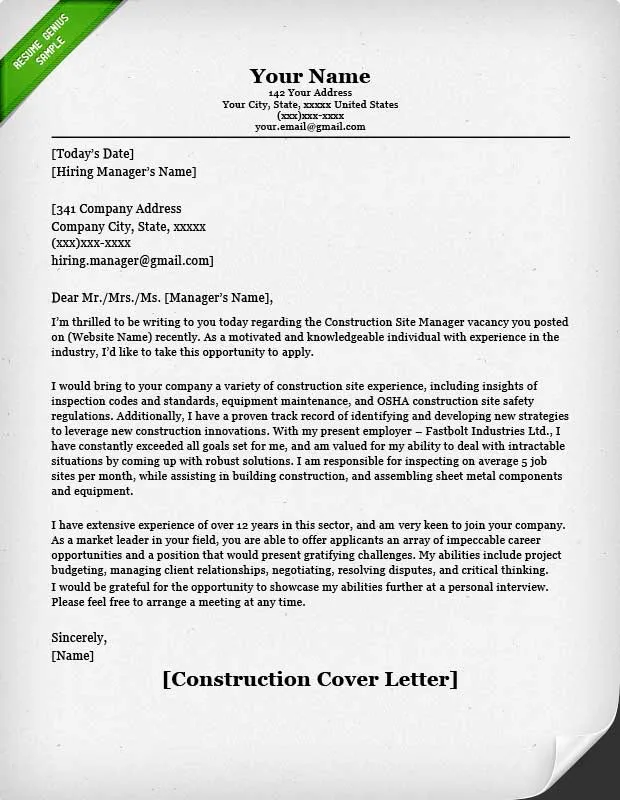
Why You Need a Cover Letter
In today’s competitive job market, a well-crafted cover letter is not just an optional extra—it’s often a crucial requirement. It’s your first opportunity to make a positive impression on a potential employer, setting the stage for your resume and highlighting your suitability for the role. A cover letter allows you to go beyond the static information of your resume, providing a more personal and engaging introduction. It’s where you can articulate your passion for the position, explain your career aspirations, and demonstrate your understanding of the company’s needs. By using a cover letter effectively, you can differentiate yourself from other applicants and increase your chances of securing an interview. Without it, you risk being perceived as lacking genuine interest or failing to adequately communicate your value.
A cover letter gives you a platform to address any potential gaps or weaknesses in your resume, such as a career change or a period of unemployment. Furthermore, a cover letter signals professionalism and attention to detail. Employers often consider it an indicator of your communication skills and ability to follow instructions. If a job posting explicitly requests a cover letter, failing to submit one can immediately disqualify you. Therefore, by incorporating a personalized and well-written cover letter, you show initiative and dedication, which greatly enhances your application and makes you a more attractive candidate.
Highlight Key Skills & Experience
Your cover letter is the perfect place to spotlight the skills and experiences that directly align with the job requirements. Begin by carefully reviewing the job description and identifying the key qualifications and skills the employer is seeking. Then, in your cover letter, strategically weave in examples of how you’ve demonstrated these skills in past roles. Use specific examples that quantify your accomplishments whenever possible, using numbers and data to demonstrate your impact. For instance, instead of saying “Managed social media accounts,” you could write, “Increased social media engagement by 40% within six months by implementing a new content strategy.” This approach provides concrete evidence of your abilities and makes your claims more credible.
Focus on the experiences that are most relevant to the position. Avoid simply restating your resume; instead, expand on a few key achievements. Explain how your skills and experiences make you a perfect fit for the role and why you are excited about the opportunity. Remember, the goal is to convince the hiring manager that you have what it takes to excel in the position. Tailor your examples to the specific company and industry, highlighting your understanding of their mission, values, and goals. By doing so, you show that you’ve done your research and are genuinely interested in contributing to their success. This level of detail sets you apart from other applicants.
Tailor Your Cover Letter to the Job

One of the biggest mistakes job seekers make is sending out generic cover letters. Each cover letter should be customized to the specific job and company you’re applying to. Start by researching the company’s mission, values, and recent news or projects. Showcasing this knowledge demonstrates your genuine interest and initiative. Address the hiring manager by name, if possible. This small detail makes your letter more personal and shows you’ve taken the time to find out who will be reviewing your application. If you can’t find the hiring manager’s name, try using a general greeting like “Dear Hiring Team.”
In the body of your letter, directly address the requirements outlined in the job description. Explain how your skills, experience, and accomplishments align with their needs. Use the same keywords and phrases from the job posting to help your application get noticed by applicant tracking systems (ATS). These systems are designed to screen applications based on keywords. Make sure your cover letter also reflects the company’s culture. If the company is known for its innovation, your letter should highlight your creative problem-solving skills. If it values teamwork, emphasize your collaborative experiences. Personalizing your cover letter shows you’re not just looking for any job, but that you’re genuinely interested in this specific opportunity.
Showcase Your Personality
While professionalism is key, don’t be afraid to let your personality shine through in your cover letter. This is your opportunity to express your enthusiasm for the role and demonstrate your unique value proposition. Avoid sounding overly formal or robotic; instead, aim for a tone that is genuine and engaging. Use a conversational style to make your letter more relatable and memorable. Share your career aspirations and why you’re excited about the specific opportunity. Employers want to hire people who are passionate about their work and the company’s mission.
Consider adding a brief anecdote that highlights a relevant skill or experience. This can make your letter more interesting and help you stand out from other applicants. However, ensure that your anecdote is relevant and does not overshadow your qualifications. Always maintain a professional tone and avoid using slang or jargon that might not be appropriate for the workplace. Proofread your letter carefully for any grammatical errors or typos, as these can detract from your message and make you seem less professional. By adding a touch of personality, you humanize your application and make it easier for the hiring manager to connect with you on a personal level.
Proofread and Edit Before Sending
Before submitting your cover letter, take the time to proofread and edit it meticulously. Errors in grammar, spelling, and punctuation can undermine your credibility and create a negative impression. Read your letter aloud to catch any awkward phrasing or sentences that don’t flow well. Use a spell-checker, but don’t rely on it entirely; it may not catch all errors, especially those related to context or word choice. Enlist a second pair of eyes—ask a friend, family member, or career counselor to review your letter and provide feedback. Fresh eyes can often spot mistakes you might have missed.
Check for consistency in formatting, font, and tone throughout your letter. Ensure your contact information is accurate and up-to-date. Verify that you’ve included the correct company name and job title. Consider printing out a hard copy of your letter to review it. Sometimes, seeing the letter on paper can help you identify errors that you might miss on a screen. Make sure the letter aligns with your resume and highlights the most relevant information. By taking the time to proofread and edit your cover letter carefully, you demonstrate attention to detail and professionalism. This is crucial for making a positive first impression and increasing your chances of landing an interview.