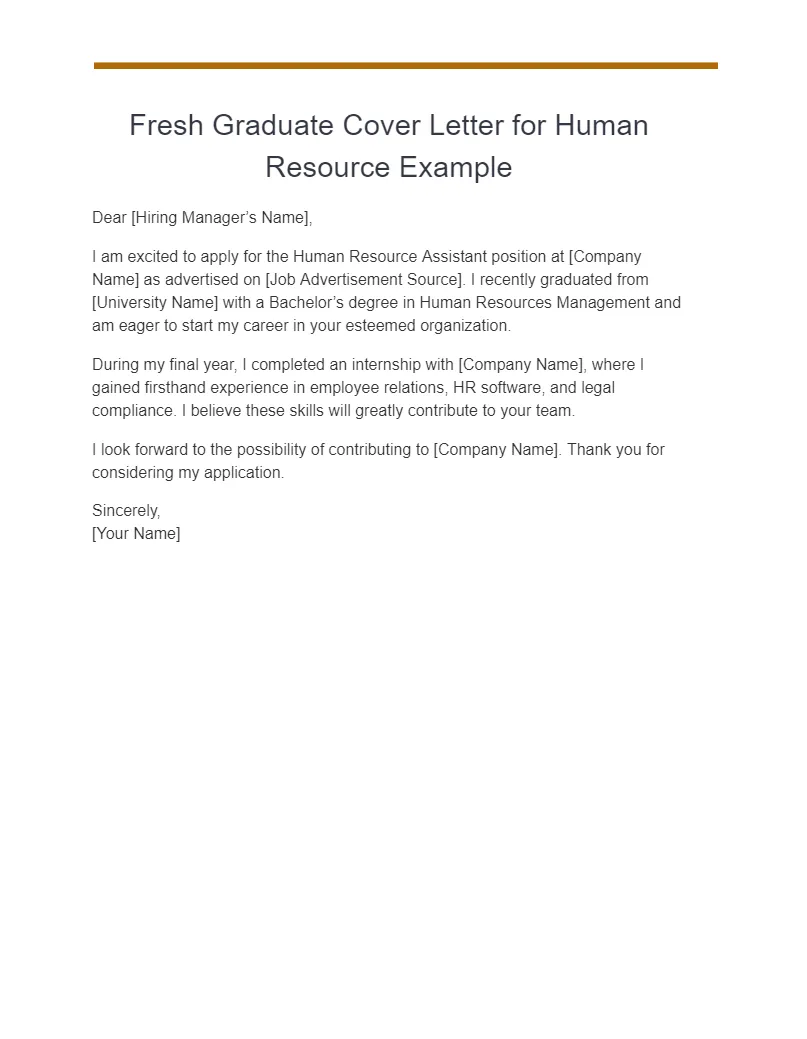
Understanding the Fresh Graduate Cover Letter
As a fresh graduate, your cover letter is your first opportunity to make a lasting impression on potential employers. It’s not just a formality; it’s a crucial tool that allows you to showcase your personality, skills, and enthusiasm, setting you apart from other applicants. While your resume provides a summary of your qualifications, your cover letter gives you the space to explain why you are the perfect fit for the role and the company. It provides context to your resume, connecting your experiences and skills to the specific job requirements. A well-crafted cover letter demonstrates your communication skills, attention to detail, and genuine interest in the position. Failing to write a compelling cover letter, on the other hand, can lead to your application being overlooked, even if your resume is impressive. This guide reveals the secrets to crafting a cover letter that not only gets noticed but also gets you an interview.
Key Components of a Fresh Graduate Cover Letter
A strong cover letter comprises several key components, each playing a vital role in conveying your message effectively. From a professional header to a compelling closing, every element contributes to the overall impact of your application. Understanding these components and how to use them will significantly increase your chances of landing an interview. Your cover letter is a marketing document, and like any good marketing material, it needs to be clear, concise, and tailored to its audience. The goal is to capture the reader’s attention, demonstrate your value, and persuade them to take the next step: inviting you for an interview. The following sections detail each of these components, providing insights and tips to help you craft a cover letter that stands out.
Header and Contact Information

Your header is the first thing a hiring manager will see, so it’s crucial to present a professional image. Include your full name, address, phone number, and email address. Ensure your email address is professional-sounding; avoid nicknames or unprofessional handles. Also, include the date and the recipient’s information, such as the hiring manager’s name, title, and the company’s address. If you are sending an email, put your contact information at the top, followed by the date, and then the recipient’s information. This header is your first chance to make a positive impression by demonstrating that you pay attention to detail and are committed to presenting yourself professionally. It sets the tone for the rest of the cover letter and assures the reader that you are organized and ready to engage in professional communication. Proper formatting is essential to create a clean and accessible layout.
Professional Greeting
Start your cover letter with a professional greeting. If possible, address the hiring manager by name. Research the company or use LinkedIn to find the name of the hiring manager or recruiter. This personalized approach demonstrates initiative and shows you’ve taken the time to learn about the company. If you can’t find a specific name, use a professional greeting like ‘Dear Hiring Manager’ or ‘Dear [Company Name] Hiring Team.’ Avoid generic greetings such as ‘To Whom It May Concern’ as they lack personalization. Your greeting sets the tone for the rest of your letter, so make it courteous and professional. This initial interaction is an excellent opportunity to create a positive connection and show you understand professional communication etiquette.
Body Paragraphs
The body paragraphs are the core of your cover letter, where you articulate your skills, experiences, and enthusiasm for the position. This section typically includes three to four paragraphs, each with a specific purpose. The goal is to persuade the reader to consider you for an interview by showing why you’re a strong fit for the role and the company. Each paragraph should have a clear focus, showcasing different aspects of your qualifications and personality. Use the body paragraphs strategically to connect your experiences to the job requirements and demonstrate your understanding of the company’s needs. This part allows you to expand on the information in your resume and provide context that might be missing, giving the hiring manager a comprehensive view of your value.
First Paragraph The Hook

The first paragraph, often called the ‘hook,’ needs to grab the reader’s attention immediately. Start with a strong statement that highlights your interest in the position and the company. You can mention where you found the job posting and express your enthusiasm for the opportunity. Briefly state your main qualification or skill that makes you a suitable candidate. This is your elevator pitch—a concise and compelling introduction that encourages the reader to continue. It should be clear, engaging, and tailored to the specific job and company. This introductory paragraph should spark interest and make the hiring manager eager to learn more about you.
Second Paragraph: Highlighting Skills & Education
In the second paragraph, focus on your skills and educational background. Connect your academic experiences and any relevant projects, internships, or volunteer work to the job requirements. Highlight skills that align with the job description, such as technical skills, soft skills, or industry-specific knowledge. Quantify your accomplishments whenever possible, using numbers and data to showcase your impact. For example, instead of saying ‘Managed social media,’ you could say ‘Increased social media engagement by 30%.’ This paragraph should demonstrate that you possess the necessary skills and knowledge to excel in the role.
Third Paragraph Showcasing Passion & Fit
The third paragraph is your opportunity to showcase your passion for the role and why you’re a good fit for the company culture. Explain why you are interested in this specific position and company. Research the company’s mission, values, and recent projects to demonstrate your genuine interest. Explain how your values align with the company’s, or how your career goals match their direction. Show how you can contribute to the company’s goals. This paragraph should provide the reader with a sense of your personality and make it clear that you are a good cultural fit, which is as essential as your professional qualifications. Expressing your enthusiasm and showing that you’ve done your research will set you apart from other applicants.
Fourth Paragraph Call to Action

The final paragraph should include a clear call to action. Express your eagerness for an interview and thank the hiring manager for their time and consideration. Reiterate your interest in the position and mention how you can be contacted. Include your phone number and email address for easy access. Make it easy for them to respond and take the next step in the hiring process. A strong call to action shows your initiative and enthusiasm. This also summarizes the most important points and encourages the hiring manager to take the next step, setting the stage for further communication.
Formal Closing and Signature
Conclude your cover letter with a professional closing and signature. Use a formal closing like ‘Sincerely,’ ‘Best regards,’ or ‘Thank you.’ Then, leave space for your handwritten signature if you’re printing and mailing the letter. If you are sending an email, type your full name below your closing. This final touch maintains the professional tone and completes the cover letter, reinforcing your attention to detail. This closing provides a polished conclusion and reinforces your enthusiasm, leaving a positive impression on the hiring manager.
Formatting and Design Tips for Your Cover Letter
The appearance of your cover letter is just as important as the content. Formatting and design can make a significant difference in how your application is received. A well-formatted cover letter is easy to read and visually appealing. Poor formatting, on the other hand, can be a distraction and detract from your message. Pay attention to the structure, layout, and aesthetics to ensure your letter is clean, organized, and professional. Making sure your cover letter is easy to read and visually appealing enhances readability and increases the chances that your application is noticed. Taking care in these details demonstrates your commitment to excellence.
Font and Readability

Choose a professional and readable font, such as Times New Roman, Arial, or Calibri. Use a font size between 10 and 12 points for easy readability. Ensure your text is well-spaced and use a clear layout with adequate margins. Avoid using complex or overly decorative fonts, as they can be distracting. Using a standard font makes your cover letter look clean and organized, enhancing readability and professionalism. A well-designed document is inviting and easier to engage with, increasing your chances of making a positive impression on the reader.
Avoiding Common Mistakes
Avoid common mistakes that can undermine your cover letter. Typos, grammatical errors, and spelling mistakes can give the impression of carelessness. Always proofread your cover letter multiple times, and consider using grammar and spell-checking tools. Don’t use generic templates without tailoring them to the specific job and company. Avoid clichés and overly formal language. Ensure your cover letter matches your resume in terms of information and style. Attention to detail is essential to demonstrate professionalism, so thorough proofreading is a non-negotiable step.
Proofreading and Editing
Proofreading and editing are critical steps in finalizing your cover letter. Review your cover letter multiple times, checking for any errors in grammar, spelling, and punctuation. Read it aloud to catch any awkward phrasing or sentences that don’t flow smoothly. Consider asking a friend, family member, or career advisor to proofread your letter for a fresh perspective. Ensure that your cover letter is clear, concise, and free from errors. Errors create negative impressions. Taking the time to thoroughly edit and proofread demonstrates your attention to detail and professionalism, increasing your chances of creating a positive impact.
Tailoring Your Cover Letter for Specific Jobs

One of the biggest secrets to cover letter success is tailoring it to each job you apply for. A generic cover letter is easily identified and can be quickly dismissed. Research the specific role, company, and industry to understand the requirements and expectations. Customizing your cover letter demonstrates your interest and makes it clear that you have considered the specific needs of the role and company. It’s essential to show how your skills and experiences align with the job’s specific requirements and the company’s values, showing that you’ve put in the effort to tailor your application.
Researching the Company
Before writing your cover letter, research the company thoroughly. Visit their website, read their mission statement, and learn about their products, services, and culture. Review their social media presence and recent news articles to understand their current initiatives and values. This research will help you tailor your cover letter and demonstrate your genuine interest in the company. Showing that you understand the company’s values, goals, and recent activities will make your application more compelling and show that you are genuinely interested in joining their team. Research also provides context, so you can provide specific examples of how your skills and experiences match the role.
Highlighting Relevant Skills and Experiences
Carefully review the job description and identify the skills and experiences that the employer is seeking. Highlight the skills and experiences that directly align with these requirements. Provide specific examples of how you have used these skills in the past, and quantify your achievements whenever possible. By explicitly addressing the job description, you show that you have the skills and experiences necessary to succeed in the role. Tailoring your cover letter to the specific job requirements is crucial to show the hiring manager that you are a perfect fit and stand out from other candidates.
Including Keywords from the Job Description
Use keywords from the job description throughout your cover letter. Applicant tracking systems (ATS) often scan cover letters and resumes for keywords. Including relevant keywords increases the chances of your application being noticed. But don’t just stuff keywords in; use them naturally and make sure they fit with your writing. Show that you understand the role and its requirements by using the same language as the job description. This strategic use of keywords will help your application get past the initial screening stage and catch the hiring manager’s eye.
Cover Letter Examples and Templates
Reviewing cover letter examples and using templates can be incredibly helpful, especially when you are a fresh graduate. These resources provide a framework and inspiration. However, remember to tailor any example or template to your specific situation. Use them as a starting point, and customize them to match the job description, your skills, and the company’s needs. Adapt the examples to fit your unique experiences and qualifications, ensuring your cover letter reflects your personality. Using cover letter examples helps you understand the structure and content, giving you a starting point for your own application. The examples and templates should be modified to create a unique and effective application.
Example Cover Letter 1
Example cover letters provide a clear structure for fresh graduates. [Insert example cover letter tailored for a specific job here, focusing on skills and education]. This example provides a solid framework for your cover letter by highlighting relevant skills. Adjust the template according to the requirements of each job, ensuring that the skills and experiences highlighted align with the job description. Tailoring the information to the unique characteristics of each company demonstrates a high level of interest and initiative, setting you apart.
Example Cover Letter 2
[Insert another example cover letter, this time focusing on the candidate’s passion and cultural fit for the company]. A good cover letter should show your genuine interest. By highlighting specific projects or experiences, the example illustrates how you can contribute to the company. Personalizing each application, by tailoring it to the company and the specific job, can significantly increase your chances of landing an interview. Demonstrating genuine enthusiasm and showcasing how your career goals align with the company’s values will greatly benefit your application.
Example Cover Letter 3
[Insert a third example cover letter here, including a call to action]. Each example is designed to highlight how your skills and experiences match the job’s requirements. To make it even better, always include a strong call to action. By adapting the provided examples to meet the needs of each job you apply for, you’ll ensure your cover letter is effective and makes a memorable impression, which will greatly improve the likelihood of an interview.