Cover Letter & Salary Requirements
Navigating the tricky terrain of salary expectations in your cover letter can be the difference between landing your dream job and getting overlooked. Many job seekers wrestle with the question of whether or not to include salary requirements in their cover letters. The answer is often nuanced and depends on various factors, including the job description, the company’s culture, and your level of experience. This article provides a comprehensive guide to help you effectively address salary expectations in your cover letter, increasing your chances of success.
Why Include Salary Expectations
In some cases, including your salary expectations is a strategic move. If the job posting specifically requests salary requirements, omitting this information could lead to your application being automatically rejected. Furthermore, stating your salary expectations upfront can save both you and the employer valuable time by quickly establishing if your needs align with their budget. This transparency can also demonstrate your professionalism and confidence in your value. However, it’s important to approach this with careful consideration of the specific opportunity and the employer’s preferences.
Researching Salary Ranges

Before you even think about writing your cover letter, you need to do your homework. Researching salary ranges is a crucial step. It allows you to make an informed decision about your salary expectations. Knowing the average salary for the position, your experience level, and the location of the job gives you a solid foundation for your negotiation later on. This also allows you to be flexible and realistic in your needs. It’s important that your salary expectations are competitive and aligned with the current market trends for the position.
Where to Find Salary Information
Several online resources provide valuable salary data. Websites like Glassdoor, Salary.com, and Payscale are excellent starting points. These platforms allow you to search for salaries based on job title, location, and experience. Company-specific data can sometimes be found on these sites as well, offering insights into the potential pay range within a particular organization. Additionally, networking with professionals in your field can give you an advantage. Reach out to people in similar roles or companies and inquire about general salary trends. Remember, information is power, and the more research you do, the more effectively you can address salary in your cover letter.
Determining Your Salary Needs
Once you have gathered salary data, it’s time to determine your own needs. Consider your current financial obligations, lifestyle, and desired future goals. Determine a minimum salary that you are willing to accept and a target salary that reflects your value and aspirations. Also take into account factors such as benefits, paid time off, and potential for growth within the company. The salary is one of the most important aspects of the job for most people. Understanding your needs is a critical part of the process. Be realistic and do not undersell yourself based on how you feel.
How to Phrase Your Salary Expectations

The way you phrase your salary expectations in a cover letter can influence the impression you make on a potential employer. Avoid being overly demanding or vague. The best strategy is to be clear, concise, and professional. If the job posting requests a specific salary, then providing it is the safest route. If the posting asks for salary requirements or expectations, it’s often best to state your desired salary range. This demonstrates flexibility while giving the employer a sense of your financial needs.
Using Specific Numbers vs. Ranges
Deciding between a specific number or a salary range is an important choice. Offering a specific number may demonstrate confidence, especially if your research supports the figure. However, it can also limit your ability to negotiate later. Providing a salary range offers more flexibility. A range allows the employer to consider your application even if their budget is slightly different from your initial expectation. A good strategy is to use a range that reflects the market rate for your experience and skills. Your range should not be too wide. A good rule of thumb is to make the range no more than 10%. Consider the specific requirements of the job and use the information to make a decision.
Example Phrases for Stating Salary
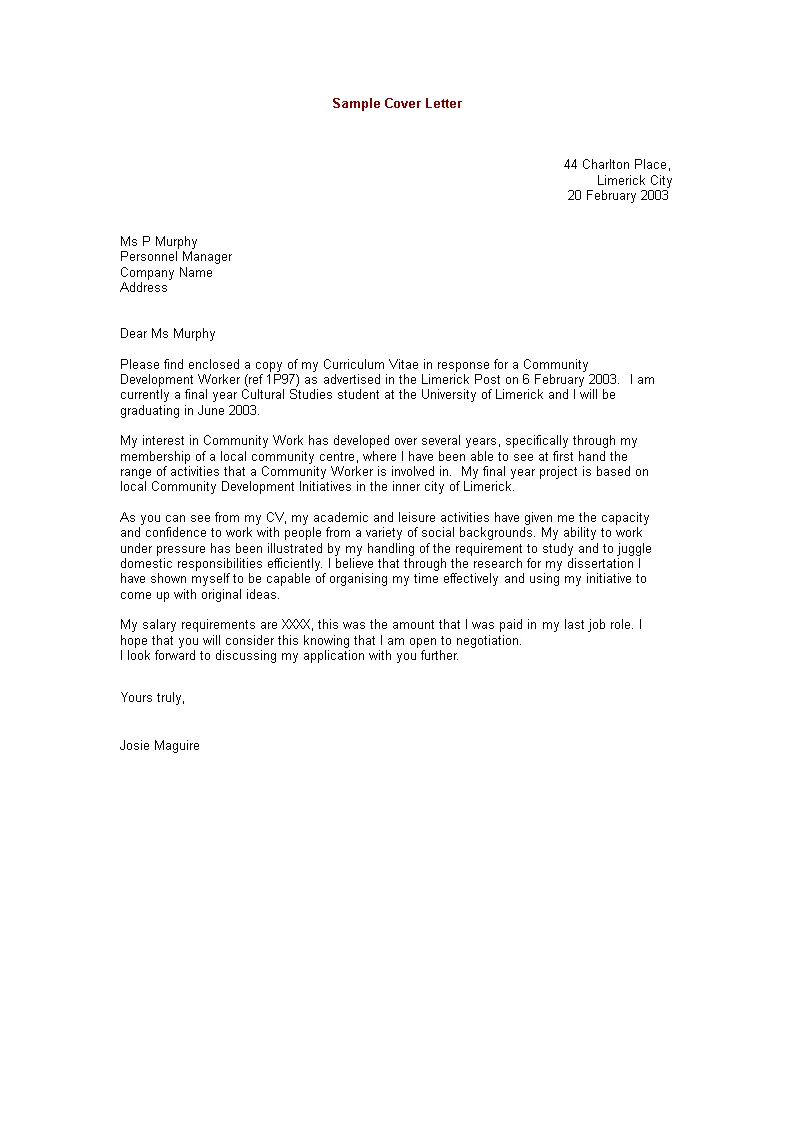
Here are some examples of how to phrase your salary expectations effectively. Always adapt these examples to fit your specific situation. You want to keep it simple, transparent and professional. Examples of phrases include, “I am seeking a position with a salary in the range of $X to $Y.” Another example is: “My salary requirements are flexible, but I am seeking a position with a salary commensurate with my experience.” You can also use a variation, “I am open to discussing salary requirements during the interview process, but my expectations are within the range of $X to $Y.” These phrases provide clarity without being overly rigid. Choose the one that best represents your needs and desired outcome.
Negotiation Considerations

Keep in mind that your cover letter is often just the first step. The actual salary negotiation will likely occur during the interview phase. If you’ve provided a salary range in your cover letter, be prepared to discuss your expectations in more detail. During the negotiation, be prepared to justify your value and the range you provided. Be ready to bring up your experience, skills, and accomplishments. Knowing your worth and understanding the market rate will empower you to confidently negotiate a fair salary. Your research will be helpful in this phase. Be confident in your accomplishments and prepared to showcase them.
Addressing Salary in the Cover Letter
The placement of the salary expectation in your cover letter is essential. It is common practice to include the salary information at the end. If the job posting explicitly requests salary requirements, then you can mention it in the closing paragraph. You can also introduce the topic in a sentence that discusses your enthusiasm for the role and transition naturally into your salary expectations. It’s not necessary to go into extensive detail. Your salary information should be concise and professional. Focus on the skills and qualifications that are relevant to the job description.
Cover Letter Tips
Your cover letter should be carefully crafted to highlight your key skills and accomplishments, always tailoring it to the specific job requirements. Make sure it has a professional layout. Use a readable font and clear formatting. Double-check for any typos or grammatical errors. Your cover letter is a professional document, so it needs to be carefully curated. Always remember to tailor your cover letter to each job you apply for. Addressing the company’s specific needs and goals will demonstrate your interest in the role. Personalize your message and focus on your qualifications.
Tailoring to the Job Description

The job description is your roadmap. It provides key information about the role and what the employer is looking for. Use the job description as a guide when drafting your cover letter. Highlight the skills and experiences that match the requirements. Tailor the language and tone of your cover letter to align with the company’s culture. Research the company and its values to align your cover letter accordingly. Your tailored cover letter will show that you pay attention to detail and are genuinely interested in the role. This attention to detail is important to your overall message and strategy.
Highlighting Your Value
Your cover letter is your opportunity to showcase your value to the employer. Instead of just listing your responsibilities, focus on your achievements and the results you’ve delivered. Provide specific examples of how you have contributed to past employers or projects. Quantify your accomplishments whenever possible. If you saved your previous company money, include how much. Use action verbs to describe your skills and experiences. Show the value you bring to the table by demonstrating how you can meet the job’s requirements. Your cover letter is about more than listing your experience; it’s about illustrating what you can bring to the company. This is critical to make a good impression.
Following Up After Submitting Your Cover Letter
After submitting your cover letter and resume, it is important to follow up with the employer. Follow up within a week or two of submitting your application. Send a brief and polite email or a phone call to inquire about the status of your application. Reference the specific job title and the date you submitted your application. Reiterate your interest in the position and your qualifications. Following up demonstrates your enthusiasm and commitment to the role. A well-timed follow-up can also serve as a reminder of your application and increase your chances of getting an interview. Consider a personalized follow-up that reiterates your interest.
In conclusion, addressing salary expectations in your cover letter requires careful consideration and preparation. By researching salary ranges, determining your needs, phrasing your expectations strategically, and tailoring your letter to the specific job, you can increase your chances of successfully navigating this important aspect of the job application process. Remember to be professional, confident, and prepared to negotiate. Following these guidelines will help you make a positive impression and move closer to landing your dream job. Best of luck with your job search!