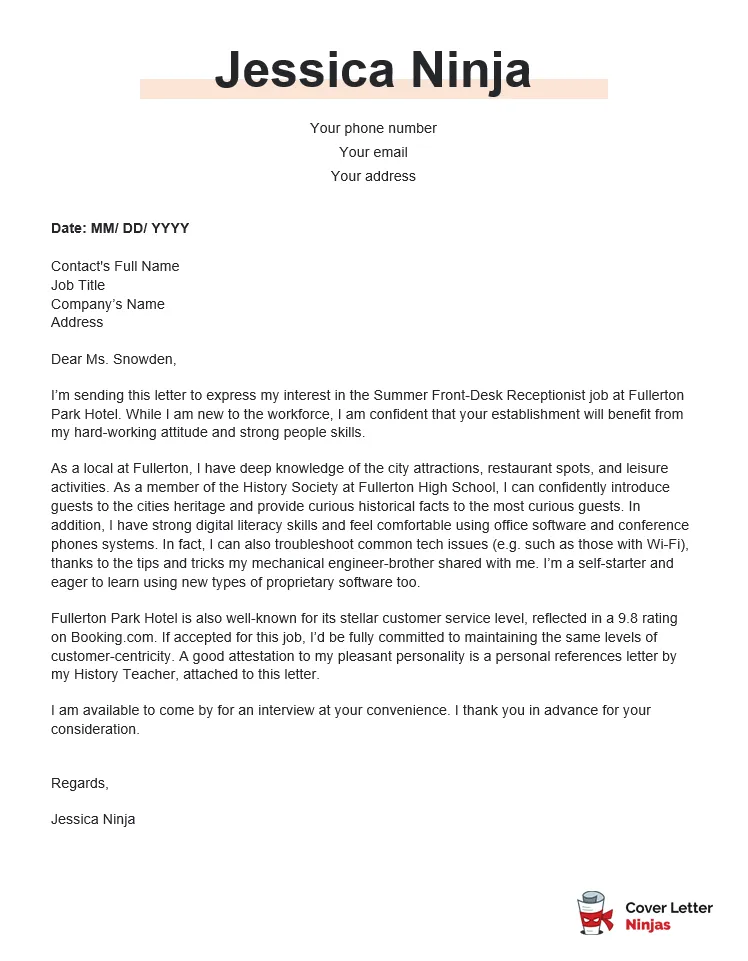
Cover Letter School Application Secrets Revealed
Navigating the school application process can feel like a daunting task, but one often-overlooked element holds the key to making a lasting impression—the cover letter. More than just a formality, a well-crafted cover letter can significantly boost your chances of acceptance. This guide unveils the secrets to writing a cover letter that not only meets expectations but also sets you apart from the competition. We will delve into the core components, provide practical tips, and highlight common pitfalls to avoid. Get ready to transform your cover letter from a simple document into a powerful tool that showcases your unique qualities and aspirations.
Understanding the Purpose of a Cover Letter
Why a Cover Letter Matters

A cover letter serves as your personal introduction, offering a glimpse into your personality, motivations, and suitability for the school. It provides a space to expand upon the information presented in your resume or application form, allowing you to tell your story in a compelling way. Admissions committees use cover letters to assess your communication skills, understand your genuine interest in their institution, and gauge how well you align with their values and goals. A strong cover letter shows that you have put in the effort to research the school and understand what makes it a good fit for you.
Key Elements of a Cover Letter
Personalized Introduction
Start with a captivating introduction that immediately grabs the reader’s attention. Address the admissions committee or a specific individual, if possible. Clearly state the purpose of your letter—to express your interest in a particular program or position. Mention where you learned about the opportunity and what initially sparked your interest in the school. Avoid generic greetings and instead, show that you have taken the time to personalize your message. Use the image of a personalized introduction for this paragraph to attract users.
Highlighting Relevant Skills and Experiences

The body of your cover letter should showcase your most relevant skills and experiences. Tailor your content to align with the requirements and values of the school. Provide specific examples of how your past experiences have prepared you for success in your chosen program. Quantify your achievements whenever possible, using numbers and data to demonstrate the impact of your contributions. This section should be concise and focused, highlighting only the most pertinent information.
Demonstrating Your Passion and Interest
Express your genuine enthusiasm for the school and its programs. Explain what attracts you to this particular institution—its research opportunities, faculty, campus culture, or specific courses. Show that you have researched the school and understand its mission and values. Avoid generic statements and instead, provide concrete examples of how your goals align with the school’s offerings. Use the image of a student passionate about a subject, to highlight the importance of showing enthusiasm.
Crafting a Compelling Body Paragraph
Tailoring Your Letter to the School

Adapt your cover letter to each school you apply to. Research the school’s specific requirements, values, and programs. Identify the key aspects that resonate with you and incorporate them into your letter. This shows that you are genuinely interested in attending their institution. Demonstrate you have taken the time to learn more about the school beyond a surface level understanding. Use the image of a student adjusting their cover letter for a school to make this point.
Showcasing Your Achievements
Use the body of your cover letter to highlight key achievements, experiences, and skills that make you a strong candidate. Avoid simply listing items from your resume. Instead, provide context and explain how each experience has prepared you for success in the program or role you are seeking. Show that you have the necessary abilities to thrive in the school environment.
Expressing Your Goals and Aspirations
Clearly articulate your academic or career goals and explain how the school’s programs or resources will help you achieve them. Show that you have a vision for your future and a plan to get there. Demonstrate that you have thought about what you want to achieve and how this school can help you succeed. This will demonstrate your preparedness and drive to succeed.
Writing a Strong Conclusion

Reiterating Your Interest
Reiterate your interest in the school and program. Briefly summarize your key qualifications and why you are a good fit. Reinforce your enthusiasm for the opportunity and thank the reader for their time and consideration. This should leave a strong, positive impression on the admissions committee.
Call to Action
End with a clear call to action. Indicate your willingness to provide additional information or attend an interview. Provide your contact information and express your anticipation of hearing from them soon. Make it easy for the admissions committee to take the next step.
Common Mistakes to Avoid

Generic Letters
Avoid using generic cover letters that could apply to any school. Tailor each letter to the specific institution, highlighting the relevant programs, values, and opportunities. Generic letters show a lack of effort and can significantly diminish your chances of acceptance. Show the admissions committee that you have researched their school.
Typos and Grammatical Errors
Proofread your cover letter meticulously to eliminate typos, grammatical errors, and spelling mistakes. These errors create a negative impression and can make you appear careless. Always proofread and get a second set of eyes to ensure accuracy. Use the image of someone proofreading a document to enhance this point.
Ignoring Application Instructions

Carefully read and follow all application instructions. If the school specifies a certain format, length, or content, adhere to those guidelines precisely. Ignoring these instructions can lead to your application being rejected. Always ensure compliance with the school’s requirements.
Formatting and Presentation Tips
Font and Spacing Recommendations
Use a professional and readable font, such as Times New Roman, Arial, or Calibri, with a font size between 11 and 12 points. Use consistent spacing (single or 1.15) and ample margins for easy readability. Use the image related to font and spacing.
Proofreading Checklist

Before submitting your cover letter, thoroughly proofread it for any errors. Use a checklist to ensure that you have addressed all the key elements, such as correct grammar, spelling, and punctuation. Always double-check the school’s name, program title, and the recipient’s name. Use the image of a proofreading checklist to enhance this point.
Seeking Feedback
Ask trusted friends, family members, or mentors to review your cover letter and provide feedback. They can offer fresh perspectives and help you identify areas for improvement. Consider getting feedback from a career counselor or writing specialist to ensure your cover letter is polished and effective. This can greatly enhance the quality of your cover letter.
In conclusion, a well-crafted cover letter is an essential component of a successful school application. By understanding its purpose, incorporating key elements, and avoiding common mistakes, you can create a cover letter that effectively showcases your qualifications and aspirations. Remember to tailor your letter to each school, proofread meticulously, and seek feedback to ensure it is polished and impactful. With these secrets revealed, you are well-equipped to write a cover letter that grabs attention and increases your chances of acceptance. Good luck with your school application!