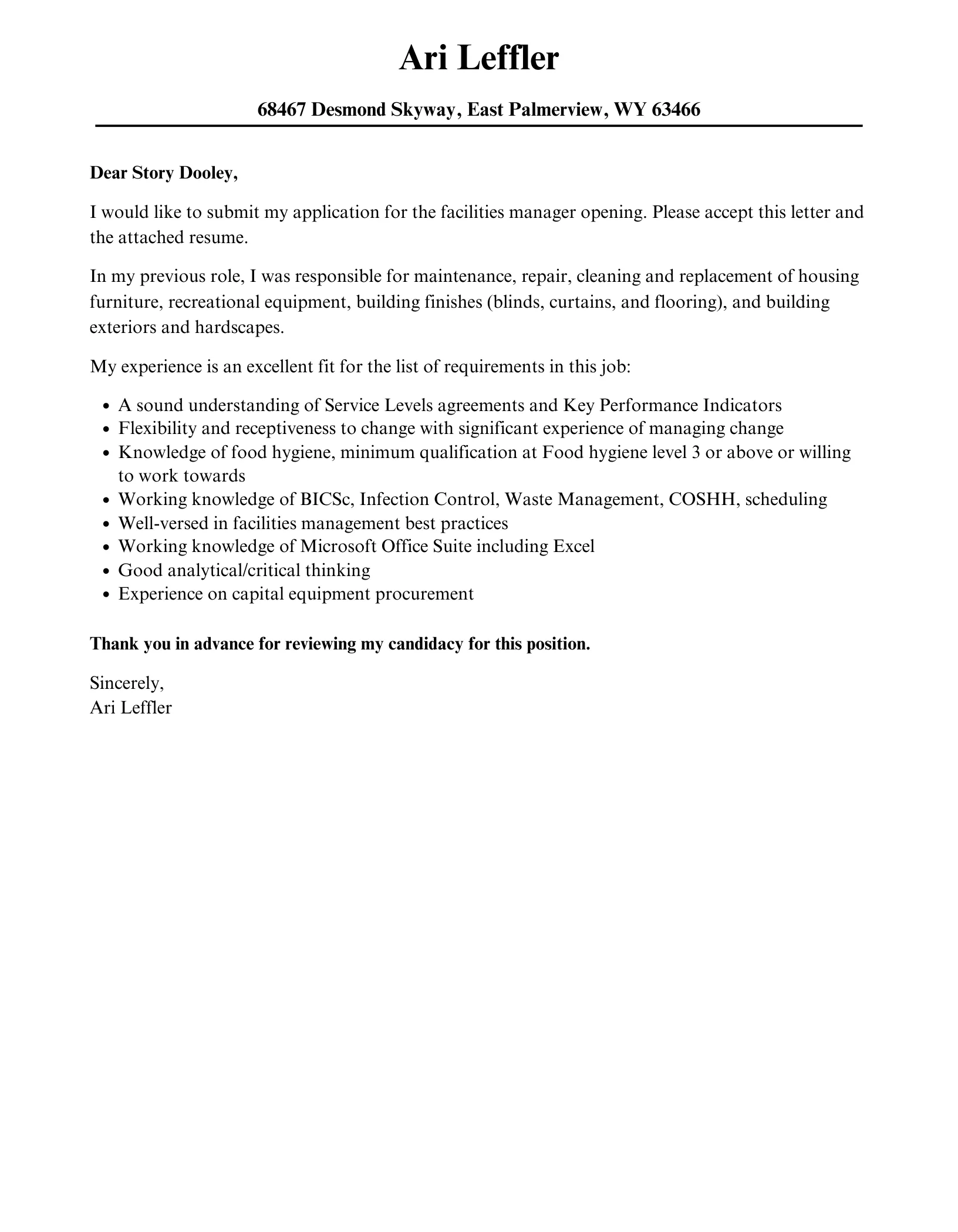
Key Elements of a Facilities Manager Cover Letter
A well-crafted cover letter is your first chance to impress a potential employer and secure an interview. As a facilities manager, you’re tasked with ensuring smooth operations, and your cover letter should reflect that same efficiency and professionalism. This article will help you navigate the intricacies of writing a compelling cover letter, providing essential tips and insights that will help you stand out from the competition. We’ll break down the key components, from the header to the closing, ensuring your application makes a lasting positive impression. A successful cover letter is not just a formality it’s a strategic tool that allows you to highlight your unique qualifications and showcase your understanding of the job requirements.
Header and Contact Information
The header of your cover letter is the foundation of professionalism and attention to detail. It’s essential to include all the necessary contact information so the hiring manager can easily reach you. This section sets the stage for the rest of your letter, so it’s important to get it right from the start. A well-formatted header conveys a sense of orderliness and organization, which are critical qualities for a facilities manager. By presenting your information clearly and concisely, you demonstrate your commitment to accuracy and professionalism, making a strong first impression and increasing the chances of your application moving forward.
Your Name and Contact Details

Begin with your full name, centered or left-aligned. Beneath your name, include your phone number, professional email address, and your LinkedIn profile URL if you have one. Ensure that your email address is professional and free of any casual or informal elements. Double-check all contact details for accuracy before submitting your cover letter to avoid any potential communication issues. Having the correct and easily accessible information can greatly enhance the efficiency of the initial contact, which is crucial for your application’s success, showing you are organized and easy to reach is vital.
Date and Recipient’s Information
Following your personal contact details, include the date on which you are submitting the cover letter. Below the date, provide the hiring manager’s name (if known), their title, and the company’s name. Also include the company’s address. Addressing the letter to a specific person shows that you’ve done your research and are genuinely interested in the role. If the hiring manager’s name is unavailable, opt for a professional greeting like ‘Dear Hiring Manager’. Accurate and properly formatted information highlights your attention to detail, a key attribute for a facilities manager dealing with various organizational aspects.
Professional Greeting
Start your cover letter with a formal greeting. If you know the hiring manager’s name, use ‘Dear Mr./Ms./Mx. [Last Name]’. Otherwise, use ‘Dear Hiring Manager’ or ‘Dear [Company Name] Hiring Team’. Avoid casual greetings such as ‘Hello’ or ‘Hi’. A professional greeting sets a respectful and formal tone. This greeting immediately signals to the recipient that you are serious about the opportunity and respectful of professional communication standards. Correctly using a formal greeting shows you have good communication skills, which are important for any facilities manager.
Body Paragraph 1 The Hook

The opening paragraph is crucial; it’s your hook to grab the reader’s attention. Begin by stating the position you are applying for and where you found the job posting. Then, briefly explain why you are interested in the position and what makes you a suitable candidate. Highlight a key achievement or skill that aligns with the job requirements. For instance, if the job posting emphasizes project management skills, mention your experience with successful project completion, keeping costs low, and exceeding deadlines. This allows you to immediately capture the hiring manager’s interest and set the stage for the rest of your cover letter, setting the tone for the skills and enthusiasm you bring to the table.
Highlighting Your Key Skills and Experience
The main body of your cover letter should focus on your relevant skills and experience. Review the job description and identify the key requirements. Use specific examples from your work history to demonstrate how you have successfully met these requirements. For instance, if the job requires experience with building maintenance, describe your experience in managing maintenance schedules, coordinating with contractors, and ensuring efficient and timely repairs. Quantify your achievements whenever possible. Using precise data and metrics will give you a notable advantage. Demonstrate your capabilities by aligning your skills and experience with the job’s requirements.
Quantifiable Achievements
Use quantifiable achievements to showcase your impact in previous roles. Rather than simply stating that you managed a team, mention the size of the team, the projects you completed, and the results achieved. For example, ‘Reduced maintenance costs by 15% by implementing a new preventative maintenance program’ or ‘Improved employee satisfaction scores by 20% through facility upgrades’. By including quantifiable achievements, you provide tangible evidence of your capabilities and demonstrate the value you bring to a role. These metrics can significantly increase your credibility and demonstrate your ability to make a practical impact in a new role.
Relevant Certifications and Training

Include a section detailing your relevant certifications and training. As a facilities manager, certifications such as Certified Facility Manager (CFM), LEED AP, or other industry-specific credentials can significantly boost your application. List these certifications clearly, including the issuing organization and the date of certification. Also, mention any training programs or workshops that have equipped you with the necessary skills and knowledge. This section validates your professional competence and shows a commitment to continuous learning, which is essential in the ever-changing field of facilities management. This detailed section will show your dedication to professional development.
Body Paragraph 2 - Why You’re a Great Fit
In your second body paragraph, explain why you are a great fit for the company and the specific role. Research the company to understand its mission, values, and culture. Align your skills and experience with the company’s needs and goals. Mention specific aspects of the company’s work that excite you. For example, if the company emphasizes sustainability, you can highlight your experience with energy-efficient building practices or sustainable resource management. Also, describe how your values and goals align with the company’s values. Showing that you have a clear understanding of the company’s objectives and how you can contribute to its success greatly enhances your application.
Expressing Enthusiasm and Company Alignment
Demonstrate your enthusiasm for the company and the role. Expressing genuine interest in the company and the opportunity can leave a positive impression. Highlight what specifically attracts you to the company and the position. This could be the company’s values, mission, culture, or its initiatives. Show that you have done your research and are genuinely interested in being a part of their team. Also, explain how your professional objectives are in line with the company’s mission and aspirations. This can be done by mentioning how you can contribute to ongoing projects, or how your skills align with the company’s overall objectives.
Body Paragraph 3 Call to Action
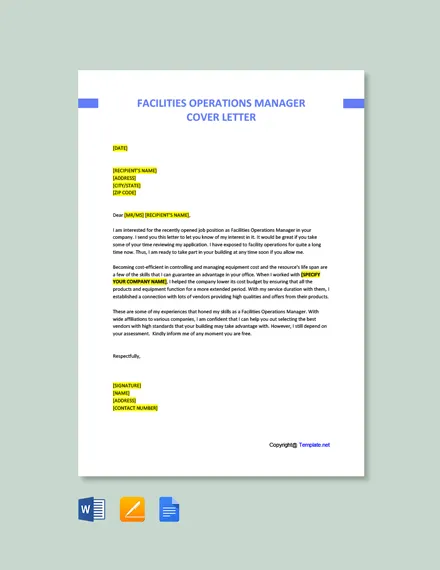
In your third body paragraph, include a clear call to action. Express your interest in an interview and state your availability. Make it easy for the hiring manager to take the next step. For example, you can say something like, ‘I am eager to discuss my qualifications in detail and am available for an interview at your earliest convenience.’ Provide your contact information again in this paragraph for easy reference, and make sure to reiterate your enthusiasm for the opportunity. Always thank the reader for their time and consideration. A compelling call to action helps the hiring manager know how to move forward and shows your enthusiasm.
Closing the Letter
Close your cover letter with a professional sign-off. The closing should be polite and appropriate. Using a professional closing will leave the reader with a positive impression of your cover letter. The closing should be consistent with the tone of the rest of your letter. Always thank the hiring manager or hiring team for their time and consideration before you sign off. A polished closing will reflect your professionalism and attention to detail.
Formal Closing and Signature
Use a formal closing such as ‘Sincerely,’ ‘Respectfully,’ or ‘Best regards.’ Leave space for your signature if submitting a hard copy. If submitting electronically, you can type your name below the closing. Proofread your entire cover letter one last time before submitting it. Check for any grammatical errors or typos. Ensuring your cover letter is error-free reflects your professionalism and attention to detail. A well-crafted cover letter is a key element in a successful job application. By following these guidelines, you can create a compelling cover letter that showcases your skills and experience.