Cover Letter Secrets
Crafting a cover letter can often feel like navigating a maze, but mastering the art of the informal cover letter can significantly boost your chances of landing that coveted interview. This guide unveils the secrets to creating a cover letter that not only impresses but also resonates with the hiring manager on a personal level. We’ll explore the nuances of informal writing, the strategic placement of your skills, and the critical elements that set a successful cover letter apart. From understanding when an informal approach is best to perfecting your tone and language, this article equips you with the tools to make your application shine. So, get ready to transform your cover letter from a formality into a powerful personal statement that grabs attention and opens doors.
Understanding the Informal Cover Letter
The informal cover letter differs from its more formal counterpart primarily in tone and style. It adopts a conversational approach, mirroring the way you would communicate in a professional email or a face-to-face meeting. The key is to strike a balance – maintaining professionalism while injecting personality and enthusiasm. This doesn’t mean sacrificing clarity or accuracy; instead, it involves using a more approachable language, often avoiding overly formal phrases. The aim is to create a connection with the reader, making your application more memorable and human. This type of cover letter can be especially effective in industries that value creativity, innovation, and a collaborative work environment. It provides a glimpse into your communication style, allowing the hiring manager to gauge how you might fit into their team’s dynamics. It’s a strategic move to differentiate yourself and showcase your personality.
When to Use an Informal Cover Letter
Knowing when to use an informal cover letter is crucial. It’s most appropriate for roles and companies that promote a culture of approachability and openness. Consider the industry: tech startups, creative agencies, and companies with a modern, less hierarchical structure often welcome a more casual tone. If the job description uses words like ’team player,’ ‘innovative,’ or ‘fun,’ it could be a sign that an informal cover letter would be well-received. Also, research the company culture beforehand. Check out their website, social media, and employee reviews to gauge their communication style. If they appear to be relaxed and collaborative, an informal cover letter might be just the ticket. However, always consider the specific job requirements and the hiring manager’s preferences; when in doubt, err on the side of slightly more formal, but still personable.
Benefits of an Informal Approach
The benefits of adopting an informal tone in your cover letter are numerous. Firstly, it makes you more relatable. A conversational style helps to humanize your application, making it easier for the hiring manager to connect with you on a personal level. Secondly, it showcases your personality. In a sea of generic applications, an informal cover letter lets your authentic self shine through, making you more memorable. This can be particularly advantageous if the job requires strong interpersonal skills or a collaborative mindset. Thirdly, it demonstrates your ability to adapt. Showing that you can adjust your communication style based on the situation indicates flexibility and an understanding of professional etiquette. Finally, it can help to convey your enthusiasm more effectively. Using energetic and engaging language can make your interest in the position clear, increasing your chances of securing an interview.
Formatting Your Informal Cover Letter
Formatting an informal cover letter requires attention to detail. While the tone is relaxed, the structure should remain professional. This combination demonstrates your ability to balance approachability with competence. Proper formatting not only presents your content in an organized manner but also reflects your understanding of professional standards. It’s about striking the right balance—where you convey a friendly tone without sacrificing professionalism. This approach shows that you understand the importance of making a good first impression and can make your application more appealing to the hiring manager. Following a consistent layout allows you to present a well-organized and easy-to-read document that highlights your skills and experiences in an effective and memorable way.
Header Essentials

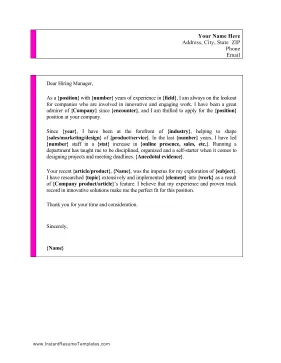
The header of your informal cover letter should be clean and concise. Start with your full name and contact information, including your phone number, email address, and, optionally, your LinkedIn profile URL. Following this, include the date and the recipient’s information: their name, job title, and the company’s name and address. Ensure your header is well-formatted and easy to read. Avoid using overly decorative fonts or unnecessary graphics, as they can distract from the content. The goal is to provide essential contact details while maintaining a professional appearance. Proper header formatting sets the tone for the entire letter and ensures the hiring manager can easily contact you if they’re interested in your application. Remember to double-check all the details for accuracy before sending your cover letter.
Addressing the Hiring Manager
When addressing the hiring manager in your informal cover letter, use their name whenever possible. Researching the hiring manager’s name shows initiative and personalizes your letter. If you can’t find the name, using a general greeting like ‘Dear Hiring Team’ or ‘Hello [Company Name] Team’ is acceptable, but always aim for a personalized approach. Start with a friendly and professional greeting that sets a positive tone for the rest of the letter. Avoid overly formal salutations; a simple ‘Hi [Name]’ or ‘Hello [Name]’ is often more appropriate. Tailoring your greeting to reflect the company’s culture can further enhance your connection. The goal is to strike a balance between familiarity and respect, making the hiring manager feel that you’ve taken the time to get to know them and the company.
Body Paragraph Structure
The body paragraphs are the heart of your informal cover letter. Use a clear and engaging structure to convey your message effectively. Start with a brief, attention-grabbing opening that highlights your interest in the role and company. Then, delve into your relevant experience and skills, providing specific examples and quantifiable achievements. Use a conversational tone to share your accomplishments and how they align with the job requirements. Show, don’t just tell, by providing concrete examples of your past successes and how they can benefit the company. This approach allows the reader to get a sense of your personality and passion for the role. Organize your paragraphs logically, using transitions to connect ideas and maintain a smooth flow. The goal is to make your cover letter both informative and easy to read, ensuring the hiring manager can quickly grasp your qualifications.
Closing with Confidence

Your closing should reinforce your interest and invite further contact. Thank the hiring manager for their time and consideration, and express your enthusiasm for the opportunity. Include a call to action, such as inviting them to reach out to schedule an interview. Keep the closing concise and professional. Avoid phrases like ‘Thanking you in advance’; instead, opt for a more confident tone. For example, ‘I look forward to the opportunity to discuss my qualifications further.’ Reiterate your interest in the role and company. Provide your contact information one last time. This concluding statement demonstrates that you’re ready to move forward in the hiring process, leaving a lasting positive impression on the hiring manager.
Informal Tone and Language
The tone and language you use are key to making your cover letter informal. Your choice of words should reflect your personality and create a sense of connection with the reader. This approach helps to build rapport with the hiring manager, making your application more memorable. To successfully navigate this, it’s essential to strike a balance between professional writing standards and a conversational style. This allows you to come across as approachable and enthusiastic while still presenting yourself in a professional manner. Using clear and engaging language will make your cover letter stand out. The tone should be consistent throughout the entire letter, ensuring that the hiring manager gets a clear understanding of your personality and communication style. Use friendly language that still maintains the formality required for professional communications.
Using a Conversational Style
Employing a conversational style in your cover letter means writing as if you’re speaking directly to the hiring manager. Use a more relaxed tone, similar to how you’d communicate in an email or a face-to-face meeting. Avoid overly formal phrases and opt for simpler, more direct language. Use contractions like ‘I’m,’ ‘can’t,’ and ‘won’t’ to sound more natural. Share your experiences in a storytelling format, using anecdotes to illustrate your skills and accomplishments. Keep the language positive and enthusiastic, allowing your personality to shine through. By speaking in a conversational manner, you humanize your application and make yourself more relatable to the hiring manager. This approach fosters a sense of connection and makes your cover letter more engaging and memorable. The goal is to present yourself as someone the hiring manager would enjoy speaking with and working alongside.
Avoiding Overly Formal Phrases

In an informal cover letter, it’s important to avoid overly formal phrases. These phrases can make your letter sound stilted and impersonal, undermining the conversational tone you’re trying to achieve. Some examples of formal phrases to avoid include ‘herewith,’ ‘pursuant to,’ and ‘in accordance with.’ Replace them with more straightforward and approachable language. Instead of ‘I am writing to express my interest,’ try ‘I’m excited to apply for the position.’ Rather than ‘I have enclosed my resume for your review,’ consider ‘You’ll find my resume attached.’ Opt for more concise and direct phrasing that feels like a natural conversation. This will make your cover letter feel more personal and relatable, reflecting your genuine enthusiasm for the opportunity and creating a positive impression on the hiring manager.
Showcasing Personality and Enthusiasm
Showcasing your personality and enthusiasm is crucial in an informal cover letter. Let your authentic self shine through by injecting your unique perspective and genuine excitement for the opportunity. Use lively and energetic language to convey your interest in the role and the company. Share anecdotes, stories, or brief personal insights that highlight your skills and experiences in a relatable way. Use humor (appropriately) if it aligns with the company culture and your personality. Show the hiring manager who you are beyond your resume. Convey your passion for the job. This will make your cover letter memorable and differentiate you from other candidates. Let your genuine interest shine through, making the hiring manager more likely to connect with you on a personal level.
Content Strategies to Impress
To make your informal cover letter truly impressive, you need a strategic approach to content. This approach will highlight your skills, experiences, and enthusiasm. Crafting content that grabs attention is key to differentiating your application. By focusing on relevant achievements, showcasing quantifiable results, and clearly expressing your genuine interest, you make a strong case for why you’re the perfect candidate. Using these strategies, you’ll transform your cover letter from a mere formality into a powerful statement of your value.
Highlighting Relevant Experience

When highlighting your relevant experience, focus on the skills and experiences that align with the job requirements. Tailor your letter to match the specific needs of the position, ensuring that you directly address the qualifications outlined in the job description. Provide specific examples that showcase your accomplishments and how they relate to the role. Instead of just listing your responsibilities, describe how you used your skills to achieve positive results. Quantify your achievements whenever possible, using numbers and data to demonstrate your impact. By presenting a clear connection between your experiences and the job requirements, you demonstrate your ability to succeed in the role. Make it easy for the hiring manager to see how your past accomplishments will benefit the company.
Quantifying Achievements
Quantifying your achievements is a powerful way to demonstrate your value. Instead of simply stating what you did, provide specific metrics and data to support your claims. For example, instead of saying ‘Improved sales,’ say ‘Increased sales by 15% in Q2.’ Use numbers to illustrate the impact of your work and to make your accomplishments more compelling. If you managed a project, mention how you brought it in on time and under budget. When possible, provide data related to efficiency, cost savings, or customer satisfaction. This approach gives the hiring manager concrete evidence of your capabilities and makes your application more credible. Quantifiable achievements show that you not only possess the required skills but also know how to deliver measurable results. Make your impact clear with facts and figures.
Expressing Genuine Interest
Expressing genuine interest is crucial to leave a lasting impression. Show that you’ve researched the company and understand its values, mission, and culture. Explain why you are drawn to the specific role and what excites you about the opportunity. Mention specific projects, products, or initiatives that resonate with you. This shows the hiring manager that you care. Use enthusiastic language to convey your excitement for the role. Share what you hope to achieve within the company. Demonstrate that you see yourself as a valuable member of the team and are committed to contributing to the company’s success. Make your interest palpable and clear. Doing so will make your application stand out from other candidates and improve your chances of landing an interview.
Proofreading and Polishing

Proofreading and polishing your informal cover letter is essential to ensure that it is error-free and professional. This step ensures that you present yourself as a detail-oriented and competent professional. Mistakes, typos, and grammatical errors can undermine your credibility and damage your chances of getting hired. Before you submit your cover letter, carefully review it for any potential issues. By taking the time to proofread and edit your application, you present yourself as a serious contender. Proofreading is about more than just checking for errors; it’s about making sure your letter flows, is clear, and highlights the best aspects of your qualifications.
Common Mistakes to Avoid
Avoid common mistakes that can undermine your application. First, ensure that your cover letter is tailored to the specific job and company. Sending a generic cover letter shows that you haven’t taken the time to understand the position. Second, avoid using excessive jargon or overly formal language. Keep your language clear, concise, and conversational. Third, don’t include irrelevant information or details that don’t align with the job requirements. Stay focused on your skills and experiences that directly relate to the position. Fourth, proofread your cover letter for errors. Correcting any spelling, grammar, and punctuation issues shows that you have attention to detail. By avoiding these mistakes, you demonstrate professionalism and increase your chances of making a positive impression on the hiring manager.
Proofreading Checklist
Create a proofreading checklist to ensure you don’t miss any important details. Review your cover letter for any spelling and grammar errors. Check the formatting to ensure it is consistent and professional. Confirm that your contact information is correct and up-to-date. Verify the recipient’s name, job title, and company details for accuracy. Ensure that your cover letter is tailored to the job requirements. Make sure you have addressed all the key aspects of the role. Read your cover letter aloud to identify any awkward phrasing or grammatical errors. Have a friend or family member review your cover letter. A fresh set of eyes can often spot errors that you might have missed. By using a proofreading checklist, you can ensure that your cover letter is polished and professional. Proofreading is a critical step in the application process.
Seeking Feedback
Seeking feedback is a valuable step to ensure your informal cover letter is strong and effective. Share your cover letter with trusted friends, family members, or career counselors. Ask them to provide honest and constructive criticism. Pay close attention to their feedback. Ask questions about how the letter reads, and how well it reflects your personality and qualifications. Ask for their suggestions on how to improve the clarity, tone, and content. Use their feedback to refine your cover letter. Consider making revisions based on the feedback and asking for a second round of reviews. By actively seeking and incorporating feedback, you can improve the quality and effectiveness of your cover letter. Taking advice can help refine your letter, ultimately making your application stand out. Seeking feedback shows your dedication to presenting your best self.