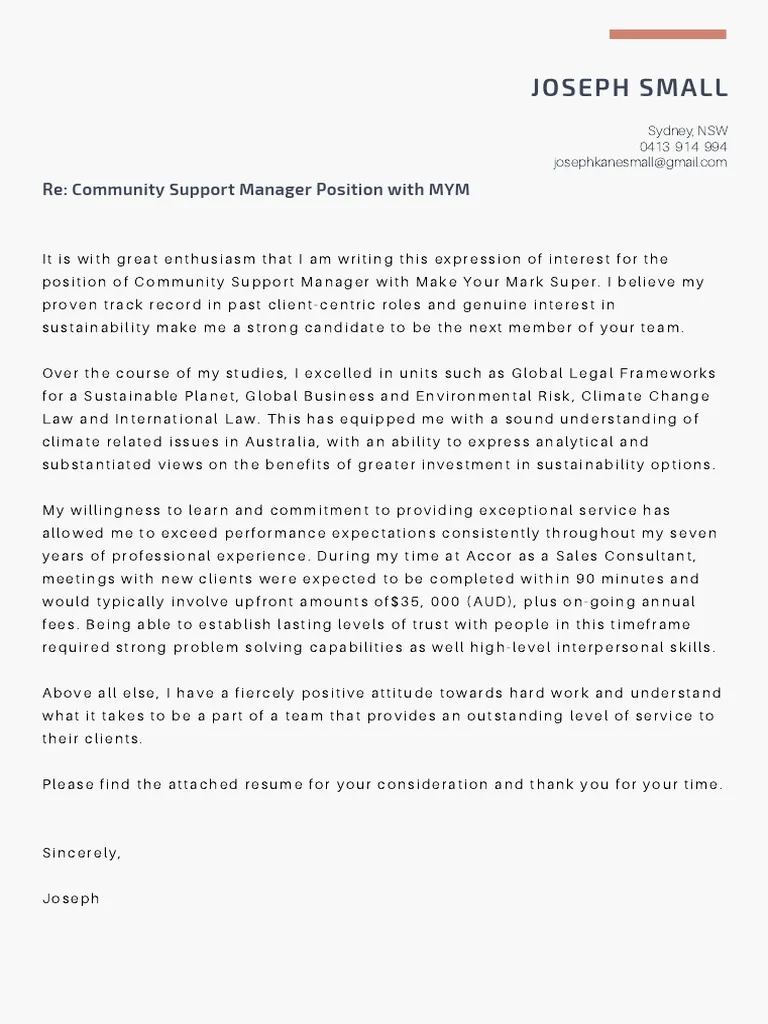
Crafting a Winning Cover Letter
A cover letter is your first impression on a potential employer, serving as a crucial bridge between your resume and the hiring manager. It is your chance to introduce yourself, highlight your skills, and express your enthusiasm for the community manager role. In a competitive job market, a well-crafted cover letter is not just a formality but a strategic tool to make you stand out. It allows you to go beyond the basic information on your resume, offering a narrative that showcases your personality, passion, and understanding of the job requirements. This initial document sets the tone for your application, demonstrating your attention to detail and your ability to communicate effectively. A compelling cover letter can significantly increase your chances of securing an interview, ultimately leading you closer to your career goals. Therefore, investing time and effort in crafting a winning cover letter is an investment in your future.
Researching the Company and Role
Thorough research is a cornerstone of a successful cover letter. Before you begin writing, delve deep into the company’s mission, values, and recent activities. Visit their website, explore their social media presence, and read news articles or press releases to understand their current projects and initiatives. This research enables you to demonstrate genuine interest and tailor your cover letter to their specific needs. Similarly, study the job description meticulously. Identify the key responsibilities, required skills, and preferred qualifications. This analysis will guide you in selecting the most relevant experiences and accomplishments to highlight. Furthermore, understanding the company’s culture will help you align your tone and language to fit their environment. Showcasing this level of understanding not only impresses the hiring manager but also positions you as a candidate who has taken the time to learn about the organization and is genuinely excited about the opportunity.
Highlighting Relevant Skills and Experience

Your cover letter is an opportunity to connect your skills and experiences with the requirements of the community manager role. Start by listing your key skills, such as communication, social media management, content creation, and community engagement. Then, provide specific examples of how you have utilized these skills in previous roles or projects. Detail your experience with different social media platforms, including your understanding of their algorithms and best practices. Moreover, showcase your ability to create engaging content, manage online communities, and respond to inquiries. Quantify your achievements whenever possible by providing specific metrics such as increased engagement rates, follower growth, or successful campaign results. By directly linking your skills and experiences to the job requirements, you demonstrate that you possess the necessary qualities to excel in the community manager position, making your application highly relevant and compelling to the reader.
Understanding the Community Manager Role
A deep understanding of the community manager’s role is essential for crafting an impactful cover letter. The role transcends simply posting content on social media; it encompasses building and nurturing a strong online presence, engaging with the audience, and fostering a sense of community. Community managers act as the voice of the brand, representing its values and connecting with its audience. They must be adept at communication, both written and verbal, and possess strong interpersonal skills. Moreover, community managers are often responsible for monitoring social media channels, responding to inquiries, and addressing customer issues. Demonstrating your understanding of these responsibilities in your cover letter will show the hiring manager that you know what the job entails and are prepared to handle its challenges. This understanding will further showcase your suitability for the position, highlighting your proactive approach and dedication to fostering a thriving online community.
Key Responsibilities of a Community Manager
A community manager’s role encompasses various key responsibilities, all geared toward building and maintaining a vibrant online presence. These include creating and curating engaging content, managing social media accounts, and monitoring online conversations. They are also responsible for responding to inquiries and feedback, resolving customer issues, and fostering positive relationships within the community. Moreover, community managers often analyze data to track engagement metrics, identify trends, and make data-driven decisions. This involves using analytics tools to measure the success of campaigns and content, as well as understanding the needs and preferences of the audience. In your cover letter, emphasize your experience in these areas, providing examples of how you have successfully managed these responsibilities in past roles. Highlighting your ability to handle these tasks will show that you possess the skills and experience necessary to excel as a community manager.
Demonstrating Community Management Skills

To demonstrate your community management skills effectively in a cover letter, you should go beyond simply listing your abilities. Provide concrete examples of how you have applied these skills in real-world situations. Highlight your experience in content creation by describing successful campaigns you have managed or specific pieces of content you have developed. Showcase your communication skills by explaining how you have effectively engaged with audiences, resolved conflicts, and fostered positive relationships. Mention your experience with social media management, including your proficiency with various platforms, understanding of algorithms, and knowledge of best practices. Furthermore, demonstrate your ability to analyze data and use it to improve engagement and drive results. By showcasing your skills with specific examples, you will convince the hiring manager of your ability to excel in the community manager role and drive meaningful results.
Showcasing Experience with Social Media Platforms
Social media platforms are essential tools for a community manager. Your cover letter should therefore detail your experience with various platforms. Specify which platforms you have managed, such as Facebook, Twitter, Instagram, LinkedIn, and others. Provide examples of your successes on each platform, including how you increased engagement, grew follower counts, or drove traffic to the brand’s website. Mention any experience with social media management tools, such as Hootsuite, Buffer, or Sprout Social. Also, demonstrate your understanding of each platform’s unique features, algorithms, and audience demographics. Showcase your ability to create content tailored to each platform, ensuring your efforts align with the brand’s overall strategy. By clearly demonstrating your proficiency with social media platforms, you will assure the hiring manager of your ability to manage the brand’s online presence effectively, driving growth and engagement.
Providing Examples of Community Engagement
Community engagement is at the heart of a community manager’s responsibilities. Your cover letter should showcase your ability to foster meaningful interactions with the audience. Describe specific instances where you have actively engaged with users, responded to comments and messages, and facilitated discussions. Share examples of how you have created or participated in online events, contests, or campaigns that have increased engagement and brand awareness. Highlight your experience in building relationships with influencers, brand advocates, and community members. Mention any successful initiatives you have led, such as starting a Facebook group, hosting a Twitter chat, or creating a collaborative content series. Emphasize your ability to create a welcoming and inclusive online environment, where users feel valued and encouraged to participate. By providing concrete examples of your engagement strategies, you will demonstrate your ability to build a strong, active online community.
Quantifying Achievements

Quantifying your achievements is a powerful way to demonstrate the impact of your work as a community manager. Instead of simply stating your responsibilities, provide specific numbers to illustrate your successes. For example, instead of saying “Increased social media engagement,” state “Increased social media engagement by 30% in six months.” If you have grown a social media following, mention the percentage increase or the total number of new followers you gained. If you have managed a campaign, specify the number of impressions, clicks, or conversions generated. Quantifying your achievements adds credibility to your claims and provides the hiring manager with concrete evidence of your abilities. Use metrics to showcase the tangible results of your community management efforts, making your cover letter more compelling and impactful.
Using Action Verbs to Describe Accomplishments
Action verbs can transform your cover letter from passive to dynamic, effectively showcasing your accomplishments and skills. Start each bullet point or statement describing your experiences with strong action verbs such as ‘managed’, ‘created’, ‘implemented’, ‘developed’, ‘increased’, ’led’, ‘organized’, ‘facilitated’, or ‘coordinated’. For example, instead of writing ‘Responsible for managing social media accounts’, write ‘Managed social media accounts, increasing engagement by 25%’. These verbs highlight what you did, how you did it, and the results achieved. They make your cover letter more engaging and demonstrate a proactive approach. Ensure that your verbs align with your accomplishments and provide a clear picture of your skills and abilities. This not only makes your cover letter more impactful but also demonstrates your attention to detail and your ability to communicate effectively.
Tailoring Your Cover Letter to the Job
A generic cover letter rarely impresses. To stand out, tailor your cover letter to each job application. Customize your letter by carefully analyzing the job description and identifying the key requirements and desired skills. Use keywords and phrases from the job description throughout your letter, particularly when describing your experiences and skills. Highlight the specific aspects of your background and qualifications that align with the job’s requirements. Show how your skills and experience directly match the needs of the company and the role. Tailoring your cover letter demonstrates that you have taken the time to understand the specific needs of the employer and are genuinely interested in the position. This personalized approach shows the hiring manager that you are a good fit and increases your chances of getting an interview.
Analyzing the Job Description

Analyzing the job description is a critical step in tailoring your cover letter. Start by carefully reading the description to identify the key responsibilities, skills, and qualifications required for the position. Note the specific keywords and phrases used by the employer. These words represent the language of the company and indicate what they are looking for in a candidate. Highlight the most important requirements and consider how your skills and experience align with each one. For instance, if the job description mentions experience with a specific social media platform or content management system, make sure to highlight your experience with those tools. Analyzing the job description enables you to create a cover letter that speaks directly to the employer’s needs, making your application much more relevant and compelling.
Customizing Your Letter for Each Application
Customizing your cover letter for each job application is key to showcasing your genuine interest and suitability for the role. This involves more than simply changing the company name and job title. You should rewrite sections of your letter to reflect the specific requirements and expectations outlined in the job description. Highlight the skills and experiences that are most relevant to the position, and provide examples of how you have successfully used them in past roles. Research the company to understand its culture, values, and recent activities, and incorporate these findings into your letter to demonstrate your interest. Show that you understand the company’s goals and how you can contribute to their success. By personalizing your cover letter, you will demonstrate to the hiring manager that you have put in the time and effort to understand the opportunity and are genuinely interested in the role.
Structuring Your Cover Letter for Impact
A well-structured cover letter is essential for making a strong impression. Begin with a clear and concise heading that includes your contact information and the date. Then, address the hiring manager by name, if possible. The opening paragraph should immediately capture the reader’s attention, expressing your interest in the position and the company. The body of the letter should be divided into concise paragraphs, each addressing a specific aspect of your qualifications and experiences. Use strong action verbs, and provide specific examples to support your claims. In the closing paragraph, reiterate your interest, thank the hiring manager for their time, and express your eagerness for an interview. A well-structured cover letter guides the reader through your qualifications, making it easy to understand why you are a good fit for the role.
Creating a Strong Opening Statement

The opening statement is the first opportunity to capture the hiring manager’s attention. Instead of starting with a generic greeting, make a strong, memorable statement that immediately conveys your enthusiasm for the role and the company. Express your interest in the specific opportunity, and highlight what makes you excited about the role. Consider including a brief overview of your key skills or accomplishments, or referencing a recent project or initiative of the company that caught your attention. The goal is to create an immediate connection and demonstrate that you understand the company’s needs. An effective opening statement sets the tone for your entire letter, creating a positive first impression that encourages the hiring manager to read further and consider your application. A great opening statement will showcase that you are the right person.
Writing Engaging Body Paragraphs
The body paragraphs are where you elaborate on your qualifications and experiences, providing specific examples to support your claims. Start each paragraph with a clear topic sentence that introduces the main point. Use strong action verbs and quantify your accomplishments whenever possible. Provide concrete examples of your successes, highlighting the skills that are most relevant to the job requirements. Focus on what you achieved in previous roles, and use metrics to demonstrate the impact of your work. Connect your skills and experience to the company’s needs. Avoid using generic statements or simply repeating information from your resume. Make each paragraph engaging and informative, providing the hiring manager with a clear picture of your abilities and qualifications. Your aim is to persuade the hiring manager that you are a valuable candidate.
Crafting a Compelling Closing
The closing paragraph should leave a lasting positive impression and encourage the hiring manager to take action. Restate your interest in the position, and reiterate your enthusiasm for the company. Thank the hiring manager for their time and consideration. Express your eagerness for an interview, and clearly state how you can be reached. Avoid generic phrases like ‘Thank you for your consideration’. Instead, make your closing more personal and specific. For example, you might express your excitement to discuss how your skills and experience can help the company achieve its goals. Keep the closing concise, professional, and action-oriented. By crafting a compelling closing, you increase your chances of securing an interview and taking the next step in the hiring process.
Proofreading and Editing Your Cover Letter

Proofreading and editing are essential steps in ensuring your cover letter is polished and professional. After writing, take the time to carefully review your entire letter for any errors in grammar, spelling, punctuation, and formatting. Mistakes can create a negative impression and undermine your credibility. Read your letter aloud to catch awkward phrasing or unclear sentences. Ask a friend or colleague to review your cover letter for a fresh perspective. They might catch errors that you have missed. Pay close attention to the details, such as the correct use of capitalization and proper sentence structure. Proofreading and editing demonstrate your attention to detail and commitment to quality. A well-proofread cover letter shows that you take your application seriously, which helps you create a favorable impression with the hiring manager.
Checking for Grammar and Spelling Errors
Grammar and spelling errors can instantly undermine your credibility and make it appear that you don’t pay attention to detail. Before submitting your cover letter, meticulously check for these types of mistakes. Use spell-check and grammar-check tools to identify potential issues, but don’t rely solely on these tools. Read your cover letter slowly and carefully, focusing on each word and sentence. Look for common errors, such as incorrect use of ’there’, ’their’, and ’they’re’; or ’to’, ’too’, and ’two’. Check that all your verb tenses are consistent. A well-written cover letter without errors will leave a positive impression on the hiring manager, demonstrating that you take your application and the job seriously.
Ensuring a Professional Tone and Format
A professional tone and format are crucial for making a positive impression. Your cover letter should maintain a formal tone, using clear and concise language. Avoid slang, contractions, and overly casual phrasing. Use professional language throughout, and show respect for the hiring manager and the company. Choose a professional font, such as Times New Roman, Arial, or Calibri, and ensure that your formatting is consistent. Use a standard font size, such as 11 or 12 points, and use consistent spacing and margins. Ensure your cover letter is easy to read and visually appealing. A well-formatted cover letter shows your attention to detail and will help the hiring manager perceive you as a professional candidate. Always save your cover letter as a PDF to ensure that the formatting remains consistent across different devices.