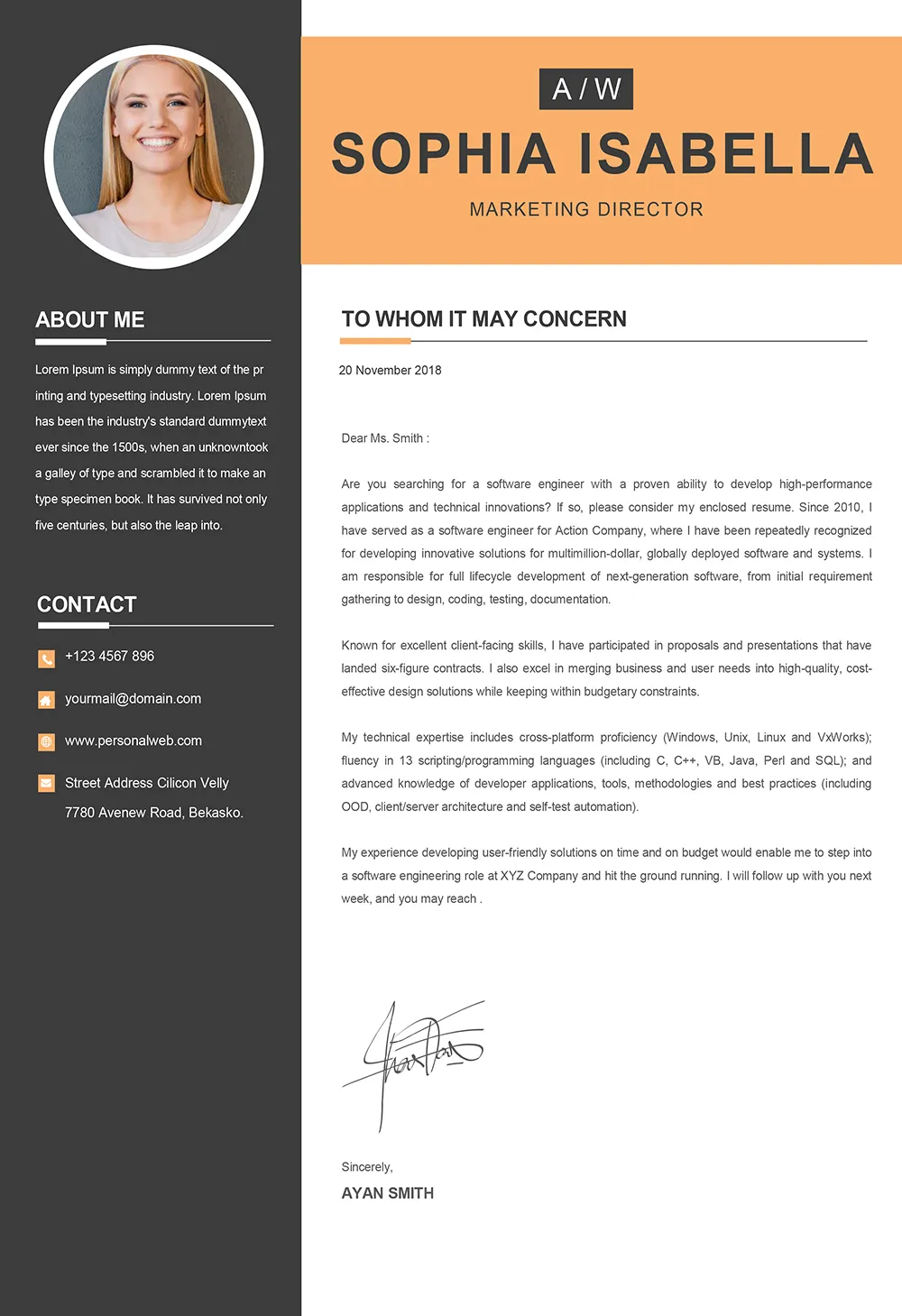
Understanding the Importance of a Cover Letter
In the competitive world of job applications, your CV often takes center stage, but the cover letter plays a crucial supporting role. Many job seekers underestimate its significance, viewing it as a mere formality. However, a well-crafted cover letter for a CV can be the deciding factor in landing you an interview. It’s your first opportunity to make a strong impression and persuade the hiring manager to delve deeper into your qualifications. Consider it your personal introduction, where you can showcase your personality, passion, and unique value proposition that a standard CV might not fully convey. A cover letter enables you to connect your skills and experiences to the specific requirements of the job, demonstrating that you are not just qualified but also a great fit for the company culture. This acts as your personal marketing tool, ensuring you stand out. It can illuminate your career goals and enthusiasm for the position. Image: cover-letter-importance.webp.
Why a Cover Letter Matters
A cover letter isn’t just a formality; it’s a strategic tool to differentiate yourself. It provides a space to expand on your CV, allowing you to highlight achievements and skills relevant to the job. It shows that you understand the company’s needs and are enthusiastic about the opportunity. Unlike a CV, which provides a factual overview, a cover letter provides a narrative. It allows you to communicate your motivations, career goals, and what specifically attracts you to the role and the company. This personal touch can make a significant difference, demonstrating your genuine interest and proactive approach. Furthermore, a cover letter can address potential gaps or weaknesses in your CV, offering context and reassurance. It’s a chance to tell a story, making your application more memorable and increasing your chances of securing an interview, making it an important step in the job application process.
Highlighting Your Key Skills

When writing your cover letter, focus on the skills that align perfectly with the job description. Identify the keywords and requirements specified by the employer and use those to frame your qualifications. Don’t just list your skills; demonstrate how you’ve applied them in previous roles. Use the STAR method (Situation, Task, Action, Result) to provide concise examples of your accomplishments. For instance, instead of stating “Managed projects,” you could write, “In my previous role, I managed the X project, where I successfully Y, resulting in Z.” This approach provides concrete evidence of your abilities. Tailor your examples to resonate with the specific needs of the company. The more relevant your examples are, the more compelling your cover letter becomes, making it evident you’re the right fit for the role. Highlighting skills in this way is better than just stating the skills that you have. Image: cover-letter-skills.webp.
What to include in a Cover Letter for CVs
A well-structured cover letter should include a few key elements. Begin with a professional header that includes your contact information and the date. Address the hiring manager by name if possible. Next, in the introductory paragraph, state the position you’re applying for and how you learned about the opportunity. This section should also express your enthusiasm. The body of your letter should highlight your skills and experiences, providing specific examples of your achievements. Focus on how your qualifications match the job requirements. In the concluding paragraph, reiterate your interest, express gratitude for the opportunity, and include a call to action, such as stating your availability for an interview. Proofread your cover letter for any errors. Make sure to include all relevant information so the reader has everything they need to know to call you for an interview. Keep it concise, focused, and tailored to each job application. Always keep the needs of the hiring manager in mind. Image: cover-letter-content.webp.
Tailoring Your Cover Letter to the Job
One of the biggest mistakes job seekers make is using a generic cover letter. Each cover letter should be tailored to the specific job and company. Review the job description carefully, identify the key requirements, and highlight the skills and experiences that align with them. Research the company’s values, mission, and culture, and then address these points in your letter to demonstrate your genuine interest. Personalize your letter to resonate with the specific needs of the role and the company’s goals. This level of personalization shows that you’ve taken the time to understand the opportunity and are genuinely interested in the position. This effort not only makes your cover letter more compelling but also significantly increases your chances of getting noticed by the hiring manager. It demonstrates that you are not just sending out mass applications but are genuinely interested in the particular job. Image: cover-letter-tailoring.webp.
Researching the Company and Role

Before you start writing your cover letter, take the time to research the company and the specific role you are applying for. Visit the company’s website, read their ‘About Us’ section, and look for any recent news or press releases. Understand their mission, values, and current projects. Explore their social media profiles to get a sense of their culture and brand. This information will help you tailor your cover letter to align with their specific needs and expectations. For the role itself, carefully review the job description. Identify the key responsibilities, required skills, and any preferred qualifications. Use this information to highlight your relevant skills and experiences, demonstrating how you can contribute to the company’s success. By showing that you have researched and understand the role and the company, you significantly increase the effectiveness of your cover letter. This shows that you are serious about the position and have taken the initiative to be prepared. Image: cover-letter-company.webp.
Addressing the Hiring Manager by Name
Addressing the hiring manager by name is a simple yet powerful way to personalize your cover letter and make a positive first impression. It shows that you have taken the time to research and are attentive to detail. Before you start writing, try to find the hiring manager’s name. This information is often available on the job posting, the company’s website, or LinkedIn. If you can’t find the name, try calling the company and asking for the hiring manager’s name for the specific role. While it’s acceptable to use a general salutation like “Dear Hiring Manager,” addressing the letter to a specific person is always preferable. It immediately signals to the reader that you are serious about the position and are not simply sending out a generic application. It adds a personal touch and increases the chances of your cover letter getting the attention it deserves.
Showcasing Your Achievements and Quantifiable Results
Focusing on achievements and quantifying results is essential for making a compelling cover letter. Instead of simply listing your responsibilities, use the STAR method (Situation, Task, Action, Result) to describe your accomplishments. For each example, provide specific details. For instance, if you increased sales, mention the percentage increase. If you improved efficiency, state the time or resources saved. If you led a project, include the project’s objectives and the results achieved. Quantifiable results provide concrete evidence of your skills and abilities, making your accomplishments more impactful. This data allows the hiring manager to see the direct impact of your actions. This type of approach is far more persuasive than vague statements. By providing hard numbers, you illustrate your value and make it easier for the hiring manager to understand your contributions. This approach helps the reader visualize the value that you would bring to the company.
Formatting Your Cover Letter

The formatting of your cover letter is as important as its content. A well-formatted letter is easy to read and visually appealing, making a positive impression. Choose a professional font such as Times New Roman, Arial, or Calibri, and use a font size between 10 and 12 points. Ensure consistent formatting throughout the document, including margins, line spacing, and paragraph spacing. Use headings and subheadings to break up large blocks of text and make it easier for the reader to navigate. Keep your paragraphs concise, ideally no more than 4-5 sentences each. Use bullet points to highlight key achievements or skills when appropriate. Finally, save your cover letter as a PDF to ensure that the formatting is consistent across all devices and to prevent any potential compatibility issues. Your cover letter’s appearance can significantly impact the hiring manager’s first impression. It demonstrates your professionalism and attention to detail. Image: cover-letter-formatting.webp.
Key Formatting Elements
Several key formatting elements can significantly improve the readability and impact of your cover letter. First, include a professional header with your contact information and the date. Make sure your name, phone number, email address, and LinkedIn profile (if applicable) are clearly displayed. Next, use clear headings and subheadings to organize your letter and make it easy for the reader to follow your points. Use proper spacing between paragraphs and sections to create visual separation. Avoid using overly long paragraphs; keep your sentences concise. Use bullet points when listing accomplishments or skills. Choose a professional font that is easy to read, such as Arial or Times New Roman, and use a consistent font size (10-12 points) throughout the document. Paying attention to these formatting details enhances the overall appearance and professionalism of your cover letter.
Proofreading and Editing for Perfection
Proofreading and editing your cover letter is an essential step in the application process. A single typo or grammatical error can undermine your credibility and make a negative impression. Carefully review your cover letter for any errors in grammar, spelling, punctuation, and sentence structure. Read your cover letter aloud to catch any awkward phrasing or run-on sentences. Consider using spell-check and grammar-check tools, but don’t rely on them completely; they may not catch all errors. It’s also a good idea to have a friend or family member read your cover letter. A fresh pair of eyes can often catch mistakes that you might have missed. Make sure your cover letter is free of errors before submitting it. A flawless cover letter demonstrates your attention to detail and professionalism.
Common Mistakes to Avoid

Avoid common mistakes in your cover letter to ensure it makes a positive impression. One of the biggest pitfalls is using a negative tone. Don’t focus on what you lack or what you didn’t like about past roles. Instead, highlight your strengths and enthusiasm for the new opportunity. Another common mistake is writing a generic cover letter that is not tailored to the specific job. Customize each letter to match the requirements of the role and the company’s values. Avoid clichés, such as “I am a team player” or “I am a hard worker.” Instead, provide specific examples that demonstrate your skills and achievements. Finally, be sure to avoid any errors in grammar, spelling, or punctuation. Proofread your letter carefully before submitting it. Avoiding these mistakes will significantly improve the quality of your cover letter and increase your chances of success. Image: cover-letter-mistakes.webp.
Negative Tone and Lack of Enthusiasm
When writing your cover letter, it’s crucial to maintain a positive and enthusiastic tone. Avoid any negative language or statements that could undermine your application. Stay away from phrases like “I am not sure” or “I don’t have experience in…” and focus on what you can bring to the role. Highlight your strengths and express your genuine excitement for the opportunity. Show enthusiasm for the company and the specific role. Show the hiring manager that you are interested in the company and that you want to contribute to their success. Tailor your letter to express your genuine interest in the company’s goals and values. A positive and enthusiastic tone will help you create a positive impression and increase your chances of getting noticed.
Generic Cover Letters
One of the biggest mistakes you can make is sending a generic cover letter. Hiring managers can easily spot letters that are not tailored to the specific job and company. These letters often lack detail and fail to highlight the applicant’s unique qualifications. Always customize your cover letter to align with the requirements of the role and the company’s culture. Research the company’s mission, values, and recent projects. Then, tailor your letter to show how your skills and experiences align with the company’s needs. Highlight the key skills and qualifications specified in the job description, providing examples of how you have used these skills in previous roles. By personalizing your cover letter, you demonstrate to the hiring manager that you are genuinely interested in the position and have taken the time to understand the company’s needs, which will increase your chances of getting the job. Image: generic-cover-letter.webp
Closing Your Cover Letter Effectively

The closing of your cover letter is your last opportunity to make a positive impression and encourage the hiring manager to take the next step. Start by reiterating your interest in the position and the company. Express gratitude for the opportunity to be considered. Include a clear call to action. State your availability for an interview and specify how the hiring manager can contact you. Close with a professional closing, such as “Sincerely,” “Best regards,” or “Thank you.” Make sure your closing is polite and professional. Review your cover letter to ensure it is free of any errors in grammar, spelling, or punctuation. A well-crafted closing leaves the hiring manager with a positive impression and makes it more likely that they will contact you for an interview. A clear and concise closing statement is a great way to finish your cover letter. Image: cover-letter-closing.webp.