Why a Great Cover Letter Matters for Entry-Level Devs
In the competitive world of software development, especially for entry-level positions, your resume is just the starting point. A well-crafted cover letter can be the deciding factor between getting an interview and being overlooked. It’s your chance to go beyond the bullet points of your resume and demonstrate your personality, passion for coding, and suitability for the specific role. For entry-level developers, a strong cover letter is particularly crucial as it allows you to address any perceived lack of experience by showcasing your enthusiasm, relevant skills, and understanding of the industry. It helps you stand out from the crowd and make a memorable first impression on potential employers, thereby increasing your chances of landing that all-important first job in the field.
Highlighting Your Skills Section
The skills section of your cover letter is where you demonstrate your capabilities to prospective employers. Don’t just list your skills; elaborate on how you’ve used them. This is where you can highlight your understanding and experience with programming languages, frameworks, and tools relevant to the job. Remember to tailor this section to match the job description; emphasize the skills most relevant to the role you’re applying for. Even if you lack extensive professional experience, focus on projects, coursework, or personal coding endeavors where you’ve utilized these skills. Use specific examples to illustrate your abilities, showing the hiring manager that you’re not just knowledgeable but also capable of applying that knowledge to solve problems and build solutions.
Technical Skills Showcase
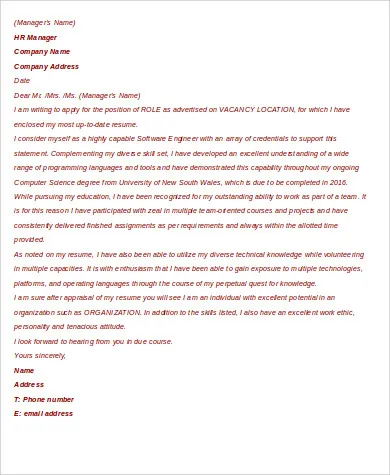
Showcasing your technical skills is essential. List the programming languages, frameworks, and tools you’re proficient in. Be specific – instead of just saying ‘programming languages,’ mention Java, Python, JavaScript, or whatever you’re skilled in. For frameworks, mention React, Angular, or Node.js if you have experience. Tools can include IDEs, version control systems (like Git), and testing frameworks. When describing your skills, include brief examples. For instance, ‘Proficient in Python, having used it to build a web scraper that automated data collection from multiple websites.’ This gives concrete proof of your technical abilities. Tailor these details to align with the requirements of the job description, emphasizing the technologies the employer is looking for. Remember to continuously update this section as you learn new skills.
Soft Skills for Devs
While technical skills are crucial, don’t underestimate the value of soft skills in your cover letter. These are the interpersonal and communication skills that complement your technical abilities. Highlight your problem-solving skills, teamwork abilities, and communication skills. Mentioning your experience with collaborative projects, participation in coding groups, or any presentations you’ve given can illustrate these soft skills. If you’re an effective communicator, detail how you explain complex technical concepts to non-technical colleagues or clients. Problem-solving skills can be demonstrated by describing how you tackled challenges in your projects, emphasizing your ability to analyze, debug, and find solutions. In essence, demonstrate that you are not only a skilled coder but also a valuable team player.
Quantifiable Achievements Section
Quantifiable achievements provide concrete evidence of your accomplishments. Even if you’re an entry-level developer, you likely have projects or experiences that can be quantified. Instead of saying you ‘improved’ something, state by how much. For example, ‘Improved the efficiency of a data processing script by 20% by optimizing the algorithm.’ Use numbers, percentages, or specific metrics to demonstrate the impact of your work. If you’ve contributed to a project, mention how many lines of code you wrote, the number of bugs you fixed, or the number of users your project served. These figures provide a clear picture of your contributions and demonstrate your ability to deliver tangible results. Focus on achievements that are relevant to the role you are applying for to show that you understand the expectations of the job.
Project Examples

When describing your projects, choose the ones that best align with the job description. Don’t just list the project name; provide a brief overview of what the project entailed, the technologies you used, and your specific role. For instance, if you built a web application, briefly explain its purpose, the technologies (e.g., React, Node.js, MongoDB), and your contribution. Did you design the front-end? Handle the back-end logic? Be specific and avoid technical jargon unless you’re certain the hiring manager will understand it. Emphasize the results or outcomes of your projects. If you have a link to a live project or a public repository (like GitHub), include it in your cover letter to provide concrete examples of your work and make it easy for the hiring manager to assess your skills.
Contribution to Open Source
Contributing to open-source projects is a great way to showcase your skills and initiative, especially for entry-level developers. If you’ve contributed to any open-source projects, highlight these contributions. Mention the projects you contributed to, the nature of your contributions (bug fixes, new features, documentation), and any recognition you received. Even small contributions can demonstrate your commitment to continuous learning and your ability to work collaboratively in a team. Include links to your contributions or your GitHub profile to allow the hiring manager to easily verify your work. If you haven’t contributed to open source yet, consider starting with smaller projects or contributing to documentation to build your portfolio and show your willingness to learn.
Formatting and Design
The formatting and design of your cover letter are essential for making a good impression. A well-formatted letter is easy to read and demonstrates professionalism. Use a clean, professional font like Arial, Times New Roman, or Calibri. Keep the font size between 10 and 12 points for readability. Use consistent formatting throughout your letter, including margins, spacing, and bullet points. Break up large blocks of text into shorter paragraphs to avoid overwhelming the reader. Ensure your cover letter has a clear and logical structure with headings, subheadings, and bullet points to organize information and make it easy to scan. A well-designed cover letter shows that you pay attention to detail, which is a critical quality in software development.
Clean and Professional Layout

Maintain a clean and professional layout. Avoid overly complex formatting, excessive colors, or distracting graphics. The focus should be on your content, not the design. Ensure your cover letter is concise and avoids unnecessary fluff. Aim for a one-page cover letter, especially for entry-level positions. Use white space effectively to separate different sections and make the letter visually appealing. Use standard business letter format, including your contact information, the date, the hiring manager’s name (if known), and a professional closing. The layout should be easy to read and navigate, reflecting your ability to present information clearly and concisely, which are important skills for a software developer.
Easy to Read Font and Style
Choose a font that is easy to read. Avoid using overly stylized fonts or ones that are difficult to decipher. Common, easy-to-read fonts include Arial, Calibri, Times New Roman, and Helvetica. Ensure your font size is appropriate, typically between 10 and 12 points. Use a simple, clear writing style. Avoid overly complex sentence structures or jargon unless it is specific to the role and the industry. Keep your tone professional and enthusiastic, and use active voice to make your writing more engaging. Use bullet points to highlight key skills or accomplishments to make your content scannable and easy to digest. A readable font and a straightforward writing style will help the hiring manager quickly understand your qualifications and enthusiasm for the position.
Keywords Optimization
Keywords are crucial for getting your cover letter noticed by both human readers and Applicant Tracking Systems (ATS). Many companies use ATS to screen applications, and these systems often search for specific keywords. Therefore, incorporating relevant keywords throughout your cover letter is essential. Conduct thorough research to identify the most important keywords for the job description. These might include specific programming languages, frameworks, tools, and soft skills mentioned in the job posting. Strategically use these keywords in your cover letter, especially in the skills section and when describing your projects and experiences. This increases the likelihood that your cover letter will pass the initial screening and reach the hiring manager.
Using Industry Specific Keywords

The use of industry-specific keywords is essential. These keywords reflect the specific technologies, tools, and concepts that are relevant to the software development field. When reviewing a job description, make note of specific programming languages (e.g., Java, Python, JavaScript), frameworks (e.g., React, Angular, Django), and development methodologies (e.g., Agile, Scrum). Incorporate these terms naturally within your cover letter, especially when you are describing your technical skills and project experiences. For example, if a job description mentions ’experience with REST APIs,’ make sure to include that phrase when describing your projects. Also, consider the specific terminology used by the company; tailor your cover letter to mirror their language as much as possible, demonstrating that you have researched the role and the company.
Tailoring the Cover Letter to the Job Description
Customizing your cover letter for each job application is a must-do step. A generic cover letter can make you seem less enthusiastic and less interested in the specific role. Read the job description carefully and identify the key requirements, skills, and qualifications. Then, customize your cover letter to highlight how your skills and experiences match those requirements. Modify the skills section, project descriptions, and even the opening paragraph to align with the job’s requirements. For example, if a job emphasizes teamwork, highlight your team-based projects and collaborative skills. If the job posting lists specific technologies, make sure to showcase your relevant experience with those technologies. This personalized approach will demonstrate your genuine interest in the position and increase your chances of getting noticed.
Proofreading and Editing
Proofreading and editing are critical steps that often get overlooked, but they can significantly impact the impression you make. A cover letter filled with errors can quickly lead to rejection. Proofread your cover letter multiple times. Check for spelling errors, grammatical mistakes, and punctuation issues. Ensure that your sentences are clear, concise, and easy to understand. Read your cover letter aloud to catch any awkward phrasing or flow issues. Consider asking a friend, family member, or mentor to review your cover letter for you. A fresh pair of eyes can often spot errors that you might have missed. This attention to detail reflects your professionalism and shows that you care about making a positive first impression.
Common Mistakes to Avoid

There are several common mistakes to avoid in your cover letter. Avoid typos, grammatical errors, and formatting inconsistencies. Don’t use jargon excessively or write in a way that is hard to understand. Do not simply rehash your resume; use your cover letter to elaborate on your skills, accomplishments, and interests. Avoid writing generic cover letters that could apply to any job. Ensure that your cover letter is tailored to the specific job you’re applying for and shows your genuine interest. Do not make overly grandiose claims or boast about skills you don’t possess. Honesty and authenticity are essential. Finally, do not forget to proofread your cover letter multiple times before submitting it to ensure that it is error-free and presents you in the best possible light.
The Importance of a Strong Closing
The closing of your cover letter is your final opportunity to make a positive impression. End your cover letter with a strong call to action. Thank the hiring manager for their time and consideration, and express your enthusiasm for the opportunity. Reiterate your interest in the position and make it clear that you are available for an interview. Provide your contact information again, including your email address and phone number. Keep your closing brief, professional, and confident. A strong closing will leave the hiring manager with a lasting impression of your qualifications and eagerness to join the team. It should convey your professionalism and make it easy for the employer to take the next step in the hiring process.