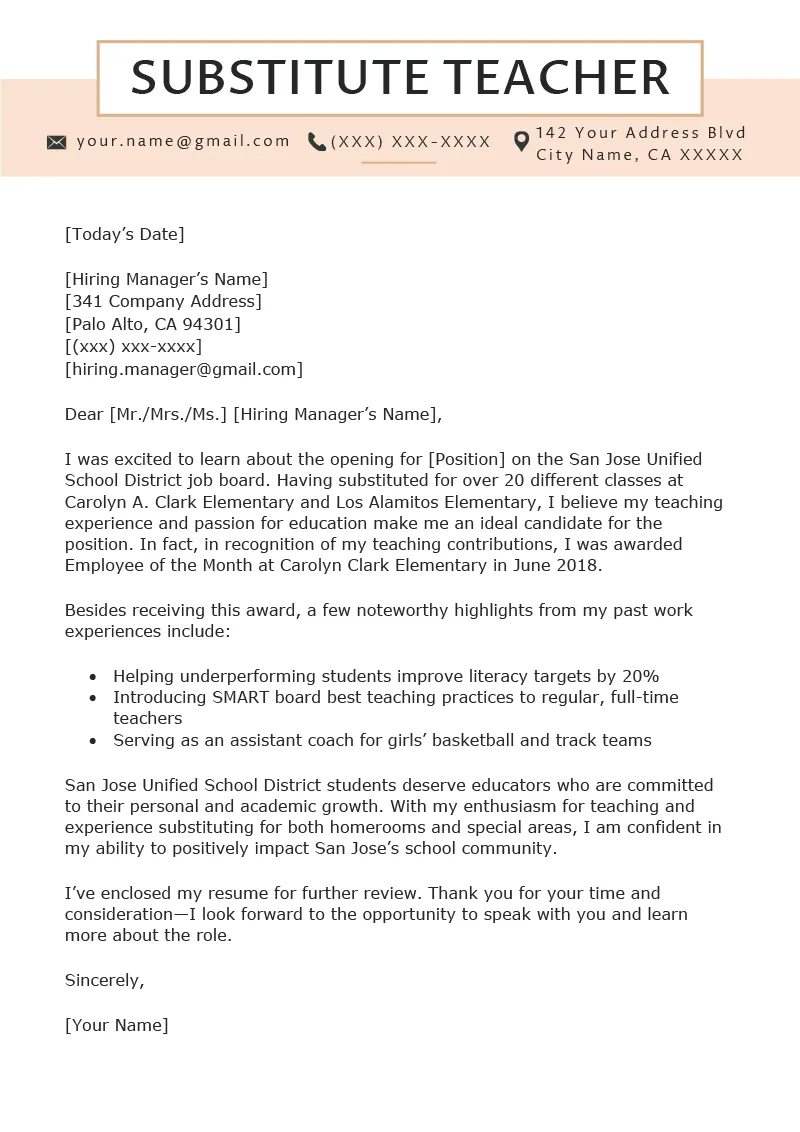
Crafting a Compelling Cover Letter for Substitute Teaching
Your cover letter is your first impression. It is your opportunity to show a school principal or hiring manager that you are the right person for the substitute teacher position. A well-written cover letter must be more than a simple introduction; it needs to effectively communicate your skills, experience, and enthusiasm for teaching. It serves as a crucial tool for showcasing your qualifications, making a strong case for why you stand out from the crowd, and ultimately, securing an interview. The cover letter’s significance lies in its ability to highlight your unique attributes and demonstrate your genuine interest in contributing to the school’s educational environment.
Highlighting Relevant Skills and Experiences
When highlighting your skills and experiences, focus on those that directly relate to the role of a substitute teacher. This should include experience in classroom management, your ability to adapt teaching methods to various student needs, and your understanding of curriculum implementation. Be sure to provide specific examples that showcase your skills in action. For instance, if you’ve previously managed a classroom, describe the strategies you used to maintain a positive learning environment. If you have experience with differentiated instruction, explain how you tailored your teaching to meet different student abilities. Quantifying your achievements, such as the percentage of students who improved their grades under your guidance, can significantly strengthen your cover letter. These concrete details will help the hiring manager see your value.
Adaptability and Classroom Management Skills

Adaptability is crucial in substitute teaching. Explain how you adapt to different classroom environments, teaching styles, and student needs. Provide an example of a time you quickly adjusted to a new classroom situation. Highlight specific classroom management skills you possess, such as your ability to establish clear expectations, maintain a positive learning environment, and effectively handle disruptive behavior. Mentioning specific strategies like positive reinforcement, clear communication, and proactive planning can demonstrate your readiness to step into any classroom and manage it effectively. Showcase your skills by explaining how you have implemented these strategies to promote an environment that fosters learning and respect.
Previous Teaching or Tutoring Experience
Detail any previous experience you have in teaching or tutoring. This can range from formal teaching roles to volunteer experiences or tutoring students privately. Describe the settings in which you taught or tutored, such as elementary schools, high schools, or online platforms. For each experience, specify the subjects you taught, the age groups of the students, and the duration of your involvement. If you have experience developing lesson plans, mention this as it directly aligns with the responsibilities of a substitute teacher. Provide examples of how you adapted your teaching methods to cater to various learning styles or how you helped students overcome academic challenges. Any experience that showcases your ability to guide and mentor students strengthens your application.
Showcasing Soft Skills and Personality
Highlighting your soft skills and personality traits is essential, as substitute teachers must connect with students and maintain a positive learning environment. Describe your ability to build rapport with students, your patience, and your enthusiasm for teaching. Use specific examples that highlight how you’ve successfully interacted with students in the past. Mentioning your passion for education and your ability to create a supportive classroom atmosphere can resonate with hiring managers. Explain how you handle challenging situations, such as dealing with difficult students or unexpected classroom dynamics. Showcase your positive attitude, strong work ethic, and your ability to remain calm under pressure. These traits are highly valued in a substitute teacher.
Communication and Interpersonal Abilities

Effective communication is key to a successful substitute teacher. Emphasize your ability to clearly communicate with students, parents, and school staff. Provide examples of how you’ve adapted your communication style to various audiences. Highlight your ability to actively listen to students’ concerns and address their needs effectively. Mention any experience you have with conflict resolution or mediation. Strong interpersonal abilities are vital, as substitute teachers must establish positive relationships with students, parents, and colleagues quickly. Describe your ability to work collaboratively and respectfully with others. Show how you can build trust and maintain a professional demeanor.
Demonstrating Professionalism and Reliability
Professionalism and reliability are crucial for substitute teachers. Highlight your commitment to punctuality, preparedness, and following school policies. Showcase your ability to maintain confidentiality and handle sensitive information with discretion. Emphasize your dedication to the students’ well-being and your commitment to providing a consistent learning experience. Mention any professional development or training programs you’ve completed. Demonstrating your ability to follow instructions, adhere to schedules, and manage your time effectively will further increase your chances of securing a position. Provide examples that illustrate your professional approach in various situations, such as how you’ve addressed a challenging situation or followed specific school procedures.
Tailoring Your Cover Letter to Each Application
A generic cover letter will not impress hiring managers. Customize your cover letter for each school district or school you are applying to. Research the school’s mission, values, and any specific requirements. Mention specific programs or initiatives that align with your skills and experience. Address the hiring manager by name if possible. Tailoring the letter demonstrates your genuine interest in the position and your understanding of the school’s needs. Highlighting how your unique abilities can contribute to the school’s specific goals is also crucial. The more specific you are, the better your chances of getting noticed. Demonstrating that you have taken the time to learn about the school indicates your initiative and dedication.
Researching the School and Understanding Their Needs

Before submitting your cover letter, research the school or district. Visit their website to understand their mission, values, and any specific programs they offer. Look for information on the school’s demographics, student population, and any unique initiatives they are implementing. If possible, find out who the hiring manager is and address the letter to them. Showing that you have researched the school and understand its needs demonstrates your interest and commitment. By mentioning specific aspects of the school, you can tailor your cover letter to showcase how your skills and experience align with their objectives and contribute to a positive learning environment.
Customizing the Letter for Specific Grade Levels
Adapt your cover letter based on the grade levels you are most comfortable teaching. Highlight experience relevant to specific age groups and tailor your language to resonate with those levels. If you are applying for an elementary school position, emphasize your ability to create engaging and age-appropriate lessons. If you are applying for a secondary school position, highlight your ability to manage older students and teach more advanced subjects. Demonstrate that you understand the developmental needs and learning styles of the students. By customizing your cover letter to specific grade levels, you will show the hiring manager that you can meet the needs of their students and have a genuine interest in their specific educational context. Mentioning experience with specific curriculum, such as Common Core, can be very beneficial.
Proofreading and Formatting for Perfection
Proofread your cover letter meticulously to ensure there are no grammatical errors, spelling mistakes, or formatting issues. Use a professional font and a clear layout to make your cover letter easy to read. Ensure your contact information is accurate and up-to-date. Proofreading is an essential step in the job application process, as it highlights your attention to detail and commitment to quality. Double-check for any inconsistencies in dates, names, and job titles. It is also helpful to have someone else review your cover letter. A fresh pair of eyes can catch errors you might have missed. A well-formatted and error-free cover letter is a critical component of making a great first impression and showing the hiring manager that you are a professional.
Ensuring Clarity and Conciseness

Your cover letter should be clear, concise, and easy to understand. Use straightforward language and avoid overly complex sentences. Keep the letter to one page in length. Use bullet points to highlight key skills or experiences. Focus on conveying your message effectively. A clear and concise cover letter ensures that the hiring manager can easily understand your qualifications and why you are the best candidate. Eliminate any unnecessary jargon or wordiness. Clearly state your purpose for writing, your relevant experience, and why you are interested in the position. Providing too much information, or making it difficult to read, will detract from your message. Aim to communicate your qualifications in a manner that is easy for the reader to grasp.
Including a Strong Call to Action
Include a strong call to action at the end of your cover letter. Express your interest in an interview and make it easy for the hiring manager to contact you. Provide your phone number and email address. Thank the reader for their time and consideration. A call to action encourages the hiring manager to take the next step. Asking for an interview will show the hiring manager that you are proactive and enthusiastic about the opportunity. Make it clear that you are looking forward to hearing from them soon. Including contact information ensures they can reach you promptly and easily. Adding a professional closing, like “Sincerely” or “Best regards,” adds a polished touch to your letter and leaves a favorable final impression.
Expressing Enthusiasm and a Desire to Contribute
Expressing your enthusiasm and your desire to contribute to the school’s community is important. Highlight your passion for education and your commitment to student success. Explain how you would contribute to a positive learning environment. Mention specific aspects of the school or district that appeal to you. Demonstrate your genuine interest in the school and its mission. Make sure to express your enthusiasm in a sincere and authentic way. Conveying your genuine desire to be part of the school’s team will make a lasting impression. Highlight any specific aspects of the school’s philosophy or initiatives that you admire, and explain why you are excited to contribute.
Following Up After Submission

Following up after submitting your cover letter is a great way to show your continued interest and initiative. Send a follow-up email or make a phone call a week or two after submitting your application. Briefly reiterate your interest in the position and inquire about the status of your application. Be polite, professional, and concise. A follow-up demonstrates your strong interest and commitment to the position. It also allows you to clarify any questions the hiring manager might have. Mention any additional relevant information you may have. If the hiring manager has a busy schedule, consider asking when it would be a good time to follow up. A thoughtful follow-up can help you stand out from other applicants and increase your chances of getting an interview.
Sending a Thank-You Note After an Interview
Send a thank-you note after your interview to express your gratitude and reiterate your interest. Reiterate key points discussed during the interview. Mention specific details about the conversation to remind the interviewer of your interaction. Sending a thank-you note shows your professionalism and attention to detail. It provides an additional opportunity to reinforce your qualifications. Reiterate why you are the best fit for the position. Within 24 hours of the interview, send a thank-you note either via email or mail. This simple gesture can significantly impact the hiring manager’s opinion. It is an excellent way to leave a lasting positive impression.
Remaining Persistent and Proactive
The job search can be challenging, and it is important to stay persistent and proactive. Continue to apply for positions even if you have not received immediate responses. Regularly check job boards, school district websites, and other online platforms for new opportunities. Seek feedback on your cover letter and resume from career counselors or mentors to improve your application. Be open to temporary or short-term assignments to gain experience. Remaining proactive and persistent can help you find the right opportunity. Network with teachers, administrators, and other education professionals to learn about potential openings. Be patient and keep a positive attitude throughout the job search. Persistence often pays off, and staying proactive will help you find the right substitute teaching position.