Understanding the Quality Assurance Manager Role
A Quality Assurance (QA) Manager is a critical role in any organization that values product quality and customer satisfaction. They are responsible for planning, coordinating, and directing quality assurance programs. This involves establishing and enforcing quality standards, testing procedures, and ensuring that products or services meet the required specifications. They work to identify and address issues throughout the product lifecycle, from design and development to deployment and maintenance. To craft a compelling cover letter, a clear understanding of the QA Manager role is essential.
Key Responsibilities of a QA Manager
QA Managers have a diverse range of responsibilities that contribute to overall product quality. They design and implement quality control systems, conduct audits, and analyze data to identify areas for improvement. They are also responsible for managing and training QA teams, developing test plans, and overseeing the execution of tests. Other duties include collaborating with other departments like development and product management to ensure quality is integrated throughout the process. Successful QA Managers are strong communicators, problem solvers, and detail-oriented individuals.
Skills Required for a QA Manager

To excel in this role, a QA Manager needs a blend of technical and soft skills. Technical skills include knowledge of testing methodologies (e.g., black box, white box), test automation tools, and software development lifecycles. Strong analytical skills are vital for interpreting data and identifying trends. Soft skills like communication, leadership, and problem-solving are also essential for effectively managing teams, resolving issues, and interacting with stakeholders. A successful cover letter will highlight these skills appropriately.
Crafting a Compelling Cover Letter
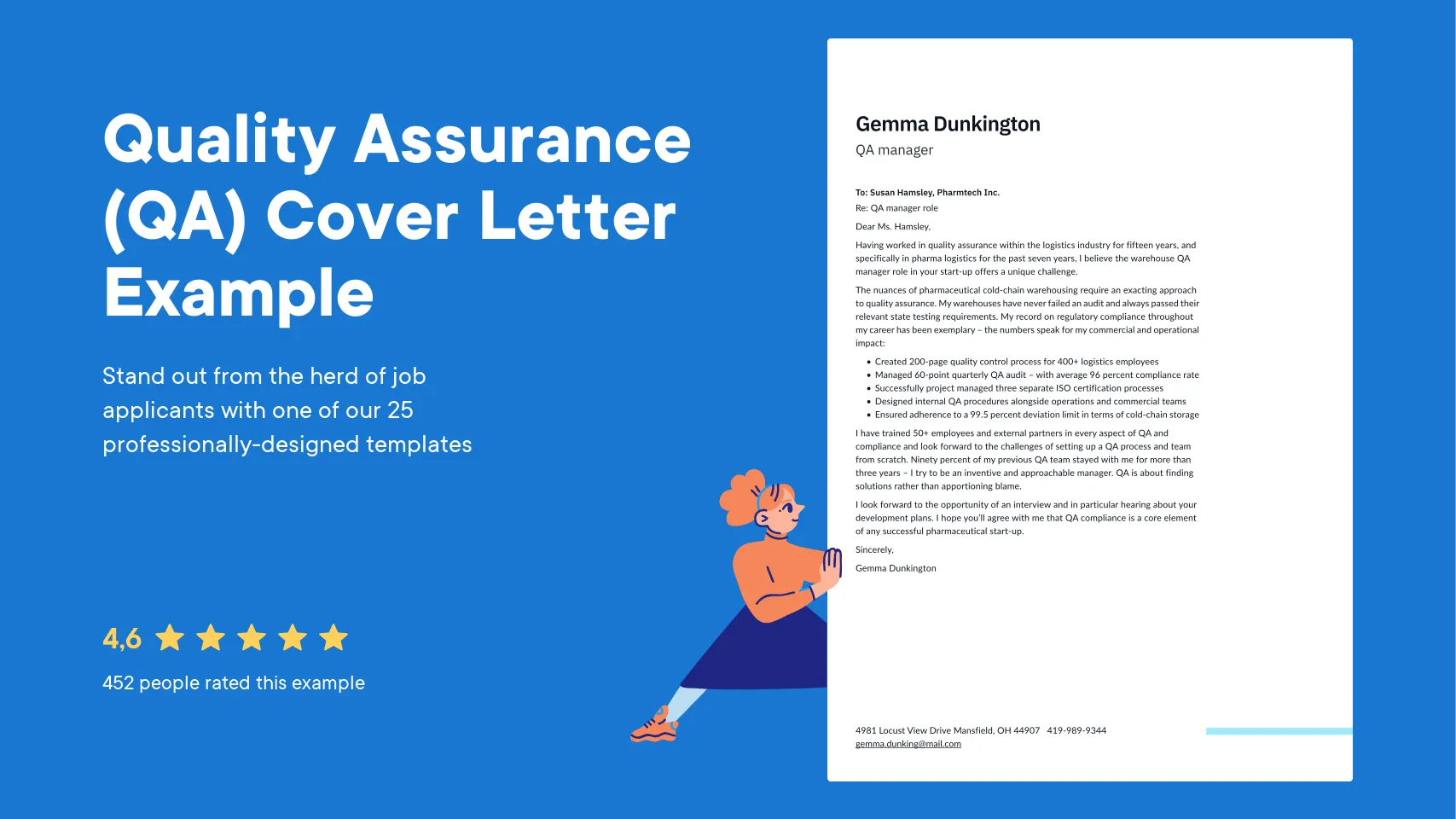
A well-crafted cover letter can significantly improve your chances of landing an interview. It should be more than just a reiteration of your resume; it should tell a story and highlight your unique value proposition. The cover letter should demonstrate your understanding of the role, your relevant experience, and your enthusiasm for the company. Tailoring the letter to each specific job application is also crucial. It’s an opportunity to showcase your personality and make a memorable first impression. A generic cover letter is likely to be discarded.
Highlighting Relevant Experience
Focus on experience that directly relates to the QA Manager position. Mention specific projects you’ve led, the tools you’ve used, and the methodologies you’ve implemented. Quantify your accomplishments whenever possible. Instead of saying you “improved testing,” state that you “reduced bug detection time by 20% through the implementation of automated testing.” Clearly connect your past experiences to the requirements outlined in the job description. Be sure to use keywords from the job posting to make sure your letter gets noticed.
Quantifying Achievements

Use numbers and data to showcase your accomplishments. Instead of simply stating you “improved product quality,” explain how you did it. For example, you could say, “Implemented a new testing strategy that reduced critical bugs by 35% within the first quarter.” Quantifiable results make your accomplishments more credible and demonstrate the impact of your work. Consider metrics like cost savings, time reductions, and improvements in customer satisfaction. Always be specific, use percentages and numbers, and provide concrete evidence.
Tailoring Your Cover Letter
Customize each cover letter for the specific job and company. Research the company and understand its values, culture, and the specific requirements of the role. Address the hiring manager by name, if possible, and demonstrate your understanding of their needs. Show how your skills and experience align with their requirements. Highlight the aspects of your background that are most relevant to the position. Generic cover letters often fail to convey this personalization, leading to rejection.
7 Secrets to a Standout QA Manager Cover Letter
Secret 1 Focus on Achievements

Don’t just list your responsibilities; focus on what you achieved in previous roles. Use the STAR method (Situation, Task, Action, Result) to provide context and demonstrate the impact of your work. Describe the situation, the task you were assigned, the actions you took, and the results you achieved. This approach brings your experience to life and shows that you are a results-oriented QA manager. For example, instead of stating you managed a team, describe how you “Led a team of 10 QA engineers, resulting in a 15% reduction in time-to-market for new software releases.”
Secret 2 Showcase Technical Skills
Highlight the specific technical skills that are most relevant to the job description. Mention the testing tools, methodologies, and programming languages you are proficient in. If the job requires experience with a particular software or platform, make sure to mention your experience with it. Briefly explain how you have used your skills in previous roles to achieve specific results. For instance, you might say, “Proficient in Selenium, used for automating regression tests, resulting in faster bug detection and improved product stability.”
Secret 3 Demonstrate Leadership
QA Managers often lead teams, so demonstrating your leadership skills is essential. Provide examples of how you have motivated and mentored team members, resolved conflicts, and fostered a collaborative environment. Explain how you have made decisions, delegated tasks, and provided feedback. If you have experience with performance reviews or training programs, be sure to mention them. Show how you can inspire your team. For example, “Led the transition to Agile methodologies, resulting in improved team collaboration and increased project delivery efficiency.”
Secret 4 Emphasize Problem-Solving

QA Managers are often called upon to solve complex problems. Provide examples of how you have identified, analyzed, and resolved quality issues in the past. Describe the challenges you faced, the solutions you implemented, and the results you achieved. Highlight your ability to think critically, make sound decisions, and take initiative. Emphasize your analytical skills and ability to use data to inform your decisions. For instance, you could state, “Identified and resolved critical performance bottlenecks through rigorous testing, leading to a 20% improvement in application response time.”
Secret 5 Align with Company Values
Research the company’s values and culture, and show how your values align with theirs. Mentioning the company’s values directly in your cover letter demonstrates that you have taken the time to understand the organization. Tailor your language and tone to match the company’s brand. Show how your experience and skills contribute to their success. For instance, if a company values innovation, highlight your experience with innovative testing approaches.
Secret 6 Use Action Verbs
Start your sentences with strong action verbs to make your cover letter more dynamic and engaging. Use verbs like “led,” “managed,” “implemented,” “developed,” “improved,” “achieved,” and “resolved.” Action verbs immediately convey what you have done and make your experience more vivid. They also make the letter more concise and impactful. This will help the reader quickly grasp your key contributions and achievements. Action verbs should be placed at the beginning of each of your accomplishments.
Secret 7 Proofread Meticulously

Typos and grammatical errors can undermine your credibility. Before submitting your cover letter, proofread it carefully. Have a friend or colleague review it as well. Check for spelling errors, grammatical mistakes, and punctuation errors. Ensure your formatting is consistent and professional. A polished cover letter shows attention to detail and respect for the employer. Thorough proofreading is a sign of professionalism and ensures your message is clear and impactful. Using grammar check tools is also recommended.
Formatting and Structure
Formatting and structure are crucial for making a positive first impression. A well-formatted cover letter is easier to read and demonstrates professionalism. Keep your cover letter concise, typically one page in length. Use a professional font like Arial or Times New Roman. Use clear headings, bullet points, and white space to organize your content and make it visually appealing.
Header and Contact Information
Include your contact information at the top of the letter. This includes your name, phone number, email address, and LinkedIn profile URL (optional). Ensure this information is accurate and up-to-date. Also, include the date and the hiring manager’s name and title. If the specific hiring manager is unknown, use the title of the role to address your cover letter. This demonstrates your attention to detail.
Professional Salutation

Use a professional salutation, such as “Dear Mr./Ms./Mx. [Last Name],” when addressing the hiring manager. If you don’t know the hiring manager’s name, use “Dear Hiring Manager.” Avoid generic salutations like “To Whom It May Concern.” This demonstrates respect and attention to detail. Always double-check the correct spelling of the hiring manager’s name.
Closing and Call to Action
End your cover letter with a strong closing statement and a call to action. Thank the hiring manager for their time and consideration. Express your enthusiasm for the opportunity and reiterate your interest in the position. Include a clear call to action, such as “I look forward to discussing my qualifications further in an interview.” Close the letter with a professional sign-off, such as “Sincerely” or “Best regards,” followed by your name.
Final Review and Submission
Before submitting your cover letter, conduct a final review. Ensure that all information is accurate, the formatting is correct, and there are no errors. Proofread carefully for spelling, grammar, and punctuation mistakes. Make sure the cover letter is tailored to the specific job description and company. Submit your cover letter and resume in the required format. Save your documents with a professional file name. A well-prepared cover letter shows your seriousness in the application process.