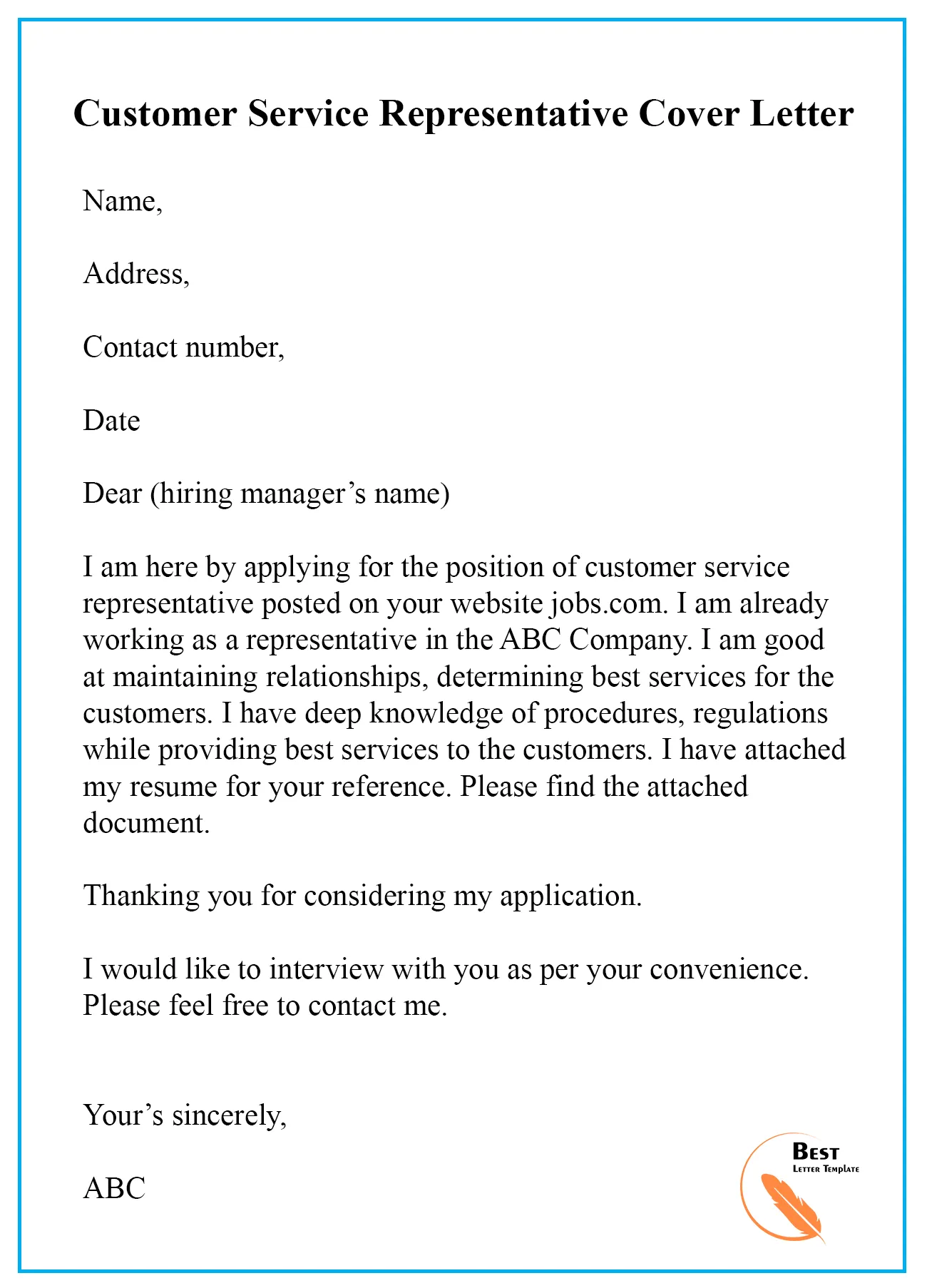
Why a Strong Customer Service Cover Letter Matters
A well-crafted customer service cover letter is your first chance to impress a potential employer. Think of it as your initial handshake; it sets the tone for your entire application. In the competitive job market, a strong cover letter distinguishes you from other candidates, highlighting your personality, skills, and enthusiasm for the role. It goes beyond your resume, allowing you to provide context and showcase experiences relevant to the specific job. It demonstrates your communication skills, attention to detail, and genuine interest in the company. Without a compelling cover letter, you risk your application being overlooked. Therefore, investing time and effort into a tailored cover letter is crucial to stand out and show your suitability for the customer service representative position. A great cover letter can significantly increase your chances of securing an interview and ultimately, the job. Remember, first impressions matter!
Highlighting Your Skills in Your Cover Letter
Your cover letter should be a platform to emphasize the skills and experiences that make you a great fit for a customer service role. While your resume gives a quick overview of your work history, your cover letter lets you elaborate on your achievements and show how your skills benefited previous employers. Start by carefully studying the job description. Identify the key skills and qualifications the employer is seeking. Then, choose relevant examples from your experience where you successfully used those skills. Don’t just list skills; provide details about the situations, actions you took, and the positive results you achieved. Quantifying your achievements with numbers, like the percentage increase in customer satisfaction or the number of issues resolved, can make your accomplishments more memorable and impactful. This approach helps the hiring manager fully understand the value you can bring to their team. It’s your chance to shine!
Key Customer Service Skills to Showcase

Focus on the specific skills highly valued in customer service roles. Highlighting these will grab the hiring manager’s attention and demonstrate your readiness to succeed. Certain skills are essential for excelling in customer service. Let’s explore the key ones to highlight in your cover letter. These are the qualities that employers look for when selecting candidates.
Communication skills
Effective communication is at the heart of excellent customer service. In your cover letter, emphasize your ability to communicate clearly, both verbally and in writing. Provide examples of how you’ve successfully explained complex information, resolved conflicts through dialogue, and adjusted your communication style for different audiences. Mention any experience with active listening, empathy, and the ability to explain technical concepts in a way that’s easy for customers to understand. For example, describe situations where you patiently explained a product feature, or where you defused an angry customer through active listening and empathetic responses. Highlight any training or certifications you have received in communication or conflict resolution. Your ability to clearly convey information is paramount.
Problem-solving skills
Customer service representatives often solve problems. Show your ability to analyze issues, find root causes, and develop effective solutions in your cover letter. Give examples of how you’ve resolved customer issues, like troubleshooting technical problems, handling complaints, or processing returns. Use the STAR method (Situation, Task, Action, Result) to describe a challenging situation, the task, the actions you took, and the positive results. For instance, you could describe identifying a recurring technical issue, researching it, implementing a workaround, and preventing similar issues from impacting other customers. Problem-solving skills are highly valued in customer service.
Empathy and patience

Customer service often involves dealing with upset customers. Highlight your empathy and patience. Show your ability to understand and share others’ feelings. Illustrate how you stay calm in difficult situations and use empathy to connect with customers. Provide examples of de-escalating tense situations, calming angry customers, and offering compassionate support. Show your ability to listen, show understanding, and offer solutions tailored to their needs. For instance, describe empathizing with a customer’s frustration, offering a sincere apology, and working diligently to find a resolution that exceeded their expectations. Empathy is key to building rapport and resolving issues.
Technical proficiency
Technical skills are increasingly important in customer service. Highlight your proficiency with the tools and technologies in the job description. If you know CRM software like Salesforce or Zendesk, mention it. Include your experience with communication platforms like live chat or email management tools. Briefly explain your experience using these tools to help customers, track interactions, and manage tickets. Include any certifications or training in relevant software. Showing a willingness to learn new technologies is also important, so mention any experience you have with self-service portals, knowledge bases, or other tools that enhance the customer experience. Technical skills are necessary for succeeding in the modern customer service landscape.
Formatting Your Customer Service Cover Letter
Proper formatting shows professionalism and attention to detail. Use a clear, concise, and visually appealing format to make a good first impression. Proper formatting makes your letter easy to read and understand. Use a professional font and be consistent throughout. Your formatting can set you apart from other applicants. Keep your format clear and easy to read. Use headings and bullet points where appropriate.
Header and Contact Information

Start with a professional header, including your full name, contact information, and the date. This should be left- or right-aligned. Include your phone number, email address, and optionally, your LinkedIn profile URL. Ensure your contact information is accurate and up-to-date. Following the header, include the recipient’s name, title, and company address. If you don’t know the hiring manager’s name, research the company’s website or LinkedIn. Addressing your cover letter to a specific person makes it more personal and shows you’ve done your research.
Professional Salutation
Use a professional salutation to open your cover letter. ‘Dear [Hiring Manager Name]’, if you know their name, is best. If you don’t know their name, use ‘Dear Hiring Manager’ or ‘Dear [Company Name] Hiring Team’. Avoid casual salutations like ‘Hi’ or ‘Hello.’ The salutation sets the tone. Ensure you spell the hiring manager’s name correctly to show attention to detail. Always maintain a formal, respectful tone. A strong salutation is key to getting their attention.
Compelling Introduction
Your introduction should immediately capture the reader’s attention and state your purpose. Clearly state the customer service position you’re applying for and briefly explain your interest in the role and the company. Highlight your key skills and experiences that align with the job requirements. This is your opportunity to make a strong first impression. A compelling introduction will grab the hiring manager’s attention and encourage them to read the rest of your letter. Briefly mention how you learned about the position and why you are a good fit. Keep it concise, focusing on the most relevant details. Your introduction is a crucial part of your cover letter, so make it count.
Body Paragraphs

Use the body paragraphs to detail your skills, experiences, and accomplishments. Use clear, concise language and organize your thoughts logically. Structure your paragraphs to highlight relevant skills and experiences, providing specific examples to support your claims. Show how your skills and experiences fit the job’s needs, and provide specific examples to back up your claims. Include at least two to three body paragraphs to fully cover your relevant experiences and skills, and keep each paragraph focused and to the point. The body paragraphs showcase your abilities. Make each point concise and easy to understand.
Quantify Your Achievements
Quantify your achievements to demonstrate the impact you made in previous roles. Numbers and data will help the hiring manager understand your value more concretely. Instead of saying ‘Improved customer satisfaction’, say ‘Increased customer satisfaction by 15%’. Use metrics like calls handled per day, average resolution time, or reduction in complaints. Quantifying provides concrete evidence of your skills. Highlight instances where you exceeded targets or achieved outstanding results. For example, you could say ‘Consistently exceeded monthly sales targets by an average of 10%’ or ‘Reduced customer complaints by 20% within six months.’ Be sure to include context to show how you improved those metrics. Providing measurable results makes your achievements more persuasive.
Tailoring Your Cover Letter
Tailoring your cover letter to each job is critical. A generic cover letter will likely be discarded. Customizing your letter shows you understand the job and company. Customize it to show your interest. Start by reading the job description and identifying the key skills, qualifications, and keywords. Use the same keywords from the job description to demonstrate you meet the criteria. Show how your skills align with the job’s needs, and provide specific examples to back up your claims. This will ensure your application is relevant and appeals to the hiring manager. Tailoring shows you’ve done your homework and are serious about the opportunity.
Mentioning Company Culture

Research and mention the company culture to show you’re interested. Visit their website and social media to learn about their values, mission, and work environment. Incorporate keywords that reflect the company’s values into your cover letter. Show how your values align with the company’s to demonstrate that you’d be a good fit. Including details about the company’s culture can make your application more personal and show that you are truly interested in the position. Mention any initiatives or programs that resonate with you and describe why you would be excited to be part of the team. Researching the company shows initiative. Mentioning company culture shows you are a good fit.
Closing Your Cover Letter
The closing is your last chance to make an impression. It should be concise, professional, and positive. Use a strong closing sentence that reiterates your interest and enthusiasm. Clearly state your intention to follow up and thank the hiring manager for their time and consideration. End with a professional closing, like ‘Sincerely’ or ‘Best regards,’ followed by your name. A strong close will reinforce your qualifications. Make sure to use the correct formatting and avoid casual closings. Your closing can leave a lasting impression.
Proofreading and Editing
Proofread and edit your cover letter carefully before submitting it. Errors undermine your credibility. Read it multiple times, and ideally have someone else review it. Print a hard copy to catch errors you might miss on screen. Proofreading is essential to ensure your cover letter is error-free. Ensure your cover letter is perfect before sending it off. Consider having a friend review your cover letter for a second set of eyes.