Crafting a Compelling Customer Service Cover Letter
A customer service cover letter is your first opportunity to make a strong impression on a potential employer. It serves as a vital introduction, showcasing your relevant skills, experience, and enthusiasm for the role. Unlike a resume, which provides a factual overview of your career, a cover letter allows you to elaborate on your qualifications, demonstrate your personality, and express your genuine interest in the company. It is essential to craft a cover letter that stands out from the competition and effectively communicates why you are the ideal candidate for the customer service position. This guide will walk you through the essential steps to create a winning cover letter that secures an interview.
Understanding the Importance of a Cover Letter
The significance of a well-written cover letter cannot be overstated. It’s often the first impression you make on a hiring manager, and it can significantly impact whether your application moves forward. A cover letter allows you to personalize your application and explain how your unique skills and experiences align with the specific job requirements. It provides an opportunity to highlight your achievements and demonstrate your passion for customer service. Moreover, it showcases your communication skills and attention to detail, all of which are crucial in a customer-centric role. A compelling cover letter can differentiate you from other applicants and increase your chances of landing an interview. It’s an opportunity to tell a story about yourself.
Highlighting Relevant Skills and Experience

Your cover letter should prominently feature the skills and experiences that align with the customer service position you’re applying for. Focus on the attributes that make you an effective communicator, problem-solver, and empathetic listener. Provide specific examples of how you have successfully handled customer interactions, resolved issues, and exceeded expectations in previous roles. Tailor your examples to the specific requirements outlined in the job description, showcasing your ability to meet and surpass those expectations. Make sure to emphasize achievements rather than simply listing responsibilities; this will make your cover letter more impactful and demonstrate your value to the employer.
Key Skills for Customer Service Roles
Identify the core skills that are essential for success in customer service. These may include excellent communication, both verbal and written, active listening, empathy, problem-solving, conflict resolution, patience, and the ability to remain calm under pressure. Also, highlight your technical proficiency, such as experience with CRM software, call center systems, and other relevant technologies. Tailor this section to the specific skills mentioned in the job description. Consider incorporating examples of situations where you successfully utilized these skills to provide outstanding customer service. Showcasing how you have used these skills is crucial.
Quantifying Achievements and Impact
Instead of simply stating what you did in previous roles, quantify your achievements with specific metrics and data. For instance, mention how you improved customer satisfaction scores, reduced resolution times, or increased sales through effective customer interactions. Quantifiable achievements provide concrete evidence of your abilities and demonstrate the value you can bring to the new role. Whenever possible, use numbers to highlight your successes and make a lasting impression. Quantifying your accomplishments will make your cover letter much more compelling.
Structuring Your Customer Service Cover Letter

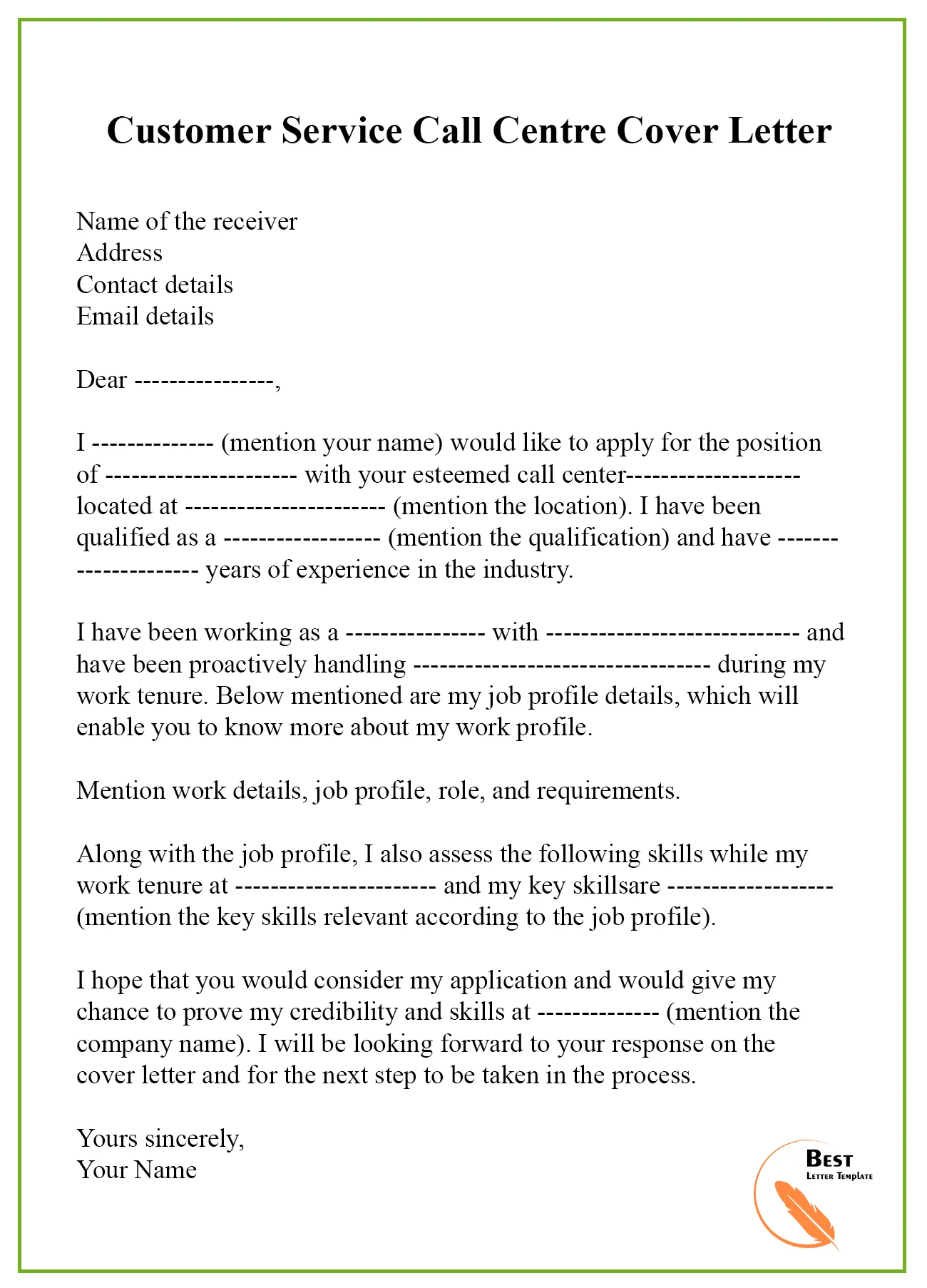
A well-structured cover letter is essential for conveying your message clearly and effectively. Divide your letter into distinct sections to make it easy for the hiring manager to read and understand. This includes a proper header, a concise introduction, compelling body paragraphs that showcase your qualifications, and a strong closing that expresses your interest and call to action. Ensure that your letter follows a logical flow, with each section building upon the previous one. Adhering to a clear structure demonstrates your professionalism and attention to detail, critical qualities in customer service.
Header and Contact Information
Start your cover letter with a professional header that includes your full name, contact information (phone number, email address, and LinkedIn profile URL if you have one), and the date. Below this, include the hiring manager’s name (if known), their title, the company name, and the company address. This information ensures that your letter looks professional and organized and that the hiring manager can easily contact you. Make sure all your contact information is up-to-date and accurate to avoid any missed opportunities.
Greeting and Introduction
Begin your cover letter with a professional greeting, such as “Dear Mr./Ms. [Last Name],” or, if you don’t know the hiring manager’s name, “Dear Hiring Manager.” In the introduction, briefly state the position you are applying for and how you found the job opening. Immediately capture the reader’s attention by mentioning a key skill or achievement that aligns with the role. Express your enthusiasm for the opportunity and the company. The introduction sets the tone for the entire letter, so make it compelling and relevant to the job.
Body Paragraphs

The body paragraphs are the core of your cover letter. This is where you elaborate on your skills, experience, and accomplishments. Use one or two paragraphs to highlight your most relevant qualifications, providing specific examples of how you’ve excelled in customer service roles. Focus on demonstrating how your skills match the requirements listed in the job description. Use the STAR method (Situation, Task, Action, Result) to effectively structure your examples, providing context, describing the challenges you faced, outlining the steps you took, and quantifying the positive outcomes. Make sure to use keywords from the job description naturally.
Call to Action and Closing
Conclude your cover letter with a strong call to action. Express your interest in an interview and reiterate your enthusiasm for the opportunity. Thank the hiring manager for their time and consideration. End with a professional closing, such as “Sincerely,” or “Best regards,” followed by your full name. Ensure your contact information is readily available and easy to find. A strong closing reinforces your interest and leaves a positive final impression.
Tailoring Your Cover Letter to the Job
A generic cover letter is unlikely to impress a hiring manager. Customize your cover letter for each job application. Review the job description carefully and identify the specific skills, experiences, and qualities the employer is seeking. Then, tailor your cover letter to highlight the most relevant aspects of your background. Research the company to demonstrate your understanding of their values, mission, and customer service approach. This personalized approach shows that you are genuinely interested in the role and that you have taken the time to understand the company’s needs.
Researching the Company

Before you write your cover letter, research the company you are applying to. Visit their website, read their mission statement, and explore their social media presence. Identify their values, customer service philosophy, and recent achievements. This knowledge will allow you to tailor your cover letter to reflect the company’s culture and demonstrate your genuine interest in working there. Mentioning specific company details in your cover letter shows that you have done your homework and are serious about the opportunity. Researching the company is an important part of tailoring your cover letter.
Matching Skills to Job Requirements
Carefully analyze the job description and identify the key skills and qualifications the employer is seeking. Then, align your skills and experience with these requirements. Use specific examples from your past roles to showcase how you have successfully demonstrated these skills. For example, if the job description mentions the need for strong communication skills, provide an example of how you resolved a difficult customer issue through clear and effective communication. By matching your skills to the job requirements, you demonstrate that you are a good fit for the role.
Using Keywords Effectively
Integrate relevant keywords from the job description into your cover letter naturally. This will help your application get noticed by applicant tracking systems (ATS) and hiring managers. However, avoid keyword stuffing, as this can make your letter sound unnatural and detract from your message. Use keywords strategically within the context of your sentences, and make sure they accurately reflect your skills and experience. The goal is to demonstrate that you meet the job’s requirements without sacrificing clarity or readability.
Common Mistakes to Avoid

Avoiding common mistakes can significantly improve the effectiveness of your cover letter. Be aware of the pitfalls and take steps to ensure your cover letter is polished and professional. These errors can damage your chances of securing an interview. Paying attention to detail and taking the time to review your letter carefully will help you avoid these common mistakes and make a positive impression.
Typos and Grammatical Errors
Typos and grammatical errors can undermine your credibility and professionalism. Carefully proofread your cover letter multiple times, and consider using grammar and spell-checking tools. Ask a friend or family member to review your letter as well. Ensure that your writing is clear, concise, and error-free. Mistakes can be a sign of carelessness and can make a negative impression on the hiring manager. Proofreading is an essential step in the cover letter writing process.
Generic Cover Letters
Avoid using a generic cover letter that could be sent to any employer. Customize your letter for each job application, highlighting the specific skills and experiences that match the job requirements. Demonstrate your knowledge of the company and your enthusiasm for the role. Generic cover letters show a lack of effort and interest, and they are unlikely to make a positive impression. Personalization is key to making your cover letter stand out.
Ignoring the Instructions

Carefully read and follow the instructions provided in the job posting. Some employers may have specific requirements for cover letters, such as a preferred format or the inclusion of certain information. Failing to follow these instructions can be a sign of a lack of attention to detail and may result in your application being overlooked. Pay close attention to all the details and requirements. Ignoring instructions will hurt your chances.
Formatting and Presentation
The formatting and presentation of your cover letter are just as important as the content. Ensure that your letter is easy to read and visually appealing. This includes using a professional font, appropriate margins, and clear spacing. A well-formatted cover letter demonstrates your attention to detail and professionalism.
Font and Readability
Choose a professional and easy-to-read font, such as Times New Roman, Arial, or Calibri, with a font size between 10 and 12 points. Use clear and concise language throughout your letter. Break up long paragraphs to improve readability and make your letter visually appealing. Ensure your letter is easy on the eyes.
Length and Tone
Keep your cover letter concise and to the point. Aim for a length of one page. Use a professional and enthusiastic tone throughout the letter, highlighting your interest in the role and the company. Maintain a positive and confident tone. The tone of your letter can have a significant impact on how the hiring manager perceives you.
Proofreading and Editing
Proofreading and editing are crucial steps in the cover letter writing process. Review your letter multiple times to check for any errors in grammar, spelling, punctuation, and formatting. Ask a friend, family member, or career advisor to review your letter as well. Fresh eyes can often catch mistakes that you may have missed. Proofreading ensures that your cover letter is polished, professional, and free of errors.
By following these guidelines, you can create a customer service cover letter that effectively showcases your skills, experience, and enthusiasm, increasing your chances of landing an interview and securing your desired position. Good luck with your job search!