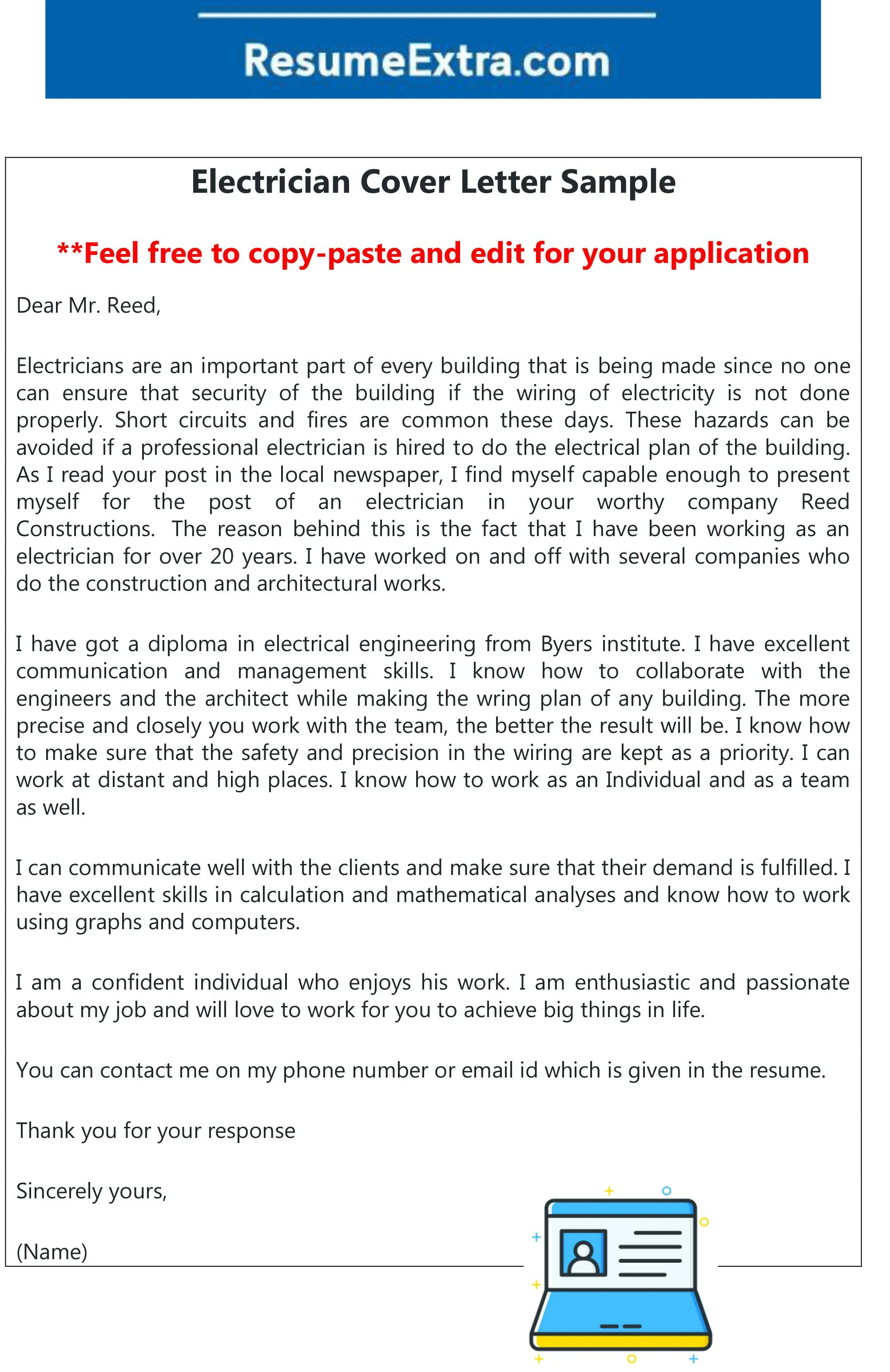
Understanding the Electrician Cover Letter
An electrician cover letter is a crucial document accompanying your resume when applying for electrical positions. It serves as your introduction to a potential employer, allowing you to highlight your qualifications, experience, and enthusiasm for the role. Unlike a resume, which provides a factual overview, a cover letter gives you the opportunity to express your personality, explain your career goals, and demonstrate your suitability for the specific job. A well-crafted cover letter can significantly increase your chances of securing an interview and ultimately, landing the job. It is an essential tool for showcasing why you are the best candidate and what you bring to the table.
Why is a Cover Letter Important?
In a competitive job market, a cover letter can be the deciding factor between getting an interview and being overlooked. It provides context to your resume, allowing you to elaborate on your skills and experiences in a way that a resume cannot. It enables you to tailor your application to the specific job requirements, demonstrating that you’ve taken the time to understand the role and the company. Furthermore, a cover letter shows your communication skills and professionalism, reflecting your attention to detail and your ability to articulate your qualifications effectively. Many employers see a cover letter as a reflection of your writing and organizational skills which are both important in the field.
Key Components of an Electrician Cover Letter

A strong electrician cover letter is comprised of several key elements that work together to create a compelling narrative. These components include a well-structured header, a personalized greeting, a concise and engaging body, and a professional closing. Each section of the cover letter plays a crucial role in presenting you as a qualified and enthusiastic candidate. Ignoring any one of these elements can weaken the overall impact of your application.
Header Section
The header of your cover letter should be the first thing a hiring manager sees. It includes your contact information and the date, setting the tone for a professional presentation. Ensuring the header is accurate and well-formatted is critical for making a positive first impression. It demonstrates your attention to detail and your commitment to providing a polished application.
Applicant’s Contact Information
Your contact information includes your full name, phone number, email address, and optionally, your LinkedIn profile URL. Make sure this information is current and accurate. Use a professional-sounding email address, and double-check the phone number for any typos. The contact information should be the first thing listed, making it easy for the recruiter to get in touch with you.
Date

The date should be placed directly below your contact information. It is important to include the current date to show the recruiter the timeliness of your application. This also allows them to keep track of your application in relation to the job posting.
Recipient’s Contact Information
Include the hiring manager’s name, title, and the company’s address. If you don’t know the hiring manager’s name, try to find it on the company website or LinkedIn. Addressing the letter to a specific person shows that you’ve done your research and demonstrates your interest in the position. If the name isn’t available, you can use a general title such as Hiring Manager.
Greeting the Hiring Manager
Start your cover letter with a professional greeting, such as “Dear Mr./Ms. [Last Name]”. If you don’t know the hiring manager’s name, use “Dear Hiring Manager.” Avoid generic greetings like “To Whom It May Concern,” as they lack personalization. Make sure the greeting is appropriate and sets a positive tone for the rest of your letter.
The Body of Your Electrician Cover Letter

The body of your cover letter is where you make your case for why you’re the right fit for the job. It’s typically composed of three to four paragraphs. Each paragraph serves a specific purpose, from introducing yourself and highlighting your skills to expressing your interest in the company and your call to action. The body should be well-organized, concise, and compelling, demonstrating your understanding of the job requirements and your ability to meet them.
First Paragraph Introduce Yourself
Begin by stating the position you’re applying for and how you found out about it. Briefly introduce yourself, mentioning your experience and enthusiasm for the role. Show your interest in the company or its projects, and make a strong first impression. This initial paragraph should grab the reader’s attention and make them want to learn more about you.
Second Paragraph Showcase Your Skills
This is where you highlight your relevant skills and experience. Align your qualifications with the job description, providing specific examples of your accomplishments. Explain how your skills have benefited previous employers. Include a list of specific skills like electrical installation, troubleshooting, and safety protocols to stand out. Use action verbs to describe your work, such as ‘installed,’ ‘troubleshooted,’ or ‘maintained’.
Highlighting Technical Skills

Emphasize your technical expertise, such as your knowledge of electrical systems, blueprints, and wiring. Mention your experience with specific tools and equipment, and any specialized certifications you hold. Provide details of any projects where you’ve demonstrated these skills, focusing on your ability to deliver high-quality work and solve complex problems. Showing examples of how you’ve used your technical skills will make your application more appealing.
Emphasizing Soft Skills
Don’t forget to mention your soft skills, such as your communication, teamwork, and problem-solving abilities. Electricians often work in teams and need to communicate effectively with clients and colleagues. Give examples of situations where you’ve demonstrated these skills, like resolving customer issues or working with other tradespeople. Highlighting your soft skills shows you are a well-rounded professional.
Third Paragraph Why You’re a Good Fit
In this paragraph, explain why you’re a good fit for the company and the specific job. Research the company’s values and mission, and explain how your goals align with theirs. Show your understanding of the company’s needs and how your skills and experience can help them achieve their objectives. Express your enthusiasm for the opportunity and your desire to contribute to the company’s success. Referencing the company’s culture or recent projects can help demonstrate your interest.
Fourth Paragraph Call to Action

End your cover letter with a call to action, such as requesting an interview. Thank the hiring manager for their time and consideration. Restate your interest in the position and provide your contact information again. Assure them that you’re available for an interview at their earliest convenience. This paragraph should leave a lasting positive impression and encourage the employer to take the next step.
Closing Your Cover Letter
The closing of your cover letter is just as important as the opening. It should be professional, polite, and leave a strong impression on the hiring manager. Ensure your closing reflects your professionalism and commitment to the job opportunity.
Formal Closing
Use a professional closing such as “Sincerely,” “Best regards,” or “Thank you for your consideration.” Avoid casual closings like “Cheers” or “Best.” A formal closing demonstrates your respect for the hiring manager and the company. The closing phrase should be followed by a comma.
Your Signature

Type your full name after the closing. If you’re sending a printed cover letter, leave space for your handwritten signature above your typed name. This adds a personal touch and emphasizes your commitment to the application. This is a traditional element of professional correspondence.
Formatting and Design for Your Cover Letter
The formatting and design of your cover letter are essential for readability and professional presentation. A well-formatted cover letter is easier to read and makes a positive impression on the hiring manager. Consider font choice, structure, and overall length to ensure your letter is both visually appealing and easy to understand. Proper formatting reflects attention to detail.
Font Choice and Readability
Choose a professional and readable font, such as Times New Roman, Arial, or Calibri. The font size should be between 10 and 12 points. Ensure the font is consistent throughout the letter. Avoid overly ornate or unusual fonts that may be difficult to read. The goal is to create a clean and easy-to-read document.
Length and Structure
Keep your cover letter concise, ideally one page in length. Use clear paragraphs and bullet points to break up text and make it easy to read. Use standard margins (1 inch on all sides) and single-spacing within paragraphs, with a double space between paragraphs. Ensure your letter is well-structured, with a logical flow from introduction to closing.
Proofreading and Editing
Proofreading and editing your cover letter is essential to catch any errors and ensure a professional presentation. Typos, grammatical errors, and poor writing can undermine your credibility. Thoroughly proofread and edit your cover letter before submitting it. This will help demonstrate your attention to detail and writing ability.
Proofread for Grammar and Spelling
Carefully proofread your cover letter for any grammatical errors and spelling mistakes. Use a spell-checker and grammar-checker, but don’t rely on them entirely. Read your letter aloud to catch any awkward phrasing or sentence structure issues. Consider asking a friend or colleague to review your letter for any errors you might have missed. A polished cover letter reflects your professionalism.
Common Mistakes to Avoid
Certain mistakes can severely impact your chances of success. Avoid these common pitfalls to ensure your cover letter makes a positive impression.
Generic Cover Letters
Avoid using a generic cover letter that can be used for any job. Tailor your cover letter to each job application, highlighting the specific skills and experiences that match the job requirements. Demonstrate your knowledge of the company and the position, and show why you’re a good fit for that particular role. A personalized letter demonstrates your interest.
Lying or Exaggerating
Never lie or exaggerate your skills or experience. Dishonesty can damage your credibility and could lead to job loss. Be honest about your qualifications and skills, and focus on the strengths that you can offer. Provide accurate information that is verifiable. Honesty is the best policy.
Electrician Cover Letter Samples and Templates
Using samples and templates can be a great starting point for your cover letter. They provide a framework for your application, but always customize them to reflect your specific skills and the requirements of the job. These tools can save you time and ensure that your cover letter follows a standard format.
Where to Find Cover Letter Templates
You can find cover letter templates on various websites, such as job boards, resume builders, and career websites. Look for templates specifically designed for electricians or similar trades. These templates can provide a solid foundation for your cover letter and help you organize your information effectively.
Customizing Templates for Your Application
When using a template, customize it to fit your experience and the job description. Tailor your skills, achievements, and work experience to match the employer’s needs. Replace generic language with specific examples. Make sure your letter reflects your unique qualifications and enthusiasm for the role. Customization shows that you are genuinely interested in the opportunity.
Electrician Cover Letter Examples
Reviewing cover letter examples can help you understand the structure and content of a successful cover letter. They provide inspiration and ideas for how to present your skills and experience effectively. Study different examples to get ideas about wording, tone, and formatting.
Example Cover Letter 1
This example will be a basic format, focusing on experience. It will highlight experience in residential electrical work and demonstrate an understanding of safety protocols, using action verbs to illustrate your responsibilities. It will focus on the candidate’s ability to efficiently complete installations and repairs.
Example Cover Letter 2
The second example will be designed for a more experienced electrician. This sample will incorporate skills in project management, team leadership, and specialized areas, such as industrial or commercial electrical systems. It showcases a greater depth of technical understanding and the ability to take on complex tasks.
Example Cover Letter 3
This example will emphasize soft skills and career progression. It is focused on communication, problem-solving abilities, and a strong work ethic, while showing personal growth. It is for an electrician who wants to highlight leadership and communication.
Final Tips for a Standout Cover Letter
These final tips will help you create a cover letter that makes a lasting impression and increases your chances of getting hired. By following these recommendations, you’ll be well-equipped to impress potential employers.
Tailor Your Letter to Each Job
Customize your cover letter for each job application. Review the job description carefully and highlight the skills and experiences that match the employer’s requirements. Show that you’ve taken the time to understand the role and company and are committed to meeting their needs. Customize the letter, using specific examples to demonstrate how your skills and experiences align with the job requirements.
Highlight Achievements with Numbers
Quantify your accomplishments whenever possible. Use numbers to demonstrate the impact of your skills and experience, such as the percentage by which you increased efficiency or the number of projects you successfully completed. Quantifiable results are more persuasive and provide concrete evidence of your abilities. Include these metrics in your application to stand out.
Follow Up After Submission
Follow up with the hiring manager a week or two after submitting your application. This demonstrates your continued interest in the position and your professionalism. A brief email or phone call is an appropriate way to follow up. Use this opportunity to reiterate your interest and ask about the status of your application. Following up shows you are serious about the opportunity.