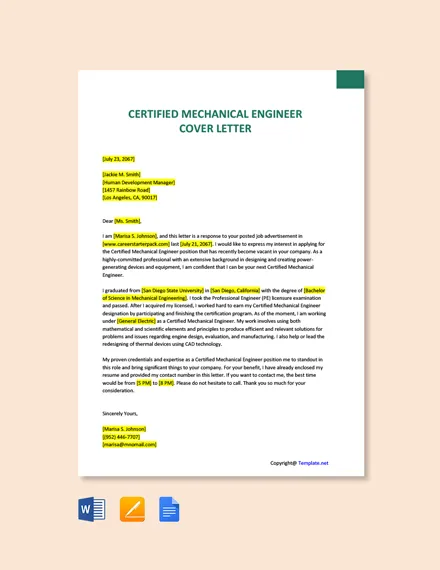
What is an Engineer Cover Letter
An engineer cover letter is a crucial document that accompanies your resume when applying for engineering positions. It serves as your first direct communication with a potential employer, offering a chance to introduce yourself, highlight your qualifications, and express your interest in the specific role. It’s more than just a formality; it’s an opportunity to make a strong first impression and set yourself apart from other applicants. A well-crafted cover letter demonstrates your communication skills, attention to detail, and genuine enthusiasm for the opportunity. By carefully crafting each section, you can significantly increase your chances of securing an interview and ultimately landing your dream job.
Importance of Engineer Cover Letter
The importance of an engineer cover letter cannot be overstated. It provides context to your resume, allowing you to elaborate on your experiences and connect them to the specific requirements of the job. Hiring managers often look for candidates who demonstrate a clear understanding of the role and the company. This is where your cover letter shines, showcasing your ability to analyze job descriptions, identify key skills and tailor your message accordingly. By highlighting relevant skills and experiences, you make a compelling case for why you are the ideal candidate. Furthermore, the cover letter allows you to express your personality, enthusiasm, and genuine interest in the company, elements that a resume alone cannot convey.
Why Cover Letters are Still Relevant

In a world increasingly dominated by online applications, some may question the relevance of cover letters. However, they remain a vital tool in the job application process. While resumes provide a snapshot of your qualifications, cover letters offer the chance to tell your story and provide the ‘why’ behind your application. They give you the opportunity to explain gaps in your employment history, address any concerns a hiring manager might have, and showcase your passion for the industry. Many hiring managers still highly value cover letters because they provide insights into a candidate’s writing skills, communication abilities, and ability to tailor their message. Cover letters are a key differentiator and a critical component of a strong application.
Essential Elements of an Engineer Cover Letter
A well-structured engineer cover letter includes several key elements, each playing a crucial role in conveying your qualifications and interest. A clear, concise, and professional cover letter will make you stand out. Adhering to best practices ensures that the document effectively communicates your value proposition to a potential employer. Let’s break down the core components.
Contact Information
At the top of your cover letter, provide your full name, address, phone number, and professional email address. Ensure your email address is professional and appropriate. Using a clean and easily readable format is essential. Ensure that your contact information is accurate and up-to-date, as this is how the employer will reach you. This section sets the stage for professionalism and makes it easy for the employer to contact you.
Salutation

Start your cover letter with a professional salutation. ‘Dear Mr./Ms./Mx. [Last Name]’ is the standard approach if you know the hiring manager’s name. If you are unsure of the hiring manager’s name, you can use ‘Dear Hiring Manager’ or ‘Dear [Department Name] Hiring Team.’ Avoid generic salutations like ‘To Whom It May Concern’, as they can make your letter feel impersonal and less tailored. Researching the company or the specific role to find the hiring manager’s name is always a good practice, showing initiative and attention to detail.
Opening Paragraph
The opening paragraph should immediately grab the reader’s attention and state the purpose of your letter. Clearly mention the specific position you are applying for and where you found the job posting. Briefly express your enthusiasm for the opportunity and your understanding of the company. Consider including a strong opening sentence that highlights your most relevant skill or achievement, as this will capture the hiring manager’s attention immediately. This sets the tone and gives the reader a reason to continue reading.
Highlight Your Skills and Experience
This is the core of your cover letter, where you showcase your skills and experience relevant to the job requirements. Review the job description carefully and identify the key skills and qualifications the employer is seeking. Then, provide specific examples from your past projects, internships, or previous roles that demonstrate your proficiency in these areas. Use the STAR method (Situation, Task, Action, Result) to illustrate your achievements. Quantify your accomplishments whenever possible to show the impact of your contributions.
Quantify Your Achievements

Instead of simply stating you ‘managed projects’, provide concrete metrics such as ‘managed a team of five engineers to deliver projects under budget and ahead of schedule by 15%.’ Quantifying your achievements makes your claims more credible and demonstrates your ability to produce results. Use numbers, percentages, and specific figures to showcase your impact and provide tangible evidence of your skills. This helps the employer understand the value you can bring to their organization.
Use Action Verbs
Start your sentences with strong action verbs to create a dynamic and engaging narrative. Instead of ‘responsible for’, use verbs like ’led’, ‘managed’, ‘developed’, ‘implemented’, ‘designed’, or ’engineered.’ This makes your cover letter more impactful and demonstrates your proactive approach. This creates a sense of momentum and reinforces the idea that you are a results-oriented professional. Action verbs also help to showcase your capabilities and demonstrate the contributions you made in previous roles.
Address the Company’s Needs
Show the hiring manager that you understand the company’s needs and how your skills align with their goals. Research the company’s mission, values, and recent projects to demonstrate that you’ve done your homework. Tailor your cover letter to highlight the specific aspects of your experience that are most relevant to the job and the company’s challenges. This demonstrates your genuine interest in the opportunity and your understanding of the company’s objectives.
Showcase Your Knowledge of the Company

Mention specific projects, initiatives, or values of the company that resonate with you. Explain how your skills and experiences can contribute to the company’s success. Showing that you understand their work and are interested in making a difference is a great way to get your application seen. Tailor your cover letter to the specific company’s needs.
Tailor Your Letter
Generic cover letters are often discarded. Tailor each cover letter to the specific job and company. Highlight the skills and experiences most relevant to the position, and explain why you are a good fit for that company and the role. This shows you’ve put in the effort to understand the company and demonstrate why you are the best candidate.
Closing Paragraph
In the closing paragraph, summarize your interest in the position and reiterate your enthusiasm. Thank the hiring manager for their time and consideration. Express your eagerness to discuss your qualifications further in an interview. Keep it concise and to the point, while still conveying your strong interest in the opportunity.
Call to Action

End your cover letter with a clear call to action. State that you are available for an interview and provide your contact information. Make it easy for the hiring manager to take the next step by providing a direct invitation.
Complimentary Close and Signature
Use a professional complimentary close such as ‘Sincerely,’ ‘Best regards,’ or ‘Respectfully.’ Below the closing, leave space for your handwritten signature if you are submitting a hard copy. If it is an electronic submission, type your full name below the closing.
Formatting Your Engineer Cover Letter
Proper formatting is essential for making your cover letter easy to read and visually appealing. Using a clean, professional layout demonstrates your attention to detail and professionalism. Poor formatting can detract from your qualifications, so it’s essential to pay close attention to these details. Proper formatting makes your cover letter readable and easy to navigate. A well-formatted letter looks professional and helps you make a positive impression.
Font and Font Size

Choose a professional and readable font like Times New Roman, Arial, Calibri, or Helvetica. Keep the font size between 10 and 12 points. This ensures that your cover letter is easy to read on any device. Avoid using overly fancy or stylized fonts, as they can be distracting and make your letter look unprofessional. The goal is to create a document that is easy on the eyes and communicates your message effectively. Using a standard font ensures that the text is clear and professional-looking.
Margins and Spacing
Use standard one-inch margins on all sides of your cover letter. Double-space between paragraphs to improve readability. Ensure the text is aligned to the left (left justification) to keep it clean and organized. The spacing and margins are to make the letter easy to read. This helps create a clean and organized appearance, making it easier for the hiring manager to review your qualifications. Proper spacing prevents the document from appearing cramped or difficult to read. These formatting elements contribute to the overall professionalism of your cover letter.
Proofreading and Editing
Thoroughly proofread your cover letter for any grammatical errors, spelling mistakes, and typos. Ask a friend, family member, or career counselor to review your letter. Errors can create a negative impression and undermine your credibility. Ensure that your writing is clear, concise, and free of errors. Proper grammar and spelling are crucial in demonstrating your attention to detail and professionalism. Carefully review your cover letter to ensure it is error-free.
Templates and Examples

Templates can be a great starting point for creating your engineer cover letter. They provide a structured framework that you can adapt to your specific needs. Using a template saves you time and ensures that you include all the essential elements of a cover letter. Templates provide a starting point, but it’s important to personalize them to reflect your unique skills and experiences.
Where to Find Templates
Many online resources offer free cover letter templates. Websites like [insert relevant website names or search terms] provide a wide variety of templates for different job titles and industries. Consider using templates from reputable career websites or professional resume writing services. Templates offer a range of designs and formats that can suit various preferences and needs.
Modifying Templates to Fit Your Needs
Customize the template to highlight your unique skills and experiences. Replace the generic content with your own information. Ensure the template reflects your personal brand and matches the tone and style of the job you are applying for. Tailor the template to the specific requirements of the job. Tailoring templates makes your cover letter stand out and shows you’re a great fit for the job.
Common Mistakes to Avoid
Avoiding common mistakes can significantly improve the quality of your cover letter. Being aware of these pitfalls will increase your chances of success. These mistakes can undermine your application, so it’s essential to be mindful of them. This will help you create a polished, professional cover letter.
Generic Cover Letters
Sending the same cover letter to multiple employers will decrease your chances of success. Always customize your cover letter for each job application. Address the specific requirements of the role and highlight the skills and experiences most relevant to the position. Tailoring your cover letter for each job demonstrates your genuine interest and makes a strong impression.
Typos and Grammatical Errors
Carefully proofread your cover letter for any typos or grammatical errors. These errors can make you appear careless and unprofessional. Double-check for spelling mistakes, incorrect punctuation, and awkward phrasing. It’s always recommended to have someone else review your cover letter before submitting it. Proofread carefully, as errors can damage your credibility. These errors may cause the hiring manager to question your attention to detail.
Lack of Enthusiasm
Demonstrate your enthusiasm for the opportunity throughout your cover letter. Highlight your interest in the company and the specific role. Show how your skills and experiences align with the company’s goals. A passionate and engaging cover letter will capture the hiring manager’s attention and make you a more memorable candidate. Your enthusiasm helps you stand out.
Final Thoughts
Writing an effective engineer cover letter is crucial for your job search success. By following the guidelines provided in this guide, you can create a compelling cover letter that highlights your qualifications and increases your chances of getting an interview. Remember to tailor your cover letter to each job application, showcase your skills and experiences, and demonstrate your enthusiasm for the opportunity. A well-crafted cover letter will set you apart from other applicants and help you land your dream job. Good luck with your job search!