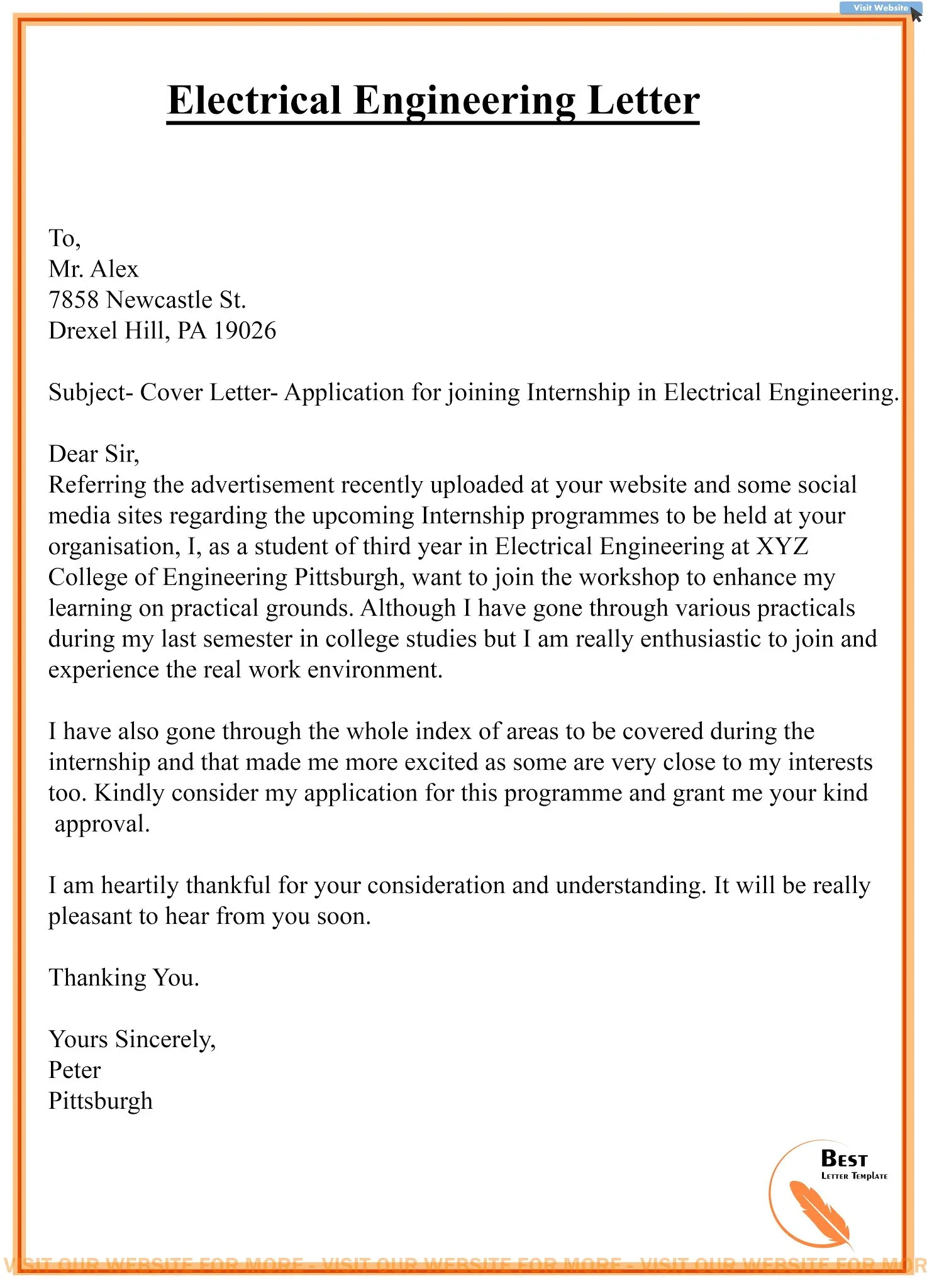
What is an Engineering Internship Cover Letter?
An engineering internship cover letter is a crucial document that accompanies your resume when applying for an engineering internship. It serves as your introduction to the hiring manager, allowing you to highlight your relevant skills, experience, and enthusiasm for the specific internship opportunity. Unlike a resume, which provides a factual overview of your qualifications, a cover letter enables you to personalize your application and demonstrate your personality, communication skills, and genuine interest in the company and the role. It’s your chance to make a strong first impression and set yourself apart from other applicants by articulating why you are the ideal candidate for the position. A well-crafted cover letter can significantly increase your chances of securing an interview.
Why Is a Cover Letter Important?
A cover letter is important because it gives you the opportunity to expand on your resume and showcase your unique qualifications. It demonstrates your communication skills, which are vital in any engineering field. It allows you to explain your career goals and how the internship aligns with your aspirations. Furthermore, it provides a platform to express your genuine interest in the company and the specific role. Many hiring managers consider a cover letter an essential part of the application process, as it reveals your attention to detail, writing proficiency, and overall professionalism. A well-written cover letter can significantly increase your chances of getting noticed and securing an interview, setting you apart from candidates who only submit a resume. Additionally, it’s a chance to show you’ve done your homework on the company and understand their needs.
Highlighting Your Skills

When writing an engineering internship cover letter, it’s important to highlight both your technical and soft skills. These skills are essential for success in the engineering field. You must demonstrate how your abilities align with the requirements of the internship. The key is to provide specific examples of how you’ve utilized these skills in the past. Instead of just listing skills, provide context by describing the projects or situations in which you’ve applied them. For instance, detail a project where you employed your CAD skills to design a component or a time when you used problem-solving skills to overcome a technical challenge. This approach proves to the employer that you possess the capabilities and can use them effectively.
Technical Skills
Technical skills are the foundation of an engineering career, and your cover letter should showcase them. Include skills that are directly relevant to the internship, such as proficiency in CAD software (like AutoCAD, SolidWorks, or CATIA), programming languages (like Python, MATLAB, or C++), and knowledge of specific engineering principles (like thermodynamics, fluid dynamics, or electrical circuits). Be specific about your level of expertise and any certifications or training you’ve received. If the job description mentions particular software or techniques, make sure to highlight your experience with them. When describing your technical skills, use action verbs to demonstrate your abilities, such as “Designed,” “Developed,” “Analyzed,” or “Implemented.”
Soft Skills
Soft skills are equally important, often even more so, than technical skills. In your cover letter, emphasize your ability to work in a team, communicate effectively, solve problems, and manage your time. Mention any experience you have in leadership roles, such as leading a project or a team. Provide examples of times when you successfully collaborated with others, resolved conflicts, or met deadlines. Highlight your communication skills by mentioning your ability to clearly explain technical concepts, write reports, and present information. Problem-solving skills are crucial, so share instances when you used analytical thinking to overcome challenges. Remember to show how you’ve applied these soft skills in academic projects, previous internships, or extracurricular activities. Show, don’t just tell, how these skills make you an effective engineering intern.
Showcasing Relevant Experience

Demonstrating relevant experience is vital in your engineering internship cover letter. This includes any academic projects, previous internships, or work experience that showcases your skills and knowledge. Tailor this section to align with the job description, emphasizing the experiences and skills most relevant to the role. Always quantify your accomplishments whenever possible, using numbers to show your impact. For example, if you improved the efficiency of a project, state the percentage of improvement. Focus on what you accomplished and how you contributed to the team or project. The goal is to convince the hiring manager that your past experiences have prepared you for the internship. Also, don’t be afraid to highlight transferable skills you’ve developed, even if the experience wasn’t directly engineering-related.
Academic Projects
Academic projects provide an excellent opportunity to demonstrate your practical skills and knowledge. In your cover letter, describe the projects that are most relevant to the internship. Explain the project’s objectives, your role in the project, and the skills you used. Include specific details about the challenges you faced and how you overcame them. If possible, mention the results or outcomes of your projects. Quantify your achievements whenever possible; for example, “Redesigned a system, reducing energy consumption by 15%.” Showcase your understanding of engineering principles and your ability to apply them to real-world problems. Highlight the technologies and tools you used, such as CAD software, simulation tools, or programming languages. Your ability to describe a project clearly indicates your ability to communicate technical concepts effectively, which is valuable in an engineering role.
Previous Internships or Work Experience
If you have any previous internships or work experience, it’s essential to highlight them in your cover letter. For each experience, describe your role, responsibilities, and accomplishments. Focus on the skills and experiences that are most relevant to the internship you are applying for. Use action verbs to describe your tasks and achievements, such as “Managed,” “Designed,” “Implemented,” or “Analyzed.” Quantify your accomplishments whenever possible; for example, “Improved the efficiency of the manufacturing process by 10%.” Explain the impact of your work and the contributions you made to the team or company. Demonstrate how you’ve developed your engineering skills and your understanding of workplace dynamics through these experiences. Even if your experience is not directly engineering-related, showcase transferable skills like problem-solving, teamwork, and communication. Make sure to link your previous experience with your goals for this internship.
Tailoring Your Cover Letter

Tailoring your cover letter is a crucial step in the application process. A generic cover letter doesn’t show that you have the specific skills and interest for that position. Every cover letter should be customized to match the specific requirements of the job and the company’s values. The effort you put in customizing it can significantly increase your chances of success. Tailoring your cover letter involves researching the company, addressing the hiring manager directly, and using keywords from the job description. This level of detail shows the hiring manager that you are genuinely interested in the role and that you’ve taken the time to understand their needs.
Researching the Company
Before you start writing, research the company thoroughly. Visit their website, read their mission statement, and understand their products or services. Look for recent news, press releases, and any information that provides insight into their current projects or goals. Understanding the company’s culture and values will help you tailor your cover letter to align with their mission. Identify any projects or technologies that interest you and mention them in your letter. This shows the hiring manager that you are genuinely interested in the company and have a solid understanding of what they do. Showing this attention to detail helps you stand out from other candidates who might send generic letters. Use the company’s website and LinkedIn to gather information about the people who work there and the types of projects they are involved in.
Addressing the Hiring Manager
Addressing the hiring manager by name shows your attention to detail and professionalism. If possible, find out the name of the hiring manager or the specific person responsible for reviewing applications. You can usually find this information on the company’s website, LinkedIn, or the job posting itself. Use a formal salutation, such as “Dear Mr./Ms. [Last Name],” unless the job posting specifies otherwise. If you can’t find a specific name, it’s acceptable to use a general greeting like “Dear Hiring Manager,” but try to avoid generic greetings like “To Whom It May Concern.” Addressing your letter to a specific person makes it more personal and shows you’ve taken the time to research the company and the role. It creates a more direct and engaging connection with the reader. If you can’t find the hiring manager’s name, you can often call the company and ask the receptionist.
Keywords and Formatting

Carefully review the job description and identify the keywords used to describe the required skills and qualifications. Incorporate these keywords naturally throughout your cover letter. This will help your application get noticed by applicant tracking systems (ATS) and ensure that your key skills and experiences are highlighted. Use the same language the company uses to describe the role and its requirements. In terms of formatting, keep your cover letter concise and easy to read. Use a clear and professional font, such as Times New Roman or Arial, and keep the font size between 10 and 12 points. Use consistent formatting throughout the document, including paragraph spacing, margins, and bullet points. A well-formatted cover letter shows attention to detail and makes it easy for the hiring manager to quickly assess your qualifications.
Structure of an Effective Cover Letter
A well-structured cover letter is essential for conveying your qualifications and making a positive impression. The layout should be clear, concise, and easy to read. An effective cover letter typically includes a header with your contact information, an opening paragraph that captures the reader’s attention, body paragraphs that highlight your relevant skills and experience, and a closing paragraph that reiterates your interest and invites further contact. Each part plays a unique role in making your application stand out. A well-organized cover letter allows the hiring manager to quickly grasp the key aspects of your profile, making it more likely that your application will receive serious consideration.
Header and Contact Information
Your header should include your full name, address, phone number, and email address. Make sure your contact information is accurate and up-to-date. Consider using a professional-sounding email address. Place the header at the top of the page, and use a consistent format that matches your resume. The header makes it easy for the hiring manager to contact you for an interview or to request additional information. Be sure to proofread the header carefully to avoid any errors, as a typo in your contact information could mean you miss out on an opportunity. It’s a key detail; therefore, it should be well-formatted and easy to locate.
Opening Paragraph

The opening paragraph is your opportunity to grab the hiring manager’s attention and state your purpose for writing. Start by mentioning the specific position you’re applying for and where you saw the job posting. Briefly state why you are interested in the internship and the company. Show enthusiasm, making your interest clear from the start. You can briefly mention a key skill or accomplishment that makes you a strong candidate. Keep it concise and compelling. The goal is to make the reader want to learn more about you. Avoid generic opening statements. The best openings are specific and personalized to the role and company. A strong opening makes a great first impression.
Body Paragraphs
The body paragraphs are where you provide the details that support your application. Focus on the skills and experience that are most relevant to the internship. Use specific examples to illustrate your qualifications. Highlight any projects, coursework, or previous experiences that align with the job requirements. Explain your role, the skills you used, and the results you achieved. Quantify your accomplishments whenever possible to show your impact. Address the key requirements mentioned in the job description. Show, don’t just tell, why you are a good fit for the role. Each paragraph should focus on a specific point, making it easy for the reader to follow your narrative. Use clear, concise language and avoid jargon.
Closing Paragraph
The closing paragraph should reiterate your interest in the internship and the company. Thank the hiring manager for considering your application. Reiterate your enthusiasm for the opportunity and your belief that you would be a valuable asset to their team. Include a call to action, such as inviting the hiring manager to contact you for an interview or to request further information. Keep it professional and enthusiastic. Avoid sounding overly eager or demanding. Express your gratitude and state that you look forward to hearing from them soon. A well-written closing leaves a positive lasting impression.
Proofreading and Editing

Proofreading and editing are critical steps in the cover letter writing process. A single typo or grammatical error can undermine your credibility and negatively impact your application. Proofread your cover letter carefully multiple times to catch any mistakes. Use a spell checker, but also read the letter aloud to identify any awkward phrasing or unclear sentences. Have a friend, family member, or career counselor review your cover letter for feedback. They can provide a fresh perspective and catch any errors you may have missed. Ensure that your cover letter is free of errors and presents you in the best possible light. Proofreading is essential for showing your professionalism and attention to detail, which is important for landing an internship.
Common Mistakes to Avoid
There are several common mistakes that applicants make when writing an engineering internship cover letter. Avoiding these mistakes can greatly improve your chances of success. Being aware of what to avoid helps you create a professional and effective cover letter. The most common mistakes include using generic language, ignoring the job description, and failing to proofread your work. Paying attention to these areas will make your application stand out and increase your chances of getting an interview. Always focus on writing a tailored, error-free cover letter to boost your chances.
Using Generic Language
Avoid using generic language and clichés that don’t demonstrate your unique qualifications. Using phrases like “I am a hard worker” or “I am a team player” is not effective. Instead, provide specific examples of how you have demonstrated these qualities in your academic or professional life. Tailor your cover letter to the specific internship you are applying for. Generic cover letters show a lack of interest and effort. Replace vague statements with concrete examples that showcase your skills, experiences, and accomplishments. Use active verbs to make your writing more engaging and specific. Ensure your cover letter highlights what makes you the right fit for the position.
Ignoring the Job Description
Failing to address the requirements outlined in the job description is a major mistake. The job description serves as a roadmap of what the company is looking for in a candidate. Carefully review the job description and identify the key skills, experiences, and qualifications that the employer seeks. Tailor your cover letter to highlight how you meet these requirements. Provide specific examples that demonstrate your ability to fulfill the job’s expectations. Ignoring the job description indicates a lack of attention to detail and a failure to understand the role. Customize your cover letter to each application, and your efforts will pay off by matching your skills with the job’s needs.
Typos and Grammatical Errors
Typos and grammatical errors can damage your credibility and make a negative impression. Always proofread your cover letter carefully. Use a spell checker and grammar checker. Read your cover letter aloud to check for awkward phrasing or unclear sentences. Have someone else review it for you, as a second set of eyes can often catch errors you may have missed. A cover letter with errors suggests a lack of attention to detail and a lack of professionalism. Ensure your cover letter is polished and error-free before submitting it. A well-written cover letter is essential for demonstrating your communication skills.
Final Thoughts
Writing a strong engineering internship cover letter is a critical step in securing your desired internship. By following the guidelines in this guide, you can create a cover letter that highlights your skills, experience, and enthusiasm. Remember to tailor your letter to each job application, research the company thoroughly, and proofread your work carefully. A well-crafted cover letter can set you apart from other candidates and increase your chances of landing an interview. Good luck with your applications, and remember that the effort you put into your cover letter will pay off in the long run. With a well-written cover letter, you can make a great first impression and begin your engineering career with a promising start.