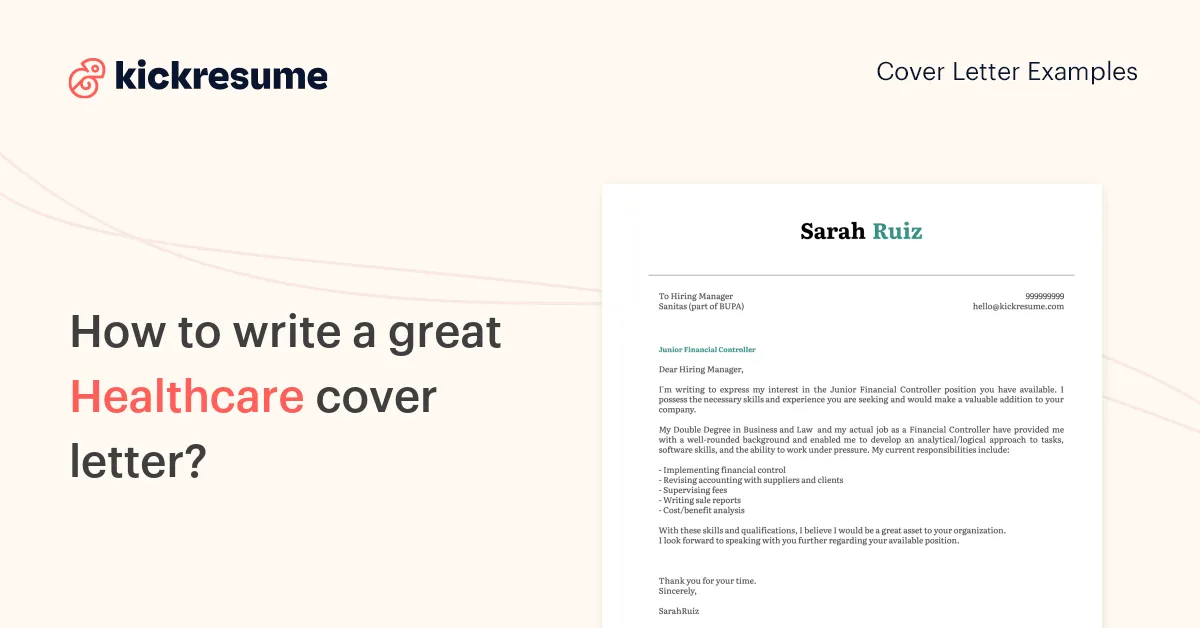
Crafting a Winning Healthcare Cover Letter
In the competitive landscape of healthcare, a well-crafted cover letter can be your golden ticket to securing a job interview. It’s your opportunity to make a strong first impression, showcase your passion for patient care, and demonstrate why you’re the ideal candidate. This guide reveals the secrets to crafting a healthcare cover letter that gets you noticed and helps you land your dream role. A compelling cover letter is more than just a formality; it is your personal marketing document, setting the stage for a successful application and highlighting your suitability for the position you are applying for.
Understanding the Importance of a Cover Letter
A cover letter serves as your personal introduction, complementing your resume by providing context to your qualifications. In healthcare, where empathy, communication, and specific skills are paramount, your cover letter allows you to elaborate on your experiences and connect them to the job requirements. It’s your chance to express your enthusiasm for the role and the organization, demonstrating that you’re not just qualified but also a good fit for their culture. Moreover, a well-written cover letter can differentiate you from other candidates, especially when applying for highly sought-after positions within the healthcare sector. The cover letter helps demonstrate your writing skills, attention to detail, and ability to communicate professionally.
Highlighting Your Skills & Experience

Healthcare roles demand a blend of technical skills, soft skills, and specific experience. Your cover letter should showcase these. Don’t just list your skills; demonstrate how you’ve applied them in previous roles. Provide concrete examples of your patient care, teamwork abilities, and problem-solving skills. If you’re applying for a nursing position, detail your experience with specific medical procedures or patient populations. If you’re a healthcare administrator, highlight your success in improving operational efficiency or patient satisfaction. Always tailor the skills you highlight to match the job description. This will demonstrate that you have not only the required competencies but also an understanding of what the employer is looking for.
Tailoring Your Letter to the Healthcare Field
Healthcare is a diverse field. Your cover letter should reflect the specific requirements of the role and the values of the healthcare organization you’re applying to. Research the organization’s mission, vision, and values. Does the organization emphasize patient-centered care, innovation, or community involvement? Align your cover letter to reflect these values. Use keywords from the job description to demonstrate that you understand the role’s requirements. If the job emphasizes electronic health records (EHR) experience, ensure you highlight your proficiency with relevant EHR systems. Demonstrate your understanding of healthcare regulations and ethical considerations, such as HIPAA compliance. This targeted approach demonstrates your commitment to the healthcare profession.
Showcasing Relevant Certifications & Licenses
Healthcare positions often require specific certifications and licenses. Ensure you prominently display these credentials in your cover letter. Specify your license number, the issuing body, and the date of expiration. If you possess advanced certifications, such as those in specialized nursing or medical technology, highlight them. Include any continuing education credits or professional development activities you’ve completed. If you are working towards a certification, state your expected completion date. Be precise about your certifications and licenses to convey your expertise and professionalism. Always make sure your credentials are up-to-date and valid.
Formatting Your Healthcare Cover Letter

The format of your cover letter is as important as its content. It must be clean, professional, and easy to read. Use a standard font like Times New Roman or Arial, with a font size between 10 and 12 points. The letter should be single-spaced with one-inch margins. Break up large blocks of text with paragraphs. Avoid excessive use of bolding, italics, or underlining. Prioritize clarity and readability to make a positive impression. Your cover letter should look polished and professional, similar to how you would present yourself in a professional environment. Ensure there are no typos, grammatical errors, or inconsistencies in your formatting, as these errors can undermine your credibility.
Contact Information & Header
Your cover letter should begin with your contact information, including your name, address, phone number, and email address. This should be at the top, either left-aligned or centered. Include the date and the recipient’s contact information (name, title, organization, and address) below your contact information. If you know the hiring manager’s name, address the letter to them specifically. This personal touch shows you’ve done your research. A well-formatted header creates a professional impression and makes it easy for the employer to contact you.
Professional Salutations & Closing
Use a professional salutation, such as ‘Dear Mr./Ms./Dr. [Last Name]’ if you know the hiring manager’s name. If you don’t know the name, use ‘Dear Hiring Manager.’ In your closing, express your appreciation for the opportunity to be considered. Reiterate your interest in the position and your eagerness to discuss your qualifications further. Use a professional closing, such as ‘Sincerely’ or ‘Respectfully,’ followed by your typed name. This formal closure is an essential part of a cover letter and emphasizes your professionalism.
Key Sections of Your Healthcare Cover Letter

The Opening Paragraph
The opening paragraph is your first chance to capture the hiring manager’s attention. State the position you are applying for and how you learned about it. Mention something that immediately grabs the reader’s interest, such as a recent accomplishment, an alignment with the organization’s mission, or a specific skill. Keep it concise and focused on your value proposition. The opening should set the tone for the rest of the letter. Make sure your first sentence is engaging and clearly states your purpose for writing, to create a positive first impression and entice the reader to continue.
Expressing Your Enthusiasm
Express your enthusiasm for the position and the organization early on. Show that you understand their mission and values. Explain why you are excited about the opportunity to contribute. Demonstrating genuine enthusiasm can significantly enhance your application. Let your passion for healthcare shine through. Show your interest by highlighting how the job aligns with your career goals, and what motivates you in this specific field. Make sure to research the organization and refer to its mission and vision.
Highlighting Key Qualifications

The body of your cover letter should highlight your most relevant qualifications. Select 2-3 key skills and experience that align with the job description. Provide specific examples of how you’ve used these skills to achieve positive outcomes. Use action verbs to describe your accomplishments. Quantify your achievements whenever possible, such as ‘increased patient satisfaction by 15%’ or ‘reduced medication errors by 10%.’ This evidence demonstrates your value to a potential employer. Keep this section concise and focused, ensuring your key strengths are easily identified and linked to the job’s requirements. Provide context and detail to set your qualifications apart from others.
Quantifying Achievements
Quantifying your achievements with numbers and data adds significant impact to your cover letter. Instead of saying ‘improved patient care,’ say ‘improved patient care by implementing a new communication protocol, resulting in a 20% decrease in patient complaints.’ Use metrics to demonstrate the impact of your work. For instance, specify the number of patients you’ve assisted or the percentage by which you’ve improved efficiency. Quantitative evidence adds credibility to your claims. This gives concrete evidence of your capabilities and provides a clearer picture of what you can contribute to the organization. Numbers are a powerful tool in making your application more persuasive.
Addressing the Employer’s Needs
Demonstrate that you understand the employer’s needs and how you can meet them. Review the job description carefully and address the specific requirements. Tailor your letter to show how your skills and experience directly address their needs. Focus on how you can solve their problems or help them achieve their goals. Make it clear that you have researched the organization and are aware of its current challenges. This personalized approach demonstrates that you are not just sending a generic cover letter, but are genuinely interested in the role and the organization. Align your skills and experiences with their specific needs.
Why You Are the Best Fit

Clearly articulate why you are the best fit for the position. Explain how your qualifications, experience, and personal attributes align with the job and the organization’s culture. Highlight your unique skills or experiences that set you apart from other candidates. Summarize your key strengths and how they benefit the employer. Reinforce your enthusiasm for the role and the organization. Clearly state your value proposition – what makes you the ideal choice. Make sure your passion and ability to thrive in the healthcare industry are evident. Show that you are a good cultural fit by referring to their values.
Reviewing and Proofreading Your Cover Letter
Before submitting your cover letter, it is crucial to review and proofread it meticulously. Errors can create a negative impression, undermining your qualifications. Take the time to ensure your cover letter is free from grammatical errors, spelling mistakes, and typos. Review the content to ensure it is clear, concise, and focused. Read it aloud to catch any awkward phrasing. Ask a friend, colleague, or career counselor to review your letter for feedback and a second opinion. Thoroughly reviewing your cover letter is an essential step in ensuring that it reflects your professionalism and attention to detail, the final check can improve your chances of a successful application.
Common Mistakes to Avoid
Avoid generic cover letters. Customize each letter to the specific job and organization. Do not simply repeat your resume; elaborate on your accomplishments and provide context. Avoid using jargon that the hiring manager may not understand. Steer clear of overly formal language. Never include negative comments about previous employers or jobs. Always double-check the formatting and ensure your contact information is accurate. These are some of the most frequent mistakes that can prevent a candidate from making a positive first impression.
The Importance of Proofreading

Proofreading is the final step in the cover letter writing process. Errors can distract the hiring manager from your qualifications. Proofread multiple times. Read your cover letter slowly, word by word. Check for spelling, grammar, and punctuation errors. Ensure your formatting is consistent and professional. If possible, have someone else proofread your cover letter. A fresh pair of eyes can often catch mistakes that you might miss. Paying close attention to detail in your cover letter demonstrates your professionalism and attention to detail, a key aspect in healthcare.