
Why Mention Salary in Cover Letter?
Mentioning your salary expectations in a cover letter is a strategic move that can significantly impact your job application. While it might seem counterintuitive to discuss money upfront, doing so can demonstrate your understanding of the job market and your financial needs. It allows you to align your expectations with the employer’s budget early on, potentially saving both parties time and effort. By addressing salary proactively, you show that you are serious about the position and have thought through your career goals. Including a salary expectation also helps the hiring manager quickly assess if your requirements align with the company’s offering, preventing a mismatch down the line and streamlining the hiring process. Showing that you have researched the market and have a clear idea of your worth can portray you as a confident and professional candidate.
When Is the Right Time to Discuss Salary?
The timing of mentioning salary in your cover letter is crucial. It is generally advisable to address salary expectations either towards the end of your cover letter or, if the job posting specifically requests it, in a dedicated section. Avoid bringing up salary in the very beginning, as it might shift the focus from your skills and qualifications to the financial aspect. Instead, use the initial part of the cover letter to highlight your enthusiasm for the role and the company, and showcase your relevant experiences. This allows you to first establish your value and how you align with the job requirements before discussing compensation. Remember, the goal is to get the hiring manager interested in you, your skills, and what you can bring to the company, before discussing numbers. This approach puts you in a stronger position during salary negotiations.
Early in the Cover Letter
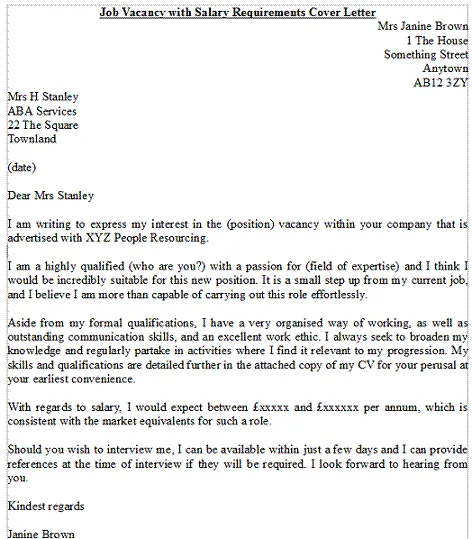
In most cases, avoid mentioning salary early in your cover letter. Prioritize selling your skills and enthusiasm for the job. An early discussion of salary could be seen as overly focused on compensation rather than the value you offer. This may negatively impact the recruiter’s initial impression. Focus on showcasing how your qualifications align with the role’s requirements. Only consider mentioning salary at the start if the job posting specifically requests it, in which case, follow the instructions provided. Even then, keeping your response brief and professional is key. The primary aim of the first paragraphs should always be to capture the reader’s attention and demonstrate your interest in the position and the company, not the salary.
Later in the Cover Letter
Positioning the salary discussion near the end of your cover letter allows you to establish your value first. After you’ve highlighted your skills, experiences, and enthusiasm for the role, a dedicated section for salary expectations provides a natural transition. This strategic placement allows you to build a strong case for why you’re the ideal candidate before broaching the topic of compensation. It’s also a great way to align expectations, ensuring both the candidate and the employer are on the same page regarding financial terms. If the job posting doesn’t specifically mention salary, it is entirely acceptable to briefly address it or even omit it. The main objective is to express your keen interest and qualification for the role first, paving the way for a potential discussion in a subsequent interview.
How to Phrase Your Salary Expectations
When discussing your salary expectations, precision and professionalism are key. Avoid being overly demanding or vague; instead, aim for a balanced approach that demonstrates your market awareness and flexibility. Use phrases like, “My salary expectations are in the range of $X to $Y,” or “I am looking for a salary that is commensurate with my experience and the responsibilities of the role.” Avoid stating a single number, as this can limit your negotiation potential. A salary range shows that you’ve considered various factors and are open to discussion. If you are uncertain, do some research and use websites like Glassdoor or Salary.com to find the average salary for similar roles in your location. Always tailor your language to the specific job and company, ensuring your expectations align with the industry standards. Always remember to be professional, and avoid mentioning any financial problems.
Using a Salary Range

Providing a salary range is a smart strategy when you discuss your salary expectations in a cover letter. A range demonstrates your flexibility and understanding that factors such as company size, benefits, and responsibilities can impact the final offer. It offers room for negotiation and indicates that you’re open to considering different options within a certain threshold. Research industry standards and job titles comparable to the one you are applying for to establish a realistic range. The range should be narrow enough to show you have a clear idea of your worth. Using a range protects you from undercutting your potential earnings and gives the employer room to maneuver within their budget. Make sure your range is grounded in research and reflects your desired compensation for the role.
Stating Your Current Salary (Optional)
Stating your current salary in your cover letter is generally optional and depends on the job requirements and your personal strategy. Some job postings might specifically request your current salary, in which case, you should comply with their instructions. However, if not explicitly requested, it’s usually better to avoid sharing this information. The current salary can sometimes anchor the negotiation, potentially limiting your earning potential if your past compensation was lower than the market average. If you feel compelled to mention it, keep it concise and avoid going into unnecessary detail. Instead of stating your current salary, you might use a phrase such as, “My current compensation is competitive and aligned with my experience.” The focus should always be on your value and the salary you are seeking for the new role, rather than your past earnings.
Avoiding Common Mistakes
Avoid making these common mistakes when discussing salary in your cover letter to enhance your chances of a positive outcome. Do not be too demanding by setting a high salary that might discourage the employer from considering your application. Likewise, avoid being too vague, as this can make you appear indecisive or unprepared. Steer clear of providing an unreasonably low salary, which may undervalue your skills. Refrain from discussing financial problems or personal needs, as this can be unprofessional. Always research industry standards and use a salary range to show flexibility. Focus on how you can contribute value to the company, and use a positive and confident tone in your writing. Reviewing and editing your cover letter carefully can help you avoid these pitfalls and present yourself as a professional candidate.
Don’t Be Too Demanding

Avoid being overly demanding when stating your salary expectations in a cover letter. Being too aggressive about salary can deter potential employers. Avoid using phrases like “I expect,” as it can come off as presumptuous. Instead, phrase your expectations in a way that is open to negotiation and shows flexibility. Research the industry standards for the role and location, then use a salary range. A reasonable range shows you’ve considered the market and are open to discussion. Remember, the initial cover letter is the first step in a broader process and negotiations can happen later. Displaying a willingness to collaborate on compensation increases your chances of moving forward.
Don’t Be Vague
Avoid being vague about your salary expectations in a cover letter. A lack of clarity may signal indecisiveness or a lack of understanding of your value. To avoid this, research industry standards for the role and location to have a concrete idea of the going rate. Use a specific salary range, rather than saying “competitive salary” or “market rate”. A well-defined range demonstrates that you’ve given your compensation expectations careful thought. It also gives the hiring manager a clearer idea of your financial needs. Remember, while flexibility is important, being too vague can leave the employer wondering whether your expectations align with their budget, possibly leading them to move on to a more specific applicant. Therefore, providing a well-researched, precise salary range is a better approach.
Example Cover Letter Salary Sections
Here are a few examples of how you can phrase the salary expectations section in your cover letter:
Example 1 (Using a Salary Range): “I am seeking a position with a salary in the range of $65,000 to $75,000, commensurate with my experience and the responsibilities of the role.”
Example 2 (Open to Negotiation): “I am eager to discuss my salary expectations further during the interview process. My research indicates a competitive salary for this role, and I am open to negotiation based on the specifics of the position.”
Example 3 (If the Job Posting Requires It): “As requested, my salary expectation is approximately $70,000 annually. My current compensation is competitive.”
Tailor your chosen language to the specifics of the job and company, ensuring your expectations are realistic and professional. Make certain your focus is on the value you bring to the company, not only on salary.
Salary Expectations Section

The salary expectations section in your cover letter is where you directly address your compensation needs. Place it towards the end of your letter, after you have highlighted your skills and expressed your interest in the role. Begin by stating your desired salary range, for example, “I am seeking a salary in the range of $X to $Y, depending on the specifics of the role.” This provides flexibility and opens the door for potential negotiation. Ensure that your range aligns with your research on industry standards and is appropriate for your level of experience. Be clear, professional, and concise in your wording. Make sure that your focus is on your qualifications and the value you bring to the organization, but you must clearly state what you are looking for from the company.
Negotiation is Possible
Keep in mind that negotiation is often possible, especially if the employer is very interested in your candidacy. Even if you state a salary range in your cover letter, this is not set in stone. Prepare to discuss your desired compensation further during the interview process. Consider factors such as benefits, additional responsibilities, and the company’s overall compensation packages. Be prepared to justify your expectations based on your skills, experience, and the job market. Demonstrate your flexibility by showing your willingness to discuss details. Research the company’s compensation structure. Understanding their pay bands will help you negotiate effectively. Maintain a positive and confident attitude throughout the negotiation process. Remember that negotiation is a two-way street, and an amicable agreement is possible.
Final Thoughts
Discussing salary in your cover letter requires careful planning. By strategically addressing your salary expectations, you can increase your chances of securing your ideal position. Use a clear and professional approach, providing a salary range that aligns with industry standards, and show flexibility. Highlight your value and align your expectations with the role. Remember that negotiation is possible, and be prepared to discuss compensation during the interview phase. Carefully tailoring your cover letter to the specific job and company requirements will increase your chances of success. The goal is to clearly state your expectations while creating a great first impression and making sure that you are a great fit for the organization. Good luck with your job search!