Understanding the Impact of a Low GPA
A low GPA can sometimes be a hurdle in your job search, but it’s certainly not the end of the road. Many employers use GPA as a preliminary screening tool to assess candidates. It can offer a quick glimpse into your academic performance and work ethic. However, it’s crucial to understand that GPA is just one factor. Your cover letter provides an opportunity to provide context and demonstrate that your abilities extend far beyond a number on a transcript. A well-crafted cover letter can shift the focus from your GPA to your strengths, experiences, and potential, ultimately increasing your chances of securing an interview and, eventually, a job.
Why GPA Matters to Employers
Employers often look at GPA to gauge a candidate’s academic performance, intellectual capacity, and commitment to their studies. A higher GPA might suggest strong study habits, time management skills, and a solid understanding of academic material. This is particularly relevant for roles that require a strong foundation of knowledge or analytical skills. However, it’s important to remember that every company has different priorities. Some employers prioritize practical experience, while others focus on a candidate’s ability to solve problems, work in a team, or demonstrate leadership skills. Regardless of the reason, you need to understand why GPA is important to the employer and then, address it properly.
When to Address a Low GPA in Your Cover Letter

The timing of addressing your low GPA is strategic. You don’t want it to be the first thing the hiring manager sees, as it might immediately overshadow your positive attributes. However, it’s also important to address it proactively, before they bring it up during an interview. If the job application specifically requests your GPA, or if the employer emphasizes academic achievements, it’s crucial to include an explanation. However, even if it’s not explicitly requested, addressing the issue in the cover letter can show transparency and initiative. This demonstrates to the employer that you are aware of your less favorable results, and you are prepared to address and overcome them.
Early or Later in the Letter
The best approach is usually to introduce it in the middle of your cover letter, after you’ve highlighted your relevant skills and experiences. This allows you to frame the context first before addressing the low GPA. This can be done strategically, ensuring that the explanation does not become the central focus of your cover letter but is addressed as part of your professional narrative. Avoid making it the opening of your letter. Instead, aim to create a positive first impression by emphasizing your key qualifications and the value you bring to the role.
Structuring Your Cover Letter to Address a Low GPA
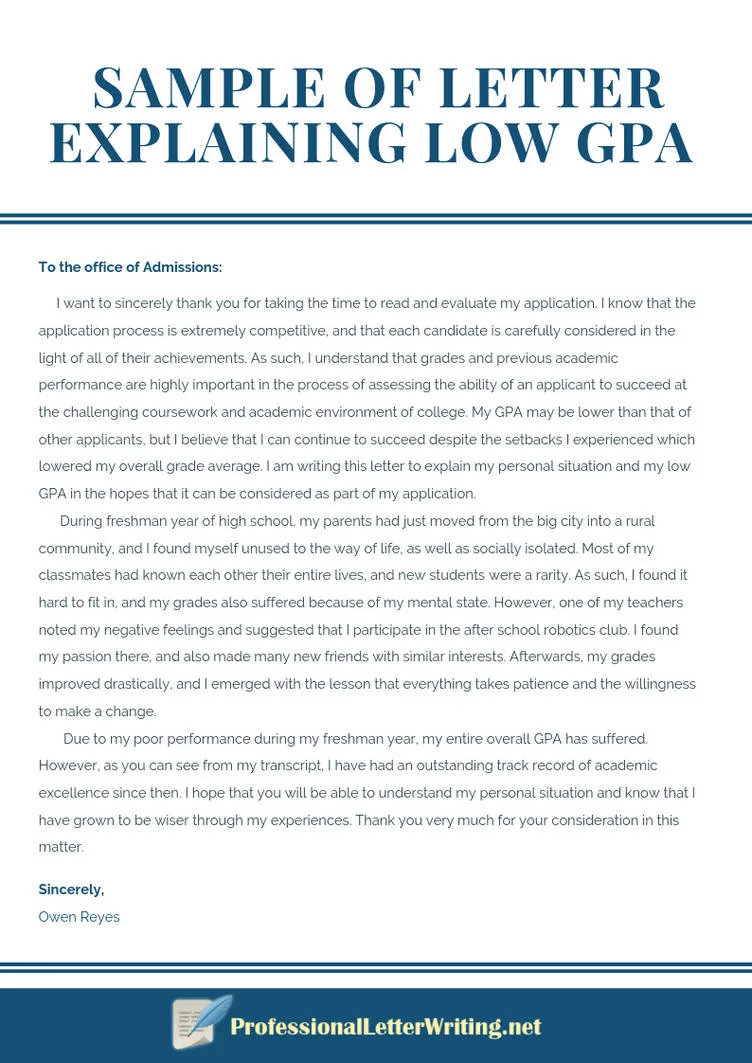
When explaining a low GPA, it’s important to be concise, honest, and positive. Your goal is to provide context without making excuses and highlight your strengths. This section should be a brief explanation that acknowledges the situation, offers relevant context, and refocuses the reader’s attention on your skills, experiences, and potential.
Acknowledge and Briefly State the Situation

Start by acknowledging your GPA without dwelling on it. For instance, you could say something like “While my GPA was [X], I want to provide some context.” This is a straightforward, non-apologetic way to bring up the topic. Avoid overly negative language or self-deprecating remarks. Instead, be direct and focus on providing clarity about your academic results.
Provide Context Without Making Excuses
The most important part is to provide context. Perhaps you faced personal challenges, had to work to support yourself, or were involved in extracurricular activities that impacted your study time. Keep the focus on facts, not blame. For example, “During my time in school, I was also working 20 hours a week to support myself, which affected my study time.” Briefly mention the challenges, but do not linger on them. The focus needs to be on what you’ve learned and how you’ve grown from the experience. Avoid making excuses, which can make you appear unprofessional. Instead, focus on the steps you have taken to improve yourself.
Highlighting Positive Aspects and Achievements
After addressing your GPA, shift the focus back to your strengths. This might include highlighting your skills, experiences, coursework, personal growth, and any achievements. This helps to balance the negative aspect of your GPA with your positive attributes, demonstrating that you are a well-rounded candidate.
Focus on Skills and Experiences

Emphasize the skills you gained through your coursework, internships, or part-time jobs. Make sure to highlight skills that are relevant to the job. Use action verbs to describe what you did and the results. For example, “Managed social media accounts, which resulted in a 30% increase in engagement.” Focus on what you learned and how you applied your knowledge, not just what you studied.
Showcase Relevant Coursework
If you excelled in specific courses that are relevant to the job, mention them. For instance, “My strong performance in courses like [course name] and [course name] provided me with the skills necessary for this role.” This shows that you have the skills needed to do the job, regardless of your overall GPA.
Emphasize Personal Growth and Development
Discuss the lessons you have learned and any steps you took to improve yourself. This shows maturity and a willingness to learn. For instance, “I’ve learned the importance of time management and have since implemented new strategies to better manage my workload.” Focus on actions and results. This shows the employer that you are committed to doing your best and that you are capable of learning.
Highlighting Lessons Learned and Improvements

Show that you’ve learned from the experience. If you made changes to your study habits or personal life to improve your performance, mention it. For example, “Since then, I’ve developed better study habits, which have significantly improved my ability to manage my workload effectively.” Demonstrate a commitment to continuous learning and self-improvement, which can be very attractive to employers.
Demonstrating Commitment and Future Performance
Conclude by showing that you are dedicated to performing well in the future. This means highlighting your skills and emphasizing your excitement for the role. For instance, “I am confident that my skills and experiences align with the requirements of this role, and I am eager to contribute to the success of your team.” Focus on your potential and enthusiasm for the job, which can help to overcome any lingering concerns about your GPA.
Quantifying Achievements and Results
Whenever possible, quantify your achievements. Numbers provide concrete evidence of your abilities and make your claims more credible. For example, “Increased sales by 15% in three months.” Or, “Managed a team of five and improved project efficiency by 20%.” Providing quantifiable results reinforces your abilities and demonstrates your value.
Providing Concrete Examples

Use specific examples to support your claims. These examples should highlight your skills, demonstrate your abilities, and show how you have overcome challenges. For example, “In my internship at X company, I was responsible for Y task, where I achieved Z result.” Use the STAR method: Situation, Task, Action, Result. This is a structured way to present examples and showcase your skills. Concrete examples create a persuasive and memorable narrative.
Proofreading and Editing for Clarity
Before submitting your cover letter, ensure it is well-written and free of errors. Proofread it carefully for grammar and spelling mistakes, which can undermine your credibility. Use clear and concise language. A well-written cover letter shows attention to detail and professionalism. Ask a friend or career advisor to review it, which can help you to identify and correct any areas that need improvement.
Common Mistakes to Avoid
Certain mistakes can be detrimental to your cover letter. Understanding these common pitfalls will help you create a more effective and persuasive cover letter.
Making Excuses or Blaming Others

Avoid making excuses or blaming external factors for your low GPA. This can come across as unprofessional and will not reflect well on your character. Instead, own the situation and show how you have moved forward. Focus on the things that you can control, such as your work ethic and your commitment to improvement.
Dwelling on the Negative
Don’t dwell on your low GPA. Keep the explanation brief and focus on what you have achieved, rather than the negative. Focus on your skills, experiences, and potential. Remember, your cover letter is an opportunity to sell yourself, so make it positive and forward-thinking. Too much negativity can create a bad impression.
Being Dishonest or Misleading
Never lie about your GPA or qualifications. Honesty is crucial. If you are asked about your GPA, be forthright. Fabricating your achievements can lead to significant consequences, including job loss. Honesty builds trust and demonstrates integrity, which are essential qualities for any job. Being transparent about your situation can build trust with the hiring manager.
Focusing on Your Cover Letter’s Strengths

The best way to deal with a low GPA is to balance it with the strengths that set you apart. Your cover letter should highlight your skills, experiences, and personal qualities, providing a complete picture of your potential.
Skills and Experience
Detail the skills you’ve acquired through internships, coursework, and other activities. Make sure these skills align with the job requirements. Show how you’ve applied your knowledge and what you’ve achieved. Highlight any specific skills or experiences that make you an excellent candidate. Be specific and provide clear examples.
Achievements
List your achievements, both academic and otherwise. This could include awards, projects, or accomplishments outside of school. Showcase any leadership roles or significant contributions. Quantify your achievements whenever possible, using numbers and data to demonstrate the impact of your work. These demonstrate your abilities and value.
Personal Qualities
Showcase your personal qualities, such as your work ethic, ability to work in a team, and problem-solving skills. Highlight any soft skills that are relevant to the job. Provide examples of how you have demonstrated these qualities in the past. Explain how these personal attributes contribute to your potential for success in the role.
Concluding Your Cover Letter with Confidence
End your cover letter with a strong and confident closing. Restate your enthusiasm for the role and reiterate your skills. Thank the employer for their time and consideration. Encourage them to contact you if they have any questions. A confident closing reinforces your message and leaves a positive final impression. Focus on your future and your willingness to contribute to the company. A confident ending can leave a lasting positive impression.