Understanding the Need for a Versatile Cover Letter
Applying for multiple positions simultaneously can be a strategic move in a job search, expanding your opportunities and increasing your chances of landing an interview. However, this approach requires careful consideration of how to present yourself effectively to different employers. The key to success lies in crafting a versatile cover letter that can be adapted to various roles while still showcasing your unique qualifications and enthusiasm. A generic cover letter, though easier to create initially, can quickly become a barrier, failing to resonate with hiring managers seeking candidates who demonstrate genuine interest and relevant experience. This is where understanding the art of customization becomes crucial.
Why Customize is Key
In today’s competitive job market, a one-size-fits-all approach simply won’t cut it. Recruiters and hiring managers can often spot a generic cover letter from a mile away. They’re looking for candidates who have taken the time to understand the specific requirements of the role and the values of the company. Customization allows you to demonstrate that you’ve done your homework, aligning your skills and experience with the specific needs of the position. It’s about showing the employer that you’re not just sending out applications; you’re actively pursuing this job.
Addressing Multiple Roles

When applying for multiple positions, the challenge is to avoid sending out a cover letter that appears to be a perfect fit for none. The best approach involves creating a master cover letter that highlights your core skills and experiences, then tailoring it for each specific application. This means carefully reviewing each job description, identifying the key requirements, and adjusting your cover letter to directly address those needs. This approach allows you to present yourself as a versatile candidate, capable of contributing to different aspects of the organization while making a strong case for your suitability for each role.
Highlighting Transferable Skills
One of the most effective ways to make your cover letter versatile is to focus on your transferable skills. These are the skills and abilities you’ve developed throughout your career that can be applied across different job functions and industries. Examples of transferable skills include communication, problem-solving, leadership, teamwork, and time management. By highlighting these skills, you can demonstrate your value to potential employers, even if your past experience doesn’t perfectly align with the specific requirements of the job. This approach allows you to bridge the gap between your past experiences and the desired qualifications, making you a more compelling candidate.
Researching the Company
Before you even begin writing, thorough research is essential. This involves going beyond a quick glance at the job description. Visit the company’s website, explore their social media presence, and read news articles to understand their mission, values, and recent initiatives. This research will provide you with valuable insights to personalize your cover letter and demonstrate your genuine interest. By showing that you understand the company’s culture and goals, you can significantly increase your chances of making a positive impression. This proactive approach showcases your dedication and allows you to tailor your application in a way that resonates with the employer.
Tip 1 Tailor Your Opening

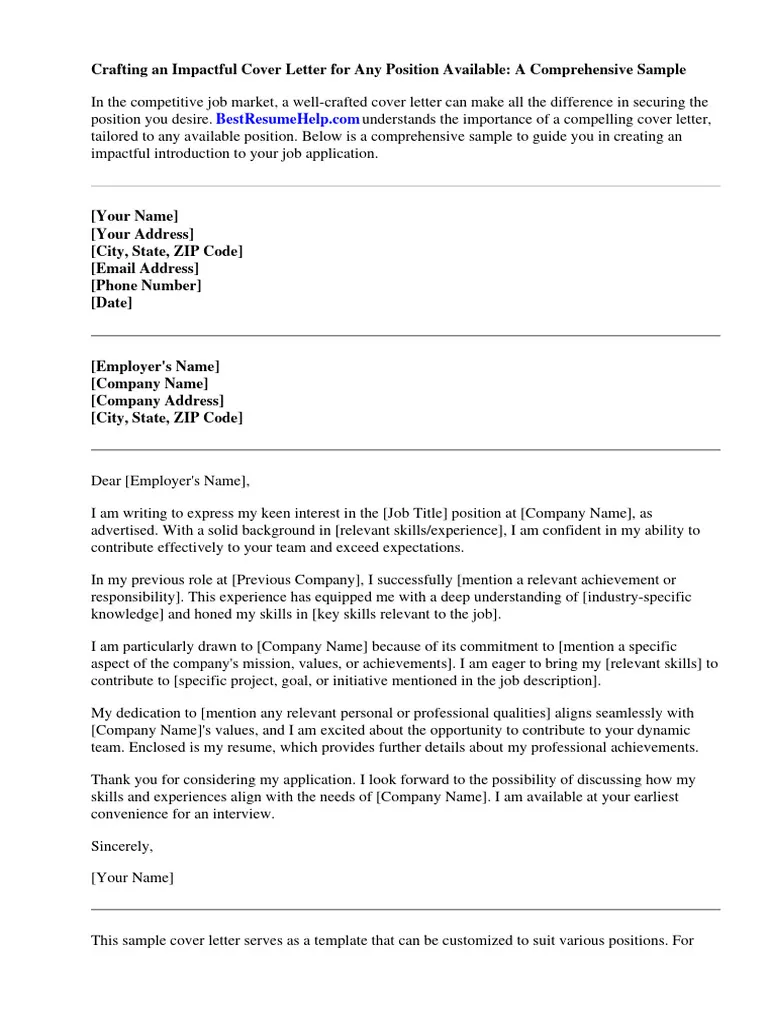
The opening paragraph of your cover letter is your first and often only chance to grab the reader’s attention. It sets the tone for the rest of your application and influences the hiring manager’s first impression. A generic opening, such as “I am writing to express my interest…” does little to differentiate you from other applicants. Instead, aim for an opening that is concise, engaging, and directly relevant to the position and company.
Why the Opening Matters
The opening serves as the hook, compelling the reader to continue reading. It should immediately convey your enthusiasm for the role and showcase your understanding of the company’s needs. A well-crafted opening demonstrates that you’ve taken the time to personalize your application and that you’re not just sending out a mass email. This initial impression can significantly impact whether your application is given serious consideration or quickly dismissed.
Personalizing for Each Role
To personalize your opening, mention the specific role you’re applying for and briefly explain why it appeals to you. If you’ve had a conversation with someone at the company or learned something specific about the company, mention that as well. This demonstrates that you’ve done your research and are genuinely interested in the opportunity. Avoid generic phrases and instead, focus on making a connection with the reader. For example, you might start by referencing a recent company achievement or highlighting how your skills align with their current projects. This personalization shows that you’ve taken the time to understand their needs and are eager to contribute.
Tip 2 Showcase Your Relevant Skills

The body of your cover letter should clearly and concisely highlight the skills and experiences most relevant to the job description. Rather than simply listing your responsibilities, demonstrate how your skills have translated into tangible results. This approach is not just about saying you have certain skills; it’s about proving it through specific examples and accomplishments. This allows the hiring manager to visualize your potential contributions to the team and how you can add value to the organization.
Identifying Key Skills
Carefully review the job description and identify the key skills and qualifications the employer is seeking. These are usually listed in the requirements section or mentioned throughout the description. Make a list of these skills and brainstorm how your past experiences have equipped you with them. Ensure that the skills you highlight directly address the needs outlined in the job description. This ensures that you present yourself as a strong match and that you’re speaking the employer’s language.
Providing Specific Examples
Don’t just state that you have a particular skill; provide specific examples of how you’ve used it successfully in the past. Describe a situation, the action you took, and the positive result you achieved (the STAR method). This could be a project you led, a problem you solved, or a goal you surpassed. By providing these concrete examples, you demonstrate your competence and credibility, making your claims more persuasive and memorable. These real-world examples give the hiring manager a clear understanding of your abilities and how you can contribute to their team.
Quantifying Your Achievements

Whenever possible, quantify your achievements. Instead of saying you “improved customer service,” state that you “increased customer satisfaction scores by 15%” or “reduced customer complaint resolution time by 20%.” Numbers and metrics provide concrete evidence of your skills and accomplishments, making your application more impactful. Quantifying your achievements makes your claims more believable and shows employers the tangible value you can bring to their organization. It provides clear evidence of the impact you have made in previous roles and how you can contribute to their success.
Tip 3 Emphasize Your Enthusiasm
Enthusiasm is a crucial element that can significantly influence an employer’s perception of you. It shows that you are not just looking for a job but are genuinely interested in the specific opportunity and the company. This excitement can set you apart from other candidates and demonstrate your commitment to the role. Expressing your enthusiasm also makes your application more engaging and memorable, increasing your chances of receiving a positive response. Demonstrating your passion can leave a lasting impact on the hiring manager and improve your prospects.
Demonstrating Genuine Interest
Go beyond stating that you’re interested in the job. Explain why you’re interested. What specifically excites you about the role or the company? Did something in the job description resonate with you? Did you find the company’s mission compelling? Mentioning these specific details shows that you’ve thought carefully about the opportunity and that it’s a good fit for your career goals. This level of detail distinguishes you from candidates who are simply sending out generic applications.
Connecting with the Company’s Mission
If possible, connect your personal values and career goals with the company’s mission and values. Show that you understand and support their goals, and highlight how your skills and experience can contribute to their success. This shows that you are not only a good fit for the job but also a good fit for the company culture. This connection demonstrates that you are looking for more than just a paycheck; you’re seeking a role where you can make a meaningful contribution and align with the company’s vision.
Tip 4 Customize for Each Application
While a master cover letter can be a starting point, you must customize it for each application. This doesn’t mean starting from scratch every time. It means making strategic adjustments to tailor your application to the specific requirements of each job. Even small changes can make a big difference in capturing the hiring manager’s attention and demonstrating your commitment to the role.
Adapting to Different Job Descriptions
Carefully review each job description and identify the key skills, experiences, and qualifications the employer is seeking. Then, adjust your cover letter to align with these requirements. This might involve re-ordering your skills, emphasizing certain accomplishments, or tailoring your language to match the tone and style of the job description. Ensure you’re using the same keywords and phrases the employer uses, as many companies utilize Applicant Tracking Systems (ATS) to scan for these terms.
Modifying Your Resume

Don’t forget that your resume is also a crucial part of your application. While your cover letter can provide additional context and highlight your enthusiasm, your resume serves as a detailed record of your qualifications. Consider modifying your resume to align with the specific job requirements, especially when it comes to your skills and experience. This might involve re-wording your job descriptions to match the keywords from the job description or re-ordering the information to place the most relevant experience at the top. Ensure that both your cover letter and resume work in harmony to present a cohesive picture of your qualifications.
Tip 5 Proofread and Polish
Before submitting your cover letter, always proofread it carefully. Errors in grammar, spelling, and punctuation can create a negative impression, regardless of your qualifications. Taking the time to proofread demonstrates your attention to detail and professionalism. A polished cover letter shows that you care about the opportunity and are willing to put in the effort to present yourself in the best possible light.
Checking for Grammar and Spelling
Use a grammar and spell checker as your first line of defense. However, don’t rely solely on these tools. They can sometimes miss errors or suggest incorrect phrasing. Read your cover letter aloud to catch any awkward sentences or unclear phrasing. This can help you identify mistakes that you might miss when reading silently. It’s also a good idea to have a friend, family member, or career counselor review your cover letter for a fresh perspective.
Ensuring Professional Tone

Maintain a professional tone throughout your cover letter. Avoid slang, informal language, and overly casual expressions. While it’s important to express your personality and enthusiasm, always do so in a way that reflects your professionalism and respect for the employer. Use a formal salutation, such as “Dear Mr./Ms./Mx. Last Name,” and a professional closing, such as “Sincerely” or “Best regards.” Ensure that your language and formatting are consistent and that your overall message is clear, concise, and focused on the job at hand.
Final Thoughts
Writing a cover letter for multiple positions requires a strategic approach, combining versatility with tailored customization. By understanding the need for a versatile cover letter, tailoring your opening, showcasing your skills, emphasizing your enthusiasm, customizing for each application, and proofreading meticulously, you can significantly increase your chances of success. Remember that your cover letter is a crucial tool in your job search arsenal. With careful planning and execution, you can craft a compelling cover letter that will make you stand out from the competition and help you land your dream job. Good luck!