Cover Letter Basics
A cover letter is an essential document that accompanies your resume when applying for a job. It serves as your introduction to the hiring manager, providing context to your application and highlighting your key skills and experiences. Unlike a resume, which offers a factual overview of your qualifications, a cover letter allows you to express your personality, demonstrate your enthusiasm for the role, and explain why you are the ideal candidate. Mastering the art of writing a compelling cover letter can significantly increase your chances of securing an interview and ultimately landing your dream job. Remember, a well-crafted cover letter is your opportunity to make a strong first impression and set yourself apart from other applicants.
Understanding the Purpose of a Cover Letter
The primary purpose of a cover letter is to persuade the hiring manager to read your resume and consider your application. It allows you to showcase your personality and communication skills, which are often difficult to convey in a resume. It helps you to bridge any gaps in your resume, such as career changes or employment history. The cover letter is your chance to explain your motivations for applying and why you are interested in the specific role and company. Think of it as a personalized sales pitch, where you are selling your skills and experiences to the employer. It is not merely a summary of your resume; it’s a narrative that tells a story about your professional journey and how it aligns with the job requirements.
Key Components of a Cover Letter

A well-structured cover letter consists of several key components that work together to create a compelling message. The essential sections include a header with your contact information, a professional greeting, an opening paragraph that captures attention, body paragraphs highlighting your skills and experiences, a closing paragraph expressing gratitude and a call to action, and your signature. Each element plays a critical role in presenting you as a qualified and enthusiastic candidate. The layout should be clean, with clear formatting to make it easy to read. Remember to tailor the letter to each job, ensuring that you address the specific requirements of the role and the company. This will show that you are serious about the opportunity and have taken the time to understand their needs.
Header Section
The header of your cover letter is the first thing a hiring manager will see, so it’s crucial to get it right. It should include your full name, address, phone number, and email address. This section ensures the recruiter can easily contact you. Make sure your email address is professional; avoid using nicknames or unprofessional addresses. The header should be formatted consistently with the rest of your application materials. Place it at the top of the page, either left-aligned or centered, depending on your preference. Consider including the date of the letter. Ensure the header is easy to read and free of any errors. This section establishes your identity and provides the necessary contact information for the hiring manager to reach you. A well-formatted header sets a professional tone right from the start.
Formatting Your Header
When formatting your header, clarity and consistency are key. Use a font that is easy to read, such as Arial, Calibri, or Times New Roman, and maintain a consistent font size (typically 10-12 points). There’s no need for excessive use of bold or italics. Keep the header simple and uncluttered, with each element clearly separated. If you are submitting your application electronically, ensure the header is correctly aligned and doesn’t overlap with any other text. Double-check all the information for accuracy, including your phone number and email address. A properly formatted header looks professional and makes it simple for the hiring manager to contact you, contributing to a positive first impression and increasing the likelihood of your application being considered.
Professional Greetings

Choosing the right greeting sets the tone for your entire cover letter. If you know the hiring manager’s name, use it. A personalized greeting such as “Dear Mr./Ms. [Last Name]” demonstrates that you’ve done your research and are making a targeted effort. If the name is unavailable, opt for a general yet professional greeting like “Dear Hiring Manager” or “Dear [Department Name] Team.” Avoid overly casual greetings such as “Hello” or “Hi.” The greeting should align with the formality of the company and the role. Always double-check the spelling of the recipient’s name to show attention to detail. A well-chosen greeting conveys professionalism and respect, setting the stage for a positive interaction and showing you have taken the time to personalize your application.
Body Section
The body of your cover letter is where you make your case, showcasing your skills, experience, and enthusiasm for the job. It should be divided into paragraphs that each address a specific aspect of your qualifications. The body should be concise, engaging, and tailored to the job description. Start with a strong opening paragraph that grabs the reader’s attention and clearly states the position you are applying for. Follow with paragraphs that highlight your relevant skills and experiences, providing specific examples to back up your claims. The body should also express your interest in the company and why you want to work there. Be enthusiastic and genuine. This is your opportunity to make a compelling case for why you’re the ideal candidate and how you can contribute to the company’s success.
Writing a Compelling Opening Paragraph
The opening paragraph is your chance to make a great first impression. It should immediately state the position you are applying for and how you learned about the opportunity. Briefly explain why you are interested in the role and the company, showing enthusiasm and a genuine interest. Consider including a brief, impactful statement about your skills or experience that aligns with the job’s requirements. The opening should be engaging and grab the reader’s attention, making them want to read further. Avoid generic phrases; instead, aim for a personalized and targeted approach that reflects your understanding of the role and the company. A well-crafted opening paragraph sets a positive tone, demonstrating your strong communication skills and your proactive approach to the job application.
Highlighting Your Skills and Experience

The body of your cover letter should showcase your skills and experience relevant to the job. Use specific examples to demonstrate how you’ve used these skills in previous roles and what results you achieved. Quantify your achievements whenever possible, using numbers and data to illustrate your impact. Match your skills and experiences with the job requirements mentioned in the job description. This shows the hiring manager that you have carefully considered the position and are a good fit. Tailor your examples to the company and role, explaining how your skills and experience can benefit them. Be clear, concise, and use action verbs to make your descriptions more dynamic and engaging. This section should prove that you have the qualifications needed for the job and provide tangible evidence of your abilities.
Tailoring Your Cover Letter to the Job
One of the most critical aspects of writing an effective cover letter is tailoring it to each specific job you apply for. Review the job description carefully, noting the required skills, experiences, and qualifications. Highlight the aspects of your background that align with these requirements. Avoid using a generic cover letter that is the same for every application. Instead, demonstrate that you have researched the company and understand the role. Show how your unique skills and experience can help the company achieve its goals. Personalizing your cover letter shows that you are genuinely interested in the position and have taken the time to understand the company’s needs. This will significantly improve your chances of being considered for an interview. Tailoring your cover letter is a clear sign to the hiring manager that you are serious about the opportunity and have the relevant skills and experiences.
Quantifying Your Achievements
Quantifying your achievements makes your cover letter more impactful and credible. Instead of stating that you improved sales, mention that you increased sales by a specific percentage or dollar amount. Use numbers to demonstrate the results you’ve achieved in previous roles. For example, you might state that you managed a team of 10, increased customer satisfaction by 15%, or reduced operational costs by a certain amount. Include specific metrics to illustrate your impact and value. Quantifiable results add weight to your claims, providing tangible evidence of your skills and abilities. This will make a compelling case for your qualifications and help the hiring manager understand your value to their organization. Including numbers makes your accomplishments more concrete and demonstrates your ability to drive results.
Closing Section

The closing section of your cover letter is where you express your gratitude and provide a call to action. Thank the hiring manager for their time and consideration. Reiterate your interest in the position and the company. Express enthusiasm for the opportunity to discuss your qualifications further. Include a clear call to action, such as stating that you look forward to hearing from them or are available for an interview at their earliest convenience. Avoid generic phrases, such as “Thank you for your time,” and instead, aim for a more personalized and engaging approach. The closing section should leave a positive lasting impression, showing your professionalism, enthusiasm, and commitment to the opportunity. A well-written closing paragraph will increase the likelihood of the hiring manager contacting you for an interview.
Expressing Gratitude and a Call to Action
In your closing paragraph, express sincere gratitude for the hiring manager’s time and consideration. Thank them for reviewing your application and for considering you for the role. After expressing your gratitude, reiterate your interest in the position and emphasize your enthusiasm for the opportunity to discuss your qualifications further. Include a clear call to action. This could be a simple statement like “I look forward to hearing from you soon” or “I am available for an interview at your earliest convenience.” Make sure your call to action is direct and professional. Avoid being overly assertive or demanding. A well-crafted closing section provides a positive conclusion, leaving a lasting impression of your professionalism, interest, and eagerness to move forward in the hiring process.
Example Cover Letter Breakdown
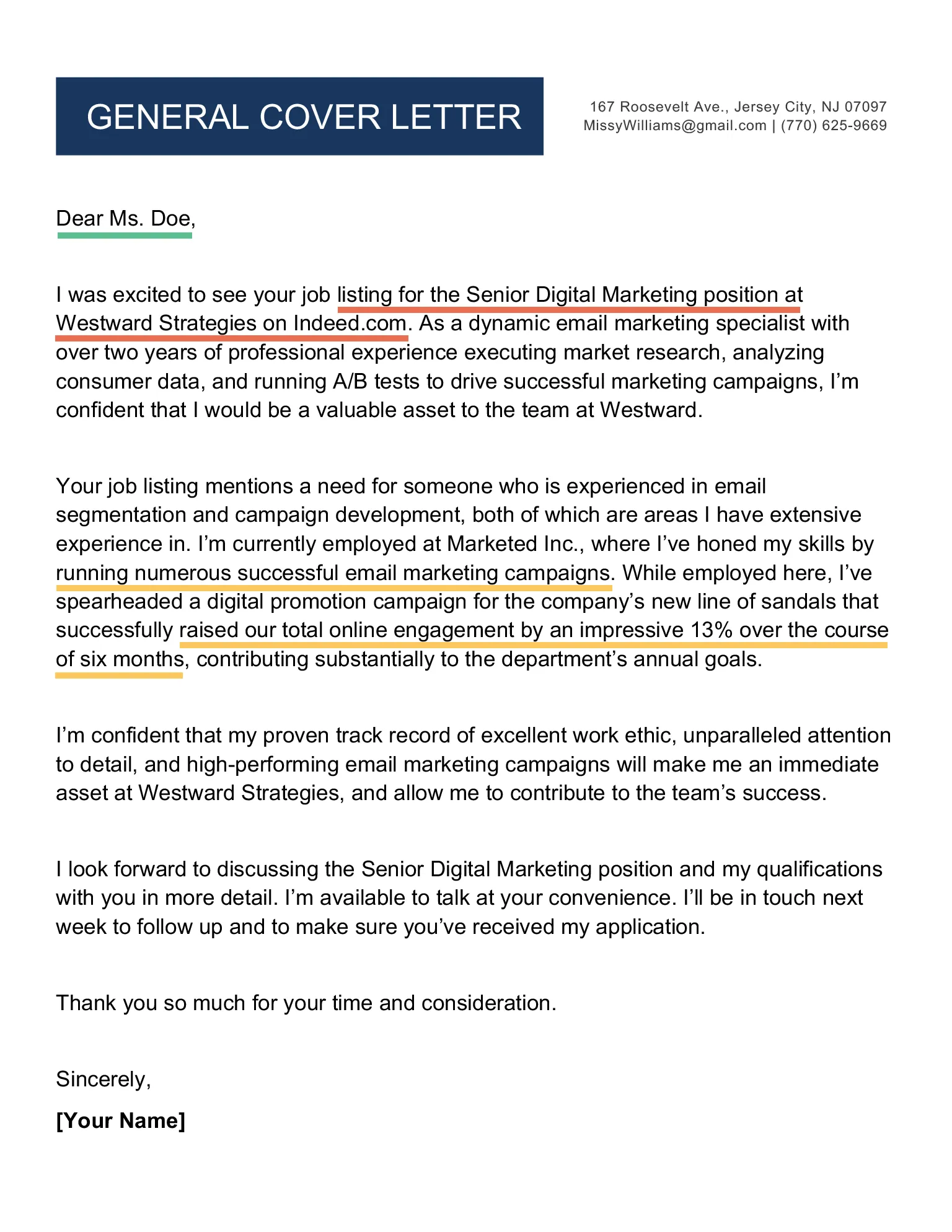
Here is a breakdown of a sample cover letter, illustrating the structure and content discussed in previous sections. We will walk through the key elements, including the header, greeting, opening paragraph, body paragraphs, and closing paragraph. Each section serves a specific purpose, so let’s examine the key components to understand how they work together. The following examples are designed to provide a clear understanding of how to effectively write a cover letter that maximizes your chances of success. Remember to tailor each section to match the requirements of the job and company to demonstrate you are the ideal candidate.
Header Example

The header should include your full name, contact information, and the date. Here’s an example of a properly formatted header:
[Your Name] [Your Address] [Your Phone Number] [Your Email Address] [Date]
This layout is clear and concise. It includes all necessary information so the hiring manager can quickly and easily contact you. The professional appearance will make a good impression before they even start reading your letter. Ensure that the information is up-to-date and accurate to avoid any delays in communication. Consistent formatting and a professional appearance are important, so it makes it easy to contact you.
Body Paragraph Example
The body of your cover letter should demonstrate your skills and experience relevant to the job. Here’s an example of a body paragraph:
“In my previous role at [Previous Company], I successfully managed a team of five, increasing sales by 15% in the first quarter. My experience with [relevant skill] and ability to [another skill] aligns perfectly with the requirements of this position. I am enthusiastic about the opportunity to contribute my skills to [Company Name]’s continued success and believe my expertise will be an invaluable asset.”
This paragraph demonstrates your experience, quantifies your achievements, and aligns your skills with the job requirements. It’s specific and results-oriented. Always ensure the paragraph is tailored to match the needs of the role you are applying for. Use strong action verbs and keep the paragraphs concise, highlighting your key achievements and matching your skills to the job requirements.
Closing Example
The closing paragraph should thank the hiring manager, reiterate your interest, and provide a call to action. Here’s an example:
“Thank you for considering my application. I am excited about the opportunity to join [Company Name] and contribute to your team. I am available for an interview at your earliest convenience. I look forward to hearing from you soon.”
This closing is polite, enthusiastic, and includes a clear call to action. You will leave a positive impression, reinforcing your interest in the role and encouraging the hiring manager to reach out to you. A well-written closing is essential for increasing your chances of moving forward in the hiring process. Be sure to proofread for any errors, maintaining a professional and polished tone until the very end.
Common Cover Letter Mistakes

Avoiding common cover letter mistakes is essential for creating a strong impression. Common pitfalls can detract from your qualifications and decrease your chances of securing an interview. Errors in grammar, formatting, or content may undermine your credibility and suggest a lack of attention to detail. Being aware of these common mistakes helps you to create a cover letter that accurately represents your skills and experience and shows you’re the ideal candidate. Take the time to carefully review your cover letter before submitting to ensure it’s polished and professional. Here are some of the most common mistakes to avoid, so you can increase your chances of making a positive impression.
Grammar and Spelling Errors
Grammar and spelling errors are a major turnoff for hiring managers. They suggest a lack of attention to detail and can make you appear unprofessional. Always proofread your cover letter carefully before submitting it. Use a spell-checker, but also manually review your document for any errors that might have been missed. Consider asking a friend or family member to proofread your cover letter. Poor grammar and spelling errors can undermine your credibility and give a negative impression. Make sure your sentences are clear, and the tone is professional. Proper grammar and spelling demonstrate that you are detail-oriented and possess strong communication skills. This improves the overall quality of your application and makes you more likely to stand out.
Generic Cover Letters
Using a generic cover letter is a common mistake that can significantly reduce your chances of success. A generic cover letter is one that is not tailored to the specific job or company. It fails to show the hiring manager that you have researched the role, understand the company’s needs, or are genuinely interested in the opportunity. The best cover letters are customized for each application. Make sure to personalize each cover letter. Reference the job description to understand the requirements. Highlight the specific skills and experiences relevant to the position. Research the company to express your understanding of their goals and values. Tailoring your letter proves that you’ve taken the time to prepare a unique message, demonstrating that you are truly interested in the role and well-suited for the company.
Lengthy Cover Letters
Lengthy cover letters are another mistake that can negatively affect your application. Hiring managers are busy. They often have many applications to review. A long, rambling cover letter may lose their interest. Keep your cover letter concise. Aim for no more than one page, and preferably shorter. Focus on the most relevant information. Use clear and direct language. Get to the point quickly. Make your key qualifications clear. Use a professional font size and formatting that is easy to read. Edit ruthlessly, removing any unnecessary words or phrases. A concise and well-written cover letter will demonstrate your strong communication skills and your respect for the hiring manager’s time.