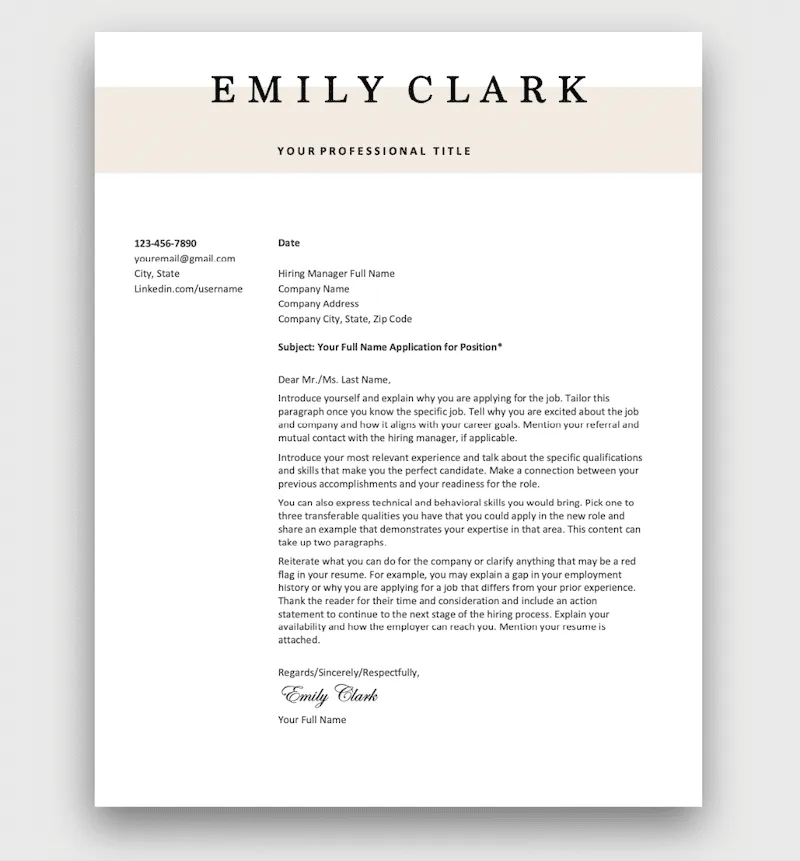
Understanding the Cover Letter’s Importance
A cover letter is a crucial component of your job application package, often considered as important as the resume itself. It serves as your first introduction to a potential employer, providing an opportunity to make a strong first impression. Unlike a resume, which provides a factual overview of your skills and experience, a cover letter allows you to showcase your personality, enthusiasm, and communication skills. It is your chance to tell a story, connecting your qualifications to the specific requirements of the job and the needs of the company. Therefore, a well-crafted cover letter can significantly increase your chances of getting noticed and securing an interview. It demonstrates that you have taken the time to understand the role and are genuinely interested in the opportunity.
Why a Cover Letter Matters for Your Resume
In today’s competitive job market, a cover letter can be the deciding factor between landing an interview and being overlooked. While your resume details your qualifications, a cover letter provides context and personality. It allows you to explain gaps in your employment history, highlight transferable skills, and demonstrate how your unique experiences align with the employer’s needs. Many hiring managers appreciate cover letters because they reveal your writing ability, attention to detail, and genuine interest in the position. A well-written cover letter proves that you are not just sending out generic applications; it shows that you have carefully considered the role and are eager to contribute to the company’s success. This level of effort often distinguishes you from other candidates.
Key Elements of a Cover Letter

A compelling cover letter includes several key elements that work together to create a strong impression. These elements include your contact information, the date, the recipient’s information, a professional greeting, a compelling introduction, well-structured body paragraphs highlighting relevant skills and experiences, a clear closing with a call to action, and your signature (if printing). Each section plays a vital role in conveying your qualifications and enthusiasm. It’s important to tailor these elements to each job application, ensuring they resonate with the specific requirements and expectations outlined in the job description. This personalized approach significantly increases your chances of capturing the employer’s attention and securing an interview.
Contact Information & Date
At the top of your cover letter, include your contact information: full name, phone number, email address, and optionally, your LinkedIn profile URL. Ensure this information is accurate and easy to read. Below your contact information, include the date you are sending the letter. Next, provide the recipient’s information: their full name, job title, and the company’s name and address. If you know the hiring manager’s name, address your letter to them directly; if not, research this information or use a general greeting. Accuracy in these details shows that you have taken the time to prepare a professional application, demonstrating your attention to detail and respect for the hiring process. Ensure that the font and formatting are consistent with the rest of the document.
Greeting & Introduction
Start your cover letter with a professional greeting. Using the hiring manager’s name is always preferable; if you don’t know their name, opt for a formal greeting like ‘Dear Hiring Manager’. Your introduction should immediately grab the reader’s attention. State the position you’re applying for and where you saw the advertisement. Briefly mention why you’re interested in the role and the company. Keep your introduction concise and focused on what you can offer. Avoid generic openings. Instead, aim to convey your enthusiasm, and highlight your key qualifications that align with the job requirements. This sets a positive tone from the start and encourages the reader to continue reading your letter with interest.
Body Paragraphs Building Your Case

The body of your cover letter is where you elaborate on your qualifications and demonstrate how you meet the job’s requirements. Use 2-3 paragraphs to highlight your most relevant skills and experiences. Instead of simply restating your resume, provide specific examples that showcase your achievements and the impact you’ve made in previous roles. Quantify your accomplishments whenever possible by using numbers, percentages, or other metrics. This makes your claims more credible and shows the value you bring. Connect your skills and experiences to the specific responsibilities outlined in the job description. This ensures the hiring manager can easily see how you align with their needs. Tailor each paragraph to the job, making sure you address the key criteria the employer is seeking.
Highlighting Skills & Experience
When highlighting your skills and experience, be strategic about what you choose to include. Focus on the skills and experiences that are most relevant to the job description. Use keywords from the job posting to demonstrate that you have the required qualifications. Provide concrete examples of how you have used these skills to achieve results in your previous roles. For instance, instead of simply stating ‘managed projects’, describe a specific project, the challenges you faced, the actions you took, and the outcomes you achieved. This allows the employer to understand your capabilities and how you can contribute to their team. Make sure your examples are clear, concise, and highlight your ability to solve problems and achieve goals.
Quantifying Achievements & Using Action Verbs
Quantifying your achievements adds credibility to your cover letter. Instead of saying ‘Improved customer satisfaction’, say ‘Improved customer satisfaction by 15% through implementing a new feedback system’. Using numbers, percentages, and data shows the impact you’ve made in previous roles. Action verbs bring your accomplishments to life and make your letter more engaging. Start each bullet point or sentence with strong action verbs, such as ‘managed’, ‘developed’, ’led’, ‘achieved’, ‘implemented’, ‘created’, or ‘streamlined’. This active language makes your cover letter dynamic and demonstrates your proactive approach to work. Ensure that the action verbs you choose are appropriate for the skills and responsibilities outlined in the job description.
Tailoring Your Letter to the Job

Customizing your cover letter for each job application is essential. Generic cover letters are easily spotted and often discarded. Review the job description carefully and identify the key requirements and qualifications the employer is seeking. Then, adjust your cover letter to address these specific needs. Highlight the experiences and skills that align with the job requirements, using keywords from the job posting. Show that you understand the company’s mission and values and explain how your goals align with theirs. This demonstrates your genuine interest in the role and the organization. Personalization shows that you have taken the time to understand the role and are not just sending out a mass application.
Using Keywords from the Job Description
Incorporating keywords from the job description is a smart strategy to get your cover letter noticed by applicant tracking systems (ATS) and hiring managers. Most companies use ATS to scan resumes and cover letters for relevant keywords. Identify the key skills, qualifications, and responsibilities mentioned in the job description and strategically include these words and phrases in your cover letter. Do not stuff keywords; instead, integrate them naturally into your sentences. For example, if the job description requires ‘project management’ skills, use this phrase when describing your project management experience. This will help your cover letter pass the ATS filters and demonstrate that you meet the job’s requirements. Make sure the keywords you use reflect your actual skills and experience.
Closing Your Cover Letter
Your closing should reiterate your interest in the position and express gratitude to the hiring manager for their time and consideration. Restate your enthusiasm for the opportunity and briefly summarize why you are a strong candidate. Provide a clear call to action. For example, ‘I am eager to discuss my qualifications in an interview.’ and ‘Thank you for considering my application; I look forward to hearing from you soon.’ If you mentioned that you will follow up, mention it here. End with a professional closing, such as ‘Sincerely,’ ‘Best regards,’ or ‘Thank you,’ followed by your typed name.
Expressing Gratitude & Call to Action

Always express gratitude for the hiring manager’s time and consideration. This simple act of courtesy shows respect and professionalism. Include a call to action in your closing to encourage the hiring manager to take the next step, such as scheduling an interview. Clearly state that you are available for an interview and provide your contact information again. If you have previously indicated when you’re available or a specific time, you could reiterate that. Keep your closing concise and focused, leaving a positive and lasting impression on the reader. This ensures that the hiring manager knows you are interested and proactive about the opportunity.
Formatting Your Cover Letter PDF
Formatting your cover letter as a PDF ensures that your document maintains its appearance across different devices and operating systems. PDFs preserve your formatting, including fonts, layout, and images, ensuring that the hiring manager sees your cover letter exactly as you intended. To create a PDF, use a word processing program such as Microsoft Word or Google Docs. After writing your cover letter, go to the ‘File’ menu and select ‘Save As’. Choose ‘PDF’ as the file format. This ensures that your cover letter appears professional and polished. This is essential, as slight formatting discrepancies can significantly detract from your application. PDFs are also less susceptible to being altered by other parties.
File Type and Naming Conventions
Always save your cover letter as a PDF file. This prevents your formatting from being altered and ensures compatibility across different systems. Choose a clear and professional file name. Use your full name and the title of the position you are applying for, such as ‘JohnDoe_CoverLetter_MarketingManager.pdf’. This makes it easy for the hiring manager to identify your application. Avoid using special characters or spaces in the file name. The file name is the first impression, so make sure it looks professional. By following these naming conventions, you maintain professionalism and ensure your application is organized and easy to access for the hiring team.
Proofreading and Editing

Proofreading and editing are critical steps in ensuring your cover letter is polished and professional. Errors in grammar, spelling, and punctuation can damage your credibility and lead to your application being rejected. Always proofread your cover letter multiple times. Read it aloud to catch any awkward phrasing or typos. Ask a friend, family member, or career advisor to review your cover letter for clarity and accuracy. Pay close attention to details, such as the correct use of commas, semicolons, and apostrophes. Ensure your sentences are clear, concise, and easy to understand. A well-proofread cover letter demonstrates attention to detail and professionalism, qualities that employers value.
Common Cover Letter Mistakes to Avoid
Several common mistakes can undermine the effectiveness of your cover letter. These mistakes can make you look unprofessional and reduce your chances of getting an interview. Avoid these pitfalls to ensure your cover letter makes a positive impression.
Overly Generic Content
One of the most common mistakes is using a generic cover letter that could be sent to any company or for any job. Generic letters don’t show that you’ve taken the time to research the company or understand the job requirements. Always personalize your cover letter by tailoring it to each specific job application. Mention the company’s name, specific aspects of the job description, and explain why you are interested in the role. Showing a genuine interest and highlighting how your skills align with the job is vital. Customize your cover letter each time to demonstrate your dedication and enthusiasm. This personalized approach will significantly increase your chances of getting noticed.
Typos & Grammatical Errors

Typos and grammatical errors can instantly damage your credibility and make you appear careless. Always proofread your cover letter meticulously before submitting it. Use spell-check and grammar-check tools, but don’t rely on them entirely. Read your cover letter aloud to catch any awkward phrasing or errors that automated tools might miss. Ask a friend, family member, or career advisor to review your cover letter for clarity and accuracy. A cover letter free of errors demonstrates your professionalism, attention to detail, and respect for the hiring process. Ensuring your cover letter is error-free shows that you are meticulous and pay attention to quality.
Length & Tone
Keep your cover letter concise and to the point. Aim for one page in length, unless otherwise specified. Avoid rambling or including unnecessary information. Make sure your tone is professional, enthusiastic, and positive. Avoid sounding overly casual or informal, and steer clear of overly aggressive or demanding language. Choose a professional font and maintain consistent formatting throughout. Always tailor your tone to the company culture. Ensure that your tone aligns with the overall tone of the company. By striking the right balance in length and tone, you can create a cover letter that is both engaging and professional.
Examples of Effective Cover Letters
Reviewing examples of effective cover letters can provide valuable insights and inspiration. Look for cover letters that highlight achievements, quantify results, and tailor the content to the job description. Pay attention to the formatting, tone, and language used. Many online resources and career websites offer sample cover letters for various roles and industries. Use these examples as a guide, but always remember to customize your cover letter to reflect your unique skills and experiences. These examples can provide a template for structuring your cover letter. Take note of how the most successful cover letters are written and use these as a model when creating your own.
Cover Letter for Entry-Level Positions
For entry-level positions, focus on highlighting your relevant skills, education, and any internships or volunteer experiences. Emphasize your enthusiasm for the position and your eagerness to learn and grow within the company. If you have limited work experience, showcase your transferable skills, such as communication, teamwork, and problem-solving. Connect your educational background, projects, and extracurricular activities to the job requirements. Customize your cover letter to demonstrate your knowledge of the company and the role, showing that you have the skills and qualifications necessary. Show how your skills align with the company’s goals and that you are an ideal candidate. Be clear about your career aspirations and your willingness to learn and contribute.
Cover Letter for Experienced Professionals
Experienced professionals should focus on showcasing their accomplishments and the impact they have made in their previous roles. Use specific examples and quantify your achievements whenever possible. Highlight your relevant skills, expertise, and leadership abilities. Address any potential gaps in your employment history. Emphasize how your experience aligns with the job description and how you can contribute to the company’s success. Tailor your cover letter to reflect the specific requirements of the role and the company’s values. Demonstrate your ability to solve problems, lead teams, and achieve results. Include any awards, recognitions, or special projects that highlight your experience. Be precise about your contributions and demonstrate your ability to take initiative.