Why Cover Letters Still Matter
In an era dominated by online applications and digital submissions, you might wonder if a cover letter still holds any weight. The answer is a resounding yes. While resumes provide a snapshot of your skills and experience, a cover letter allows you to tell your story, demonstrating your personality and passion for the role. It’s your chance to connect with the hiring manager on a more personal level, illustrating why you’re the perfect fit for the company and the position. Cover letters offer the opportunity to highlight specific achievements, tailor your application to the job description, and showcase your writing skills. In many cases, a well-crafted cover letter can be the deciding factor, setting you apart from other qualified candidates and increasing your chances of landing an interview. Therefore, taking the time to create a compelling cover letter is a critical step in your job search strategy, making your application stand out.
Crafting the Perfect Cover Letter Header
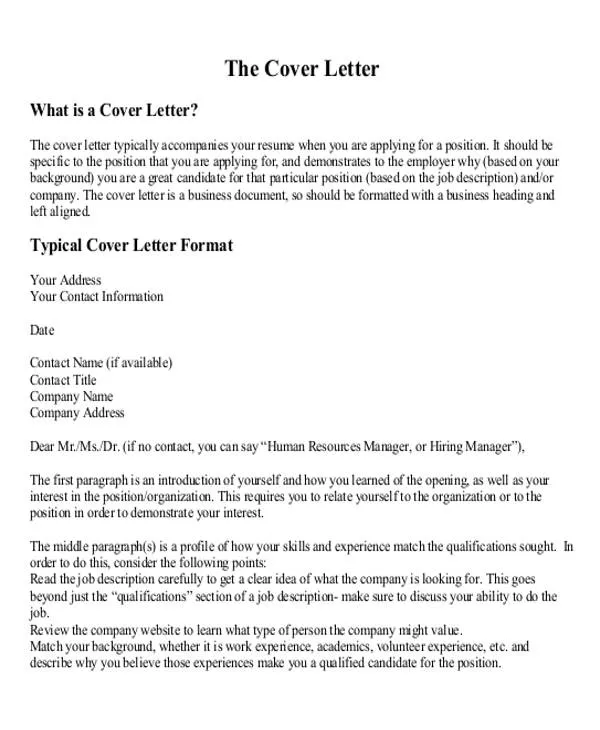
The header of your cover letter is the first thing the hiring manager will see, making a strong impression vital. It sets the tone for the entire document and provides essential contact information. Begin by including your full name, professional title (if applicable), phone number, email address, and LinkedIn profile URL. Ensure this information is accurate and up-to-date. Consider formatting the header in a way that is both visually appealing and easy to read. A clean and organized header demonstrates attention to detail, reflecting well on your overall professionalism. The layout should be consistent with your resume, creating a cohesive brand. Use a simple font, adequate spacing, and ensure your contact details are easily accessible. It is your personal introduction to the hiring manager, making it a critical first step.
Your Contact Information (Header Detail)

Your contact information within the header should be presented clearly and professionally. This includes your full name, which should be the largest text in the header, making it immediately identifiable. Underneath, list your professional title, if you have one, or simply state your profession. Following your name and title, provide your phone number. Make sure the phone number is one you regularly monitor and where you can easily be reached for potential calls. Your email address should be a professional one. Avoid using nicknames or informal email addresses. Use a variation of your name (e.g., john.doe@email.com). Finally, include your LinkedIn profile URL. This allows the hiring manager to learn more about your professional background and accomplishments. Ensure your LinkedIn profile is up-to-date and reflects your professional image.
Date and the Recipient’s Details
Following your contact information, include the date. Place this at the top, typically aligned to the left or right, depending on your preference. The date should be the day you are sending the cover letter. Underneath the date, include the recipient’s details. If possible, address the hiring manager by name. Research the company’s website or use LinkedIn to find the hiring manager’s name. Addressing the letter to a specific person shows that you’ve done your homework and are genuinely interested in the position. If you are unable to find a specific name, it’s acceptable to use a generic title like ‘Hiring Manager’. Include the recipient’s title, company name, and the company’s address below the date. Correctly formatting and including these details showcases professionalism and attention to detail.
The Salutation How to Get It Right
The salutation is your formal greeting to the hiring manager, so it should be professional and appropriate. The most common and recommended salutation is ‘Dear [Mr./Ms./Mx. Last Name]’. This shows respect and a level of personalization. Always use the correct title (Mr., Ms., or Mx.) and double-check the spelling of the recipient’s last name. If you are unsure of the hiring manager’s gender, or if you are addressing a company without a specific contact, you can use ‘Dear Hiring Manager’ or ‘Dear [Company Name] Team’. Avoid informal greetings like ‘Hi’ or ‘Hello’, as these are less appropriate for a cover letter. After the salutation, include a colon, and ensure the greeting is consistent with your overall tone and the company culture.
Mastering the Cover Letter Body
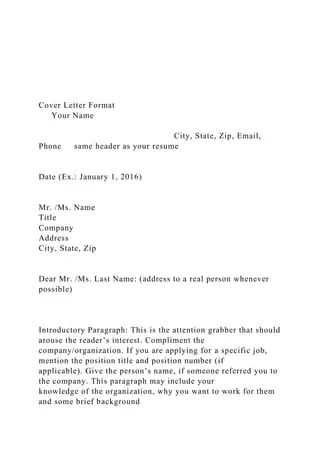
The body of your cover letter is where you make your case, detailing why you are the best fit for the role. It should be well-structured and compelling, highlighting your key skills, experiences, and achievements. The body typically consists of three to four paragraphs. The opening paragraph grabs the reader’s attention and states your purpose. The subsequent paragraphs should elaborate on your qualifications, providing specific examples and quantifiable results. In these paragraphs, express your enthusiasm for the role and how your skills align with the company’s needs. The concluding paragraph should reiterate your interest and call to action. Ensure the body is concise, well-written, and free of jargon. Each paragraph should have a clear purpose and contribute to the overall narrative, showcasing your suitability for the position. The goal is to demonstrate your value and make a strong impression.
Opening Paragraph Grab Their Attention
Your opening paragraph is your first chance to grab the hiring manager’s attention, so it should be impactful and engaging. Start by stating the position you are applying for and where you found the job posting. Immediately follow with a brief statement about why you are interested in the role and the company. This demonstrates your enthusiasm. Instead of a generic opening, tailor your introduction to the specific job requirements. Briefly highlight one or two key skills or experiences that directly align with what the employer is seeking. This shows that you understand the role and are prepared to meet its demands. Consider using a compelling hook, such as a brief achievement or a specific skill relevant to the job. Keep the opening concise, aiming for a maximum of four sentences, to maintain reader engagement and set the tone for the rest of the letter.
Highlighting Your Key Skills & Experience
The next section should showcase your key skills and experience. Select the skills and experiences that are most relevant to the job requirements. Use specific examples from your previous roles to illustrate how you have applied those skills. Instead of simply listing your responsibilities, describe what you accomplished and the results you achieved. When describing your experience, use action verbs to make your accomplishments more impactful. For instance, use ‘managed,’ ’led,’ ‘developed,’ or ‘implemented’ to highlight your actions and contributions. Tailor your descriptions to match the keywords and requirements outlined in the job description. This demonstrates that you have carefully read the job posting and understand what the employer is looking for. Provide concrete examples and quantifiable achievements to back up your claims.
Quantifying Your Achievements

Quantifying your achievements is a powerful way to demonstrate your value and make your cover letter more impactful. Whenever possible, use numbers and data to illustrate your accomplishments. Instead of saying ‘Improved customer satisfaction,’ say ‘Increased customer satisfaction by 15% through the implementation of a new feedback system.’ Providing specific figures and metrics adds credibility to your claims and showcases your impact. Include details about your projects, the scope of your responsibilities, and the specific results you delivered. Use percentages, dollar amounts, or any other relevant metrics to quantify your successes. This helps the hiring manager understand the concrete benefits you can bring to their organization. Ensure your numbers are accurate and relevant to the role, and always back them up with clear and concise explanations.
Expressing Enthusiasm and Fit
Expressing your enthusiasm for the role and demonstrating how well you fit the company culture is crucial. This is your chance to show the hiring manager that you are genuinely interested in the position and the company. Research the company’s values, mission, and recent achievements. Incorporate these details into your letter to show that you are knowledgeable and engaged. Explain why you are excited about the opportunity and how your skills and experiences align with the company’s goals. Mention specific aspects of the role that excite you and explain how you can contribute to the team. Express your desire to be a part of their mission and culture. This level of engagement makes you stand out from other applicants and shows that you see a future with the company.
The Call to Action Closing the Deal
The closing paragraph should include a clear call to action, prompting the hiring manager to take the next step. Reiterate your interest in the position and express your eagerness to discuss your qualifications further. Thank the hiring manager for their time and consideration, showing your appreciation. State that you are available for an interview and include your contact information again for easy access. Be polite and professional, and ensure your tone reflects your genuine interest in the role. Express your confidence in your ability to succeed in the position and contribute to the company’s goals. A strong call to action encourages the hiring manager to take the next step and move your application forward.
Cover Letter Closing Best Practices

The closing is the last impression you’ll make on a hiring manager, so it should be professional and leave a positive lasting impact. Use a professional closing such as ‘Sincerely,’ ‘Best regards,’ or ‘Thank you for your consideration’. These closings are appropriate for most cover letters. Avoid casual closings such as ‘Cheers’ or ‘Best’, as these may not be suitable for all company cultures. Following the closing, leave a space for your signature, and then type your full name. If submitting a digital cover letter, consider including a scanned signature or using a digital signature tool to maintain professionalism. If you are submitting a printed cover letter, always sign it in blue or black ink. Proofread the entire letter one last time before sending it to ensure there are no errors and that it reflects your best professional self.
Formatting and Proofreading Your Cover Letter
Formatting and proofreading are essential steps for ensuring your cover letter is professional and free of errors. Poor formatting and typos can undermine your credibility and negatively impact your chances. Ensure your cover letter is easy to read by using a clean, professional font like Arial, Calibri, or Times New Roman. Maintain a consistent font size (typically 11 or 12 points) and use clear headings and subheadings to break up large blocks of text. Use standard one-inch margins on all sides and maintain consistent spacing throughout the document. Before sending your cover letter, proofread it carefully for any grammatical errors, spelling mistakes, or punctuation issues. Use a grammar checker and ask a friend or colleague to review your letter. A polished and error-free cover letter shows attention to detail and demonstrates your commitment to quality.
Choosing the Right Cover Letter Format
Selecting the appropriate cover letter format is important for a professional presentation. The most common cover letter format is the standard business letter format, which includes your contact information, the date, the recipient’s details, the salutation, the body paragraphs, and the closing. Ensure your letter is well-organized with clear sections and appropriate spacing. Consider your target audience when choosing your format. For more creative roles, you might use a slightly more design-focused layout, but always maintain a professional appearance. The format should be consistent with your resume, creating a cohesive impression. Ensure your chosen format is easy to read and well-structured, making a positive first impression.
Proofreading for Perfection

Proofreading is the final and most crucial step in perfecting your cover letter. Thoroughly check for any grammatical errors, spelling mistakes, punctuation issues, and formatting inconsistencies. Use a spell checker and grammar checker tool, but don’t rely on them entirely. Read the letter aloud to catch any awkward phrasing or sentence structures. Ask a trusted friend or colleague to proofread your cover letter. A fresh pair of eyes can often spot errors that you might miss. Ensure that your name, contact information, and the recipient’s details are correct. Confirm the job title and the company name are accurate. Make sure your letter flows logically and that your key skills and experiences are well-articulated. A flawless cover letter demonstrates your professionalism, attention to detail, and increases your chances of making a positive impression.