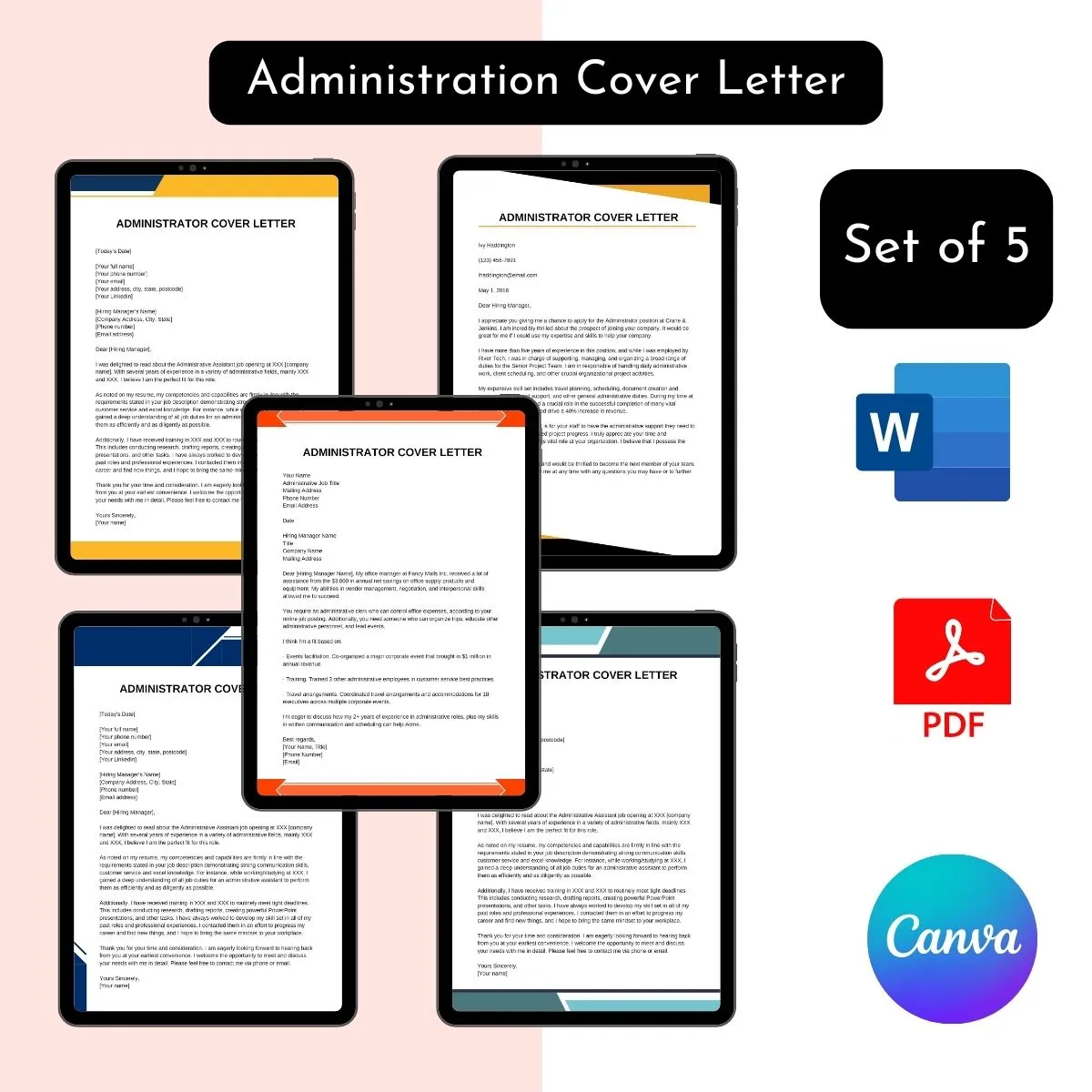
Crafting a Cover Letter for Admin Positions
In the competitive job market, a well-crafted cover letter is your first opportunity to make a lasting impression on potential employers. For administrative positions, this is especially critical, as your cover letter serves as a sample of your communication and organizational skills. This guide provides you with a step-by-step approach to creating a cover letter that not only highlights your qualifications but also captures the attention of hiring managers. We’ll delve into the essential elements of a compelling cover letter, from researching the company and understanding the job description to showcasing your skills and quantifying your achievements. By following these guidelines, you can significantly increase your chances of landing an interview and securing your dream administrative role.
Researching the Company Before You Write
Before you even begin to draft your cover letter, dedicate time to research the company and the specific role. Understanding the company’s mission, values, and recent activities can help you tailor your letter to align with their needs and demonstrate genuine interest. Visit the company’s website, explore their social media profiles, and read any recent news articles about them. Pay close attention to the language they use to describe their culture and values. This research will inform your writing, allowing you to weave in relevant information that shows you’ve gone the extra mile. Identifying specific projects, initiatives, or values that resonate with you can help you to express your interest in a way that sets you apart from other candidates. Remember, a generic cover letter quickly ends up in the rejection pile, but a customized one speaks volumes about your commitment and attention to detail.
Understanding the Job Description

The job description is your roadmap to success. Read it thoroughly, identifying the key skills, qualifications, and responsibilities the employer is seeking. Highlight the keywords and phrases used in the description, as you’ll want to incorporate these into your cover letter to demonstrate that you possess the required attributes. Note the required skills and how they are prioritized. Is it a strong emphasis on organizational skills, communication, or technical proficiency? Tailor your cover letter to align with these priorities, focusing on how your experience and abilities directly match the employer’s needs. If the job description mentions specific software or procedures, ensure you address your familiarity with those tools. This targeted approach will demonstrate that you are a well-suited candidate who has the specific qualifications to excel in the role. Also, remember to address the required qualifications, such as education and experience.
Highlighting Relevant Skills
The core of your cover letter should highlight your relevant skills, showcasing your ability to excel in the administrative role. Begin by identifying your core competencies. Administrative positions often require a blend of technical, interpersonal, and organizational skills. Match your skills with the job requirements outlined in the description. Provide concise examples of how you’ve utilized these skills in previous roles. This is not just about listing your abilities; it is about demonstrating how you have applied them to achieve positive results. Focus on those skills that are most relevant to the specific role you are applying for. Tailor your examples to show a direct correlation between your abilities and the requirements outlined in the job posting. This will help the hiring manager quickly understand your suitability for the position.
Administrative Skills to Showcase
When highlighting administrative skills, focus on the core competencies essential for success. These include organizational skills, time management, attention to detail, and the ability to prioritize tasks. Additionally, showcase your proficiency in managing calendars, scheduling meetings, and coordinating travel arrangements. Highlight your experience with managing and maintaining filing systems, both physical and digital. Your ability to handle confidential information with discretion is also a key skill to emphasize. Don’t forget to mention your ability to handle incoming and outgoing correspondence and to effectively manage office supplies and equipment. Demonstrate your ability to work independently while also being a proactive team player.
Communication and Interpersonal Skills

Strong communication and interpersonal skills are vital for administrative roles. Highlight your written and verbal communication abilities, including your proficiency in composing professional emails, reports, and other correspondence. Emphasize your ability to communicate clearly and effectively with colleagues, clients, and other stakeholders. Demonstrate your ability to actively listen, understand diverse perspectives, and resolve conflicts diplomatically. Showcase your customer service skills, including your ability to handle inquiries and provide solutions. Highlight any experience with training or mentoring, as well as your ability to build and maintain positive relationships with people from all backgrounds. These communication skills will significantly improve your chances of success in an administrative role.
Technical Proficiency
Technical proficiency is crucial in today’s administrative roles. Specify the software and tools you are proficient with, such as Microsoft Office Suite (Word, Excel, PowerPoint, Outlook), Google Workspace, CRM software, and any industry-specific applications. Mention your experience with data entry, database management, and any specialized administrative tools. Highlight your ability to troubleshoot technical issues and your willingness to learn new software. Detail your typing speed and accuracy, as this is often an essential requirement. If you have experience with virtual meeting platforms (Zoom, Microsoft Teams), make sure to mention this as well. Your technical proficiency will demonstrate your capacity to handle the technological aspects of the job.
Quantifying Achievements
Quantifying your achievements transforms your cover letter from a list of responsibilities to a compelling narrative of your accomplishments. Instead of merely stating your duties, use data and specific examples to illustrate the impact you’ve made in previous roles. If you improved efficiency, state the percentage by which you reduced processing time or improved workflows. If you managed projects, mention the number of projects completed successfully and any associated cost savings or revenue generation. If you improved customer satisfaction, provide specific metrics, such as a percentage increase in positive feedback. Quantifiable results immediately capture the reader’s attention, making your cover letter more memorable and demonstrating your value to potential employers. Your use of data will show a clear picture of your capabilities and give the employer a clear understanding of your success.
Using Action Verbs to Impress

Using strong action verbs is crucial for making your cover letter dynamic and engaging. Start each bullet point or sentence describing your achievements with a powerful action verb. For example, use ‘managed,’ ‘coordinated,’ ‘implemented,’ ‘streamlined,’ ‘achieved,’ or ‘improved.’ Avoid passive language or weak verbs, such as ‘was responsible for’ or ‘assisted with.’ Choose verbs that accurately reflect your accomplishments and demonstrate your initiative and leadership abilities. By starting your sentences with strong action verbs, you create a sense of momentum and showcase your ability to get things done. Make a list of strong action verbs to use in your cover letter and choose the ones that best describe your skills and accomplishments.
Structuring Your Cover Letter
A well-structured cover letter ensures your message is clear, concise, and easy to follow. Start with your contact information, the date, and the recipient’s details. Use a professional salutation, such as ‘Dear Mr./Ms./Mx. Last Name.’ The opening paragraph should immediately grab the reader’s attention. Briefly state the position you are applying for, where you saw the advertisement, and a brief statement of your key qualifications. Use the body paragraphs to highlight your relevant skills, experiences, and achievements, tailoring your narrative to match the job requirements. End with a strong closing paragraph that summarizes your interest, reiterates your value, and includes a call to action. A well-organized letter presents you as an organized and professional individual.
Contact Information and Salutation
Begin your cover letter by providing your contact information at the top, including your name, phone number, email address, and, optionally, your LinkedIn profile URL. Next, include the date and the recipient’s information. If the job posting provides a contact name, use it. Otherwise, use a professional salutation such as ‘Dear Hiring Manager.’ Using the correct salutation sets a professional tone. Be sure to double-check the spelling of the recipient’s name and company details. Make sure your email address sounds professional and is easy to read. A professional and well-formatted heading sets the stage for a positive first impression.
The Opening Paragraph Hooking the Reader

The opening paragraph of your cover letter is crucial. It is your opportunity to capture the reader’s attention and make them want to read more. State the specific position you are applying for and how you found the job posting. Briefly, mention your key qualifications or a compelling achievement. For example, you could highlight a specific skill or experience that directly aligns with the job requirements. Keep it concise and focused. The goal is to immediately convey your interest and make the reader excited to learn more about you. A strong opening ensures that your cover letter stands out from the competition.
Body Paragraphs Showcasing Your Value
The body paragraphs are where you expand on your qualifications and demonstrate your value to the employer. Use these paragraphs to highlight your relevant skills, experience, and achievements, using specific examples to support your claims. Address the key requirements outlined in the job description and explain how your skills and experiences align. Use action verbs to describe your accomplishments, and quantify your achievements whenever possible. Be sure to tailor each letter to the specific job and demonstrate how you can address the company’s needs. The body paragraphs should provide a clear picture of your ability to excel in the administrative role.
Tailoring the Letter to Each Job
Customization is critical. Do not send a generic cover letter for every job application. Review the job description carefully and tailor your letter to match the specific requirements and the company’s culture. Highlight the skills and experiences most relevant to the position. If the job posting mentions specific software, highlight your experience with those tools. Research the company to understand its values, mission, and recent projects. The goal is to demonstrate that you understand the company’s needs and that you possess the skills and qualities to excel in the role. Remember, a tailored cover letter shows that you have invested time and effort in the application.
The Closing Paragraph Making a Strong Impression

The closing paragraph offers a final opportunity to leave a lasting impression and encourage the employer to take action. Summarize your interest in the position and reiterate your key qualifications, highlighting how you can contribute to the company’s success. Express your enthusiasm for the opportunity and thank the reader for their time and consideration. Include a call to action, such as stating your availability for an interview and providing your contact information. A confident and well-crafted closing paragraph leaves a positive final impression.
Proofreading and Editing Your Cover Letter
Before submitting your cover letter, carefully proofread and edit it to ensure it is free of errors. Check for spelling mistakes, grammatical errors, and punctuation errors. Ensure that your formatting is consistent throughout and that your sentences are clear and concise. Read the letter aloud to identify any awkward phrasing or sentences that could be improved. Consider asking a friend or family member to review your cover letter for a second opinion. A well-written and error-free cover letter demonstrates your attention to detail and professionalism.
Common Mistakes to Avoid
Avoid common mistakes that can undermine your cover letter. Do not submit a generic cover letter that does not address the specific job requirements. Avoid using vague language or clichés. Refrain from simply repeating your resume; instead, expand on your skills and achievements and tailor them to the specific job. Avoid making negative statements about previous employers or experiences. Ensure your letter is properly formatted and easy to read. Always proofread your letter carefully for any spelling or grammatical errors. A polished cover letter will improve your chances of success and make a good impression on a potential employer.
By following these guidelines, you can create a cover letter that showcases your skills, experience, and qualifications in a compelling and effective way. Remember, your cover letter is your opportunity to make a strong first impression, so take the time to craft a well-written and tailored letter that highlights your value to the employer. Good luck with your job search!