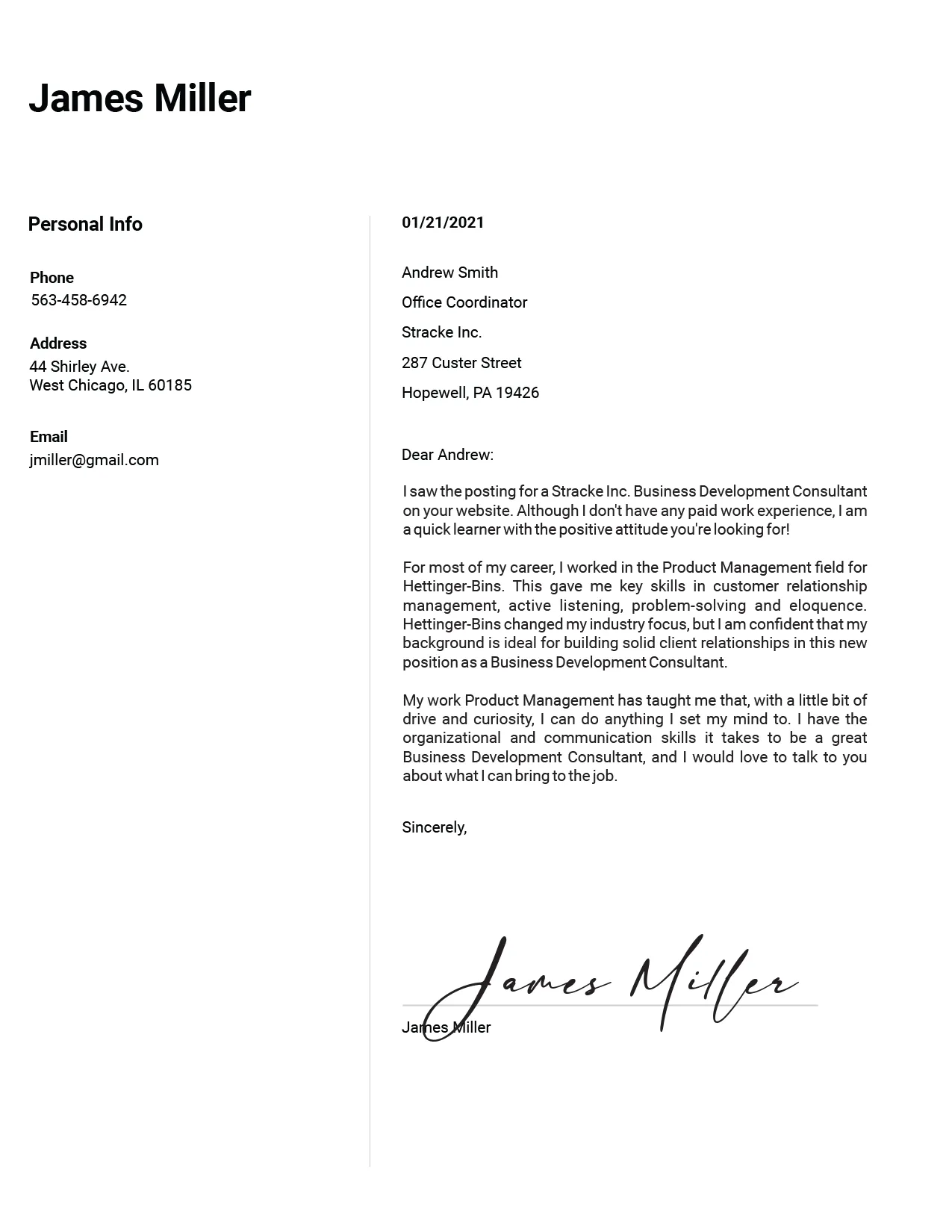
What is a Cover Letter (and Why You Need One)
A cover letter is a crucial document that accompanies your resume when applying for a job. It serves as a personal introduction, allowing you to highlight your skills, experience, and enthusiasm for the position. Unlike a resume, which provides a factual overview of your career, a cover letter allows you to tell your story, explain why you are a good fit for the role, and showcase your personality. Many job seekers underestimate the power of a well-crafted cover letter, but it can significantly increase your chances of getting noticed by a hiring manager. In a competitive job market, a compelling cover letter can set you apart from other applicants and make a lasting impression. When done correctly, it helps you build a narrative, making a strong first impression and creating a pathway to an interview opportunity.
Key Components of a Stellar Cover Letter
A stellar cover letter isn’t just a summary of your resume; it’s a well-structured document that grabs the reader’s attention and convinces them of your suitability for the role. A well-written cover letter will showcase your personality, your enthusiasm, and your understanding of the company and the role. It should be concise, easy to read, and free of errors. The key components include a professional header, a personalized greeting, a captivating opening paragraph, a detailed body that highlights relevant skills and experience, a compelling closing paragraph, and a clear call to action. Each section plays a vital role in conveying your qualifications and eagerness for the job. Crafting each section with purpose and precision will make your cover letter much more effective.
Header and Contact Information

The header of your cover letter should mirror the one on your resume, ensuring consistency and professionalism. Include your full name, address, phone number, and email address. Consider using a professional-looking email address, avoiding nicknames or unprofessional language. The header should be neatly formatted and easy to read. Also, it is important to include the date and the hiring manager’s or recruiter’s contact information. Using the correct contact details creates a professional impression and ensures your application reaches the right person. A well-formatted header is a critical first step in making a positive impression on the hiring team, showing attention to detail.
Addressing the Hiring Manager
Personalizing your cover letter by addressing the hiring manager by name is a powerful way to make a positive impression. Research the hiring manager’s name through the job posting, company website, or LinkedIn. If you can’t find a specific name, using a general greeting like “Dear Hiring Manager” is preferable to a generic greeting. Addressing the hiring manager by name shows that you’ve taken the time to research the company and are genuinely interested in the opportunity. This level of personalization makes your application stand out. Take the extra step to find out who will be reading your application and use their name if possible.
The Opening Paragraph How to Grab Attention
The opening paragraph is your chance to grab the reader’s attention and make a strong first impression. Avoid generic phrases like “I am writing to express my interest.” Instead, start with a statement that immediately highlights your enthusiasm for the position or the company. Consider mentioning something specific that attracted you to the role or a key skill that aligns with the job requirements. The opening paragraph should be concise, engaging, and clearly state the position you are applying for. It sets the tone for the rest of your cover letter, so it must be effective. It should also make it clear that you understand the requirements of the role.
Highlighting Your Skills and Experience

The body of your cover letter should showcase your relevant skills and experience in a way that directly relates to the job requirements. Review the job description carefully and identify the key skills and qualifications the employer is seeking. Provide specific examples of how you’ve demonstrated those skills in previous roles. Use the STAR method (Situation, Task, Action, Result) to describe your accomplishments. Instead of just listing your responsibilities, focus on the impact you made and the outcomes you achieved. Tailor each cover letter to the specific job by emphasizing the most relevant aspects of your experience. Align your skills with the requirements of the job so the hiring manager can see you as a good match.
Showcasing Achievements Not Just Duties
Focusing on achievements rather than just listing your duties is key to writing a compelling cover letter. While describing your responsibilities is important, highlighting your accomplishments demonstrates your value to a potential employer. Consider providing examples of projects you successfully completed, problems you solved, or improvements you implemented. Quantify your achievements whenever possible. Instead of saying “Managed social media accounts,” say “Increased social media engagement by 30% in six months.” This level of detail provides concrete evidence of your capabilities and sets you apart from other candidates. Use strong action verbs to describe your achievements, making your cover letter more dynamic and engaging for the reader. Highlighting achievements showcases your value, leading to increased interview opportunities.
Quantifying Your Accomplishments
Quantifying your accomplishments adds credibility and impact to your cover letter. Whenever possible, use numbers, percentages, or specific metrics to illustrate your achievements. This provides concrete evidence of your impact and demonstrates your ability to deliver results. For example, instead of saying “Improved customer satisfaction,” you could say “Increased customer satisfaction scores by 15% through the implementation of a new feedback system.” Quantifiable achievements are much more compelling than vague statements. They demonstrate that you understand the importance of data and can use it to drive positive outcomes. Quantifying your achievements makes your application more persuasive and increases your chances of being selected for an interview.
Tailoring Your Letter to the Job

One of the most critical steps in writing an effective cover letter is tailoring it to the specific job and company. Generic cover letters that could be sent to any employer are often overlooked. Start by carefully reviewing the job description and identifying the key requirements, skills, and values. Then, customize your letter to highlight the experiences and qualifications that align with those requirements. Use the same keywords and phrases from the job description to show that you understand what the employer is looking for. Researching the company’s culture, values, and recent achievements can also help you tailor your letter to show that you’re a good fit for their organization. Tailoring your cover letter demonstrates your attention to detail and genuine interest in the position, increasing your chances of getting noticed by the hiring team.
Researching the Company
Before you start writing your cover letter, research the company. Understanding the company’s mission, values, products, and recent news will help you demonstrate your interest and tailor your letter effectively. Visit the company’s website, read their “About Us” section, and check out their social media profiles. Look for information about their culture, recent projects, and any awards or recognition they’ve received. If possible, read articles or press releases to understand the company’s current goals and challenges. Use this information to customize your cover letter, showing the hiring manager that you’ve done your homework and are genuinely interested in working for their organization. Mentioning specific projects, values, or initiatives can make your cover letter more engaging and demonstrate that you are a good fit for the company’s culture.
Using Keywords from the Job Description
Incorporating relevant keywords from the job description is a crucial element of an SEO-friendly cover letter. Employers often use Applicant Tracking Systems (ATS) to scan resumes and cover letters for specific keywords. Carefully review the job description and identify the key skills, qualifications, and requirements mentioned. Then, naturally integrate those keywords into your cover letter. Be careful not to stuff your letter with keywords, as this can make it sound unnatural. Instead, use the keywords in the context of your skills and experiences. This ensures that your cover letter is easily scannable by the ATS and demonstrates that you meet the required qualifications. Using relevant keywords increases your chances of getting past the initial screening process and having your application reviewed by a human.
The Closing Paragraph and Call to Action

The closing paragraph should summarize your key qualifications and reiterate your enthusiasm for the position. It should also include a clear call to action. Express your interest in an interview and make it easy for the hiring manager to take the next step. Instead of simply stating “Thank you for your consideration,” try something more proactive like “I am eager to discuss how my skills and experience can contribute to your team. I am available for an interview at your earliest convenience.” Provide your contact information again and express gratitude for their time. A strong closing paragraph leaves a lasting impression and encourages the hiring manager to contact you.
Expressing Gratitude and Next Steps
Always express gratitude for the hiring manager’s time and consideration. Thank them for reviewing your application and express your excitement about the opportunity. Include a call to action, clearly stating your interest in an interview and how they can contact you. For example, you might say, “Thank you for your time and consideration. I am excited about the opportunity and would welcome the chance to discuss my qualifications further. I am available for an interview at your earliest convenience. You can reach me at [phone number] or [email address].” Proofread your cover letter carefully to ensure that all contact information is accurate and up-to-date. A well-crafted closing paragraph is essential to leave a positive impression and encourage the hiring manager to move forward with your application.
Formatting and Proofreading Your Cover Letter
Formatting and proofreading are essential steps in ensuring that your cover letter is professional, polished, and error-free. A well-formatted cover letter is easy to read and visually appealing. It demonstrates your attention to detail and professionalism. Proofreading ensures that your cover letter is free of grammatical errors, spelling mistakes, and typos, all of which can damage your credibility. Take the time to format your cover letter correctly and proofread it carefully. Consider using a professional template, and always proofread it again before submitting.
Font and Layout Best Practices

Choosing the right font and layout can significantly impact the readability and professionalism of your cover letter. Use a clear, readable font like Arial, Times New Roman, or Calibri, with a font size between 10 and 12 points. Avoid using overly stylized or decorative fonts. Use single-spacing for the body of your letter, with a blank line between paragraphs. Use left alignment, and ensure that your margins are one inch on all sides. Maintain consistency throughout the document. Proper formatting makes your cover letter easy to read and demonstrates your attention to detail. A well-formatted document ensures the reader can focus on your content, making it easier to read and absorb the information.
Proofreading Checklist Before Submitting
Before submitting your cover letter, proofread it carefully to catch any errors. Use a proofreading checklist to ensure that you haven’t missed anything. Check for spelling errors, grammatical mistakes, and typos. Verify that all contact information is correct. Ensure that your formatting is consistent and professional. Ask a friend, family member, or career counselor to review your cover letter for any errors or suggestions. Proofreading is the final step to ensuring that your cover letter is error-free and makes a strong positive impression. Taking the time to proofread and double-check all elements of your cover letter ensures that it is a polished, professional, and effective application document. Taking the extra time to review your cover letter can make all the difference.