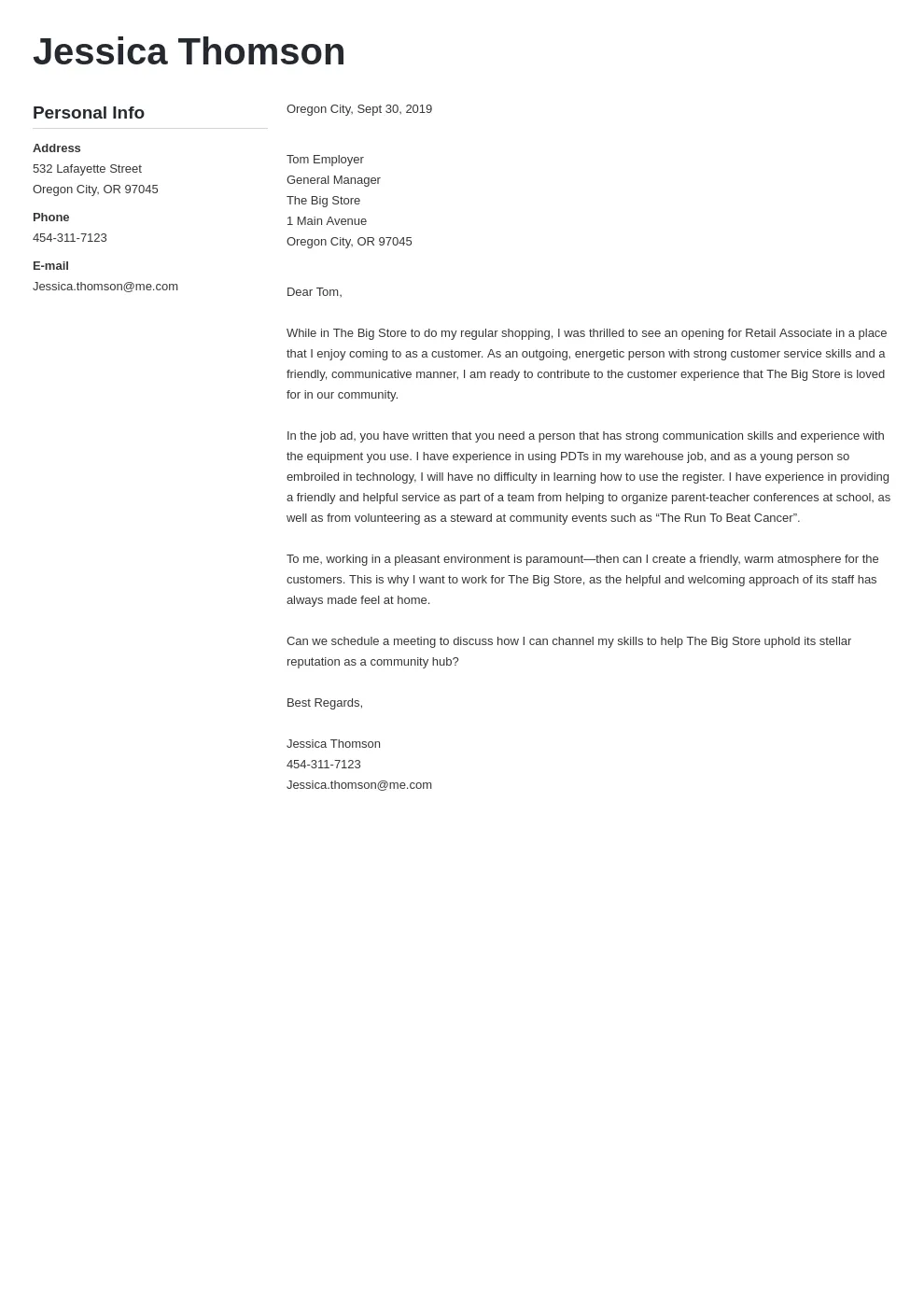
What Is a Retail Cover Letter?
A retail cover letter is a crucial document that accompanies your resume when applying for a retail position. It serves as your introduction to the hiring manager and allows you to showcase your personality, skills, and enthusiasm for the role. Unlike a resume, which provides a concise summary of your experience, a cover letter gives you the opportunity to elaborate on your qualifications and explain why you are the ideal candidate for the job. It’s your chance to make a strong first impression and distinguish yourself from other applicants. The cover letter isn’t just a formality; it’s a tool that can significantly increase your chances of getting an interview and ultimately, landing your desired retail job. It helps the employer understand your motivations and how your skills align with their needs.
Why Is a Retail Cover Letter Important?
In the competitive world of retail, a well-crafted cover letter can be the key to unlocking your career aspirations. It’s important because it provides context to your resume. Resumes are great at listing skills and experiences, but they don’t always tell the whole story. A cover letter lets you articulate your passion for retail and explain why you’re a perfect fit for the specific role and company. It highlights your communication skills, demonstrates your understanding of the job requirements, and allows you to personalize your application. Employers often use cover letters to assess your writing ability, attention to detail, and overall professionalism. A strong cover letter can also help you address any gaps in your resume or explain why you are making a career change. By demonstrating your genuine interest and enthusiasm, you can significantly increase your chances of securing an interview and making a positive impression on potential employers.
Key Components of a Retail Cover Letter

A well-structured retail cover letter consists of several key components, each playing a vital role in conveying your qualifications and interest. These elements work together to create a compelling narrative that captures the hiring manager’s attention. Understanding these components will enable you to craft a cover letter that effectively showcases your skills, experiences, and enthusiasm for the retail position you’re pursuing. Start with the header and contact information at the top of your cover letter, followed by a personalized salutation addressing the hiring manager or the store manager. Then, the body of your letter should consist of three paragraphs: the first paragraph should convey your passion for retail, the second paragraph should highlight relevant skills and experiences, and the third paragraph should demonstrate your enthusiasm for the specific role. Finally, a strong closing paragraph and a formal closing are essential for leaving a lasting positive impression.
Header and Contact Information
The header of your retail cover letter is the first thing a hiring manager will see, so it’s important to make a professional impression. Include your full name, address, phone number, and email address at the top of the document. Ensure your contact information is accurate and up-to-date, so potential employers can easily reach you. It’s also a good practice to use a professional-sounding email address. Below your contact information, include the date, followed by the hiring manager’s name (if known), their title, and the company’s address. If you’re unsure of the hiring manager’s name, you can address the letter to the hiring manager or the store manager. This information helps the recipient understand who the cover letter is for and adds a touch of professionalism, signaling that you’ve taken the time to research the company and the position.
Ensure the layout of your header is neat and easy to read. Avoid any fancy fonts or excessive formatting. A clean and simple design reflects your professionalism and attention to detail. Consider using a standard font like Times New Roman or Arial for the entire document. Proper formatting in the header sets the stage for the rest of your cover letter, demonstrating your organizational skills and respect for the hiring manager’s time. A well-formatted header shows that you pay attention to detail, an important quality in any retail environment. The header should be at the top of the page, typically left-aligned, making it the initial piece of information that the reader sees.
Your Name and Contact Details
Begin by listing your full name clearly at the top, followed by your contact details. It’s essential to provide a phone number and an email address where you can be easily reached. Choose a professional-sounding email address; if necessary, create a new one specifically for job applications. This demonstrates that you’re serious about the job. Your address isn’t always necessary, but including it can add a professional touch. Double-check all information for accuracy before submitting. The main goal here is to ensure the hiring manager can easily contact you for an interview or further communication. Make certain the contact information is easy to read and well-formatted to create a polished first impression. Make sure the information is aligned consistently and uses a clear font.
Date and Hiring Manager’s Information

Below your contact information, include the date you are submitting the cover letter. This helps the employer know when you applied. Then, if you know the name of the hiring manager, include their name, title, and the company’s address. This personalization shows that you have done your research and demonstrates a level of professionalism. If the hiring manager’s name is not available, address the letter to the “Hiring Manager” or “Store Manager.” This approach is preferable to using a generic greeting like “To Whom It May Concern,” as it shows that you’ve made an effort to find out who is in charge of hiring. Ensure the format is professional. Use the same font and formatting style as the rest of your cover letter to maintain consistency. Make sure the information is accurate; misspellings or incorrect titles can create a negative impression. A personalized approach reflects your attention to detail and genuine interest in the role.
The Salutation
The salutation sets the tone for your entire cover letter. If you know the hiring manager’s name, a personalized greeting like “Dear Mr./Ms. [Last Name]” is always best. This demonstrates that you’ve researched the company and shows that you pay attention to details. If you don’t know the hiring manager’s name, a more general greeting like “Dear Hiring Manager” or “Dear Store Manager” is acceptable, but try to find the hiring manager’s name, if possible, by checking the company website or LinkedIn. Avoid using generic greetings like “To Whom It May Concern,” which can come across as impersonal. After the salutation, use a comma instead of a colon. Maintain a professional tone throughout. Your greeting is your first opportunity to create a positive impression.
Crafting the Body of Your Retail Cover Letter
The body of your retail cover letter is where you can truly shine. It’s where you can articulate your passion for the retail industry, highlight your relevant skills and experiences, and express your enthusiasm for the specific role you are applying for. The body of your cover letter is typically structured into three main paragraphs. Each paragraph has a specific purpose, working together to create a compelling narrative that showcases your suitability for the position. By following a clear and concise structure, you can effectively communicate your qualifications, demonstrate your interest in the company, and convince the hiring manager that you are the ideal candidate. Remember to tailor each paragraph to the specific job requirements and company culture, as this will demonstrate your genuine interest in the position.
First Paragraph Highlight Your Passion

In the first paragraph, you want to capture the hiring manager’s attention and express your genuine enthusiasm for the retail industry and the specific company. Start by stating the position you’re applying for and where you found the job posting. This sets the context. Then, articulate your passion for retail. Explain what excites you about the industry. Share what attracts you to this particular company. Explain your understanding of the company’s mission, values, or products to show that you have done your homework and are genuinely interested in the role. You should convey your passion, but keep your tone professional and avoid overly enthusiastic or informal language. This paragraph should set the stage for the rest of your cover letter by demonstrating your motivation and establishing a positive impression from the start. Your goal here is to make the hiring manager want to read on and learn more about your qualifications.
Second Paragraph Skills and Experience
The second paragraph of your cover letter is where you highlight your relevant skills and experience. Carefully review the job description and identify the key requirements. Then, provide specific examples from your work history or other experiences that demonstrate you possess those skills. Focus on skills most relevant to the role, such as customer service, sales, teamwork, and problem-solving. Quantify your achievements whenever possible. For instance, instead of saying “I increased sales,” state “I increased sales by 15% in six months.” Use action verbs to describe your accomplishments. For example, use words like “managed,” “coordinated,” “assisted,” or “resolved.” Connect your skills and experience to the job requirements. Explain how your abilities will benefit the company. Be concise and avoid simply restating your resume. Provide concrete examples that illustrate how you’ve used your skills to achieve positive results. This paragraph shows that you understand the job’s needs and have the skills to succeed.
Third Paragraph Show Enthusiasm
In the third paragraph, express your enthusiasm for the specific role and the company. Reiterate your interest in the position and explain why you are a good fit for the company culture. Mention something specific about the company that appeals to you – perhaps its values, products, or community involvement. Explain how you can contribute to the company’s success. Demonstrate your knowledge of the company’s mission or goals. Reiterate your interest in the position and why you are the perfect fit. Mention anything you know about the company. Show that you have done your research and have a genuine interest in the opportunity. End the paragraph by expressing your eagerness to learn more and discuss your qualifications in an interview. Keep it concise and show how your skills and personality align with the company’s values. This paragraph should leave the hiring manager with a positive and lasting impression.
Closing Your Retail Cover Letter

The closing of your retail cover letter is an important aspect. It gives you a final chance to reiterate your interest in the position and to express your desire for an interview. Your closing should be professional and courteous. This part is where you provide the finishing touch. The right closing leaves the hiring manager with a positive lasting impression. It reaffirms your commitment to the company and provides clear instructions for the next steps. A strong closing is a key part of your retail cover letter. It can significantly improve your chances of moving forward in the hiring process.
The Formal Closing
Close your cover letter with a professional and polite closing. Use phrases like “Sincerely,” “Best regards,” or “Thank you for your time and consideration.” Avoid casual closings like “Cheers” or “Best.” After the closing, leave a few spaces for your signature, followed by your typed name. If you are sending your cover letter electronically, you can omit the handwritten signature. You might also include a brief statement about your availability for an interview. For example, “I am available for an interview at your earliest convenience.” This gives the hiring manager a clear indication of your interest and availability. Ensure the closing is consistent with the tone and professionalism of the rest of your cover letter. A well-crafted closing reinforces your professionalism and leaves a positive impression.
Proofreading Your Cover Letter
Proofreading is one of the most critical steps in writing a successful retail cover letter. Errors in grammar, spelling, and punctuation can make you look unprofessional and can hurt your chances. Before submitting your cover letter, carefully review it for any mistakes. Read the letter aloud to catch any awkward phrasing or typos. Use spell-check and grammar-check tools, but don’t rely on them entirely. These tools can miss errors and can only highlight surface level mistakes. Proofread multiple times, and ideally, have someone else review your cover letter for you. A fresh pair of eyes can often catch mistakes that you might miss. Ensure that your cover letter is clear, concise, and easy to read. Check for consistency in formatting, font, and spacing. Errors in your cover letter can indicate a lack of attention to detail, which is a significant trait in the retail industry. Take the time to polish your cover letter. Proofreading demonstrates professionalism, attention to detail, and your commitment to excellence.
Essential Tips for Writing a Retail Cover Letter

To maximize your chances of success, consider these additional tips when writing your retail cover letter. These suggestions will help you create a compelling document that stands out from the competition. By following these guidelines, you can make a strong positive impression. These tips are designed to help you write a cover letter that is effective and makes a positive impression. These tips can help you craft a winning cover letter. Keep in mind that these practices are essential to creating a cover letter that is well-received by hiring managers.
Tailor Your Letter to the Job
Avoid using a generic cover letter template. Customizing your letter to each specific job is essential. Review the job description and identify the key skills and qualifications the employer is seeking. Highlight the experiences and abilities that match those requirements. Explain how your background aligns with the role and how you can contribute to the company’s success. Showing that you have carefully considered the job description and tailored your letter accordingly demonstrates that you have taken the initiative and have a genuine interest in the position. Personalizing your cover letter is the most essential tip. Always address the hiring manager by name whenever possible. Customization demonstrates attention to detail and a genuine interest in the role. This increases the likelihood of getting noticed by the hiring manager.
Use Action Verbs
To make your cover letter more impactful, use strong action verbs. Verbs such as “managed,” “led,” “achieved,” “coordinated,” and “resolved” are dynamic and show your accomplishments. Instead of saying “responsible for customer service,” use “provided exceptional customer service, resolving customer issues.” Action verbs create a more compelling narrative and make your achievements more memorable. These verbs add strength to your descriptions. They make your contributions and accomplishments stand out. The use of action verbs provides energy. They also make the cover letter more engaging, which leads to a lasting impression. Strong verbs make your cover letter more powerful and effective.
Show, Don’t Tell

Instead of simply stating your skills, provide specific examples that demonstrate those skills in action. Don’t just say you’re a good team player; describe a time you collaborated with colleagues to achieve a specific goal. Instead of saying you are organized, mention how you managed inventory and organized the sales floor. Be precise and use quantifiable results whenever possible. For instance, “Increased sales by 15% through effective upselling and customer engagement.” This approach shows the hiring manager what you’ve done and the positive impact you have had. Providing concrete examples reinforces your abilities. It also provides potential employers with evidence of your abilities and how they will benefit their business. This technique enhances your credibility and strengthens your application.
Retail Cover Letter Examples to Inspire You
Reading retail cover letter examples can provide valuable insights and inspiration. By reviewing well-written cover letters, you can learn how to structure your own letter and what content to include. Pay attention to the language, tone, and format used in the examples. Analyze how the candidates highlight their skills and experiences, and how they express their enthusiasm for the job. Look for examples that match the specific role you’re applying for. Adapt the examples to your own situation, tailoring them to your skills and experiences. Use these examples as a starting point and a source of ideas. Modify them to suit your unique qualifications and personality. Retail cover letter examples are excellent resources for improving the quality of your application. Learning from the best practices will help you create a compelling cover letter.