Understanding the Importance of an Education Cover Letter
In the competitive landscape of education, a well-crafted cover letter is your key to unlocking the door to your dream teaching position. More than just a formality, the education cover letter serves as your initial introduction to a potential employer. It’s your chance to make a strong first impression, highlighting your skills, experience, and passion for education. Unlike your resume, which provides a factual overview of your qualifications, a cover letter allows you to tell a story, connecting with the hiring committee on a more personal level. It is an opportunity to showcase your personality, teaching philosophy, and enthusiasm for the specific role and institution, setting you apart from other applicants. By carefully constructing this document, you can effectively communicate your unique value proposition and increase your chances of securing an interview, marking the beginning of your journey towards a fulfilling career in education. Remember to tailor your letter to each application, reflecting your genuine interest and demonstrating why you are the perfect fit for the role.
Why a Cover Letter is Crucial
A compelling cover letter is a crucial component of your job application for several reasons. Firstly, it provides context to your resume, allowing you to elaborate on your experiences and skills in a narrative format. Secondly, it demonstrates your communication skills, essential for educators, displaying your ability to articulate your thoughts and ideas clearly and concisely. Thirdly, it allows you to express your enthusiasm for the specific role and institution, showcasing your genuine interest in the opportunity. Cover letters also enable you to address any potential gaps or concerns in your resume, proactively explaining your situation. Furthermore, they give you the chance to highlight your unique qualifications and align them with the specific requirements of the job description. In essence, a well-written cover letter is an opportunity to make a personal connection with the hiring manager, setting you apart from the competition and significantly increasing your chances of landing an interview. Failing to include a cover letter, or submitting a poorly written one, could lead to your application being overlooked, even if you have excellent qualifications.
Highlighting Your Skills and Experience

When crafting your education cover letter, focus on highlighting the skills and experiences most relevant to the specific teaching position. Review the job description carefully, and identify the key requirements and desired qualities. Then, structure your cover letter to emphasize how your qualifications align with these needs. Begin by selecting a few core skills – such as classroom management, curriculum development, differentiated instruction, or assessment – and provide specific examples of how you’ve demonstrated them in past roles. For each example, use the STAR method (Situation, Task, Action, Result) to illustrate the impact of your skills. Briefly describe the situation, outline the task you faced, detail the actions you took, and, most importantly, explain the positive results you achieved. This approach provides concrete evidence of your abilities and showcases your achievements. Also, consider incorporating keywords from the job description to ensure your application is easily screened by applicant tracking systems. This focused approach increases the chances of your cover letter standing out and securing you an interview opportunity.
Key Components of a Winning Cover Letter
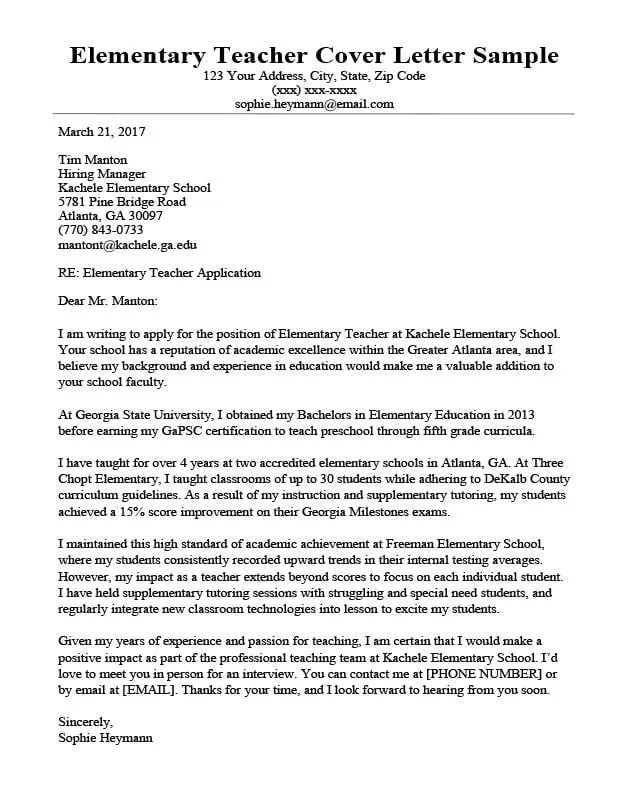
A winning education cover letter comprises several key components that work together to create a compelling narrative. Start with your contact information and the date, followed by the hiring manager’s name and title. The opening paragraph should grab the reader’s attention and clearly state the position you are applying for and where you found the job posting. The body of the letter should showcase your relevant skills and experience, providing specific examples that demonstrate your abilities. The education section should highlight your degrees, certifications, and any relevant coursework. Quantify your achievements whenever possible by using numbers and data to illustrate your impact. Express your passion for education and enthusiasm for the specific school or institution. Tailor your letter to the specific job by addressing the requirements outlined in the job description. Before closing, always proofread your cover letter meticulously for any grammatical errors or typos. Finally, close with a professional closing and a call to action, expressing your eagerness for an interview.
Contact Information and Salutation
Begin your cover letter with your contact information at the top, including your full name, phone number, email address, and optionally, your LinkedIn profile URL. This ensures the hiring manager can easily reach you. Beneath your contact information, include the date, followed by the hiring manager’s name and title, and the school’s address. Address your letter to a specific person whenever possible, rather than using a generic salutation such as “To Whom It May Concern.” Research the school’s website or LinkedIn to find the name of the hiring manager or principal. If you can’t find a specific name, use a professional salutation such as “Dear Hiring Committee” or “Dear [Department Name] Search Committee.” Using the correct name adds a personal touch and shows you’ve taken the time to learn more about the school. Always maintain a professional tone and ensure your salutation is grammatically correct. This attention to detail can significantly improve your chances of making a positive first impression.
Crafting a Compelling Opening

The opening paragraph of your education cover letter is crucial; it’s your first chance to capture the reader’s attention and make them want to read more. Avoid generic openings like “I am writing to express my interest.” Instead, aim for an engaging and impactful introduction. Clearly state the position you are applying for, and where you saw the job posting, for example, “I am writing to express my enthusiastic interest in the Elementary Teacher position at [School Name], as advertised on [Platform].” Then, briefly highlight your key qualifications or a compelling reason for your interest in the role. You might mention your passion for a specific subject, your experience working with a particular age group, or your admiration for the school’s mission and values. Consider starting with a brief anecdote that relates to the school’s goals, a relevant experience, or a remarkable teaching achievement that will grab the reader’s attention. The goal is to quickly establish your fit for the role and create a sense of excitement about what you can bring to the school. The opening should be concise, professional, and tailored to the specific job and school.
Showcasing Your Relevant Skills and Experience
The body of your education cover letter is where you showcase your relevant skills and experience, proving why you’re the ideal candidate. Use the STAR method (Situation, Task, Action, Result) to provide specific examples of your accomplishments. For each skill, describe the situation you faced, the task you undertook, the actions you took to address the situation, and the positive results you achieved. For example, instead of simply stating “I managed a classroom,” you could write “In a classroom setting with 25 students, I implemented a new classroom management system, resulting in a 30% reduction in disruptive behavior and a marked increase in student engagement.” Quantify your achievements whenever possible by using numbers, data, or specific metrics to demonstrate the impact of your work. Tailor each example to align with the requirements outlined in the job description, and use keywords from the job posting to highlight your relevant skills. Focus on experiences that demonstrate your ability to engage students, differentiate instruction, manage a classroom effectively, and foster a positive learning environment. This section is your opportunity to convince the hiring manager that your qualifications match their needs and to show how you can contribute to the school’s mission.
Education and Certifications Section
Although your resume details your education, the cover letter offers a chance to highlight your most relevant qualifications. Briefly mention your degrees, including the name of the institution, the degree received, and the date of graduation. If you have multiple degrees, you can prioritize the one most relevant to the position. Include any teaching certifications you hold, specifying the type and the issuing authority. If you are currently working towards a certification, mention it, indicating the expected completion date. Highlight any specialized coursework or training that aligns with the job requirements, such as courses in special education, early childhood development, or specific subject areas. This section should be concise and to the point, emphasizing your academic credentials and any additional training that makes you a strong candidate. If you have earned any honors or awards related to your education or teaching, include those as well, to further demonstrate your commitment to excellence.
Quantifying Your Achievements
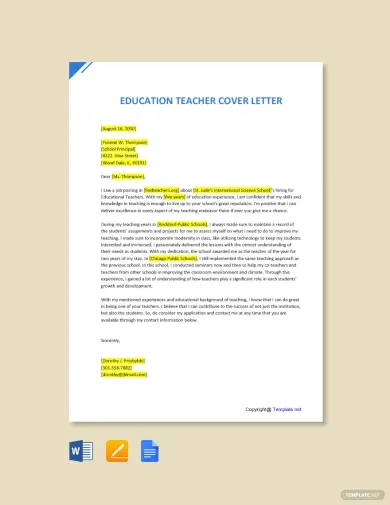
One of the most effective ways to make your education cover letter stand out is by quantifying your achievements. Use numbers and data to illustrate the impact of your work and to provide concrete evidence of your abilities. Instead of simply stating that you “improved student test scores,” specify by how much. For example, write “Increased student test scores by 15% within one academic year.” If you implemented a new teaching strategy, provide data on how it affected student engagement, such as, “Increased student participation in class activities by 20% through the implementation of project-based learning.” Include any specific metrics, such as the number of students you taught, the number of professional development workshops you led, or the amount of grant money you secured. Quantifying your achievements adds credibility to your claims and provides tangible proof of your contributions. When possible, use percentages, specific numbers, and data to demonstrate the positive results of your work and to showcase your impact on student learning. This approach makes it easier for the hiring manager to assess your qualifications and understand your value as an educator.
Expressing Your Passion and Enthusiasm
Your education cover letter is a perfect opportunity to express your genuine passion for education and enthusiasm for the specific role and institution. This is where you can convey your dedication to teaching and your excitement for the opportunity. Avoid generic statements and instead, share your personal teaching philosophy and explain why you are drawn to the school’s mission, values, or specific programs. Discuss what aspects of education inspire you the most – whether it’s fostering a love of learning in students, creating a supportive classroom environment, or collaborating with colleagues to improve student outcomes. Show your knowledge of the school by mentioning specific programs, initiatives, or events that resonate with you. Demonstrate your excitement for the role by highlighting how your skills and experience align with the school’s needs and how you can contribute to their success. Personalize your letter to create a genuine connection with the hiring manager. This will show your dedication to education and your genuine interest in the position, making you a more compelling candidate.
Tailoring Your Cover Letter to the Specific Job
One of the most important steps in writing a winning education cover letter is tailoring it to the specific job you’re applying for. Never use a generic cover letter; always customize it to reflect the unique requirements of each position and school. Begin by carefully reviewing the job description, paying close attention to the skills, experiences, and qualifications the school is seeking. Use this information to customize your letter, highlighting the experiences and skills that directly align with the job’s requirements. Use keywords from the job description to ensure your application is easily screened by applicant tracking systems and demonstrates that you meet the requirements of the role. If the job description mentions specific teaching methodologies, curricula, or technologies, make sure to address those in your letter. If you have relevant experience, provide specific examples and demonstrate how you can contribute to the school’s goals. Tailoring your cover letter shows the hiring manager that you have taken the time to understand their needs and that you are genuinely interested in the specific position. This focused approach makes you a more compelling candidate and increases your chances of landing an interview.
Researching the School or Institution

Thoroughly researching the school or institution is essential for writing an effective education cover letter. This research allows you to demonstrate your genuine interest in the school and customize your letter to align with their specific mission, values, and programs. Start by visiting the school’s website, exploring their mission statement, core values, and any specific programs or initiatives they offer. Check out their social media profiles to gain insights into the school culture, events, and community involvement. Read any recent news articles or publications about the school to learn about recent accomplishments or challenges. If possible, try to find out more about the school’s leadership team, faculty, and staff. When writing your cover letter, mention specific aspects of the school that appeal to you, such as their commitment to a particular teaching philosophy, their focus on student diversity, or their involvement in the community. This shows the hiring manager that you have taken the time to understand their unique environment and that you are a good fit for their school culture.
Customizing Your Letter for Each Application
Customizing your cover letter for each application is crucial for demonstrating your genuine interest and suitability for the specific role. Although you can use a template as a starting point, always tailor it to the individual job and school. Start by reviewing the job description carefully, and identify the key requirements and desired qualifications. Then, adapt your cover letter to highlight the skills and experiences that directly address these needs. Use keywords from the job description to ensure your application is easily screened and to show you meet the requirements. Mention any specific programs, initiatives, or values of the school that resonate with you. If the job description requests a specific teaching philosophy or style, make sure to demonstrate your alignment with these expectations. By customizing your letter, you show the hiring manager that you have taken the time to understand their needs and that you are genuinely interested in the specific position. This approach greatly increases your chances of getting an interview and landing your dream teaching job.
Formatting and Presentation Best Practices
The formatting and presentation of your education cover letter are crucial for making a positive impression. Ensure your letter is clean, easy to read, and visually appealing. Use a professional font such as Times New Roman, Arial, or Calibri, and maintain a consistent font size between 11 and 12 points. Use standard one-inch margins on all sides of the document. Align the text to the left and use single spacing within paragraphs and double spacing between paragraphs. Break up large blocks of text into shorter paragraphs to improve readability. Bold important keywords or phrases to draw the reader’s attention. Avoid using excessive formatting, such as different fonts or colors, which can distract from the content. Ensure your cover letter is free from any errors, and the presentation of the letter reflects your attention to detail. Before submitting, save your cover letter as a PDF to preserve the formatting and make sure it appears as you intended when opened by the hiring manager. A well-formatted cover letter demonstrates your professionalism and attention to detail, which will improve your chances of success.
Choosing the Right Font and Formatting
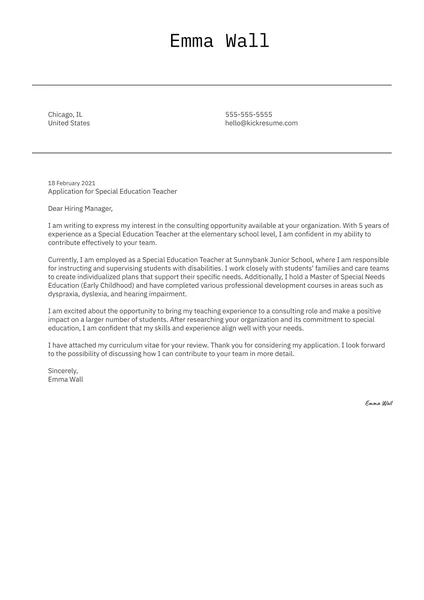
Choosing the right font and formatting can significantly enhance the readability and overall presentation of your education cover letter. Select a professional and easy-to-read font, such as Times New Roman, Arial, or Calibri. These fonts are widely recognized and are considered to be clear and legible. Maintain a consistent font size between 11 and 12 points throughout the document to ensure that it is easy on the eyes. Use standard one-inch margins on all sides to give the text enough space and avoid a cluttered appearance. Align the text to the left, which is generally more readable, and avoid full justification. Use single spacing within paragraphs and double spacing between paragraphs to separate the ideas. This approach allows the reader to easily follow the flow of your writing. Bold important keywords or phrases sparingly to draw attention to key points. Ensure that your cover letter is free of any grammatical errors or typos. A well-formatted cover letter demonstrates your professionalism, attention to detail, and your respect for the hiring manager’s time.
Proofreading and Editing Your Cover Letter
Thorough proofreading and editing are essential to ensuring your education cover letter is polished and professional. Before submitting your cover letter, meticulously review it for any grammatical errors, spelling mistakes, typos, and punctuation issues. Carefully check the sentence structure, making sure each sentence is clear, concise, and easy to understand. Ensure that the flow of ideas is logical and that your arguments are well-supported. Use a spell checker and grammar checker, but don’t rely on them entirely. Proofread your cover letter multiple times, reading it slowly each time, to catch any mistakes. Consider having a friend, family member, or career advisor review your cover letter to provide an objective perspective. They can spot errors you may have missed and provide suggestions for improvement. Reading your cover letter aloud can also help you catch any awkward phrasing or grammatical errors. Ensure that your cover letter is free of any errors, your attention to detail reflects your professionalism and commitment to excellence. A well-proofread cover letter demonstrates your respect for the hiring manager and will significantly improve your chances of making a positive impression.
Proofreading Checklist
Utilizing a proofreading checklist can help you catch errors in your education cover letter. Begin by checking for any grammatical errors, such as incorrect verb tenses, subject-verb agreement issues, and pronoun errors. Look for spelling mistakes, especially common ones or words that are easily confused. Verify the accuracy of your punctuation, including commas, periods, semicolons, and apostrophes. Ensure that your sentence structure is clear, concise, and varied, and make sure the flow of ideas is logical and easy to follow. Check for any typos, especially in proper nouns, such as the school’s name, and dates. Review your contact information, including your phone number, email address, and the hiring manager’s name and title. Ensure that you have used the correct salutation and closing. Check for consistency in formatting, such as font size, margins, and spacing. Proofread your cover letter multiple times, reading it slowly and carefully, to catch any mistakes. Having another person review your cover letter is a good idea to provide an objective perspective. A thorough proofreading process will increase your chances of submitting a professional cover letter, leading to more interview opportunities.
Common Mistakes to Avoid

There are several common mistakes to avoid when writing an education cover letter. Avoid using generic language; instead, tailor your letter to each specific job and school. Do not use the same cover letter for multiple applications. Do not include irrelevant information that does not directly relate to the job requirements. Refrain from simply repeating your resume; use the cover letter to elaborate on your experiences and provide context. Do not make any grammatical errors, spelling mistakes, or typos; proofread carefully. Avoid using jargon or overly technical language that the hiring manager may not understand. Don’t be negative or critical of previous employers or colleagues. Avoid writing a cover letter that is too long; keep it concise and to the point, ideally within one page. Do not be overly formal or informal; maintain a professional tone throughout. Avoid sending a cover letter without addressing it to a specific person. Avoiding these common mistakes will increase your chances of creating a compelling cover letter, showing you are a thoughtful candidate.
Closing Your Cover Letter Professionally
The closing paragraph of your education cover letter is your final opportunity to leave a lasting impression. It’s important to close your letter professionally and with enthusiasm. Thank the hiring manager for their time and consideration. Reiterate your interest in the position and the school. Express your eagerness to discuss your qualifications further and emphasize your fit for the role. Mention that you have attached your resume and offer to provide any additional information or materials they may need. Include a call to action, such as, “I would welcome the opportunity to discuss my qualifications in an interview.” Close your letter with a professional closing, such as “Sincerely,” or “Best regards,” followed by your typed name. Ensure your contact information is readily available, and sign your name if sending a hard copy. This closing demonstrates your professionalism, your interest in the position, and your eagerness to take the next step in the application process. This helps solidify your position as a qualified and enthusiastic applicant.
Writing a Strong Closing Paragraph
A strong closing paragraph is essential for leaving a positive impression on the hiring manager. Start by thanking the hiring manager for their time and consideration, this demonstrates your appreciation and professionalism. Reiterate your interest in the position and the school, emphasizing that you are excited about the opportunity and reiterating your fit for the role, highlighting what you bring to the team. Express your eagerness to discuss your qualifications further in an interview. Mention that you have attached your resume and offer to provide any additional information or materials they may require, offering to provide additional information. Close your letter with a professional closing, such as “Sincerely,” “Best regards,” or “Thank you for your consideration”, and follow it with your typed name. Ensure that your contact information is easily accessible. Make sure to express your enthusiasm, professionalism, and commitment to the position to improve your chances of securing an interview.
Adding a Call to Action
Including a clear call to action in your education cover letter closing is vital for prompting the hiring manager to take the next step. After expressing your gratitude and reiterating your interest, include a statement such as “I would welcome the opportunity to discuss my qualifications in an interview” or “I am eager to learn more about this opportunity and how my skills can benefit your school.” Make your call to action clear, concise, and action-oriented, inviting the hiring manager to reach out to you. This is an excellent way to show your enthusiasm and willingness to engage with the hiring process. By adding a call to action, you give the hiring manager a clear prompt and increase the likelihood that they will contact you for an interview. The call to action should be specific, professional, and relevant to the specific job requirements. It should encourage them to follow up with you and move your application forward, improving your chances of getting hired.