Why a Cover Letter Is Crucial for Entry-Level Customer Service
In the competitive job market, especially for entry-level positions, a cover letter is not just an optional addition – it’s your first impression and a critical tool in setting you apart. For customer service roles, which often involve direct interaction with customers and require strong communication skills, a well-crafted cover letter demonstrates your understanding of the role and your suitability for it. Unlike a resume, which provides a summary of your experience, a cover letter allows you to explain why you’re the perfect fit for the specific job and the company. It’s your chance to tell a story, highlight your skills, and express your enthusiasm, all of which can be difficult to convey in a bullet-point list. In essence, the cover letter serves as your personal introduction, giving you the opportunity to present yourself as more than just a list of qualifications and show your potential to contribute meaningfully to the organization.
Crafting a Cover Letter That Grabs Attention
To make your cover letter stand out, it’s important to capture the reader’s attention from the start. Begin with a strong opening that immediately addresses the hiring manager or recruiter. If you know the name of the person, it adds a personal touch. The first paragraph should briefly state the position you’re applying for and then highlight a key skill or experience that makes you a strong candidate. Instead of generic phrases, try to express genuine enthusiasm for the role and the company. Research the company culture and values, and tailor your introduction to reflect your understanding of the company’s mission or recent achievements. This personalized approach demonstrates your interest and initiative. Using action verbs in your introduction can also add impact, portraying you as proactive and engaged. This initial impression sets the tone for the rest of your letter and encourages the reader to learn more about your qualifications.
Highlighting Your Relevant Skills for Customer Service

Customer service roles require a specific set of skills, and your cover letter should explicitly highlight these. Start by reviewing the job description carefully and identifying the key skills the employer is seeking. These often include communication, problem-solving, patience, and adaptability. Even if you lack direct customer service experience, think about other experiences where you’ve demonstrated these skills. For example, if you’ve worked in retail, describe how you handled difficult customers or resolved issues. If you’ve volunteered, explain how you assisted people or managed conflicts. Quantify your achievements whenever possible. Instead of saying “I provided excellent customer service,” say “I resolved an average of 15 customer inquiries per day with a 95% satisfaction rate.” This adds credibility and shows you understand the expectations of the role. Tailoring the skills to the job description is critical to show the hiring manager that you understand what they’re looking for.
Emphasizing Soft Skills in Your Cover Letter
Soft skills are crucial in customer service, often more so than technical abilities. These include communication, empathy, problem-solving, and teamwork. To effectively emphasize these skills, provide specific examples of how you’ve used them. For instance, instead of just saying you have good communication skills, describe a situation where you clearly explained a complex issue to a customer, resulting in a positive outcome. Use the STAR method (Situation, Task, Action, Result) to structure your examples, making them more impactful and easier to understand. For empathy, you could describe a time you went above and beyond to help a customer. For teamwork, illustrate how you collaborated with colleagues to solve a customer’s issue. The more concrete and detailed your examples, the more credible your claims will be. This demonstrates that you can not only identify soft skills but also apply them effectively in real-world situations.
Showcasing Your Communication Abilities
Communication is at the heart of customer service. Your cover letter should highlight both your written and verbal communication skills. Demonstrate your written skills through your letter itself; ensure it’s well-organized, grammatically correct, and uses clear, professional language. Avoid slang, jargon, and overly casual phrasing. Show that you can adapt your communication style to suit different situations and audiences. Give examples of how you’ve communicated effectively in various contexts, such as writing emails, making phone calls, or providing presentations. If you’ve received any feedback on your communication skills, such as positive reviews from previous employers or customers, mention them. If you have experience in handling complaints or resolving conflicts, describe how you used clear and concise language to de-escalate tense situations or explain policies. Make sure to tailor your language to the specific needs of the customer.
Demonstrating Problem-Solving Skills

Problem-solving is a core competency in customer service. Demonstrate your ability to identify, analyze, and resolve customer issues. Provide specific examples of how you’ve addressed problems in the past. Describe the situation, your approach, and the outcome. Quantify your results whenever possible; for instance, “Successfully resolved 90% of customer complaints within 24 hours.” Highlight your ability to think critically, troubleshoot, and find creative solutions. Did you go above and beyond to find a solution? If so, describe how. You can discuss any tools or methods you used to solve problems, such as CRM software or specific problem-solving frameworks. Show your ability to take initiative and find solutions independently or as part of a team. Remember, your aim is to convince the hiring manager that you can handle unexpected challenges and contribute to a positive customer experience.
Showcasing Your Adaptability and Patience
Adaptability and patience are essential in customer service, and your cover letter should demonstrate these qualities. Customer service roles are dynamic, requiring you to adjust to various customer needs and situations. Provide examples of how you’ve handled challenging or unexpected situations. Describe how you adapted to changes in procedures, technologies, or customer expectations. Did you quickly learn new software or processes? How did you handle demanding customers or difficult situations? Emphasize your ability to remain calm and composed under pressure. Use phrases that highlight your patience, such as, “I remained calm and patient,” or “I took the time to understand their concerns fully.” If you’ve ever worked in a fast-paced environment, describe how you managed your time and prioritized tasks effectively. These examples demonstrate your ability to handle stress, remain flexible, and provide excellent service, even in difficult circumstances.
Formatting Your Cover Letter for Maximum Impact
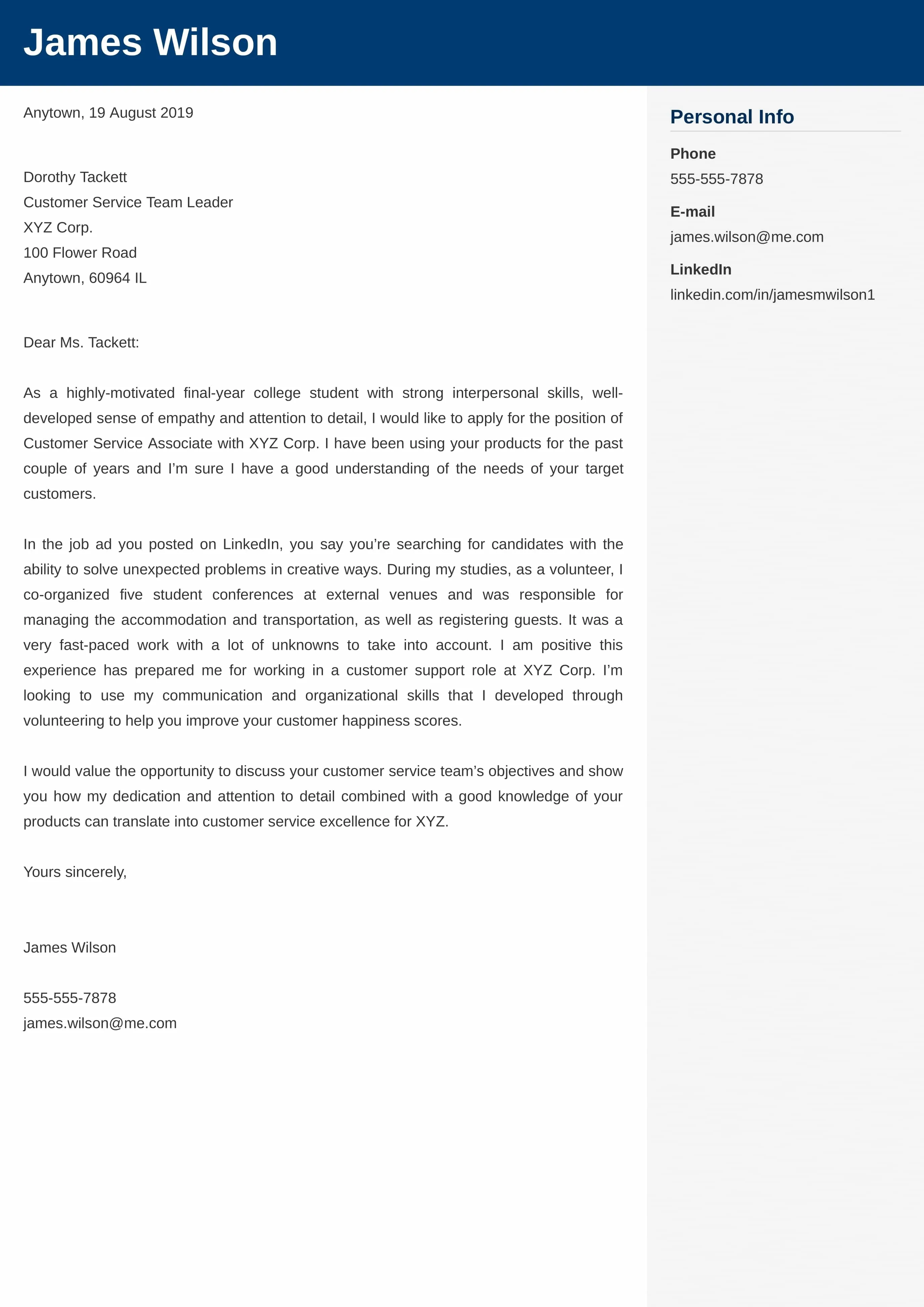
The format of your cover letter is critical to making a good impression. A well-formatted letter is easy to read and professional in appearance. Use a standard business letter format, including your contact information, the date, and the recipient’s information at the top. Choose a professional font like Times New Roman, Arial, or Calibri, and use a font size between 10 and 12 points. Keep your letter concise, ideally one page, and use clear headings and subheadings to break up the text. Use bullet points or numbered lists to highlight key skills or achievements, making it easy for the reader to scan. Maintain consistent margins and spacing throughout the document. Pay close attention to the layout, ensuring that the text is aligned and visually appealing. Avoid large blocks of text; use short paragraphs to maintain readability. Proofread your cover letter carefully for any grammatical errors or typos. A well-formatted cover letter shows that you pay attention to detail and respect the reader’s time.
Essential Elements of a Customer Service Cover Letter

A comprehensive cover letter should include several key elements to present you as the best candidate. Begin with a professional header containing your contact information. Address the hiring manager by name, if possible; personalization makes your letter stand out. In the introduction, state the position you’re applying for and express your enthusiasm. In the body, discuss your relevant skills and experiences, providing specific examples to illustrate your qualifications. Highlight skills such as communication, problem-solving, and adaptability. Quantify your achievements whenever possible, using numbers or percentages to demonstrate your impact. Finally, conclude with a strong closing statement, reiterating your interest and including a call to action. This could be a request for an interview or an offer to provide additional information. Make sure each section of your letter contributes to your narrative and helps the hiring manager see why you’re the right fit for the role.
Contact Information and a Professional Greeting
Your cover letter must include accurate and professional contact information. At the top of the letter, list your name, phone number, email address, and optionally, your LinkedIn profile URL. Make sure your email address is professional and appropriate; avoid using nicknames or unprofessional language. If possible, find out the name of the hiring manager or the person to whom the application should be addressed. Use a formal greeting such as “Dear Mr./Ms. [Last Name].” If you’re unable to find a specific name, use “Dear Hiring Manager.” Avoid generic greetings such as “To Whom It May Concern,” which can make your letter seem impersonal. Ensure that your contact information is easy to find and that the hiring manager can easily reach you. Proofread your contact details carefully to prevent errors.
The Body Paragraphs Selling Yourself
The body paragraphs are the heart of your cover letter, where you showcase your skills, experience, and enthusiasm. Start with a paragraph highlighting your key skills and how they align with the job requirements. In the following paragraphs, provide specific examples that demonstrate your abilities. Use the STAR method to structure your examples, outlining the situation, the task, the action you took, and the result. Quantify your accomplishments whenever possible; for instance, “Increased customer satisfaction by 15% by implementing a new support system.” Focus on skills and experiences that are directly relevant to customer service, such as communication, problem-solving, and empathy. Tailor your examples to the specific job description, emphasizing the skills and experiences the employer is seeking. Always maintain a professional tone and use clear, concise language. Use action verbs to describe your accomplishments and show that you’re proactive and results-oriented. Each paragraph should contribute to the overall narrative of why you’re the perfect candidate for the role.
Closing Your Cover Letter Effectively

A strong closing paragraph is crucial for leaving a lasting impression. Reiterate your interest in the position and the company. Summarize your key qualifications and skills briefly, reminding the hiring manager why you’re a good fit. Include a call to action, such as requesting an interview. Make it easy for the hiring manager to take the next step by clearly stating your availability or your willingness to provide further information. Thank the hiring manager for their time and consideration. Use a professional closing such as “Sincerely” or “Best regards,” followed by your typed name. Avoid clichés and generic phrases. Tailor your closing to reflect the tone of your letter and the specific requirements of the job. Ensure that your closing reinforces your enthusiasm and leaves the hiring manager with a positive impression.
Proofreading and Editing Your Cover Letter
Proofreading and editing are critical steps in the cover letter writing process. Typos and grammatical errors can undermine your credibility and make you appear unprofessional. Review your cover letter carefully for any errors in spelling, grammar, and punctuation. Use a spell checker and grammar checker, but don’t rely on them entirely. Read your letter aloud to catch any awkward phrasing or mistakes that you might miss otherwise. Ask a friend, family member, or career advisor to review your letter for feedback. They can provide a fresh perspective and catch any errors you might have overlooked. Pay close attention to the layout, ensuring that your letter is well-formatted and easy to read. Ensure that your letter is consistent in terms of fonts, spacing, and margins. Edit your letter to make it concise and to the point; remove any unnecessary words or phrases. A polished cover letter shows that you pay attention to detail and are committed to presenting yourself in the best possible light.
Tailoring Your Cover Letter to the Specific Job
Customization is key to a successful cover letter. Avoid using a generic cover letter for multiple job applications. Tailor each letter to the specific job description and the company’s values and needs. Research the company thoroughly and understand their mission, culture, and recent achievements. Use keywords and phrases from the job description throughout your cover letter. Highlight the skills and experiences that are most relevant to the position, and provide specific examples of how you’ve demonstrated those skills in the past. Show that you understand the company’s needs and that you can contribute to their success. If possible, address your letter to the hiring manager by name; this personalization shows that you’ve taken the time to research the company. Demonstrate a genuine interest in the role and the company. Tailoring your cover letter shows that you’re serious about the job and that you’ve taken the time to understand the requirements.
Researching the Company and Addressing the Hiring Manager

Researching the company is a crucial step in writing an effective cover letter. Show the hiring manager that you’ve done your homework by mentioning the company’s mission, values, or recent achievements in your letter. Visit the company’s website, social media profiles, and any news articles or press releases. Understand the company’s culture, its industry, and its products or services. Tailor your language and examples to align with the company’s values. Find out the name of the hiring manager or the person to whom you should address your cover letter. Personalizing your letter makes it stand out and shows that you’re genuinely interested in the position. If you’re unable to find a specific name, use “Dear Hiring Manager.” Use the company’s name correctly throughout your letter. The effort to research the company demonstrates your attention to detail and your commitment to the application process. A well-researched cover letter gives you a significant advantage in the hiring process.
Keywords and Phrases to Use in Your Cover Letter
Incorporating relevant keywords and phrases is an important part of writing an effective cover letter, especially in today’s job market where many companies use applicant tracking systems (ATS) to screen applications. Review the job description carefully and identify the key skills, qualifications, and responsibilities listed. Use these keywords and phrases throughout your cover letter, particularly in the sections highlighting your skills and experience. For example, if the job description mentions “customer issue resolution,” be sure to use this phrase when describing your experience in addressing customer complaints. Other important keywords might include communication, problem-solving, empathy, and active listening. Use action verbs to describe your accomplishments and responsibilities, such as “resolved,” “managed,” “implemented,” and “communicated.” Ensure you naturally integrate the keywords into your letter rather than stuffing them in awkwardly. This ensures that your cover letter gets noticed and helps you pass through the ATS screening process, increasing your chances of getting an interview.
Examples of Strong Action Verbs
Using strong action verbs is a great way to make your cover letter more compelling and impactful. Action verbs describe your accomplishments and responsibilities in a dynamic and engaging way. Start your sentences with action verbs to showcase your skills and experience. Use verbs that are relevant to customer service roles, such as assisted, communicated, resolved, managed, and trained. Here are some examples of strong action verbs you can use in your cover letter, categorized by skill:
- Communication: Communicated, presented, wrote, explained, clarified, negotiated, advised.
- Problem-Solving: Resolved, addressed, identified, analyzed, investigated, troubleshot, evaluated.
- Customer Service: Assisted, served, supported, responded, managed, provided, ensured.
- Teamwork: Collaborated, coordinated, partnered, facilitated, contributed, assisted.
- Leadership: Led, managed, supervised, trained, mentored, guided, motivated.
Make sure the action verbs you use are appropriate to the context of your experience. Quantify your achievements whenever possible; for instance, “Resolved 20+ customer complaints per day,” adding credibility and showcasing your value to a potential employer. Action verbs are not only important for drawing attention, but also to show the hiring manager your capabilities at a quick glance. Choose verbs that accurately reflect your skills and accomplishments.
Common Mistakes to Avoid in Your Cover Letter

There are several common mistakes that can hurt your chances of landing an interview. Avoid generic cover letters that are not tailored to the specific job or company. Generic letters demonstrate a lack of effort and genuine interest. Do not make any grammatical errors or typos. Proofread your letter carefully and have someone else review it for you. Do not use overly casual language or slang; always maintain a professional tone. Avoid exaggerating your skills or lying about your experience; instead, focus on highlighting your relevant qualifications and achievements. Do not make the letter too long. Aim for one page, concise, and to the point. Avoid negative language or complaining about previous employers or situations. Focus on what you can offer to the company rather than focusing on past issues. Do not simply repeat information from your resume; instead, use your cover letter to expand on your experiences and provide specific examples that support your claims. By avoiding these common pitfalls, you can create a cover letter that highlights your qualifications and makes a positive impression on the hiring manager.