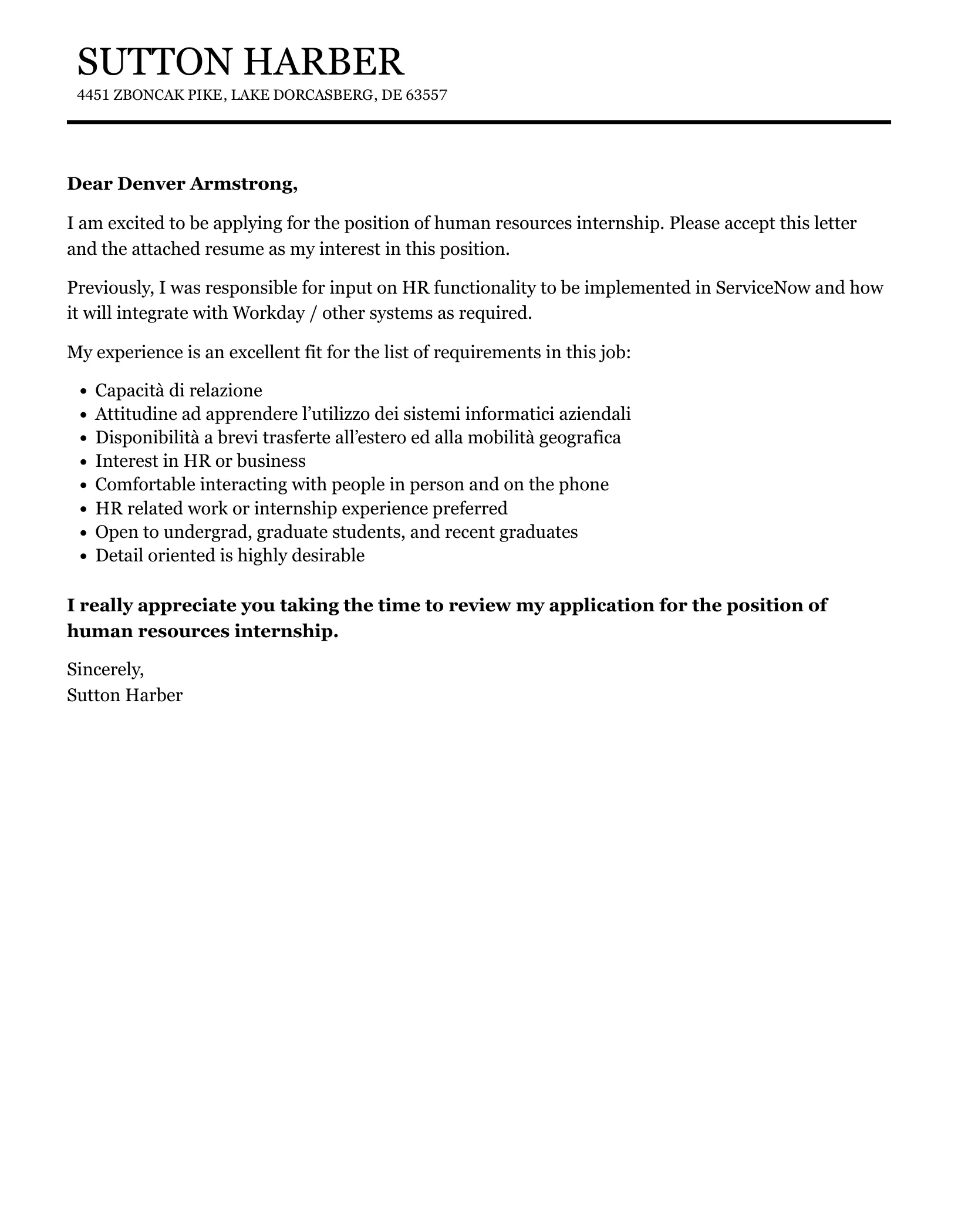
Why a Stellar HR Internship Cover Letter Matters
In the competitive landscape of job applications, especially for internships, a well-crafted cover letter can be the key to unlocking opportunities. For an HR internship, your cover letter is more than just a formality; it’s your first chance to demonstrate your understanding of human resources, your communication skills, and your genuine interest in the field. A strong cover letter highlights your relevant experiences, showcases your personality, and convinces the hiring manager that you are a great fit for the role and the company culture. It’s an opportunity to stand out from other applicants and make a lasting impression, setting the stage for a successful interview and ultimately, the internship itself. A lackluster cover letter, on the other hand, might lead your application to be overlooked, no matter how qualified you are.
Understand the HR Internship Role
Before starting to write your cover letter, it’s important to have a clear understanding of what an HR internship entails. HR internships offer a wide range of experiences, from recruitment and onboarding to employee relations and training and development. Researching the specific responsibilities of the internship you’re applying for will help you tailor your cover letter effectively. What are the key tasks and projects the intern will be involved in? What skills and knowledge are they looking for? This understanding allows you to align your experiences and qualifications with the specific needs of the role, increasing your chances of success. For instance, if the internship emphasizes recruitment, you would highlight any experience with applicant tracking systems, interviewing, or sourcing candidates.
Research the Company and HR Department
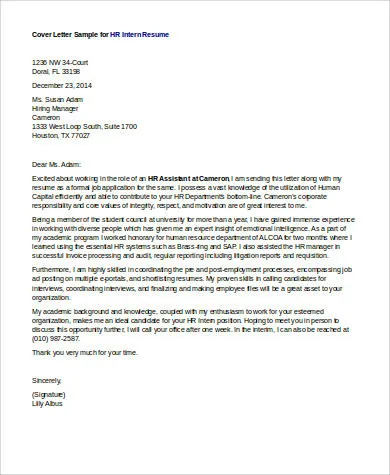
Demonstrating that you’ve taken the time to research the company and its HR department is a crucial element of a compelling cover letter. This research demonstrates your genuine interest and helps you tailor your letter to reflect the company’s values, culture, and specific HR practices. Visit the company’s website, read about their mission and values, and look for recent news or press releases related to their HR initiatives. If possible, research the specific HR department or team you’d be working with. Understanding their current projects, goals, and any recent awards or recognitions will help you craft a personalized cover letter that resonates with the hiring manager. This shows initiative and that you’re truly invested in the opportunity.
Key Components of an HR Internship Cover Letter
A well-structured HR internship cover letter includes several key components. These elements work together to create a cohesive and compelling narrative that showcases your qualifications and enthusiasm. From the header containing your contact information to the closing paragraph expressing gratitude and availability, each section plays a vital role. Understanding the purpose of each element and how they connect is key to creating an impactful cover letter. These components are essentially the building blocks, and their effective organization will help you to craft a compelling narrative that will captivate the hiring manager.
Your Contact Information and Date
At the top of your cover letter, include your full name, address, phone number, and email address. Ensure this information is accurate and professional. Following your contact information, include the date you’re sending the letter. This section provides the hiring manager with the necessary information to contact you quickly and easily. It is also a standard professional practice and sets a tone of formality and attention to detail from the outset.
The Hiring Manager’s Name and Title

Addressing your cover letter to a specific person is crucial. If possible, find out the name and title of the hiring manager or the person responsible for HR internships. Addressing the letter directly, like “Dear Ms. [Last Name],” is more personal and shows that you’ve taken the initiative to research the company. If you can’t find a specific name, use a professional greeting, such as “Dear Hiring Manager” or “Dear Human Resources Team.” Avoid generic greetings like “To Whom It May Concern,” as they suggest a lack of effort.
Crafting a Compelling Opening Paragraph
The opening paragraph is your chance to grab the hiring manager’s attention and set the tone for your letter. Start with a strong statement that clearly states the purpose of your letter – that you’re applying for the HR internship. Mention where you saw the job posting and briefly highlight your key qualifications or skills that align with the role. Express your enthusiasm for the company or the opportunity. The goal is to make a positive first impression and encourage the reader to continue reading. Make sure your introduction is concise and focused, letting the reader know immediately why you’re writing and what you bring to the table. The opening is the hook; make it interesting.
Highlighting Your Skills and Qualifications
The body of your cover letter is where you demonstrate your skills and qualifications. Review the job description carefully and identify the key skills and experiences the employer is seeking. Then, use specific examples from your coursework, projects, or previous experiences to illustrate how you possess those qualities. Tailor your examples to the internship’s specific requirements, even if that requires a little extra digging into previous experiences. Use action verbs to describe your accomplishments. This section is your opportunity to show, not just tell, why you are a strong candidate for the position. Consider the use of bullet points for enhanced readability.
Relevant Coursework and Academic Achievements

If you are a student, highlight relevant coursework and academic achievements related to human resources. This could include courses in HR management, organizational behavior, employment law, or any related areas. Mention specific projects, presentations, or research papers that demonstrate your knowledge and skills. If you have a high GPA or received any academic awards, mention them as well. For example, if you took a course on compensation and benefits, briefly describe a project you completed that involved designing a compensation plan. This academic background serves as a foundation for your interest and skills.
HR-Related Skills and Experiences
Even if you don’t have direct HR experience, highlight any skills that are transferable to the field. These could include communication, problem-solving, teamwork, organization, or project management. Use examples from internships, part-time jobs, volunteer work, or extracurricular activities to showcase these skills. If you have experience with administrative tasks, data entry, or customer service, emphasize how those experiences have prepared you for an HR role. For example, if you volunteered as a team lead in a student organization, describe how you managed a team, resolved conflicts, and organized events.
Showcasing Your Passion for HR
Express your passion for human resources by discussing what interests you most about the field. What aspects of HR do you find most compelling? What are your career goals, and how does this internship align with them? This section provides insight into what motivates you and helps the hiring manager see your long-term vision. Showing genuine interest in HR goes a long way in a cover letter. Your passion will make you stand out among the many applicants. Maybe you’re fascinated by talent acquisition, employee development, or creating positive workplace environments. Share those specific interests to make your application more compelling.
Structuring the Body Paragraphs Effectively

The body paragraphs are the heart of your cover letter, where you showcase your qualifications and enthusiasm for the HR internship. Organize these paragraphs logically, using clear topic sentences and supporting evidence. Use the STAR method (Situation, Task, Action, Result) to describe your experiences and achievements. Start by briefly describing the situation or context, then outline the task you were assigned, detail the actions you took, and finally, highlight the positive results you achieved. This structure provides a clear and concise way to demonstrate your skills and contributions. This will ensure your letter is easy to read and that your key points are easily accessible to the reader.
Demonstrating Knowledge of HR Principles
Demonstrate your basic knowledge of HR principles and terminology, even if you’re new to the field. Use terms like recruitment, onboarding, performance management, employee relations, and training and development appropriately. Show that you have a foundational understanding of key HR concepts. If you’ve studied topics such as employment law, or understand HR’s role in diversity, equity, and inclusion, mention these. This shows you’ve thought about the role and the work in which it is embedded.
Expressing Your Career Goals
Briefly mention your career goals and how the HR internship fits into your long-term plans. How does this experience align with your professional aspirations? Are you interested in specializing in a particular area of HR? Sharing your career goals demonstrates that you’re a motivated individual with a vision for your future. Show that you are serious about a career in HR. Even if you are not sure, expressing a desire to learn and gain experience will demonstrate your strong motivation.
Tailoring Your Letter to the Job Description

Customize your cover letter to match the specific requirements and preferences of the job description. Carefully review the job posting and identify the key skills, experiences, and qualifications the employer is seeking. Then, adjust your cover letter to directly address those points. Use the same keywords and phrases from the job description where appropriate, but don’t just regurgitate the requirements. Instead, provide specific examples of how your skills and experiences align with those requirements. This demonstrates your attention to detail and your genuine interest in the role. Always tailor your cover letter, so it appears as though it was written just for that particular internship.
Emphasizing Your Enthusiasm and Fit
Throughout your cover letter, express your enthusiasm for the internship and the company. Convey your excitement about the opportunity to learn and contribute to the HR team. Show that you’re a positive and motivated individual who is eager to take on new challenges. Demonstrate how your values align with the company’s mission and culture. Mention anything specific that attracts you to the company – a recent project, an initiative, or a value – that showcases your interest. This can make a huge difference when determining who gets the interview.
Writing a Strong Closing Paragraph
The closing paragraph should summarize your interest in the internship and leave a lasting positive impression. Reiterate your enthusiasm for the opportunity and briefly recap your key qualifications. Express your gratitude for the hiring manager’s time and consideration. Be clear about your availability for an interview and how they can contact you. A strong closing paragraph should be confident, concise, and leave the hiring manager with a positive image of you. End with a professional closing like “Sincerely” or “Best regards,” followed by your typed name.
Thanking the Hiring Manager and Offering Availability

In your closing paragraph, thank the hiring manager for considering your application. Express your appreciation for their time and attention. Mention that you’re available for an interview at their earliest convenience and provide your contact information again if desired. This shows professionalism and a willingness to move forward in the hiring process. It’s also a subtle reminder to the hiring manager that you are ready and waiting for the next step. Your closing should reinforce your interest and make it easy for them to take action.
Proofreading and Editing Your Cover Letter
Before submitting your cover letter, thoroughly proofread and edit it for any errors in grammar, spelling, and punctuation. Errors can undermine your credibility and make a negative impression. Use spell-check and grammar-check tools, but don’t rely on them entirely. Read the letter aloud to catch awkward phrasing or unclear sentences. Ask a friend, family member, or career counselor to review your letter for feedback. A polished and error-free cover letter demonstrates your attention to detail and professionalism. This is crucial in a field like HR, where accuracy and precision are highly valued.
Common Mistakes to Avoid
Certain mistakes can significantly decrease your chances of success. Here are some of the most common mistakes to avoid when writing your cover letter. Avoid generic or overly formal language; this can make you appear unenthusiastic or impersonal. Do not simply rehash your resume; your cover letter should expand on your experiences and provide more context. Don’t write a cover letter without tailoring it to the specific job; generic letters are easily spotted. Avoid spelling and grammatical errors; these demonstrate a lack of attention to detail. Avoid long, rambling paragraphs; keep your letter concise and focused. Always proofread the document.
Formatting and Presentation Tips
Formatting and presentation are essential to ensure your cover letter is easy to read and visually appealing. Use a professional font such as Times New Roman, Arial, or Calibri, with a font size of 11 or 12 points. Maintain consistent formatting throughout the letter, including spacing and margins. Use clear headings and subheadings to break up the text and make it easier to scan. Keep paragraphs concise and easy to read. Avoid excessive use of bolding, underlining, or italics. A well-formatted cover letter shows that you pay attention to detail and understand professional communication standards.
Dos and Don’ts for Your Cover Letter
- Do tailor your cover letter to each specific job application.
- Do highlight your skills and experiences relevant to the HR field.
- Do demonstrate your passion and enthusiasm for human resources.
- Do proofread and edit your letter carefully for errors.
- Don’t use generic language or copy and paste from templates.
- Don’t simply restate your resume; provide additional details.
- Don’t be negative or critical of previous employers.
- Don’t exceed one page in length.
Finalizing and Submitting Your Cover Letter
Before submitting your cover letter, double-check everything. Ensure that the letter is addressed to the correct person and that the company name and job title are accurate. Save your cover letter as a PDF file, as this preserves the formatting and ensures that the document looks the same on all devices. Attach your cover letter and resume to your application and follow any specific instructions provided by the employer. Once you submit your application, keep track of the positions you’ve applied for and the dates you applied. It’s also good practice to follow up with the hiring manager if you haven’t heard back within a reasonable timeframe. By following these steps, you’ll increase your chances of landing that HR internship.