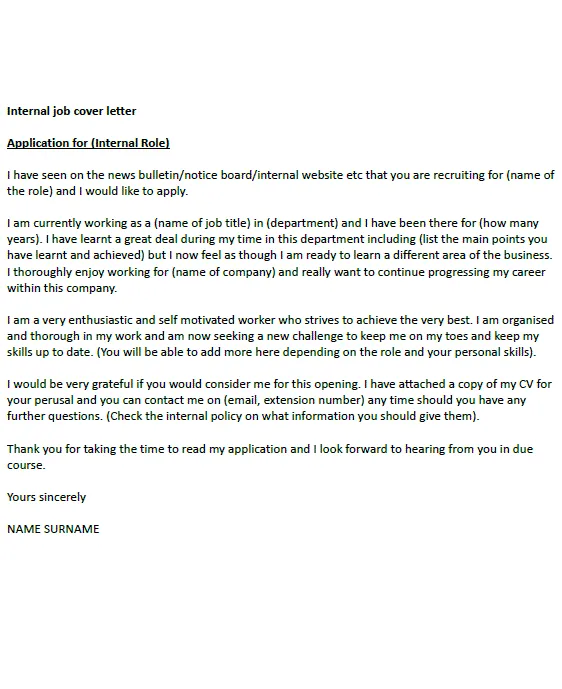
Understanding the Internal Job Cover Letter
Navigating the internal job market requires a strategic approach, and a well-crafted internal job cover letter is your most powerful tool. Unlike external applications, internal applications have nuances that you must understand to effectively showcase your qualifications and secure an interview. This guide provides a comprehensive overview of how to write an internal job cover letter that highlights your skills, experience, and value to the company. It’s a crucial step in your career progression within your current organization, and it’s a chance to make a lasting impression on hiring managers. A compelling cover letter sets the stage for your application and helps distinguish you from other internal candidates.
Why is an Internal Cover Letter Important?
An internal cover letter is more than just a formality; it’s an opportunity to reinforce your interest in the role and demonstrate your understanding of the company’s needs. It allows you to provide context to your resume, elaborate on your achievements, and articulate your career goals. The goal is to show how your skills align with the new role and how you can contribute to the team’s success. Because you’re already part of the company, you can tailor your letter to specific internal knowledge, and use this to your advantage. A good cover letter highlights your internal network, references, and familiarity with company policies and procedures.
Highlighting Internal Applications

When applying for an internal position, you have a unique advantage: you’re already familiar with the company culture, values, and goals. Your internal cover letter provides a platform to leverage this familiarity. Mention specific company projects, initiatives, or accomplishments you’ve been involved in. Showcase your commitment to the company by highlighting your contributions and demonstrating your understanding of the organization’s strategic direction. Your knowledge of internal workings can set you apart from other candidates. This familiarity will significantly influence the hiring manager’s perception of your fit for the new role.
Key Components of an Effective Internal Cover Letter
A well-structured internal cover letter follows a standard format but incorporates elements that are unique to internal applications. Following these key components will set you up for success. The letter should be concise, professional, and tailored to the specific job requirements. Your cover letter should be a snapshot of your qualifications and experience. It should reflect your enthusiasm for the position and the company.
Header and Contact Information
Start your internal cover letter with a professional header. Include your full name, job title, and contact information (email address and phone number). You don’t need to include your mailing address as you are already part of the company. Ensure your contact details are up-to-date. The goal is to make it easy for the hiring manager to reach you, if necessary. Use a clean and readable font, such as Arial or Times New Roman, and maintain consistent formatting throughout the document.
Addressing the Hiring Manager

Addressing the hiring manager by name is always recommended. Research and find out the name of the hiring manager or the person in charge of reviewing applications. If you cannot find this information, use a general greeting like ‘Dear Hiring Team’ or ‘Dear [Department] Hiring Manager’. Avoid generic greetings like ‘To Whom It May Concern,’ which can make your application seem impersonal. Personalizing the greeting shows you’ve taken the time to learn about the role and the team.
Opening Paragraph – Capturing Attention
Your opening paragraph should immediately grab the reader’s attention and clearly state the position you’re applying for. Briefly explain why you’re interested in the role and what makes you a suitable candidate. This is your opportunity to make a strong first impression, so make sure it is both engaging and direct. Start with a brief statement about your current role and your desire to transition to the new opportunity. Emphasize your enthusiasm and highlight something relevant to the new role.
Body Paragraphs – Showcasing Skills and Experience
The body paragraphs are where you demonstrate how your skills and experience align with the job requirements. Provide specific examples and quantifiable results to showcase your accomplishments. Use the STAR method (Situation, Task, Action, Result) to structure your responses and highlight the impact of your contributions. Relate your previous experience to the new role and explain how your current skills can be applied to the new challenges. Focus on your accomplishments and how you have made a difference in your current role. Demonstrate what you can bring to the table and how your skills will benefit the new position. The main point is that you should back up all claims with data and real examples.
Demonstrating Alignment with the Role

Carefully review the job description and identify the key skills and qualifications. Tailor your cover letter to address these specific requirements. Provide examples of how you’ve demonstrated these skills in your previous roles. Highlight any relevant projects or initiatives you’ve worked on, and explain how your experience aligns with the needs of the new position. The key is to show the hiring manager that you understand the role and can excel in it. It’s essential that the hiring manager understands how your experience translates to their needs.
Quantifying Achievements and Results
Whenever possible, quantify your achievements with data and metrics. Use numbers to demonstrate the impact of your work. For example, instead of saying ‘Improved customer satisfaction,’ say ‘Improved customer satisfaction by 15%’. This will provide the hiring manager with concrete evidence of your ability to deliver results and add value to the organization. Numbers can greatly improve the power of your statements and improve your odds of being picked. Make sure to select metrics that are relevant to the job you are applying for.
Highlighting Internal Contributions and Loyalty
As an internal candidate, it’s important to highlight your contributions to the company and your loyalty. Mention any company initiatives or projects you’ve been involved in, and showcase your understanding of the company’s values and goals. Demonstrate your commitment to the organization by highlighting how you’ve grown within the company and why you’re seeking this new opportunity. This shows that you are not just seeking a job, but a career within the company. Show that you are more than just an employee and that you are dedicated to contributing to the organization’s continued success.
Closing Paragraph – Expressing Enthusiasm

In your closing paragraph, reiterate your interest in the position and express your enthusiasm for the opportunity. Thank the hiring manager for their time and consideration. Indicate your availability for an interview and provide a call to action. End with a confident and professional tone. By the end of your cover letter, the hiring manager should feel confident in their decision to interview you for the position.
Formatting and Proofreading
Formatting and proofreading are critical to creating a professional and polished cover letter. Take the time to ensure that your cover letter is easy to read and free of errors. A well-formatted and error-free cover letter will impress the hiring manager and give you a competitive edge. A cover letter riddled with errors makes it seem as though you aren’t serious about your application.
Formatting for Readability
Use a clear and readable font, such as Arial or Times New Roman, and maintain consistent formatting throughout the document. Use paragraph breaks to separate sections and keep the text visually appealing. Make sure your contact information is easy to find. Avoid using jargon or overly complex language. A clear and concise writing style will make your cover letter more accessible and easier to understand.
Proofreading for Errors

Proofread your cover letter carefully for any grammatical errors, spelling mistakes, or typos. Ask a colleague or friend to review your cover letter as a second pair of eyes can often catch errors that you may miss. Errors, even small ones, can undermine your credibility and make a negative impression. Make sure that there are no errors before you submit the cover letter. Ensuring there are no errors is one of the most critical parts of the writing process.
Internal Job Cover Letter Examples
Reviewing different cover letter samples can help you understand the key components and how to best present your qualifications. Look at the examples below for more help. Tailor the samples to your specific skills and the job you are applying for. Customize the cover letter by including your own achievements and qualifications. Make sure to only use examples as a guide, and not copy them.
Sample Cover Letter for a Management Position
This cover letter sample will highlight how to write an application for a management position. The example shows how to demonstrate your leadership skills, management experience, and ability to lead a team. Be sure to include your accomplishments, as well as previous management experience. Describe how your past experiences prepared you for the position.
Sample Cover Letter for a Technical Role

This cover letter sample will help you highlight your technical skills, programming expertise, and problem-solving abilities for a technical position. The example will help you emphasize your technical skills, and show you how to highlight your relevant experience in technical roles. Be sure to use metrics when possible and provide a thorough analysis of your skills.
Sample Cover Letter for a Sales Position
This cover letter sample is designed to show you how to showcase your sales achievements, customer relationship skills, and ability to meet sales targets. This example can help you emphasize your communication skills and how you have exceeded expectations. Make sure to include sales data and quantify your experience.
Common Mistakes to Avoid
Avoiding common mistakes can significantly improve your chances of success. These mistakes can be easy to make, but can have negative implications on your application. You must be careful to avoid making these mistakes as you develop your internal job application.
Generic Cover Letters

Avoid sending generic cover letters that are not tailored to the specific job. Use a template only as a guide and customize each cover letter to reflect the job requirements and your qualifications. A generic letter indicates that you don’t have a deep interest in the specific role or the company. Customize each application to make it specific and show that you are interested in the position.
Failing to Tailor the Letter
Always tailor your cover letter to the specific job requirements. Show how your skills, experience, and achievements align with the job description. Highlighting the specific skills and qualifications required, while providing examples, is a great way to show you are a good fit for the position. Customize the cover letter to include how you can add value to the position.
Focusing Too Much on the Past
While it’s important to highlight your past experience, don’t dwell on the past. Focus on how your skills and experience can contribute to the future success of the new role. Mention your goals and ambitions. Show that you are thinking about the next steps in your career. Focus on what you’ll do and how you’ll provide value in the position.
Maximizing Your Chances of Success
Writing a compelling internal job cover letter is a key step in securing a promotion or transitioning to a new role within your company. By following these guidelines, tailoring your letter to the specific job requirements, and showcasing your skills and experience, you can significantly increase your chances of success. Remember to always tailor your cover letter to the specific job and use data when possible to show you are a great candidate for the position.