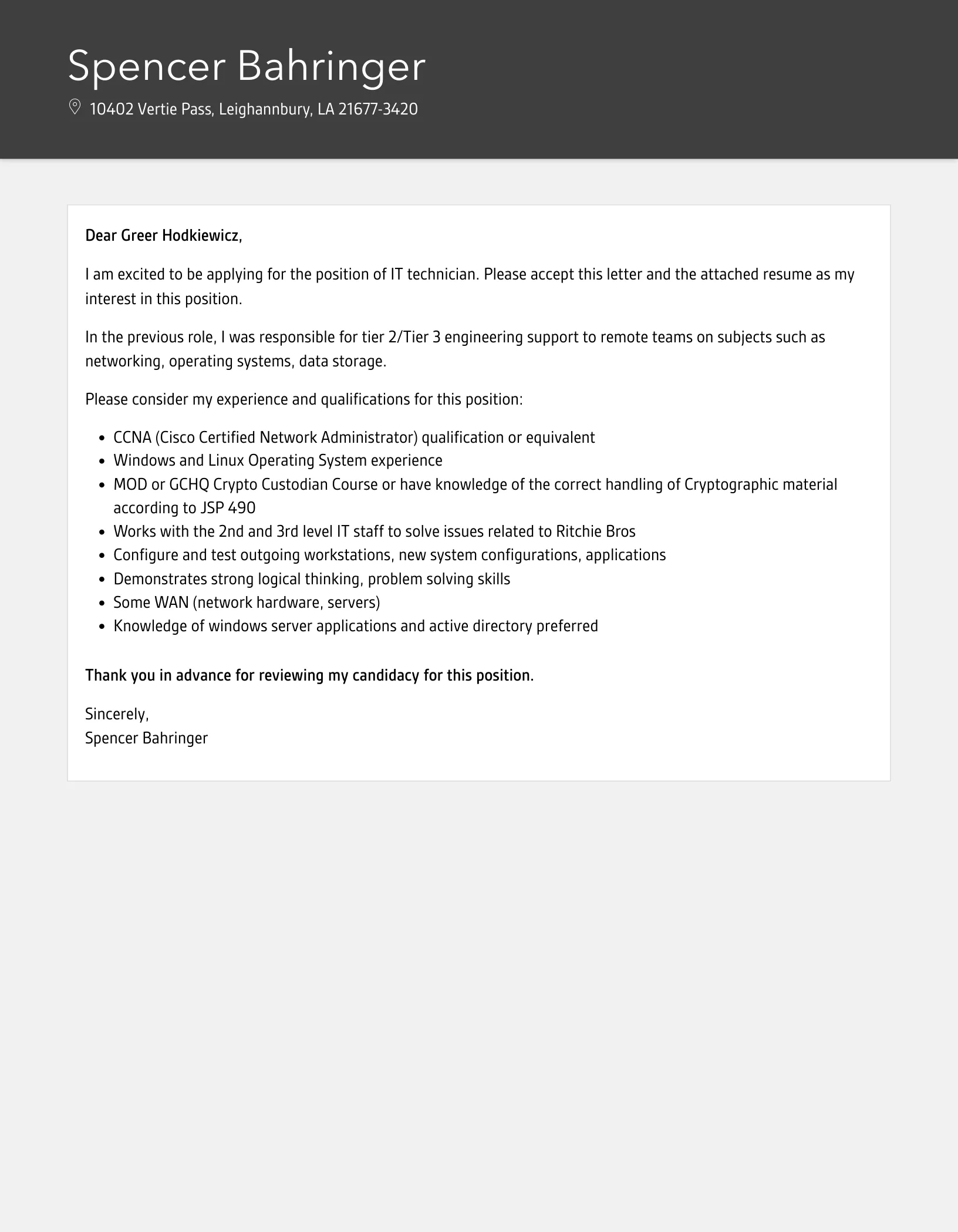
Understanding the IT Technician Cover Letter Importance
In the competitive world of information technology, securing an IT Technician position requires more than just a strong resume. A well-crafted cover letter is your opportunity to shine and demonstrate your suitability for the role. It serves as a crucial introduction, providing context to your qualifications and showcasing your personality. Without a compelling cover letter, your application may be overlooked, as it fails to highlight your unique value proposition. Recruiters often use cover letters to gauge your communication skills, attention to detail, and genuine interest in the specific opportunity, making it an indispensable tool in your job search arsenal. Therefore, dedicating time and effort to create a tailored and impactful cover letter is a strategic move that significantly increases your chances of landing an interview. A professional cover letter sets the stage for your application and lets the hiring manager understand why you’re the perfect fit, beyond just a list of skills and experiences.
Key Components of an Effective IT Technician Cover Letter
A successful IT Technician cover letter is more than a formality; it is a strategic document designed to capture the hiring manager’s attention. It needs to be meticulously structured and rich with information. Your cover letter should be concise, engaging, and targeted to the specific job requirements. Key components include a clear introduction, detailed highlights of your IT skills, experience, and achievements, and a compelling closing statement. Each section should flow logically, ensuring that your qualifications are easily understood and aligned with the job requirements. This includes both technical skills and the soft skills. Ensure you are adding the key components for a high-quality cover letter for IT Technicians.
Contact Information and Introductory Paragraph

Start your cover letter with your contact information at the top, including your name, phone number, email, and optionally, your LinkedIn profile link. Then, address the hiring manager by name, if possible, to personalize your letter. The introductory paragraph is your first chance to make a positive impression. Briefly state the position you’re applying for and how you learned about the opportunity. Immediately grab their attention by stating your passion for the role and your understanding of the company’s needs. Clearly articulating your motivation and enthusiasm sets the tone for the rest of the letter, signaling your genuine interest and commitment. This initial section should be concise, impactful, and designed to encourage the reader to delve deeper into your qualifications. A strong introduction sets the stage and will make the hiring manager want to read more.
Highlighting Your IT Skills and Experience
The body of your cover letter is where you showcase your skills and experience. Instead of simply listing your responsibilities, provide specific examples that demonstrate how you’ve used your technical and soft skills to achieve results. For each skill or experience, give context and quantify your achievements whenever possible. For example, describe a project where you resolved a network issue, supported the IT team, or implemented a new system, and include the positive outcomes. Align your experience with the job description, highlighting the skills and experiences the employer is specifically looking for. Use keywords from the job posting to signal your relevance to the role. A focused and results-oriented approach will make your application stand out.
Technical Skills to Showcase
As an IT Technician, you’ll need to show expertise in various technical skills. List all the software and hardware that you know, but choose the most important ones for the specific job. Highlight your knowledge of operating systems (Windows, macOS, Linux), networking protocols (TCP/IP, DNS, DHCP), hardware troubleshooting, and cybersecurity practices. Mention experience with specific software like help desk software or remote access tools. If the job requires any certifications, make sure to list them prominently. Be clear and concise in detailing your technical skills. The key is to demonstrate that you possess the specific skills the hiring manager is seeking for the role, indicating that you have the foundational knowledge and practical experience.
Soft Skills to Emphasize

While technical skills are crucial, don’t overlook the importance of soft skills. IT Technicians often work directly with end-users, so strong communication, problem-solving, and customer service skills are essential. Highlight your ability to explain technical concepts clearly, actively listen to problems, and provide effective solutions. Mention your teamwork skills, as IT is often a collaborative environment. Showcase your ability to remain calm under pressure, manage time effectively, and adapt to changing priorities. Providing relevant examples of these soft skills can make the difference between an application and a successful interview. Showcasing these soft skills is very important to demonstrate your overall suitability for the role.
Quantifying Achievements with Numbers
Whenever possible, quantify your achievements to demonstrate the impact of your skills and experience. Instead of saying “Improved network performance”, state “Improved network performance by 20% by implementing…” Use numbers to show your contributions. For instance, describe the size of the networks you’ve managed, the number of users you’ve supported, or the cost savings achieved through your initiatives. This provides concrete evidence of your abilities. This approach adds credibility to your claims. It helps the hiring manager understand the direct benefits of your work and makes your application far more compelling than generic statements. Using numbers is a simple, yet very effective way to strengthen your application.
Formatting Your IT Technician Cover Letter
The layout and design of your cover letter play a vital role in creating a professional and polished presentation. A well-formatted cover letter is easier to read. This ensures your skills and qualifications are quickly and effectively communicated. Choose a clean, easy-to-read font like Arial, Calibri, or Times New Roman in a standard size (11 or 12 points). Use single spacing within paragraphs and double spacing between paragraphs. Employ a simple, clear layout with appropriate headings and bullet points to break up the text and guide the reader through the document. Keep your cover letter to one page, as it conveys a sense of respect for the reader’s time. Ensure you proofread your cover letter and use an easy-to-read format.
Choosing the Right Font and Layout

The choice of font and layout can greatly impact the first impression of your cover letter. Opt for a professional and readable font, such as Arial, Calibri, or Times New Roman. Ensure a clear and consistent layout with sufficient white space to avoid overwhelming the reader. Use headings and subheadings to organize information logically. Use bullet points for lists of skills, achievements, or experiences, which helps the reader scan the document. The layout should enhance readability, while also creating a professional image. Ensuring consistency in your formatting choices enhances your credibility and professionalism.
Proofreading and Editing
Careful proofreading and editing are crucial steps. Errors in grammar, spelling, or punctuation can damage your credibility and give the impression of carelessness. Read your cover letter multiple times. Print it out and review it on paper to catch errors that are difficult to spot on a screen. Ask a friend, family member, or career counselor to review your letter. Take the time to refine your writing and correct any errors. A polished, error-free cover letter shows attention to detail and professionalism. It will go a long way toward securing an interview.
Tailoring Your Cover Letter for Each Job
Avoid using a generic cover letter for all job applications. Customize each letter to align with the specific requirements and keywords of each job posting. Demonstrating that you have tailored your application to the specific requirements shows that you have done your homework and are genuinely interested in the role. This extra effort can make your application stand out. This is important for making the right impression. Using a generic cover letter is one of the biggest mistakes, so it is important to customize your application.
Researching the Company and Job Description

Before writing your cover letter, research the company and the specific job description thoroughly. Understand the company’s mission, values, and the specific requirements of the IT Technician position. Review the job description carefully. Identify the key skills, qualifications, and experiences they are seeking. This knowledge will allow you to tailor your cover letter to address the employer’s specific needs and expectations. Customize your letter to demonstrate your deep understanding of the company, as well as how you can bring value to it. Do your research so your application will go to the top of the list.
Using Keywords from the Job Posting
Integrate relevant keywords from the job posting into your cover letter. This will increase the chances of your application being noticed by Applicant Tracking Systems (ATS) and hiring managers. Identify the key skills, technologies, and qualifications the employer is seeking. Then, incorporate those keywords naturally into your descriptions of your skills and experience. Use the exact language used in the job description, when possible. Doing so will make your cover letter highly relevant and demonstrates that your qualifications directly align with the role’s requirements. This strategic approach maximizes your chances of landing an interview.
Closing Your IT Technician Cover Letter
The closing of your cover letter should leave a lasting impression. Express your enthusiasm for the opportunity and reiterate your interest in the position. Show the reader that you’re ready to take the next step. Thank the hiring manager for their time and consideration. Make sure to include a clear call to action, such as “I look forward to the opportunity to discuss my qualifications further in an interview” or “I am eager to learn more about this opportunity.” Proofread the closing of your cover letter to ensure that it aligns with the other sections of the cover letter. It will help to create a positive impression. A strong closing reinforces your key selling points and motivates the hiring manager to consider your application.
Expressing Enthusiasm and Call to Action

In your closing paragraph, express your genuine enthusiasm for the IT Technician position. Reiterate your interest in the company and the specific role, referencing something that resonates with you in the company or job description. Include a clear call to action, such as expressing your availability for an interview. For example, write, “I am eager to discuss how my skills and experience can contribute to your team. I am available for an interview at your earliest convenience.” A strong call to action helps move the application process forward. Use this opportunity to show your enthusiasm, summarize your best qualities, and clearly state your next steps. This will show the hiring manager that you are eager to take the next steps.