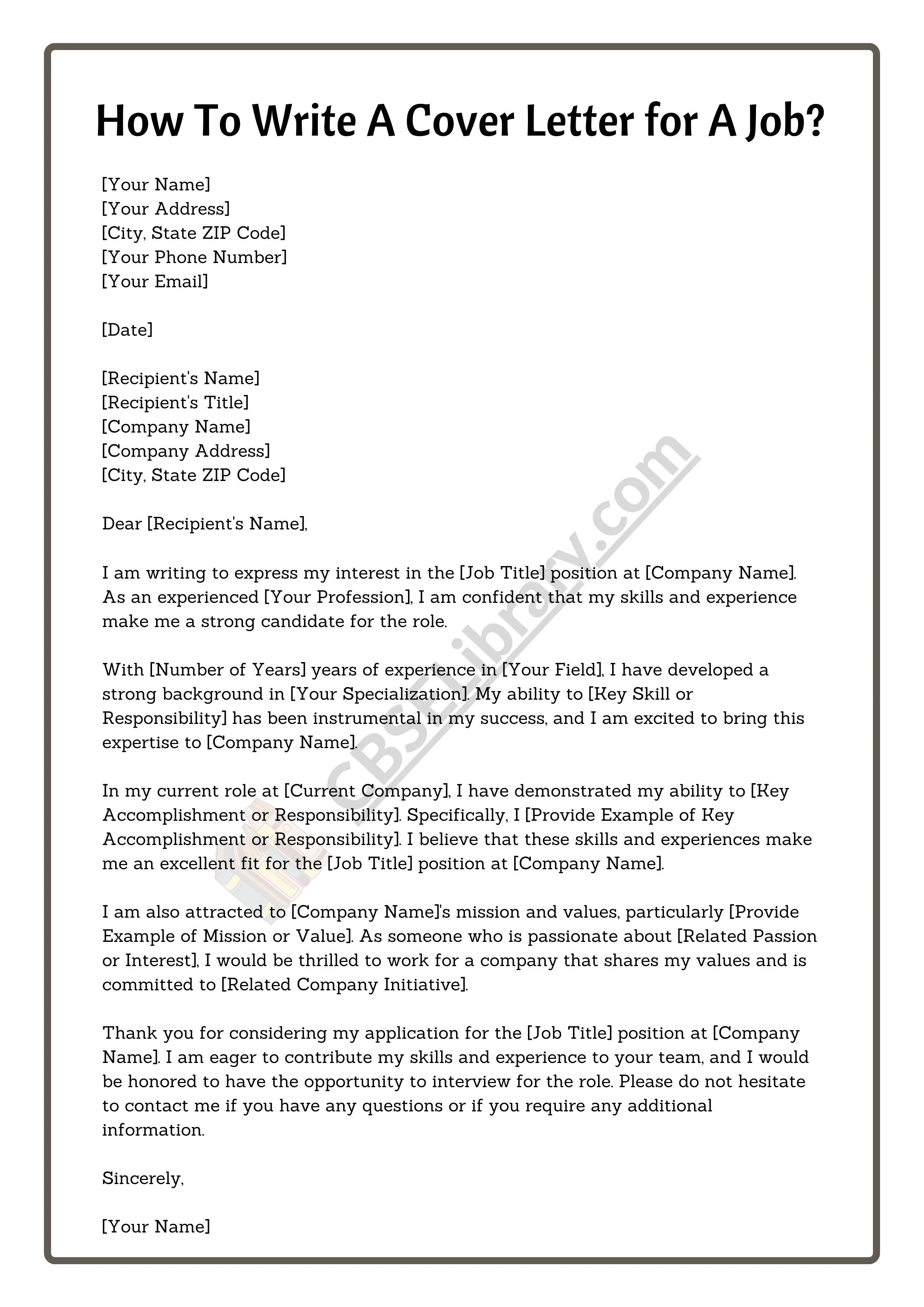
What is a Job Cover Letter
A job cover letter is a crucial document that accompanies your resume when applying for a job. It serves as a personalized introduction, allowing you to showcase your personality, skills, and enthusiasm for the specific position and company. Unlike a resume, which provides a factual overview of your experience, a cover letter allows you to tell a story, explaining why you are the perfect fit for the role. It’s your opportunity to make a strong first impression and persuade the hiring manager to read your resume carefully. It’s also a chance to highlight the most relevant aspects of your experience in relation to the job’s requirements.
Why is a Cover Letter Important
A well-crafted cover letter is important because it provides context to your resume and demonstrates your genuine interest in the job and the company. It allows you to expand on your qualifications and explain how your skills and experiences align with the specific requirements of the role. Cover letters can also help you stand out from other candidates, especially if you can articulate your unique value proposition and what you can bring to the organization. They allow you to address any potential gaps or weaknesses in your resume, and show your proactive approach to the application process. Many hiring managers consider a cover letter an essential part of the application, so submitting a strong one will increase your chances of getting noticed.
Key Elements of a Cover Letter

A compelling cover letter contains several key elements that work together to create a strong narrative. Start with a professional header including your contact information, and address the letter to the hiring manager, if possible. The body of the letter should open with a strong introduction that captures the reader’s attention and states your purpose. The main body paragraphs should focus on your relevant skills and experiences, using specific examples to showcase your achievements. The letter should demonstrate your knowledge of the company and tailor your qualifications to the job description. Always close your letter by expressing enthusiasm for the opportunity and including a clear call to action.
Header and Contact Information
The header of your cover letter is the first thing the hiring manager will see, so it needs to be professional and easy to read. At the top of the page, include your full name, address, phone number, and email address. Ensure this information is accurate and up-to-date. Underneath your contact information, include the date, and then the hiring manager’s name, title, company name, and address. If you don’t know the hiring manager’s name, research the company website or LinkedIn. It’s crucial to format this section neatly, using a clear font and consistent spacing for a polished look. A well-formatted header will provide easy access to your contact details and show your attention to detail.
Greeting the Hiring Manager
The greeting sets the tone for your cover letter. Addressing the hiring manager by name is the most professional approach, demonstrating that you’ve done your research. Use “Dear Mr. / Ms. / Mx. [Last Name]” to show respect. Avoid generic greetings like “To Whom It May Concern” if you can. If you’re unsure of the hiring manager’s name, research on LinkedIn or the company website can often provide the necessary information. If you can’t find a specific name, a good alternative is “Dear Hiring Manager.” Make sure you spell the name correctly to show that you care enough to make an effort, and make a positive impression right from the start.
Body Paragraphs

The body paragraphs are where you showcase your skills and experience. Start with a compelling introduction that states the position you’re applying for and how you learned about it. The following paragraphs should highlight your qualifications, emphasizing skills and experiences relevant to the job description. Use the STAR method (Situation, Task, Action, Result) to illustrate your accomplishments with specific examples. Tailor each paragraph to the job requirements, and use keywords from the job posting. Keep your paragraphs concise and easy to read, and focus on demonstrating your value to the company. Make sure your writing is clear, concise, and error-free to maintain the reader’s interest.
Highlighting Relevant Skills and Experience
Your cover letter’s main goal is to demonstrate how your skills and experience align with the job requirements. Carefully review the job description, and identify the key skills and qualifications the employer is seeking. Then, in your cover letter, provide specific examples that showcase your skills. Use action verbs to describe your accomplishments and quantify your achievements whenever possible. If the job requires project management skills, describe a project you managed, the challenges you faced, the actions you took, and the positive outcomes you achieved. By highlighting the relevant skills with tangible examples, you’ll show the hiring manager that you have the qualifications to excel in the role. Remember to keep it relevant; focus only on experiences directly applicable to the job.
Tailoring the Letter to the Job
Customizing your cover letter for each job application is crucial for showing your genuine interest. Start by carefully reading the job description to understand the specific requirements, skills, and qualifications the employer seeks. Then, adjust your letter to align your experiences and qualifications with these requirements. Use the same keywords and phrases used in the job posting to demonstrate your understanding of the role. Research the company and mention specific projects, values, or initiatives that resonate with you. Avoid using generic templates; each cover letter should be unique to the job. By tailoring your letter, you demonstrate that you’ve invested time and effort, which increases your chances of making a positive impression.
Quantifying Accomplishments

Quantifying your accomplishments makes your cover letter more impactful. Whenever possible, use numbers, percentages, or specific data to demonstrate your achievements. Instead of saying “Improved customer satisfaction,” say “Increased customer satisfaction by 15% through implementing a new customer service protocol.” Instead of saying, “Managed social media accounts,” state “Managed social media accounts, growing followers by 30% in six months.” Quantifying your achievements provides concrete evidence of your skills and abilities. Numbers make your statements more credible and show the hiring manager the value you bring to the table. This approach helps you stand out and makes your accomplishments more memorable.
Demonstrating Company Knowledge
Demonstrate your interest in the company by showing that you’ve done your research. Visit the company’s website, read their blog, and browse their social media channels. Mention specific company projects, values, or initiatives that resonate with you. Show that you understand their mission and how you can contribute to their goals. Explain why you are attracted to the company, and how your skills and experiences align with their values. Refer to specific products, services, or recent news from the company to show that you’ve invested time in understanding their business. Demonstrating this understanding will impress the hiring manager and show your genuine interest in the role.
Closing the Letter
Your closing paragraph should reiterate your interest in the position and express gratitude for the hiring manager’s time and consideration. Briefly summarize why you’re a good fit and what you can bring to the company. Reiterate your enthusiasm for the opportunity. End with a clear and professional call to action, such as encouraging the hiring manager to review your resume and suggesting a follow-up. Use a polite closing such as “Sincerely,” “Best regards,” or “Thank you” and then your full name. Make sure your contact information is readily available for easy access.
Expressing Enthusiasm and Call to Action

Expressing enthusiasm is essential for creating a positive impression. Clearly state your excitement about the opportunity and explain why you’re interested in the role and the company. Show your passion for the job and its responsibilities. A call to action encourages the hiring manager to take the next step. Include a clear call to action in your closing. Encourage them to review your resume. You could also state that you’re available for an interview and express your eagerness to discuss your qualifications further. A strong call to action ensures the hiring manager knows the next steps and keeps your application moving forward.
Proofreading and Formatting
Proofreading and formatting are important to your cover letter’s credibility. Always proofread your cover letter carefully for any grammatical errors, spelling mistakes, or typos. Read it multiple times and consider asking a friend or family member to review it as well. Use a professional and easy-to-read font, such as Arial or Times New Roman, and maintain consistent formatting throughout the document. Use clear headings, bullet points, and ample white space to make your letter easy to read. The layout should be clean and organized, reflecting your attention to detail. Make sure the formatting is visually appealing and easy to follow. Proofreading and formatting help you make a great first impression, signaling your professionalism and attention to detail.
Common Mistakes to Avoid
Several common mistakes can damage your cover letter. Avoid using a generic template without tailoring it to the specific job. Do not simply restate your resume; instead, provide additional context and highlight relevant accomplishments. Avoid typos, grammatical errors, and overly informal language. Don’t write a cover letter that’s too long; keep it concise and focused on the most important information. Steer clear of negative language or criticizing previous employers. Avoid exaggerating or making false claims, as this can damage your credibility. Finally, avoid sending the wrong file or attaching the wrong documents. Paying attention to these common mistakes ensures your cover letter makes a positive impression.