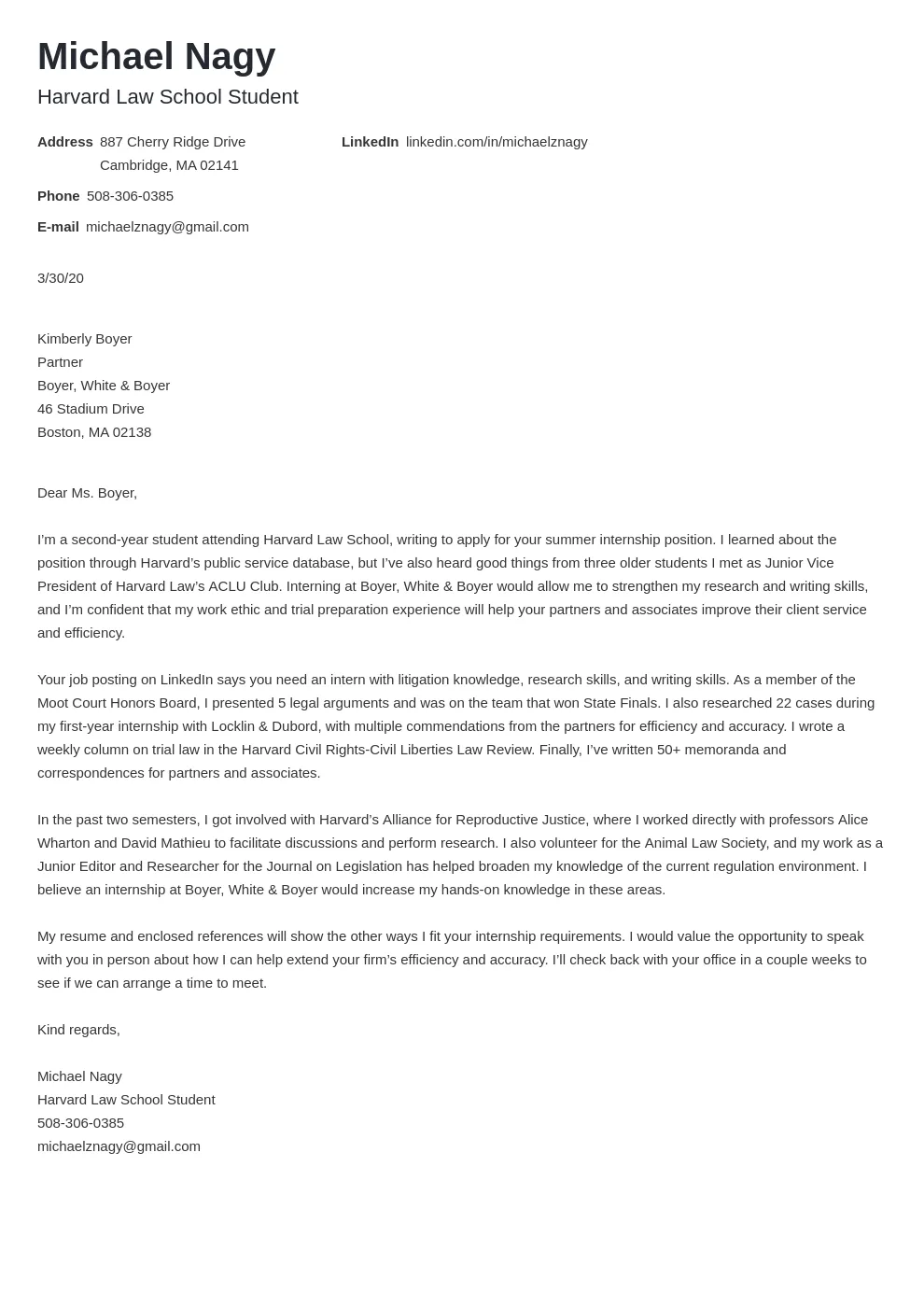
Why a Powerful Law Firm Lawyer Cover Letter Matters
In the competitive world of law, a compelling law firm lawyer cover letter is your first and often most critical opportunity to make a strong impression. It’s not merely a formality; it’s a strategic tool that can significantly influence whether you secure an interview. Your cover letter provides a platform to showcase your unique qualifications, personality, and understanding of the firm’s needs. A well-crafted letter highlights your skills, experiences, and enthusiasm, setting you apart from other applicants. It’s an essential element in demonstrating your suitability for the role and the firm’s culture. A weak or generic cover letter, on the other hand, can lead to immediate rejection. Therefore, investing time and effort in creating a powerful, personalized cover letter is crucial for any lawyer seeking to advance their career.
Understanding the Law Firm’s Needs
Before you even begin writing, you must understand the specific needs and values of the law firm you are targeting. This requires thorough research and a deep dive into the firm’s background and practices. Your cover letter should directly address these needs, demonstrating that you are the ideal candidate to meet their requirements.
Researching the Law Firm

Start by visiting the firm’s website and reading their ‘About Us’ section. Pay attention to their mission statement, values, and the types of cases they handle. Explore their recent news, publications, and any recognition they’ve received. Utilize platforms like LinkedIn to learn about the firm’s employees and their roles. Reviewing legal directories can provide insights into the firm’s reputation and expertise. Understanding the firm’s clients and the areas of law they specialize in is crucial to tailoring your application effectively. The more you understand the firm, the better you can align your cover letter to its specific needs and demonstrate your genuine interest.
Identifying Key Skills and Experiences
Once you’ve researched the firm, identify the key skills and experiences they value most. Carefully review the job description and note the required qualifications. Consider your own skills and experiences and how they align with the firm’s needs. Think about the types of cases you’ve worked on, the specific legal tasks you’ve performed, and any achievements you’ve made. Create a list of your skills and experiences that directly address the requirements outlined in the job description. This exercise will help you craft a cover letter that showcases your suitability and demonstrates that you possess the qualities the firm seeks. Highlighting relevant experiences and skills is vital to demonstrate that you are a suitable candidate.
Structuring Your Law Firm Lawyer Cover Letter
Structuring your cover letter properly is essential to ensure clarity and impact. A well-organized cover letter allows you to convey your message effectively and leave a lasting impression on the hiring manager. It should include an informative opening, a body that presents your qualifications, and a closing that encourages further engagement. Each part of your cover letter plays a crucial role in shaping the hiring manager’s perception of you, so careful structuring is key to demonstrating your suitability and showcasing your skills.
Contact Information and Date

Begin your cover letter with your contact information, including your name, address, phone number, and professional email address. Include the date below this information. This placement makes it easy for the hiring manager to reach you and confirms the date of your application. Ensure that your email address is professional and reflects your brand. The date indicates when the cover letter was written and is vital for organization, particularly in the context of multiple applications. This straightforward setup is a fundamental aspect of professional communication.
Professional Greeting
Use a professional greeting, such as “Dear Mr./Ms./Mx. [Last Name]” or “Dear Hiring Manager,” if the name of the hiring manager is unknown. Avoid generic greetings like “To Whom It May Concern.” If possible, research the hiring manager’s name on LinkedIn or the firm’s website to personalize your letter. Personalizing your greeting shows that you’ve done your homework and demonstrates your attention to detail. This effort can help you make a more positive first impression. Always be respectful in your tone and style.
The Opening Paragraph: Grabbing Attention
The opening paragraph is your chance to immediately grab the reader’s attention. Clearly state the position you are applying for and where you saw the job posting. Briefly mention why you are interested in the firm and what makes you a strong candidate. Highlight a key skill or achievement that aligns with the firm’s needs. Make your opening compelling and concise, setting the tone for the rest of your letter. This initial paragraph should make the reader want to learn more about your qualifications and background. Use this space to showcase your enthusiasm for the role and the firm.
Highlighting Relevant Skills and Experience

The body of your cover letter is where you provide a detailed account of your relevant skills and experience. Discuss how your qualifications align with the job requirements. Use specific examples to demonstrate your expertise. Provide concrete examples of your accomplishments, and explain how your skills have contributed to past successes. This could include winning a case, managing a team, or improving a process. Quantify your achievements whenever possible, using numbers to show your impact. Make sure to clearly and concisely convey your legal expertise in a manner that shows you are the ideal candidate.
Quantifying Achievements
Whenever possible, quantify your achievements. Instead of saying “Successfully managed cases,” say “Managed a caseload of over 50 cases simultaneously, resulting in a 90% success rate.” Instead of saying “Improved client satisfaction,” mention “Increased client satisfaction scores by 20% through improved communication.” Use numbers, percentages, and specific metrics to demonstrate the impact of your work. Quantifying your achievements provides concrete evidence of your skills and expertise, making your accomplishments more persuasive. Show the tangible results of your efforts to boost your chances of getting the job.
Showcasing Legal Expertise
Focus on showcasing your legal expertise in a way that is relevant to the firm’s practice areas. Highlight any specialized knowledge or certifications you possess. Use industry-specific terminology to demonstrate your understanding. Provide clear examples of how you have applied your legal knowledge to solve complex problems. Mention any specific legal technologies or software you are proficient in. Ensure your qualifications show that you possess the skills and background the firm seeks. Demonstrating specialized knowledge can differentiate you from other applicants and highlight your value.
Expressing Enthusiasm and Fit

Express your genuine interest in the firm and the specific position. Explain why you are attracted to the firm’s values, culture, and the opportunities it offers. Discuss how your career goals align with the firm’s mission and vision. Show that you have researched the firm and understand its strengths. Show that you are not just looking for a job but are genuinely enthusiastic about becoming part of their team. This enthusiasm demonstrates your commitment and willingness to make a contribution. Showing enthusiasm is a vital element in establishing a good impression and enhancing your likelihood of being considered for the position.
The Closing Paragraph: Call to Action
Conclude your letter with a call to action. Express your interest in an interview and state your availability. Thank the hiring manager for their time and consideration. Reiterate your enthusiasm for the position and the firm. Provide your contact information once more. End with a professional closing, such as “Sincerely” or “Respectfully.” The call to action encourages the hiring manager to take the next step and invites further engagement. This proactive approach demonstrates your confidence and initiative.
Proofreading and Editing
Proofreading and editing your cover letter is an essential step. Always check for any grammatical errors, typos, and spelling mistakes. Ensure your writing is clear, concise, and easy to understand. Ask someone else to read your letter for a fresh perspective. Minor errors can negatively impact your application and give the impression that you lack attention to detail. Meticulous proofreading is essential for conveying professionalism.
Formatting Tips for a Professional Look

Formatting plays a critical role in the overall appearance of your cover letter. A well-formatted cover letter is easier to read and conveys a sense of professionalism. The correct layout and presentation can enhance your chances of being noticed and considered for the position.
Font and Margins
Choose a professional font, such as Times New Roman, Arial, or Calibri, with a font size of 11 or 12 points. Set standard margins of 1 inch on all sides. These settings create a clean and readable layout that is easy on the eyes. A professional font ensures that your cover letter appears polished and presents you as a serious candidate. The layout should be neat and appealing.
Readability and White Space
Use clear and concise language, and keep paragraphs short. Use bullet points to highlight key information. Add white space between paragraphs and sections to break up the text and improve readability. Ensure your cover letter is well-organized and easy to navigate. A well-formatted cover letter indicates that you value presentation and attention to detail. Creating a clean visual appearance is crucial for getting the reader’s attention.
Avoiding Common Cover Letter Mistakes

Many applicants make common mistakes that can undermine their chances of getting hired. By avoiding these errors, you can greatly improve your cover letter and increase your odds of success. Pay close attention to details and review your cover letter carefully before submitting it. Avoiding mistakes helps present you in the best possible light.
Generic Cover Letters
Avoid using generic cover letters. Tailor your letter to each specific job and law firm. Demonstrate your understanding of the firm’s needs and how you can contribute. Show your research and your genuine interest in the opportunity. Generic cover letters demonstrate a lack of effort and may be immediately discarded by hiring managers. Always personalize your cover letter to make a strong impression.
Typos and Grammatical Errors
Typos and grammatical errors can reflect poorly on your attention to detail and professionalism. Proofread your cover letter carefully before submitting it. Ask someone else to review it for a fresh perspective. These errors can be easily avoided, but they can significantly hurt your chances of getting hired. Make sure your writing is clear and well-edited.
Ignoring the Job Description
Carefully review the job description, and address the specific requirements outlined. Align your skills and experiences with the needs of the position. Explain how your qualifications make you a good fit for the job. Ignoring the job description shows that you are not paying attention to the details of the role, diminishing your candidacy. Make sure you highlight the qualities and skills that the firm is seeking.
Submitting Without Proofreading
Always proofread your cover letter before submission. Ensure your information is accurate, and your writing is polished. A careless error can make a negative impression. The cover letter is a chance to leave a positive lasting impression, but typos can undermine your message. Ensure that you have checked all aspects of your letter.
Following Up on Your Application
After submitting your cover letter, it’s important to follow up on your application. Send a brief and polite email to the hiring manager one to two weeks after submitting your application. Reiterate your interest in the position and mention your key qualifications. Ask about the status of your application. Following up demonstrates your continued interest in the position and your attention to detail. This follow-up shows that you are committed to the process. Make sure that your communication is professional and respectful.