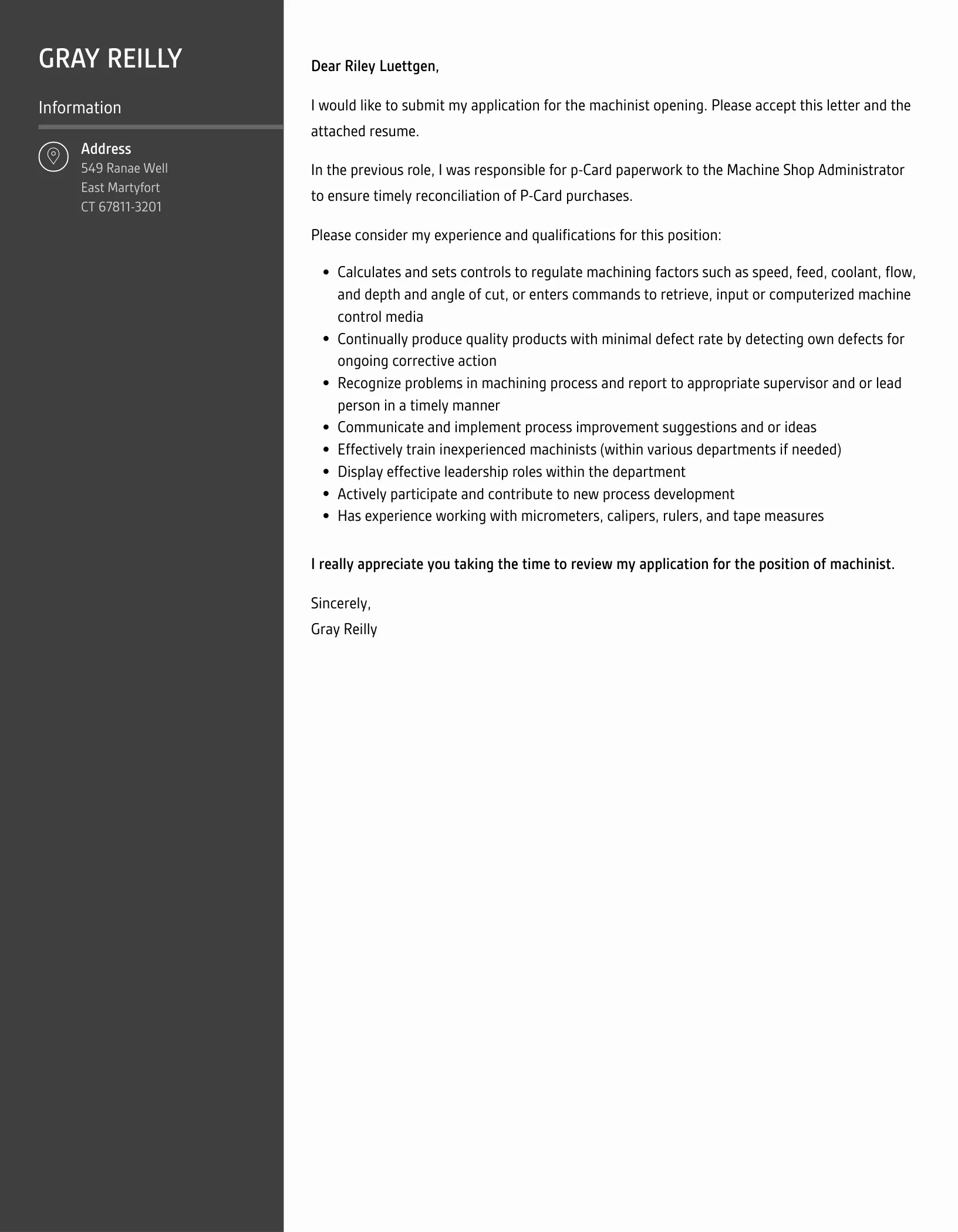
Crafting the Perfect Machinist Cover Letter
A well-crafted machinist cover letter is your first impression. It is your opportunity to showcase your skills, experience, and passion for machining. This guide will walk you through the essential elements of a compelling cover letter, providing examples and tips to help you stand out from the competition and land your dream job. Whether you’re an entry-level machinist or a seasoned professional, a strong cover letter is critical to presenting yourself effectively to potential employers. We’ll cover everything from highlighting your skills and experience to formatting your letter for maximum impact. Proper cover letter can significantly increase your chances of securing an interview and ultimately getting hired. Let’s start crafting that perfect letter!
Understanding the Purpose of a Machinist Cover Letter
The primary goal of a cover letter is to introduce yourself and highlight your qualifications in a way that a resume alone cannot. It’s a chance to elaborate on your skills, demonstrate your personality, and express your enthusiasm for the specific role and company. Unlike your resume, which provides a factual overview of your background, your cover letter allows you to tell a story, connecting your skills to the employer’s needs and showing why you’re the ideal candidate. Use it to demonstrate your understanding of the company’s requirements, your attention to detail, and your ability to communicate effectively. This is your chance to set yourself apart from the many applicants.
Highlighting Your Skills and Experience

Your cover letter is an opportunity to highlight relevant skills and experience that make you a great fit for the job. Focus on the skills and experience most relevant to the specific position. Review the job description carefully and identify the key requirements. Then, provide specific examples from your work history to illustrate how you’ve successfully applied those skills. Do not just list your skills; demonstrate them through concrete achievements and projects. Quantify your accomplishments whenever possible. For instance, instead of saying ‘Managed projects,’ state ‘Managed projects resulting in a 15% reduction in production time.’ This makes your qualifications more tangible and persuasive.
Key Skills to Showcase
When writing your cover letter, it’s important to focus on specific skills. This gives the reader a clearer picture of your expertise. Focus on your machining expertise and technical proficiency. Tailor this section to match the job description to make sure you highlight what the employer is looking for. For example, if the job requires experience with specific machines, make sure you mention that.
Machining Expertise
Detail your expertise in various machining techniques. This could include milling, turning, drilling, grinding, and broaching. Mention any specialized knowledge you possess, such as experience with specific materials (e.g., steel, aluminum, plastics) or complex geometries. Include experience with machine tools like lathes, mills, and grinders. Also, be sure to include any experience with inspection and quality control. Your ability to read blueprints and technical drawings is crucial; highlight your proficiency in this area. (machining expertise tools.webp)
Technical Proficiency

Demonstrate your technical proficiency with specific tools and software. Include your experience with CNC programming, CAD/CAM software, and other relevant technologies. Specify any certifications or training you’ve received. For example, experience with Mastercam, SolidWorks, or AutoCAD is highly valued. In addition, mention your ability to set up and operate machinery, troubleshoot issues, and perform routine maintenance. Emphasize your understanding of safety protocols and your commitment to maintaining a safe working environment. Show that you’re proficient in the latest techniques. (machinist-skills-experience.webp)
Demonstrating Accomplishments
Employers are looking for concrete results. Instead of just listing your responsibilities, focus on your achievements. Use action verbs to describe your accomplishments and quantify your results whenever possible. This approach makes your cover letter more compelling and demonstrates the value you bring to the table. Provide specific examples that illustrate how you’ve made a positive impact in previous roles. Emphasize projects you have worked on and the outcome of your contribution. Focus on quantifiable achievements to help make a case.
Quantifiable Achievements
Use numbers to highlight your achievements. For instance, ‘Reduced production time by 15%’ or ‘Improved part accuracy by 10%.’ This makes your claims more credible and shows the tangible value you can bring to a new role. Instead of saying you ‘Improved efficiency,’ quantify it with figures: ‘Increased efficiency by 20% through process optimization.’ Including specific numbers shows that you understand how to increase productivity and reduce costs, which is very attractive to any employer. Make your achievements stand out by using numbers. (machinist-achievements.webp)
Projects and Results

Give specific examples of projects you’ve successfully completed and the results you achieved. Explain your role in these projects, the challenges you faced, and how you overcame them. Describe how you contributed to the project’s success, whether it was through improved efficiency, cost savings, or enhanced product quality. If possible, include details about any awards or recognition you received for your work. Show that you have the ability to get things done. These provide context and demonstrate your ability to solve problems and achieve results. This helps the reader understand your hands-on experience.
Formatting Your Machinist Cover Letter
Proper formatting is key to making your cover letter easy to read and professional. Make sure to follow a standard business letter format with a clear header, concise paragraphs, and a professional closing. Pay attention to the overall design and ensure your letter is visually appealing and easy to navigate. This will make your letter look professional and demonstrate attention to detail, which are both qualities that employers value.
Contact Information and Header
Start with your contact information at the top of the letter. Include your name, address, phone number, and email address. Ensure your email address is professional. Make sure your header is clean, well-formatted, and consistent with the design of your resume. Include the date and the employer’s contact information, including the hiring manager’s name if known. Using a professional header helps to ensure that your cover letter looks polished. (machinist-cover-letter-header.webp)
Professional Salutation

Use a professional salutation such as ‘Dear Mr./Ms./Mx. [Last Name]’ if you know the hiring manager’s name. If you don’t know the name, use a general greeting like ‘Dear Hiring Manager.’ Avoid generic greetings like ‘To Whom It May Concern,’ as they can make your letter seem less personal. A personalized greeting shows that you’ve done your research and are genuinely interested in the position.
Body Paragraph Structure
The body of your cover letter should be structured in a way that highlights your qualifications. The body should be made up of several paragraphs, each focused on a specific aspect of your candidacy. The paragraphs should flow together logically, creating a cohesive narrative that demonstrates your interest and suitability for the job. Follow a clear structure.
First Paragraph Introduction
Start your cover letter with a strong introduction. State the position you’re applying for and where you found the job posting. Briefly mention why you’re interested in the role and the company. If possible, mention a mutual connection or something specific that caught your attention. Make sure to include a strong opening statement to capture the reader’s attention from the start. This should be the key information in the introduction. (machinist-cover-letter-structure.webp)
Middle Paragraphs

The middle paragraphs should focus on your skills, experience, and accomplishments. Use these paragraphs to highlight the key requirements listed in the job description and explain how your background aligns with them. Provide specific examples of your achievements, using quantifiable results whenever possible. Show your ability to solve problems, work with different technologies, and achieve goals. Make each paragraph easy to read and focused. These should provide details about your skills and achievements. Make sure you provide evidence that you can meet the job requirements.
Concluding Paragraph
Conclude your cover letter with a call to action. Reiterate your interest in the position and the company. Thank the reader for their time and consideration. Express your eagerness to discuss your qualifications further and provide your contact information again. End the letter with a professional closing like ‘Sincerely’ or ‘Best regards,’ followed by your name. End your letter on a high note, restating your interest. Your concluding paragraph should be the place to provide your gratitude for their time.
Formatting and Design
Choose a clean, easy-to-read font such as Times New Roman, Arial, or Calibri, and use a font size of 10-12 points. Use one-inch margins on all sides of the document. Keep your cover letter concise, ideally within one page. Use bullet points or short paragraphs to break up large blocks of text and make it easier to read. Ensure your letter is free of grammatical errors and typos. A well-formatted cover letter shows that you have an eye for detail. (machinist-formatting-design.webp)
Tailoring Your Letter to the Job

To increase your chances of success, tailor your cover letter to each job you apply for. This involves carefully reviewing the job description and highlighting the skills and experience most relevant to the specific position. Customizing your letter demonstrates to the hiring manager that you’ve taken the time to understand the job requirements and are genuinely interested in the opportunity. Customization is one of the most important things to keep in mind.
Researching the Company
Before you start writing, research the company to understand its values, mission, and recent projects. This information will help you tailor your letter and demonstrate your genuine interest in the company. Look at the company’s website, social media profiles, and any news articles or press releases. Find out about their products, services, and clients. Mentioning something specific about the company shows that you’re truly interested in working there. (machinist-job-research.webp)
Matching Skills to Requirements
Carefully review the job description and identify the key skills and qualifications the employer is seeking. Then, highlight those skills in your cover letter, providing specific examples of how you’ve demonstrated them in previous roles. Use keywords from the job description throughout your letter to show that you meet the requirements. Tailoring your letter to the job increases your chances of success. Make sure your skills and experience match the specific requirements.
Using Keywords Effectively

Use relevant keywords from the job description throughout your cover letter. This helps the hiring manager quickly see that you possess the necessary skills and experience. Keywords are often used by applicant tracking systems (ATS) to filter applications, so including them can improve your chances of getting past the initial screening stage. However, avoid keyword stuffing, which can make your letter sound unnatural. Use keywords strategically and contextually to make it a natural read. Make sure the keywords are in context.
Proofreading and Editing
Proofreading and editing are essential steps to ensure your cover letter is free of errors and presents you in a professional light. A cover letter with typos or grammatical mistakes can damage your credibility and undermine your chances of getting an interview. Take the time to carefully review your letter and seek feedback from others. Make sure to check the letter for any errors before sending it.
Checking for Errors
Carefully check your cover letter for any grammatical errors, spelling mistakes, or typos. Read through your letter multiple times, and consider using a grammar and spell-checking tool. Ensure your formatting is consistent and that all the information is accurate, including contact details and dates. These errors can create a bad impression, so be careful in this stage of the process. (machinist-proofreading-editing.webp)
Seeking Feedback
Ask a friend, family member, or career counselor to review your cover letter. They can provide an objective perspective and identify any areas for improvement. Ask them to check for clarity, grammar, and overall effectiveness. Make sure the letter flows well and that it is easy to read. A second pair of eyes can catch mistakes you might have missed. This will give you additional insights.
Cover Letter Examples for Machinists
Reviewing sample cover letters can provide inspiration and guidance as you write your own. Examples can help you understand how to structure your letter, highlight your skills, and tailor your message to specific job requirements. Here are three examples of cover letters for different levels of machinist experience.
Example 1 Entry-Level Machinist
This example focuses on highlighting educational background, relevant coursework, and any internships or projects completed. It demonstrates a strong interest in learning and a willingness to grow within the field. Even if you have limited experience, emphasize your enthusiasm and desire to learn. Highlight related skills you possess, like blueprint reading, and your attention to detail.
Example 2 Experienced Machinist
This example highlights a more extensive work history. Focus on specific achievements, quantify your results whenever possible, and showcase a range of machining skills. Mention any advanced certifications or specialized training you’ve received. Be sure to include projects you completed and quantify the positive impact you had on the company. Highlight your leadership and team skills if you have them.
Example 3 CNC Machinist
This example focuses on CNC-specific skills, such as programming, setup, and operation. Highlight your experience with various CNC machines and software. Mention any experience with specific materials and complex parts. Quantify your improvements in production efficiency and accuracy. The key is to mention the machines and software that the job posting requires. Make sure to emphasize your CNC expertise.