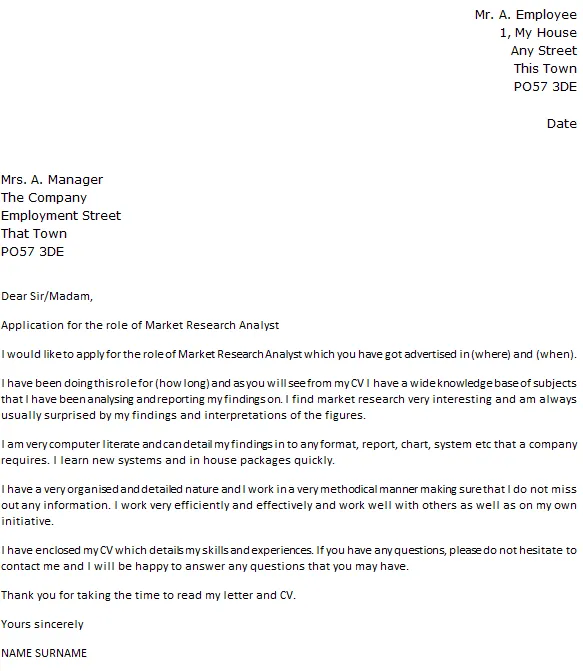
Top 5 Market Research Cover Letter Tips
A compelling market research cover letter is your first step toward landing your dream job. It’s your chance to showcase your skills, experience, and enthusiasm to potential employers. Crafting a cover letter can seem daunting, but with the right approach, you can create a document that grabs attention and sets you apart from the competition. Here are five essential tips to guide you in creating a winning market research cover letter. Following these tips can significantly improve your chances of getting noticed and securing an interview. Remember, your cover letter is more than just a formality; it’s a powerful tool to demonstrate your suitability for the role and highlight your passion for market research.
Highlighting Your Market Research Skills
Your cover letter is the perfect place to highlight your key market research skills. Focus on those skills that are most relevant to the job description. This might include data analysis, survey design, statistical modeling, qualitative research methodologies, or report writing. Use specific examples to illustrate how you’ve applied these skills in past projects. For instance, if you have experience with SPSS or R, mention how you used these tools to analyze data and draw meaningful insights. If you are proficient in conducting focus groups or interviews, provide details about your process. Showing proficiency is essential. Remember, employers are looking for candidates who can demonstrate that they possess the skills required to succeed in the role.
Quantify Your Achievements

Avoid vague statements. Instead, quantify your achievements whenever possible. Use numbers and metrics to demonstrate the impact of your work. For example, instead of saying you “improved sales,” state that you “increased sales by 15% through market analysis.” If you conducted research that led to cost savings, specify the amount. Did your recommendations influence strategic decisions? Mention this and provide details. Quantifiable results immediately capture the employer’s attention and demonstrate the real value you can bring to their organization. By backing up your claims with concrete evidence, you show that you are results-oriented and capable of making a significant contribution to their team. This detail makes your cover letter stronger and more convincing.
Tailoring Your Cover Letter
A generic cover letter will likely end up in the trash. To truly impress, customize each cover letter for the specific job and company. Thoroughly read the job description and identify the key requirements and desired skills. Then, tailor your cover letter to address these requirements directly. Demonstrate how your skills and experience align with what the employer is seeking. This shows that you have taken the time to understand the role and the company, and that you genuinely want the job. Personalization makes your cover letter stand out from the rest. Research the company to understand their values, mission, and recent projects. This will allow you to demonstrate your interest in the company and its work. Showing you care is essential.
Showcasing Your Enthusiasm
Let your enthusiasm for market research shine through. A cover letter is your opportunity to express your passion for the field and the specific role you are applying for. Explain why you are drawn to market research and what excites you about the opportunity. Discuss any relevant industry trends or challenges that interest you. Demonstrate your understanding of the market and your eagerness to contribute to the company’s success. Employers want to hire individuals who are genuinely passionate about their work. Your enthusiasm will make you more memorable and increase your chances of getting an interview. A positive attitude and genuine interest are always appreciated.
Proofreading and Presentation

Always proofread your cover letter carefully before submitting it. Errors, typos, and grammatical mistakes can damage your credibility and create a negative impression. Use a spell-checker, but also read your cover letter multiple times to catch any errors that spell-checkers might miss. Consider having a friend or colleague review your letter as well. Pay attention to the layout and formatting of your cover letter. Use a professional font, maintain consistent margins, and ensure that your letter is easy to read. A well-presented cover letter demonstrates attention to detail and professionalism. It reflects your commitment to quality and your respect for the potential employer.
Understanding the Role
Researching the Company
Before you even start writing your cover letter, research the company extensively. Visit their website, read their annual reports, and explore their social media presence. Understand their products, services, target market, and recent projects. This information will allow you to tailor your cover letter to demonstrate that you understand their business and are genuinely interested in contributing to their goals. Knowing about the company shows you care about making a good impression and are not just sending out generic applications. Find any news article, or recent press release to show your initiative.
Matching Skills and Requirements

Carefully review the job description to identify the key skills and qualifications the employer is seeking. Make a list of these requirements and then review your own skills and experience to see how you match them. In your cover letter, explicitly address these requirements and provide examples of how you have demonstrated these skills in the past. This will demonstrate that you are a good fit for the role and that you understand the employer’s needs. Highlighting the core requirements will help you stand out from the competition. Using the same keywords mentioned in the job description can also help the applicant tracking systems (ATS) read your cover letter better.
Demonstrating Your Value Proposition
Showcasing Relevant Experience
In your cover letter, provide a concise overview of your relevant experience. Focus on the projects, roles, and responsibilities that are most closely aligned with the job description. Use the STAR method (Situation, Task, Action, Result) to describe your accomplishments. This structure helps you provide clear, concise, and impactful examples of your skills. Highlight any specific achievements or successes that demonstrate your ability to deliver results. Detail what you did in your previous role, what task you did, how you approach it and what was the outcome.
Highlighting Key Projects

If you’ve worked on significant market research projects, be sure to highlight them in your cover letter. Provide a brief overview of the project, your role, the methodologies you used, and the key outcomes. Quantify your achievements by using metrics like the number of surveys conducted, the size of the sample, or the impact of your findings on decision-making. Use projects to show you know the job. If possible, mention any recognition or awards you received for your work. By showcasing these projects, you demonstrate your ability to manage projects, conduct research, and deliver valuable insights.
Explaining Your Research Approach
Briefly explain your research approach and methodologies. Are you experienced with both qualitative and quantitative research? Mention the specific tools and techniques you use, such as surveys, focus groups, statistical analysis, or data visualization. If you have experience with specific research software like SPSS, R, or Qualtrics, be sure to mention it. This will demonstrate your technical skills and your ability to gather, analyze, and interpret data. Use your experience to give the employer the information they need.
Formatting and Design
Choosing the Right Tone

The tone of your cover letter should be professional, confident, and enthusiastic. Avoid using overly casual language or slang. Maintain a positive and engaging tone throughout the letter. Show your personality, but remain professional and respectful. Address the hiring manager by name, if possible, and use a formal salutation and closing. Tailor the tone to the specific company and role. Your tone reflects your professionalism and communication skills, which are highly valued in market research roles.
Keeping it Concise
Keep your cover letter concise and to the point. Aim for one page, or no more than two pages, in length. Hiring managers are busy and have many applications to review. Make sure every sentence adds value and directly addresses the job requirements. Avoid unnecessary details or irrelevant information. Use clear and concise language and get to the point quickly. Be selective about what you include, focusing on the most important information. Concise letters are more effective and show that you respect the hiring manager’s time.
Professional Formatting
Use a professional font like Times New Roman, Arial, or Calibri. Maintain consistent margins and spacing throughout your letter. Use clear headings and bullet points to organize your content. Proofread your cover letter for any grammatical errors or typos. Ensure that your letter looks clean and professional. Save your cover letter as a PDF to ensure that the formatting remains consistent across different devices. Well-formatted letters give a good impression and look more organized. Proper formatting is essential. Use professional formatting and design for the best first impression.