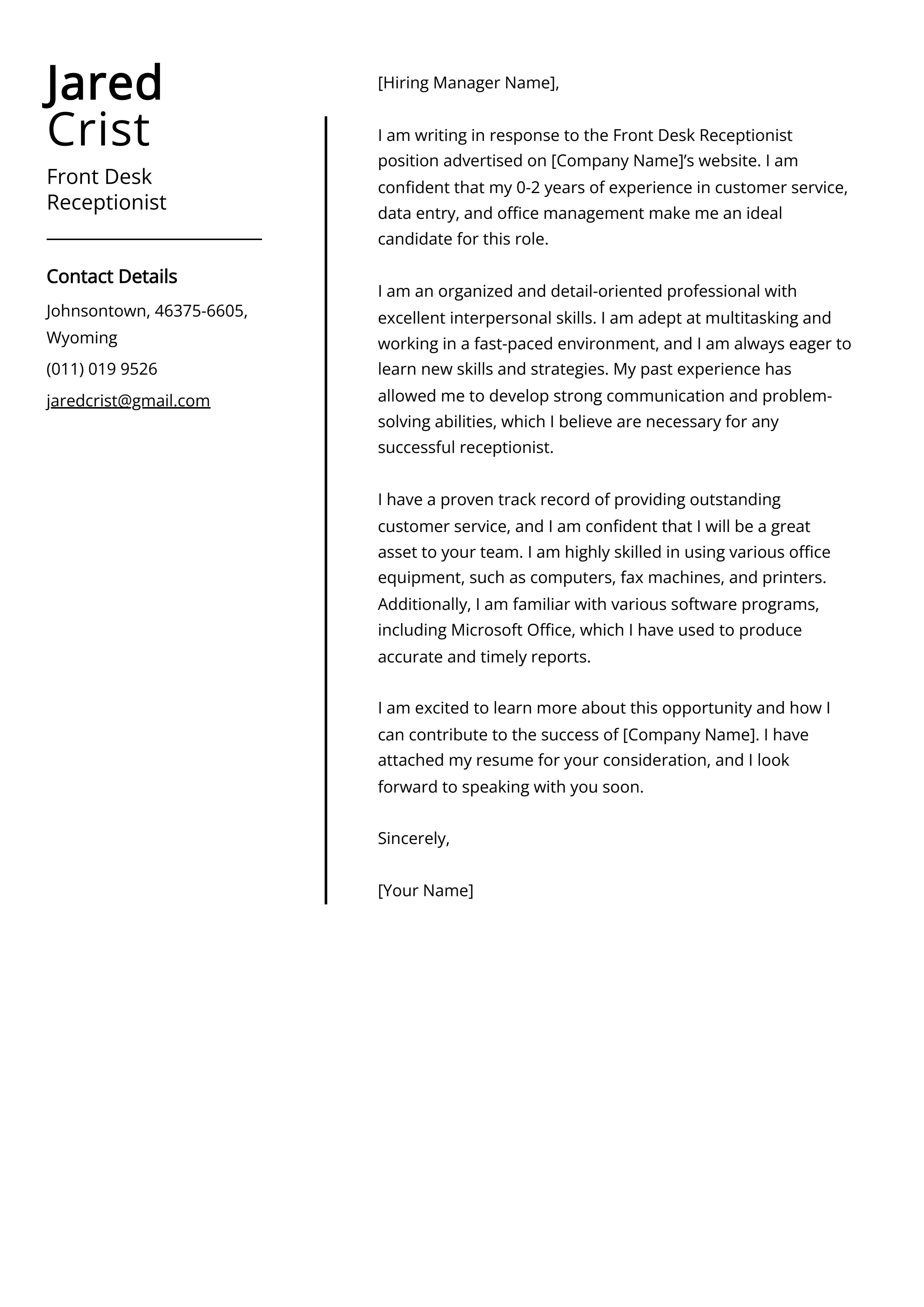
A medical front desk position is often the first point of contact for patients, making a strong impression crucial. A well-crafted medical front desk cover letter can significantly increase your chances of landing an interview and ultimately, the job. This guide will walk you through the process of creating a compelling cover letter that highlights your skills and experience, and that showcases your suitability for this vital role within a healthcare setting.
Understanding the Medical Front Desk Role
Before you start writing your cover letter, it’s essential to understand the role of a medical front desk professional. This understanding will help you tailor your letter to the specific requirements of the job and demonstrate your awareness of the position’s demands. Knowing the role also allows you to highlight the skills and experiences that are most relevant to the employer. The medical front desk is more than just answering phones it is a fast paced environment.
Key Responsibilities of a Medical Front Desk
Medical front desk staff handle a variety of responsibilities that are crucial to the smooth operation of a medical facility. These include greeting patients, managing appointments, handling patient inquiries, verifying insurance information, and managing patient records. They often handle phone calls, process payments, and ensure the waiting area is organized. These tasks require a high level of organizational skills, attention to detail, and the ability to multitask effectively. Additionally, they maintain confidentiality and adhere to all HIPAA regulations.
Essential Skills for Medical Front Desk Success

The success of a medical front desk professional hinges on a specific set of skills. Strong communication skills, both written and verbal, are essential for interacting with patients, doctors, and other staff members. Excellent organizational skills are needed to manage appointments, records, and administrative tasks efficiently. Proficiency in using medical software and electronic health records is also highly valuable. Problem-solving skills and the ability to remain calm under pressure are critical for handling stressful situations and patient inquiries. Finally, empathy and a patient-centered approach help create a welcoming and supportive environment.
Crafting Your Medical Front Desk Cover Letter
Your cover letter is your first chance to make a positive impression on a potential employer. A well-structured and thoughtfully written cover letter can capture their attention and persuade them to review your resume. This section provides a comprehensive guide to writing a cover letter that effectively highlights your qualifications and expresses your enthusiasm for the position. Pay attention to detail, clarity, and the overall tone to ensure that your cover letter effectively represents you and your abilities.
Header Section of Your Cover Letter
Start your cover letter with a professional header. This should include your contact information, such as your name, phone number, email address, and LinkedIn profile (if you have one). Be sure to place this information at the top of the page. This ensures that the hiring manager can easily contact you. Follow this with the date, and the recipient’s information, including the name of the hiring manager (if known), their title, and the address of the medical facility. Accuracy and attention to detail in this section demonstrate your professionalism and consideration.
Your Contact Information

Include your full name, phone number, professional email address, and optionally, your LinkedIn profile URL. Make sure your email address sounds professional. Double-check all the details to make sure they are correct.
Recipient’s Information
If possible, address your cover letter to a specific person (e.g., the hiring manager). Include their name, title, and the medical facility’s address. Researching the organization to find the hiring manager’s name shows initiative. If you cannot find a specific name, use a professional title like ‘Hiring Manager’.
Salutation for Cover Letter
The salutation sets the tone for your letter. Use a professional greeting such as ‘Dear Mr./Ms./Dr. [Last Name]’ if you know the hiring manager’s name. If you do not know the name, ‘Dear Hiring Manager’ is a suitable alternative. Avoid generic greetings like ‘To Whom It May Concern’. The salutation should be formal and respectful, demonstrating that you take the application process seriously. This is your chance to make a positive first impression and show respect to the person receiving your application.
The Body of Your Cover Letter

The body of your cover letter is where you sell yourself and showcase your suitability for the position. This section should be well-organized and clearly communicate your qualifications and enthusiasm. Structure it in a way that highlights your skills and experiences. Start with a strong opening that states the position you are applying for and how you found the job posting. Then, use the subsequent paragraphs to provide specific examples that demonstrate your relevant skills and experience. Tailor your letter to meet the requirements mentioned in the job description, ensuring that your cover letter effectively showcases your value to the potential employer.
Highlighting Your Skills and Experience
In the body of your cover letter, focus on showcasing your skills and experience. Reference the job description and identify the key requirements. Then, describe how your skills and experiences match those requirements. Provide specific examples of situations where you have demonstrated these skills. This could include previous experience in customer service, managing appointments, handling insurance verification, or working with medical software. Ensure that your examples demonstrate your ability to handle the responsibilities of the medical front desk position effectively.
Quantifying Achievements
When possible, quantify your achievements. Use numbers and statistics to demonstrate the impact you’ve had in previous roles. For instance, you might write ‘Managed an average of 50 patient calls per day with a 95% satisfaction rate’ or ‘Reduced patient wait times by 15% by implementing a new scheduling system.’ Quantifying your achievements provides concrete evidence of your abilities and makes your cover letter more persuasive. This showcases your practical abilities and highlights the value you bring to an organization.
Tailoring Your Cover Letter to the Job

Always tailor your cover letter to each job application. Customize your letter to match the specific requirements listed in the job description. Refer to the facility by name, and mention any aspects of the job or organization that particularly interest you. This personalization demonstrates that you have carefully reviewed the job posting and are genuinely interested in the position. Showing that you have taken the time to tailor your letter will make it stand out from generic applications, increasing your chances of being selected for an interview.
The Closing of Your Cover Letter
The closing of your cover letter should be as professional and thoughtful as the rest of the document. This section provides an opportunity to summarize your interest in the position and encourage the hiring manager to contact you. Keep it concise and to the point. It should also be a positive ending, leaving a lasting good impression. Your final words should be clear, expressing your gratitude and a willingness to discuss the position further.
Expressing Gratitude and Next Steps
Close your letter by expressing your gratitude for the hiring manager’s time and consideration. State your interest in the position and your eagerness for an interview. Indicate that you are available for an interview at their convenience. Include a polite call to action, like ‘I look forward to hearing from you soon’ or ‘Thank you for considering my application’. Finally, use a professional closing such as ‘Sincerely’ or ‘Best regards,’ followed by your full name.
Proofreading Your Cover Letter

Proofreading is a crucial step in the cover letter writing process. Errors can undermine your professionalism and could lead the hiring manager to dismiss your application. Thoroughly review your letter for any grammatical errors, typos, and formatting inconsistencies. Read it aloud to catch any awkward phrasing or sentences that do not flow smoothly. Having a friend or colleague read your cover letter can also help identify mistakes that you may have missed. Proofreading ensures your cover letter is polished and professional.
Common Mistakes to Avoid
Be aware of common mistakes that can diminish the impact of your cover letter. Avoid generic letters that are not tailored to the specific job. Do not use slang or informal language. Ensure your cover letter is error-free. Avoid providing information that is not relevant to the job. Do not exceed the one-page length limit. Always be positive and enthusiastic in your tone. Overlooking these elements will make your cover letter more effective.
Formatting and Design
The layout and formatting of your cover letter are as important as the content. Use a professional and easy-to-read font, such as Times New Roman, Arial, or Calibri. Ensure that your letter has consistent margins and spacing. Keep your letter to one page. Use clear headings and bullet points to break up text and improve readability. Your cover letter should look neat and organized, making it easy for the hiring manager to review your information. These elements of design enhance the presentation and convey your professionalism.
Tips for Success

To increase your chances of success, consider these additional tips. Research the medical facility where you are applying, and tailor your letter accordingly. Highlight any relevant certifications or training. Showcase any experience you have with specific medical software. Emphasize your ability to handle confidential patient information. Always include a strong call to action, encouraging the hiring manager to contact you. By following these tips, you increase your chances of securing an interview and landing the job. These added touches will make your application more competitive.
Review and Revise
Before submitting your cover letter, carefully review and revise it. Ensure that the content is accurate, the formatting is professional, and the tone is appropriate. Ask a trusted friend or colleague to review your letter and provide feedback. Check for any errors you might have missed. This final step ensures that your cover letter is polished and effectively represents you as a qualified candidate. The effort you put into review and revision significantly improves your chances of success.
Writing a strong medical front desk cover letter takes time and effort. However, by following these guidelines, you can craft a compelling letter that effectively showcases your skills and experience. This will significantly increase your chances of landing an interview and securing the job. Remember to customize your letter for each application and always proofread carefully before submitting. Good luck with your job search!